History & Heritage
In Sorrento, some hotels occupy a beautiful promontory, while others seem to have been part of the landscape for eternity. The Grand Hotel Cocumella belongs to the latter category.
Its identity is not solely based on its five-star status or its membership in the Small Luxury Hotels of the World. It is rooted in a long-standing presence along this stretch of coastline. Gardens, villas, and the sea create a backdrop of remarkable continuity.
The very name of the establishment evokes local memory. It is intertwined with the history of the Sorrentine Peninsula, where characterful residences traverse the ages without breaking their original spirit.
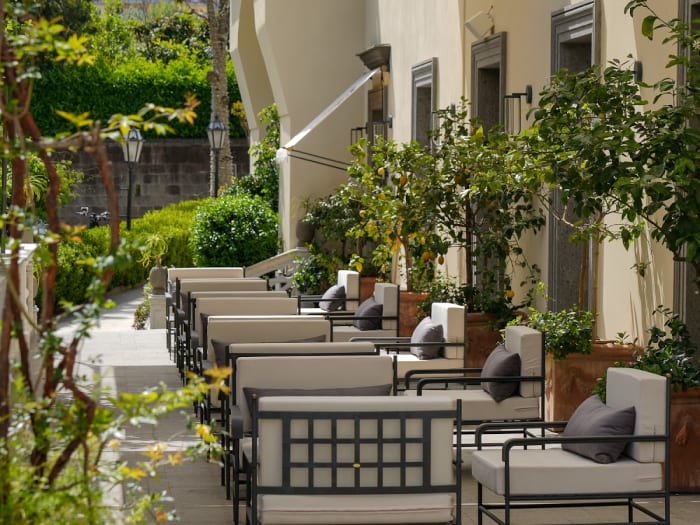
What strikes one here is less the ostentation and more the permanence. The architecture, with its traditional Italian charm, sets the tone. Balanced volumes, controlled light, fluid circulation between interiors and gardens, and carefully chosen materials that age gracefully.
In a place like this, heritage does not take on a museum-like quality. It expresses itself through a way of inhabiting the long term. One perceives a southern elegance made of shade, openings towards the Mediterranean, and a measured art of hospitality.
The Grand Hotel Cocumella also fits into the tradition of great Italian holiday homes. Sorrento has long attracted guests who appreciate the beauty of the site, the mild climate, and the proximity to key locations in the Bay of Naples.
In this context, the hotel is not merely a stopover. It is a destination that contributes to the cultural experience of the stay. Guests come for the view, but also for the continuity between the history of the destination and the daily life of the house.
Belonging to the Small Luxury Hotels of the World network brings a contemporary interpretation to this heritage. It highlights a high-end independent hospitality that is committed to its uniqueness and the precision of its service.
For the traveller, this historical dimension alters the nature of the stay. One does not simply book a room with a view; one chooses a setting that tells a story about Sorrento, its relationship with the sea, its holiday culture, and Italian hospitality.
This depth adds richness to the simplest details. A corridor bathed in light. A lounge where one lingers. A terrace designed for watching the day fade away. Luxury lies as much in the quality of service as in the impression of entering a home that already has a history.
The Establishment
The Grand Hotel Cocumella first reveals itself as a haven of tranquillity in Sorrento. In a destination bustling with visitors during the warmer months, this notion of retreat is of paramount importance. The hotel offers a more serene relationship with the Amalfi Coast and the Bay of Naples, without sacrificing proximity to local attractions. This dual quality—serenity on one hand and practical access on the other—defines much of its appeal.
The view of the Mediterranean Sea shapes the experience. In Sorrento, the connection to the landscape influences the rhythm of one’s stay. It accompanies breakfast, leisurely reading on the terrace, the return from excursions, or the time for aperitifs. In a hotel of this calibre, the view provides a breath of fresh air. It serves as a reminder that one is staying on a natural balcony facing the horizon, amidst cliffs, gardens, and marine light. The Grand Hotel Cocumella capitalises on this setting, allowing the Mediterranean to play a constant role in the experience.
The architecture contributes to this sense of harmony. Traditional Italian charm suggests a classic composition. Elegance here arises from proportion and continuity. The communal spaces seem designed to endure. The lounges invite both brief pauses and entire afternoons of relaxation. The transitions between indoors and outdoors appear seamless. The common areas set the rhythm of the stay, providing moments of respite and suspended time.
The hotel’s location, close to local attractions, is another advantage. Sorrento is often chosen as a starting point for exploring the region. The historic centre, the coastline, nearby villages, the archaeological sites of Campania, and ferry crossings to the islands remain easily accessible. Staying in an establishment that allows for easy exploration, then returning to a more intimate setting, transforms the travel experience.
This ability to combine accessibility with tranquillity explains why the hotel appeals to a diverse range of guests. Couples find a setting conducive to romantic getaways. Business travellers appreciate the discretion. Families can also feel at ease here. The establishment is built on a simple yet demanding idea: to offer a luxury of context. The view, architecture, relative silence, proximity to the town, and the sensation of a place deeply rooted in its territory compose its identity.
Rooms and Suites
At the Grand Hotel Cocumella, the rooms and suites extend a certain idea of Italian holiday living. They are part of a characterful house in Sorrento.
The peaceful setting, traditional architecture, and views of the Mediterranean structure the experience. The rooms are conceived as places for staying, resting, and connecting with the landscape.
On this coast, comfort often depends on light, silence, the freshness of the spaces, and openness to the outside. Elegance remains understated, without any spectacular effects.
In Sorrento, this approach aligns well with the rhythm of the stay. Guests come as much to slow down as to explore.
The nightly turndown service, daily housekeeping, and a 24-hour reception contribute to the quality of the stay. These details matter in the perception of real comfort.
For couples, the room invites a slower pace. For families, it needs to remain fluid and practical.
For business travellers, it should allow for occasional work while preserving energy. The Grand Hotel Cocumella adapts to these varied uses.
In Sorrento, the value of a room often lies in its continuity with the place. A coherence is expected between the intimate and the landscape.
The rooms and suites at the Grand Hotel Cocumella thus offer refined retreats. They welcome the sea, light, and the atmosphere of the peninsula without disturbing the peace.
The Dining Experience
In Sorrento, gastronomy is an integral part of the experience, on par with the view, the garden, or the rhythm of the days.
The first promise of dining in Sorrento lies in the context. Eating facing the sea, or in an environment that reflects its proximity, alters the perception of a meal. Breakfast takes on the qualities of a luminous ritual. Lunch calls for freshness and refined simplicity. Dinner becomes a slower affair, where one anticipates both the atmosphere and the dish.
In a hotel with a peaceful ambience, this dimension is essential. The dining experience extends the overall tone of the establishment. There is a desire for continuity between the calm of the spaces, the elegance of the service, and the clarity of the cuisine.
The culinary tradition of the region offers a particularly rich backdrop. An establishment of this type naturally draws from Mediterranean inspiration. Seafood, sun-ripened vegetables, olive oil, citrus fruits, aromatic herbs, pasta, and Campanian desserts compose this horizon. The interest lies in the ability to render these local references accessible, elegant, and attuned to the rhythm of the stay.
Breakfast deserves special mention, as it often sets the standard for a hotel. In a holiday destination, it is not merely about nourishment, but about establishing the day. A good breakfast in Sorrento must cater to various needs. An early departure for an excursion, a leisurely morning as a couple, a family pause before sightseeing, or an informal business meeting. The quality of the setting, the pace of service, and the opportunity to savour this moment without haste are as important as the offerings themselves.
Dining is also a matter of sociability. In an establishment that is a member of the Small Luxury Hotels of the World, the experience is often more intimate. Less noise, greater continuity, a sense of a well-kept home. A simple drink at the end of the day or a dinner without a special occasion can leave a lasting memory.
At the Grand Hotel Cocumella, gastronomy is viewed as an art of balance. It complements the beauty of the site and extends the spirit of the stay.
Wellness & Rhythm of Stay
At the Grand Hotel Cocumella, wellness begins with the surroundings. In Sorrento, the views of the Mediterranean, the tranquil atmosphere, and the traditional architecture invite you to slow down.
Wellness extends beyond mere facilities; it arises from an enhanced quality of stay. Here, it is founded on a balance between landscape, serenity, and fluidity.
The proximity to local attractions facilitates active days. Returning to a calm environment helps avoid unnecessary fatigue. The 24-hour reception and concierge services ease the organisation of your stay.
The relationship with the sea plays a central role. The view of the horizon soothes the inner rhythm, inviting simple pleasures: enjoying a coffee on the terrace, reading a few pages in the shade, or taking a stroll during the gentle hours.
A well-located and peaceful hotel enables this. It transforms the interstices of travel into genuine moments of recovery.
For couples, this aspect manifests as an elegant retreat, without isolation. There is a harmonious alternation between excursions and quiet times, sociability and intimacy.
For business travellers, wellness is found in an environment that absorbs the tension of a busy agenda. It softens transitions and preserves both sleep and focus.
For families, it resides in an orderly and welcoming environment. The services facilitate organisation without burdening daily life.
At the Grand Hotel Cocumella, wellness is an art of tempo. A grand hotel also guides you in how to organise your time. Transitioning from the room to communal spaces, from the city to tranquillity, from excursions to rest, occurs here with ease.
In Sorrento, this quality matters. It is the result of a subtle alchemy between landscape, service, and restraint.
Concierge & Services
In high-end hospitality, services are valued for how they make the stay simpler, smoother, and more personal. The Grand Hotel Cocumella offers a 24-hour concierge service, a continuously open reception, daily room service, a nightly turndown service, luggage storage, laundry services, wake-up calls, and a multilingual team. Together, these elements create a concrete promise: that of a stay without unnecessary rough edges.
The concierge is one of the most crucial services in a destination like Sorrento. The region is rich in excursions, transfers, visits, and reservations. Being able to rely on a team available at all hours transforms the travel experience. It allows for the organisation of a tailor-made day, checking schedules, anticipating flows, and reserving a table or transport. A good concierge filters, prioritises, and simplifies.
The 24-hour reception plays an essential complementary role. In a region where arrivals can be late and departures very early, this continuity is reassuring. It guarantees valuable flexibility for international travellers, multi-stop itineraries, or stays that blend leisure and professional obligations. The wake-up call service becomes particularly useful for departures to ferries, private transfers, or early excursions.
Daily housekeeping and the nightly turndown service contribute to the tangible quality of the stay. In a holiday hotel, guests enter and exit several times a day. They return from the sea, a stroll, or dinner in town. There is a need for the room to regularly regain its order and freshness. The turndown service adds an evening preparation that transforms the return to the room into a moment of transition.
Luggage storage and laundry services meet very concrete needs. They are particularly useful in a transit or touring destination. Arriving before the room is available, enjoying a final day before a late departure, or having one’s belongings cleaned after several stops: all these situations mean that the efficiency of the service directly impacts comfort. The multilingual team ensures practical understanding and a more relaxed relationship.
At the Grand Hotel Cocumella, the services are delivered with a logic of controlled discretion. Everything suggests a home where the aim is to assist without overwhelming. This is often the best definition of luxury service today: to be present before the need becomes a burden, while allowing the traveller their freedom.
The Sorrento art of living
Staying at Grand Hotel Cocumella also means choosing a certain way of inhabiting Sorrento. The town is not merely a practical base for the Amalfi Coast or the islands of the Bay of Naples; it has its own art of living, more nuanced than one might first imagine. Sorrento is a destination of thresholds: between town and garden, cliff and sea, tourist animation and residential softness. A peaceful hotel, close to local sights yet protected from excessive bustle, allows that complexity to be properly felt.
Sorrento’s first pleasure lies in its light. It shapes façades, terraces, paths lined with vegetation and open views over the Mediterranean. One quickly understands that travel here is not experienced only through a checklist of sites, but through a sequence of moments: a coffee taken slowly, a late-afternoon walk, a détour through the shopping lanes, a return to the hotel before dinner. Grand Hotel Cocumella, with its refined setting and peaceful atmosphere, seems particularly suited to that reading of a stay. It offers a base that does not artificially accelerate the pace, but instead allows guests to choose their own intensity.
Sorrento has long cultivated a form of southern elegance founded on measure. There is, of course, the attraction of panoramas and excursions, but also a taste for simple things done well: welcome, dining, walking, one’s relationship with time. In that sense, a characterful hotel plays an essential role. It does not merely provide accommodation; it gives the journey its tone. A house that privileges continuity, discretion and quality of service helps one enter the local rhythm without reducing the destination to hurried consumption.
Proximity to local attractions allows for several readings of Sorrento and its region. Some travellers will want to explore intensively: the historic centre, viewpoints, sea crossings, nearby villages and Campanian cultural heritage. Others will prefer a more contemplative approach, made of half-days, pauses and regular returns to the hotel. Both options are valid, and that is precisely what makes the address interesting: it seems capable of supporting both active stays and slower interludes. That flexibility is a rare quality, especially in highly sought-after destinations where crowds can quickly dictate the programme.
The Sorrento art of living, finally, lies in this alliance between spectacular beauty and preserved intimacy. The coast attracts through iconic images, but the best memories are often born elsewhere: in the feeling of a sheltered garden, a quiet sitting room, a terrace where time expands, a service that understands without overplaying. Grand Hotel Cocumella appears to belong to that category of addresses that allow one to experience Sorrento from within, with more depth than mere visual consumption. For the discerning traveller, that is probably the essential point: finding a place that does not simply display the destination, but helps one inhabit its rhythm, its nuances and its genuine softness.
Booking via MyConciergeHotel
Booking the Grand Hotel Cocumella through MyConciergeHotel means approaching Sorrento with greater method and better control of your time on site. In a highly sought-after destination, the quality of your stay also depends on its preparation. Spring and autumn are among the most pleasant periods, and demand remains high during these times. Therefore, planning ahead brings genuine comfort.
The value of editorial and concierge support lies in the coherence of the journey. The Grand Hotel Cocumella captivates with its peaceful atmosphere, views of the Mediterranean, traditional Italian architecture, and proximity to Sorrento's points of interest. However, it is essential to organise your stay to make the most of it. A well-thought-out trip does not simply stack visits but balances discoveries with moments of respite. On the Sorrentine Peninsula, distances may seem short on the map, yet they can prove more demanding depending on the season, timings, or crowds.
Booking through MyConciergeHotel allows for a more seamless integration of the hotel into your itinerary. This could involve anticipating transfers, structuring excursion days, reserving certain activities or tables, or clarifying the priorities of your stay. Booking activities in advance also helps avoid queues. In Sorrento, spontaneity can be delightful, but it quickly shows its limits when seeking a high-end stay without unnecessary time loss.
This approach suits various types of travellers. Couples may prefer a contemplative stay, with a few selected experiences and room for the unexpected. Families often require a clearer organisation to avoid downtime. Business travellers generally expect reliable execution that preserves their agenda while allowing for moments of relaxation. In all cases, the value of a supported reservation lies in the personalised rhythm.
Choosing MyConciergeHotel for the Grand Hotel Cocumella means opting for a booking informed by context. It involves understanding why this address suits a particular type of stay, during which period it is best discovered, and how to connect it with Sorrento and its region. Luxury is not solely about the room or the view; it also resides in minimising friction, the precision of choices, and the feeling of a thoughtfully planned journey.