History & heritage
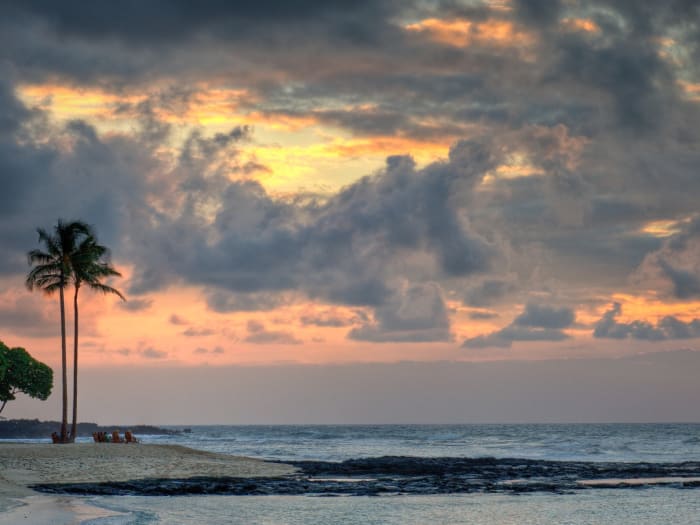
On the Kona Coast, Four Seasons Resort Hualalai belongs to a landscape whose story long predates hospitality. The Big Island first speaks of fire, cooled lava, sea winds and vegetation slowly taking hold on volcanic ground. Much of the resort’s identity comes from this dialogue between Hawaii’s mineral terrain and the idea of a retreat opening directly onto the ocean. More than a tropical backdrop, Hualalai refers to a specific part of the island of Hawaii, known for its dry light, west-coast sunsets and immediate relationship with the sea.
The property belongs to a generation of major resorts in Hawaii that sought to move away from a standardised vision of beachfront luxury. The aim is not to recreate an urban grand hotel in the tropics, but to work with the site: low-rise buildings, materials and tones inspired by nature, and a fluid transition between indoors and outdoors, with gardens that accompany rather than tame the landscape. This approach is central to understanding the spirit of the place. Refinement here is expressed less through display than through continuity: between room and terrace, planted pathways and beach, attentive service and the slower rhythm of the Kona Coast.
The Four Seasons signature is clearly present. It brings a level of service recognised worldwide, yet softened by the Hawaiian setting. The result is a style of hospitality that values precision without stiffness, attentiveness without theatricality. In a destination where many guests come in search of rest, that restraint matters. It allows the resort to maintain a relaxed yet polished atmosphere, especially appealing to travellers who want a high-end Hawaiian stay without losing the sense of openness and natural ease.
The property’s heritage also lies in its ability to speak to several travel desires at once. For some, Hualalai is above all a seaside retreat, suited to silence, reading and long unhurried mornings outdoors. For others, it is a base for exploring the island’s west coast, its volcanic scenery, water-based activities and insular way of life. That versatility helps explain its lasting appeal for both couples and families. Each can find a personal rhythm here without the hotel losing its identity.
What remains, ultimately, is a sense of coherence. The resort does not overplay exoticism; it relies on the intrinsic strength of the setting. The private beach, lush gardens, nature-inspired design and constant openness to the outdoors create a simple but convincing narrative: that of a major resort designed to make guests feel Hawaii before it ever needs to explain it. In a sector where renovations and trends can quickly flatten experiences, that fidelity to place is perhaps the most persuasive part of its heritage.
The property
Four Seasons Resort Hualalai is best understood as a whole rather than as a single building. That distinction matters, because it immediately shapes the way one inhabits the place. On arrival, guests do not enter a dramatic enclosed volume cut off from its surroundings; they step into a resort conceived as a sequence of open spaces, gardens, pathways, terraces and views towards the water. This composition gives the stay a particular tone: that of a large-scale tropical residence, where one moves on foot through a carefully composed landscape.
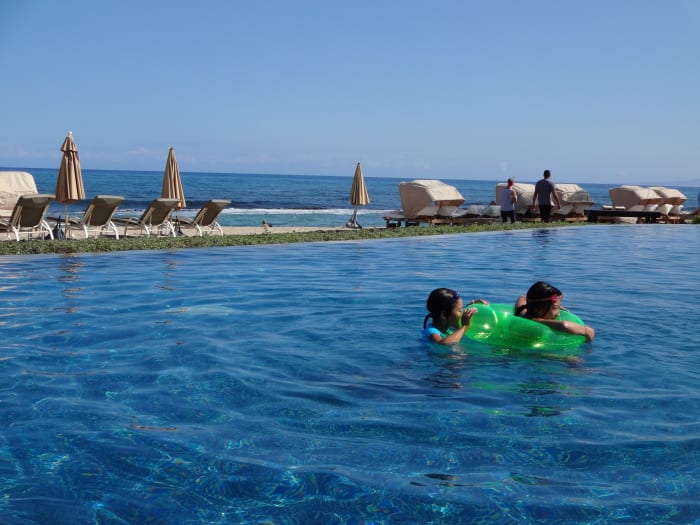
One of the defining features of the estate is its relationship with the shoreline. The private beach on Hawaii’s west coast is not merely a seaside amenity; it structures the life of the resort. Light shifts throughout the day, the sea air tempers the heat, and the presence of the ocean acts as a constant thread from many points across the grounds. It quickly becomes clear why so many travellers choose this side of the island: the climate is generally even, the days lend themselves equally to swimming and contemplation, and late afternoon often takes on an almost ritual quality.
The lush gardens are just as important. In many tropical hotels, planting functions as decoration. Here, it contributes to the experience in a more immersive way. It creates pauses, preserves privacy between different areas, filters views and accompanies the transition from one zone to another. The resort therefore feels both expansive and sheltered. That sense of refuge is especially valuable in a destination so open to the elements: it allows guests to enjoy the outdoors without ever feeling overexposed.
The nature-inspired design reinforces this impression. The lines favour discretion over effect. Materials, colours and volumes all seek a form of visual calm that leaves the setting to take the lead. It is a luxury of composition rather than display. This is what the best island resorts can offer when they are thoughtfully conceived: the possibility of living outdoors for most of the day without giving up comfort, elegance or quality of execution.
The relaxed yet refined atmosphere, often cited as one of the hotel’s strongest assets, comes precisely from that balance. Nothing feels forced. Public spaces invite lingering without imposing ceremony. Families find room and flexibility; couples find quieter interludes; seasoned luxury travellers find a level of service consistent with the brand’s standards. In this way, the resort manages to combine scale and intimacy, gentle liveliness and a genuine sense of retreat.
To stay here is, finally, to choose a certain idea of Hawaii: not the island reduced to a postcard, but a place where nature, architecture and hospitality can still converse with accuracy. Four Seasons Resort Hualalai does not try to compete with the landscape; it takes its place within it. That restraint, rare in major resort destinations, is what gives the property its depth.
Rooms and suites
In a resort of this nature, the room is not conceived merely as a place to sleep between activities, but as an extension of the landscape and of the pace of the stay. At Four Seasons Resort Hualalai, that approach is evident throughout: accommodation aims less to impress through demonstrative luxury than to create an immediate sense of comfort, calm and continuity with the outdoors. The nature-inspired design already felt in the public areas finds its most intimate expression here.
Colour palettes, materials and proportions all favour a restful reading of space. Nothing seems designed to distract from what matters most: light, vegetation, air, and in some categories a glimpse of the ocean. This restraint is particularly well suited to the Hawaiian context. In an environment where guests willingly spend long hours outside, the room must provide a counterpoint: coolness, quiet, order, and that much-valued feeling of instantly belonging. High-end comfort is measured here as much by the quality of rest as by the ease of use.
The distribution of rooms and suites across a large estate offers a notable advantage: it preserves a degree of privacy even within a sizeable resort. Depending on location, guests enjoy different outlooks over lush gardens, landscaped pathways or the nearby shoreline. That variety contributes to the appeal of the stay. It also allows the experience to be matched to different travel styles: some will favour discretion and relative seclusion, while others will prefer easy access to restaurants, the beach or leisure areas.
For couples, the appeal often lies in the sense of private retreat these accommodations can offer within a carefully tended tropical setting. For families, the argument is slightly different: easy circulation, a relaxed atmosphere, attentive service, and the property’s ability to make everyday routines feel smoother. Daily housekeeping, turndown service and the constant care devoted to preparing the room all contribute to that sense of an effortless stay. In resort hospitality, it is often these invisible details that distinguish a pleasant hotel from one that is genuinely restorative.
It is also worth noting that the room aesthetic does not overstate the local narrative. Natural inspiration is present, but measured. This avoids the trap of heavy-handed exoticism, which can date quickly. The result feels more timeless: discreet, legible luxury designed to endure and to support the stay rather than dominate it. That sobriety also allows the singularity of the site to come through more clearly. At Hualalai, the real staging comes from outside: the west-coast light, the green of the gardens, the volcanic texture of the landscape and the nearness of the sea.
Choosing a room or suite here therefore means choosing a way of inhabiting the resort. Guests planning a stay shaped by water activities, terrace dining and frequent movement around the grounds will not have the same priorities as those seeking above all a restful pause. In both cases, the essential remains the same: accommodation designed to extend the hotel’s overall atmosphere, with that blend of ease, precision and natural elegance that defines its character.
Dining
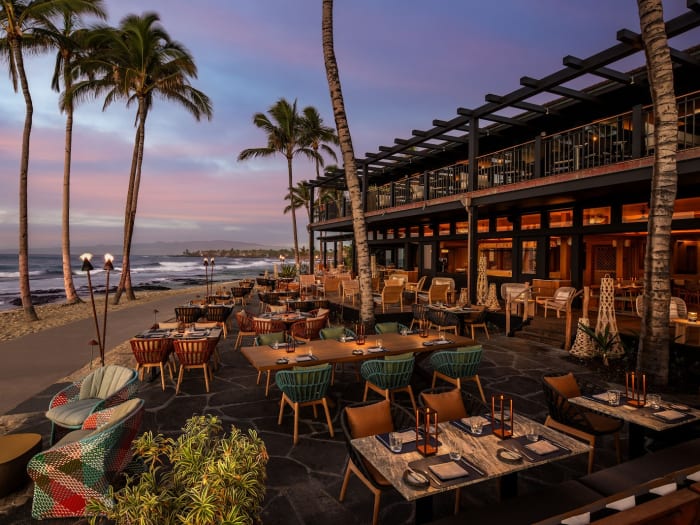
Dining is an integral part of the allure of the Four Seasons Resort Hualalai, naturally extending the experience of seaside living.
On-site, the restaurants offer both local and international cuisines. This coexistence suits a Hawaiian resort well, where expectations are diverse.
Some travellers seek an immediate connection to the territory through its products, flavours, and island habits. Others appreciate a broader offering, suitable for several days of stay.
In such establishments, gastronomic quality is not solely defined by the technicality of the dishes. It also encompasses the setting, the rhythm, and the moment.
A breakfast in the fresh morning air, a light lunch between the beach and the pool, a dinner bathed in the evening light. In Hawaii, dining is experienced in direct relation to the outdoors.
The resort's open architecture and its placement within the gardens enhance this way of dining with the landscape. Each meal extends a day that began in the sun and concludes facing the ocean.
Local cuisine anchors the stay in its environment. Along the Kona coast, it naturally revolves around seafood, tropical fruits, and fresh preparations.
Contemporary Hawaiian cuisine carries influences from across the Pacific. In a high-end setting, the challenge is to make it accessible without freezing it in time.
The international offering responds to another logic, that of comfort during the stay. Travellers who remain for several nights appreciate the ability to vary their culinary experiences.
Families with different rhythms also find their needs met here. This diversity contributes to the sense of ease characteristic of large resorts.
What often distinguishes the best culinary experiences is the quality of service. Here, the execution complements both a simple meal and a more elaborate dinner.
Sophistication then lies in fluidity. Being present without interrupting, advising without imposing, recognising the habits of a stay that is taking shape.
At the Four Seasons Resort Hualalai, dining is woven into the rhythm of the day. It accompanies returns from the beach, brings families together, and creates moments for two.
Each meal remains consistent with the place, the light, and the island's tempo.
Spa & wellness
Even when a traveller does not choose a resort solely for its spa, wellbeing remains central to the experience of a stay in Hawaii. Four Seasons Resort Hualalai benefits from a setting especially suited to this idea of renewal: mild weather throughout the year, constant openness to the outdoors, the presence of the sea, lush gardens and an overall atmosphere of retreat. In such an environment, wellbeing is not limited to a treatment menu; it begins with the way the place allows guests to slow down.
The west coast of the Big Island has a quality of light and a climatic steadiness that encourage a lifestyle largely oriented towards the open air. That naturally shapes the way rest is imagined. Here, one can easily picture mornings begun early before the stronger heat, time spent reading in the shade, regular swims, and more contemplative evenings. A well-conceived resort knows how to orchestrate these sequences without overloading them. Wellbeing then emerges from this succession of simple moments, made easier by the quality of service and by the coherence of the spaces.
Within the Four Seasons universe, one generally expects a serious and personalised approach to treatment, whether in the form of massages, relaxation rituals or programmes designed to support recovery after travel. Without detailing unconfirmed facilities, it is reasonable to say that this kind of property usually responds to guests who want both to rest and to maintain certain wellness habits. Wellbeing therefore tends to take several forms: deep relaxation, gentle reactivation, time alone, and sometimes more targeted support depending on the needs of the stay.
What makes a spa in a tropical resort distinctive, however, is its relationship with the outdoors. At Hualalai, it would be reductive to think of wellness as a parenthesis isolated from the rest of the estate. On the contrary, everything seems to encourage continuity between treatments, walking through the gardens, breathing by the ocean and returning to calm in the room. That porosity between spaces is valuable. It prevents the experience from becoming compartmentalised and allows the body to follow the natural rhythm of the place.
For couples, this dimension may take the form of shared, discreet time woven into a day without urgency. For families, wellbeing often means something else: the possibility for each person to find their own pace, to build in pauses, and not to turn the stay into an over-programmed schedule. For frequent travellers, meanwhile, the value of a resort like this often lies in its ability to dissolve travel fatigue quickly through smooth logistics and an atmosphere that encourages immediate adjustment.
Luxury, in this perspective, lies not only in the treatment itself but in the conditions that make it effective: relative quiet, space, light, attentive service and the feeling of being protected without being cut off. Four Seasons Resort Hualalai appears to offer precisely that framework. More than a simple seaside resort, it lends itself to a gentle, understated form of inner reset, one in which the very contemporary pleasure of feeling better needs no theatrical display.
Concierge & Services
In contemporary luxury hospitality, service is also a matter of rhythm. At the Four Seasons Resort Hualalai, this aspect is particularly significant. The resort caters to travellers who expect a seamless experience and a stress-free atmosphere.
The 24-hour concierge and reception set the tone, addressing the needs of an international stay. Late arrivals, early departures, and last-minute requests are met with continuous support.
The daily housekeeping and turn-down service contribute to this underlying quality. In a resort where outdoor living is prevalent, returning to a tidied space holds real importance. These simple gestures enhance the feeling of relaxation. Luxury often lies in the absence of friction.
Luggage storage, laundry services, and wake-up calls follow the same principle. They become essential when travelling long distances or on multi-stop itineraries. In Hawaii, where days often start early, this logistical reliability is particularly valued.
The presence of multilingual staff further reinforces this impression of controlled accessibility. In a large international resort, the quality of the welcome is also measured by the understanding of guests' expectations. Good service anticipates with tact and fosters a straightforward relationship.
The concierge service here takes on special importance. In Kailua-Kona, it serves not only to reserve a table or arrange a transfer but also to assist in planning water activities, choosing the right time to enjoy the beach, and guiding both couples and families. In a highly sought-after destination, booking activities in advance provides genuine comfort.
Ultimately, one expects a comprehensive, clear, and consistent hospitality experience from an establishment like the Four Seasons Resort Hualalai. The challenge is to offer present service without ever becoming intrusive. When this balance is achieved, service transforms into an atmosphere.
The Art of Living in Kailua-Kona
Staying at the Four Seasons Resort Hualalai also means embracing a unique relationship with Kailua-Kona and the west coast of the Big Island. This part of Hawaii has a distinct character, often drier, brighter, and more mineral-rich than other areas of the archipelago. The landscape combines volcanic presence, coastal expanses, irrigated gardens, and a constant openness to the Pacific. For the traveller, this translates into a deeply sensory experience. The morning light is crisp, the warmth is tempered by the trade winds, and the evenings are spectacular yet understated, with the horizon always in view.
Kailua-Kona is not merely a beach destination; it serves as a base for understanding a different Hawaiian rhythm, one that is less urban and more connected to the elements. Visitors come for the sea, but also for a lifestyle that alters their perception of time. Days are organised around light, swimming, simple movements, and leisurely meals. In this context, Hualalai functions as an elegant base from which to experience the territory.
The appeal of the west coast also lies in its versatility. Those seeking tranquillity can enjoy a nearly stationary stay, punctuated by the private beach, gardens, and restaurants of the resort. Others may see it as a starting point for water activities or broader explorations of the island. This flexibility is invaluable. The Big Island lends itself to various interpretations: coastal, geological, contemplative, or active. A good stay often involves choosing a few experiences that resonate with the local tempo.
For couples, Kailua-Kona offers a setting conducive to romantic getaways. The evening light, strolls through the estate, al fresco dining, and a sense of seclusion naturally compose the backdrop. For families, the destination appeals with its simplicity: pleasant climate, access to the sea, a variety of activities, and the ability to balance relaxation with movement without excessive logistics. These understated qualities explain the loyalty of many travellers to this region of Hawaii.
The local art of living also embodies a form of relaxation that does not compromise refinement. This seems to be well understood by the Four Seasons Resort Hualalai. In Kailua-Kona, elegance need not be solemn; it is found in the quality of service, the precision of landscaping, and the ease of transitions. Moving from the room to the beach, from a light lunch to an evening facing the ocean, is part of the experience. This mastered simplicity ranks among the most contemporary luxuries.
To fully enjoy the stay, it is wise to consider the seasonality and local events. Temperatures remain pleasant year-round, but the atmosphere varies with the influx of visitors and the island's calendar. The key is to arrive with a clear expectation: relaxation, discovery, or a balance between the two. Kailua-Kona rewards those who are willing to attune themselves to its rhythm.
Booking via MyConciergeHotel
Booking the Four Seasons Resort Hualalai through MyConciergeHotel means preparing for a cohesive stay. In Kailua-Kona, a resort of this calibre requires thoughtful planning in advance. It is advisable to book activities ahead of time, especially during peak season. This foresight also applies to the period of stay, the room or suite, depending on your travel style.
The value of editorial and concierge support lies in this perspective. Not all travellers come to Hualalai for the same reasons. Some seek a beach retreat with minimal movement. Others use the hotel as a base to explore the west coast of the Big Island, engage in water activities, or create a broader itinerary across Hawaii. Needs vary accordingly: room location, length of stay, daily rhythm, and time allocated for relaxation.
MyConciergeHotel helps clarify these parameters before departure. In a setting that is both relaxed and refined, it is best to avoid a poorly calibrated programme. True luxury often begins before the journey. Proximity to the beach, intimacy of a more secluded environment, access to restaurants, and flexibility for family stays. This precision prevents last-minute compromises and makes arrival smoother.
Booking through us also takes seasonality into account. Temperatures remain pleasant year-round. However, the atmosphere of the stay varies according to occupancy, local events, and the availability of experiences on-site. In Kailua-Kona, these nuances matter. They influence the sense of space, the rhythm of the resort, and access to certain activities.
This approach is particularly suited to the Four Seasons Resort Hualalai. Its strength lies in the balance between nature, service, and sophisticated simplicity. To fully enjoy it, it is better to think of the journey as a whole. Time for relaxation, dining moments, sea activities, wellness treatments, and intentionally left free beaches. A successful stay in Hawaii is not necessarily the most packed; it is often the best-paced.
By choosing MyConciergeHotel, you opt for a booking enriched by context, discernment, and attention to practical details. Our role is not to overload the experience but to help you adjust it. In Hualalai, this difference is palpable. It allows you to align your stay with your expectations, the island's tempo, and this particular address.