History & spirit of the place
In Yufuin, luxury is not defined by display but by landscape, stillness and a highly considered sense of hospitality. Enowa Yufuin appears to embrace that distinctly Japanese understanding of refinement: one rooted in restraint, atmosphere and attentiveness rather than spectacle. Set in a region celebrated for hot springs and mountain scenery, the hotel reads as a contemporary retreat shaped by the slower rhythms for which Yufuin is known.
The destination matters. Yufuin belongs to Japan’s onsen culture, with all that implies in terms of ritual, restorative stays and a close relationship between architecture and nature. Enowa Yufuin seems to interpret that heritage without reducing it to pastiche. Instead, it suggests a balance between local tradition and modern design, between the spirit of a ryokan and the expectations of an international five-star stay. That measured balance is central to its identity.
Its membership of Relais & Châteaux points to a certain philosophy: a strong sense of place, human-scale hospitality, attention to detail and an experience in which destination and table matter as much as accommodation. Enowa Yufuin therefore feels less like a stopover than a place to inhabit for a few days, allowing guests to slow down and reconnect with the surrounding landscape.
Traditional Japanese hospitality here should be understood in its fuller sense. It is not only about courtesy, but about discretion, anticipation and respect for each guest’s rhythm. The result is an atmosphere that appears calm, personalised and quietly immersive. More than a hotel, Enowa Yufuin suggests a way of staying in Yufuin: one centred on serenity, nature and a deeply considered sense of comfort.
The property in its landscape
Enowa Yufuin’s first luxury is its setting: in the heart of Yufuin’s hot spring region, surrounded by mountains and removed from urban noise. Here, the landscape is not merely a backdrop but an active part of the stay. Light shifts across the day, the surrounding relief shapes the horizon, and the sense of distance from the city creates the kind of retreat many travellers seek when coming to Oita Prefecture.
Yufuin itself is known for a gentler rhythm than many spa destinations. People come for the hot springs, certainly, but also for the atmosphere: open views, a strong presence of nature and a feeling of space. Enowa Yufuin appears to align closely with that spirit. Its design, described as blending modern style with local culture, suggests an architecture that frames rather than competes with the scenery.
This kind of setting allows for different ways of staying. Some guests may use the hotel as a base for exploring the wider region; others may choose to remain largely on property, enjoying the calm, the meals and the restorative pace. That flexibility is one of the strengths of a destination hotel in Yufuin.
In a hospitality landscape often driven by spectacle, Enowa Yufuin seems to offer something quieter and more enduring: a sense of place, a measured atmosphere and a stay shaped by mountains, onsen culture and Japanese hospitality.
Rooms and Suites
At Enowa Yufuin, the room is the focal point of the stay. In Yufuin, guests come to slow down, contemplate, and follow the rhythm of the baths and meals. The accommodation must offer more than impeccable comfort; it should create a sense of refuge.
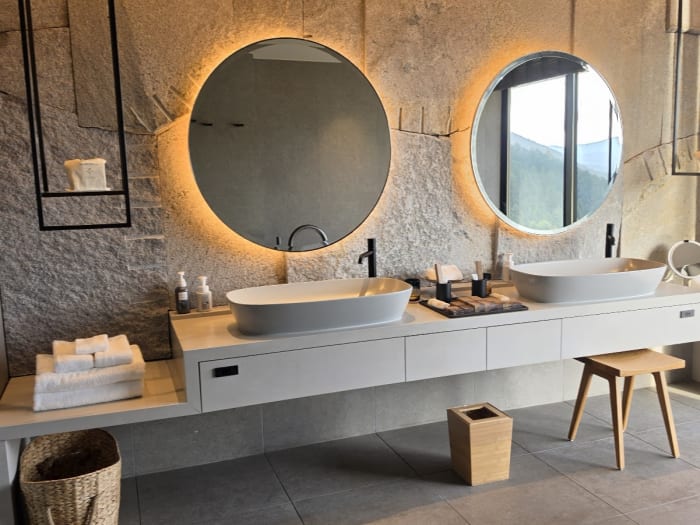
The decor blends modernity with local culture, suggesting interiors where contemporary elegance converses with Japanese references without overshadowing them.
In high-end Japanese hospitality, this alliance often translates into spaces that are easy to read. The volumes breathe. The materials are valued for both their texture and aesthetic appeal. Natural light plays a crucial role. Comfort also lies in how the room soothes the eye and mind. Enowa Yufuin belongs to that family of addresses where calm is immediately felt upon crossing the threshold.
The relationship with the outside is paramount. In a mountainous region like Yufuin, the openings, views, and connection to the landscape fully contribute to the experience. A successful room allows one to perceive the variations in weather, the gentleness of a clear morning, the density of mist, and the depth of an evening over the hills. Even without leaving the room for several hours, the stay remains enriched by the outside world. This permeability between the interior and nature is one of the great pleasures of well-designed Japanese retreats.
In a 5-star hotel that is a member of Relais & Châteaux, attention to detail in service is equally important. The turn-down service, daily maintenance, the discretion of the staff, and the adaptation to the guest's rhythm create an impression of fluidity. Nothing needs to be ostentatious. The success of the place often rests on what is barely noticeable: a room ready at the right moment, an orderly space without rigidity, an atmosphere preserved from morning to evening.
For couples, the setting is particularly suitable. The peace of the place, the distance from the city, and the immersion in a thermal and mountainous environment encourage stays for two. Families and business travellers can also find their place here, but the hotel's identity remains tied to the idea of retreat. In this context, the room becomes a space for deceleration. One reads, takes time for tea, and returns after a bath or a walk. Here, one finds that quality of silence often lacking elsewhere.
What distinguishes beautiful Japanese rooms is not the abundance of objects or the multiplication of decorative effects. It is their ability to create lasting harmony. Enowa Yufuin follows this logic. Its aesthetic language, straddling modernity and local culture, suggests spaces designed to endure in memory through coherence. It is another idea of luxury, more introspective. That of a room that accompanies the traveller in a state of rest and presence to the place. In Yufuin, this promise resonates particularly.
Dining and the Taste of the Region
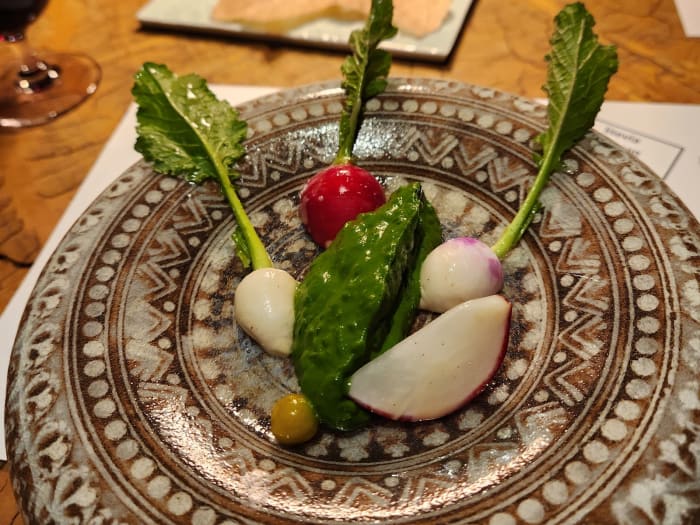
In the Relais & Châteaux universe, dining rarely plays a secondary role. Even when no specific details are provided about the restaurant, one can reasonably consider that the culinary experience is integral to the identity of Enowa Yufuin. In Yufuin, this dimension takes on a particular significance: the cuisine is not merely a service expected in a 5-star hotel, but a natural extension of the territory. Oita Prefecture, and more broadly Kyushu Island, is renowned for the richness of its products, the diversity of its terroirs, and a culinary culture that knows how to combine refinement with clarity of flavours.
In such a peaceful setting, the meal often becomes a structuring moment of the day. Dining here is not like in an urban hotel, squeezed between two appointments or before a night out. One settles in, takes their time, observes the light fading over the mountains, and then enters a slower sequence where the cuisine, service, and atmosphere must form a coherent whole. This is one of the pleasures unique to high-level Japanese retreats: the feeling that dinner is not an interlude, but an experience in continuity with the place.
The link between modernity and local culture, already perceptible in the design, can also be seen at the table. In the best establishments, this often means a cuisine attentive to the season, to the provenance of ingredients, and to the clarity of preparations, without seeking effect for its own sake. Culinary luxury, in this context, relies as much on the quality of the product as on the rhythm of service, the precision of cooking, the balance of textures, and the ability to convey the territory without caricaturing it. In Yufuin, one expects a fine table to reflect something of the region: freshness, purity, a relationship with nature, and respect for cycles.
For the international traveller, gastronomy also serves as a cultural interpreter. A stay at Enowa Yufuin can be an opportunity to discover a different way of dining, more attuned to the seasons, the progression of flavours, and the simplicity of gesture. This approach does not exclude creativity; it simply places it within a logic of accuracy. In a hotel that is a member of Relais & Châteaux, one can expect the dining service to accompany this experience with the same discretion as the rest of the establishment, knowing how to guide without over-commenting, recommend without imposing, and maintain that quality of calm that seems to define the address.
Breakfast, often underestimated, also deserves to be regarded as an important moment. In a wellness destination like Yufuin, the first meal of the day contributes to the overall balance of the stay. Whether it takes a Japanese, Western, or more hybrid form, what matters is the sensation of freshness, precision, and controlled simplicity. A good breakfast in this type of hotel does not seek demonstrative abundance; it prepares the body and mind for a day of walking, resting, or bathing.
In the absence of more specific details, it would be unwise to attribute a too-defined culinary signature to Enowa Yufuin. However, everything suggests that the dining experience is conceived as a pillar of the overall experience, faithful to the spirit of the place: rooted in its environment, respectful of the seasons, elegant without rigidity. For many travellers, it is precisely here that the memory of a successful stay is anchored. Not in the accumulation of spectacular dishes, but in the coherence of a dinner, in the sensation of having tasted a territory through precise cuisine, and in that rare feeling that the meal, the landscape, and the hospitality tell a single story.
Spa, hot springs and wellbeing
In a destination known for its hot springs, wellbeing naturally sits at the heart of a stay at Enowa Yufuin. The concierge tip advising guests to book treatments in advance suggests that spa time is an important part of the experience. In Yufuin, however, wellbeing is broader than a treatment menu. It belongs to onsen culture: bathing as ritual, the gradual release of body and mind, and a restorative relationship with hot water, quiet and time.
In this context, a convincing spa need not be theatrical. What matters is atmosphere, flow and the sense of moving from tension into calm. Enowa Yufuin’s mountain setting supports that transition almost effortlessly. Being away from the city already changes one’s pace; a treatment or bath simply deepens it.
For many international travellers, Japanese bathing culture offers a different understanding of wellness from more performance-driven spa traditions. Simplicity, repetition, warmth and stillness often matter as much as technique. That does not diminish the value of treatments; it places them within a broader rhythm of rest.
At Enowa Yufuin, wellbeing is likely best understood as contextual luxury: hot springs, quiet surroundings, attentive service and the rare permission to do very little.
Concierge & Services
True luxury is often recognised by the quality of services that go almost unnoticed. Enowa Yufuin falls into this category of establishments. The fluidity of the stay is as important as the decor.
The hotel offers a 24-hour concierge service, a continuously open reception, daily room service, turn-down service, luggage storage, laundry, wake-up calls, and multilingual staff. Taken individually, these elements may seem expected in a five-star hotel. However, when combined in a tranquil setting, they take on a different significance. They allow the traveller to rely on the establishment without it intruding upon their experience.
The concierge plays a vital role in a destination like Yufuin. Stays here are often motivated by relaxation. It is less about orchestrating a tight schedule and more about supporting a chosen pace. Organising a transfer, recommending a walk, structuring a day around baths and meals, or facilitating practical details. A good concierge knows how to be present without being intrusive.
The 24-hour reception provides discreet security. This is particularly appreciated by international guests or those arriving after a long journey across Japan. In a less urban area, this constant availability is reassuring. It contributes to the feeling of being cared for at all hours. The multilingual staff is a tangible asset. It fosters smoother interactions with travellers from various backgrounds and allows for clearer communication of local customs and the specifics of the stay.
Maintenance services are crucial in the perception of a hotel of this calibre. Daily housekeeping and turn-down service enhance the quality of returning to the room. They create the sensation of returning to a space that has been tidied without losing its personal character. In a stay focused on relaxation, these details matter. They prevent any unnecessary friction and prolong the feeling of calm.
Laundry and luggage storage cater to very practical needs. This is especially true for travellers incorporating Yufuin into a broader itinerary across Japan. Being able to travel light, have personal belongings maintained, or leave luggage before or after check-in makes the stay more flexible. The service may not be spectacular, but it significantly enhances the comfort of the stay.
What defines Enowa Yufuin is less the abundance of services than their coherence with the spirit of the place. In an environment dedicated to relaxation, ideal service supports the silence, serenity, and freedom of the traveller. It creates the conditions for a seamless experience. It is a form of discreet sophistication, in tune with traditional Japanese hospitality. Ultimately, it is often these invisible attentions that leave the most lasting memories.
The Art of Living in Yufuin
Staying at Enowa Yufuin also means entering into a certain idea of Yufuin, beyond the hotel itself. This part of Oita Prefecture occupies a unique place in the Japanese landscape. Neither a large city nor a simple hot spring resort, it embodies an escape where nature, hot springs, and the sweetness of life compose a recognisable whole. For the foreign traveller, Yufuin offers one of the most accessible faces of a contemplative Japan. The stay here is constructed less around monuments than around an atmosphere.
The local art of living primarily revolves around the relationship with time. Here, one walks, observes, and pauses. The climate is particularly pleasant in spring and autumn. These seasons suit the spirit of the place well. Spring brings a gentle light and the feeling of a landscape awakening. Autumn accentuates the depth of the reliefs and the beauty of the variations in vegetation. In both cases, Yufuin lends itself to a slow journey, where one accepts doing less to feel more.
The culture of hot springs shapes this way of inhabiting the destination. In Yufuin, bathing is not merely a pleasure; it is part of a lifestyle. It invites one to alternate gentle activity and rest, to return to the essentials, and to consider the body as a guide for the journey. This logic influences the entire stay. Comfortable clothing is chosen, dinner is taken earlier, and moments of calm are valued. Attention is paid to the weather, the light, and the quality of the air. Enowa Yufuin, through its positioning, offers a coherent hotel translation of this art of living.
Yufuin also captivates with its scale. Compared to Japan's major urban destinations, it allows for a more readable, more intimate experience. The traveller finds a sense of proximity to the landscape and the gestures of daily life. This dimension is precious for those wishing to balance an itinerary in Japan. After Tokyo, Kyoto, or Osaka, a stop in Yufuin introduces a different tempo, a different density, and another way of being on the road. Far from being a secondary interlude, it can become the moment where the stay gains its depth.
The art of living in Yufuin is not fixed in a traditional image. As is often the case in Japan, modernity coexists with ancient forms of sociability and relationship to the territory. This is what makes places like Enowa Yufuin particularly interesting. They do not offer a reconstruction but a contemporary interpretation of a locally rooted way of staying. The traveller does not seek surface-level exoticism here. They discover a current way of experiencing calm, seasonality, and attentiveness.
Yufuin is a destination that rewards availability. The more one accepts to slow down, the more it reveals its quality. A successful stay here does not necessarily depend on the quantity of visits. It hinges on the harmony found between the place, the body, and personal rhythm. Enowa Yufuin seems designed to foster this harmony. It introduces its guests to a form of Japanese art of living where luxury merges with serenity, nature, and the possibility of feeling fully present to one's surroundings.
Book via MyConciergeHotel
Choosing Enowa Yufuin through MyConciergeHotel means preparing for a stay with greater precision. This address transcends mere room categories.
Its appeal lies in more subtle elements. The right time to visit is as important as the pace of the journey. Considerations such as wellness offerings, transfers, the duration of stay, and how Yufuin fits into a broader itinerary in Japan are also crucial.
Yufuin should not be rushed. To fully appreciate it, it is better to slow down and avoid overloading your days. A stay that is too brief can reduce the experience to a mere stopover. A well-planned interlude allows you to enjoy the natural surroundings, the thermal atmosphere, the dining options, and moments of relaxation.
Anticipation is particularly important for wellness experiences. It is advisable to book treatments in advance, as slots fill up quickly. In hotels where the spa is integral to the experience, waiting can limit your choice of timings. A reservation made in advance allows these moments to be woven into the very fabric of your trip.
The choice of season is also worth considering. Spring and autumn are particularly well-suited to the spirit of Yufuin. The light, temperatures, and landscapes enhance its contemplative nature.
Enowa Yufuin is especially suited for couples and travellers seeking relaxation. This nuance helps determine whether the hotel aligns with the desired experience—be it a quiet retreat, a wellness getaway, a romantic stop, or a rejuvenating pause.
Enowa Yufuin stands out for its overall coherence. Its strength lies in the harmony between destination, landscape, traditional Japanese hospitality, and contemporary comfort. It is a place of retreat, tranquility, and immersion.