History & Heritage
In London, certain hotels stand out for their discreet continuity with the spirit of the city. DUKES London belongs to this category. Its identity is rooted in a measured British elegance, attentive to detail, and closely linked to St. James.
Staying here means encountering a decor of restraint, with a muted comfort and an urban tradition characteristic of great English addresses.
The hotel is situated in a historically rich environment. St. James is associated with private clubs, aristocratic residences, tailors, and discreet galleries. This geography shapes the rhythm of your stay. Green Park, Piccadilly, Mayfair, and the surroundings of Buckingham Palace are easily accessible on foot.
In this area, luxury hospitality often takes the form of a town house rather than a monumental palace. DUKES London embraces this intimate scale, with a residential tone.
As a member of the Small Luxury Hotels of the World, this address asserts a human-sized positioning. The personality of the place is as important as the level of service. The stay prioritises atmosphere, quality of welcome, and a certain relationship with time.
The heritage of DUKES London is as much about its style as its location. Its aesthetic, embodying contemporary British elegance, updates the past without breaking it. The common areas favour classic references, the warmth of materials, and an ambiance conducive to calm.
For a French clientele, DUKES London offers an immediately recognisable London, free from clichés. It embodies a British art of hospitality characterised by courtesy, precision, and discretion. The attentive service is marked by a presence that is just right, never intrusive.
The address is equally suitable for a cultural weekend, a romantic getaway, or a business trip. Its identity is reflected in its relationship with St. James and in its ability to harmoniously blend heritage and modernity.
The Establishment
One of the most valuable qualities of DUKES London is its scale. While some luxury addresses focus on monumental grandeur, this hotel opts for subtlety. The atmosphere is intimate, the spaces designed for genuine comfort, and the feeling of sanctuary is rare in the heart of London.
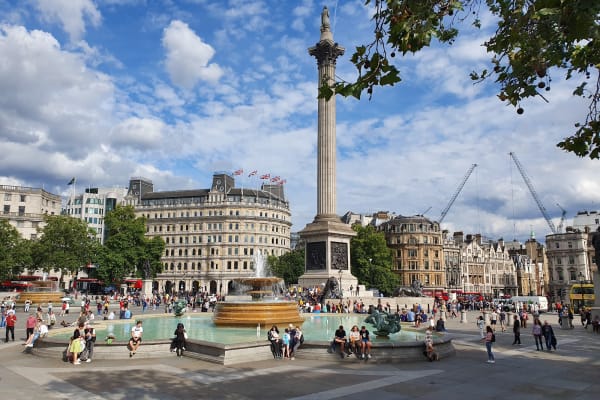
The St. James area sets the tone from the moment of arrival. Here, one finds a London of elegant façades, well-managed streets, historic clubs, discreet shopfronts, and nearby gardens. The location is ideal for those wishing to explore on foot without sacrificing tranquility. Green Park, Mayfair, the theatres of the West End, Piccadilly, Jermyn Street, and the royal surroundings are all easily accessible.
The establishment is distinguished by a domestic refinement. The atmosphere is both sophisticated and warm. Luxury here seems designed for living. The welcoming common areas invite guests to pause, read, enjoy a drink, or simply adopt a more relaxed pace.
Contemporary British elegance is reflected in a decor that balances classic codes with modern expectations. Clean lines, comfortable materials, a restrained palette, and attention to detail create a coherent ensemble. The traveller is not confronted with ostentatious decor, but rather a space thoughtfully designed to enhance their stay.
Intimacy is another strong point. In a metropolis like London, many seek less animation and more of a sense of retreat. DUKES London meets this expectation through its very positioning. Its affiliation with Small Luxury Hotels of the World reinforces this perception. The experience here is more personal, quieter, and more embodied.
The establishment caters to various uses without losing its identity. For couples, it provides an elegant setting for a London getaway. For business travellers, it offers centrality, quality service, and discretion. For culture enthusiasts, it facilitates easy access to museums, traditional shopping, concerts, or theatre.
Ultimately, DUKES London is defined less by an accumulation of spectacular amenities than by an overall sense of appropriateness. Its location, ambiance, and understated embodiment of London make it a destination for connoisseurs.
Rooms and Suites
At DUKES London, the room naturally extends the urban experience. After a day filled with meetings in St. James, Mayfair, or the West End, one expects more than standard comfort.
The room should offer a retreat, slow down the pace, and provide a sense of intimacy. Here, comfort is achieved through a balance of tradition and modernity.
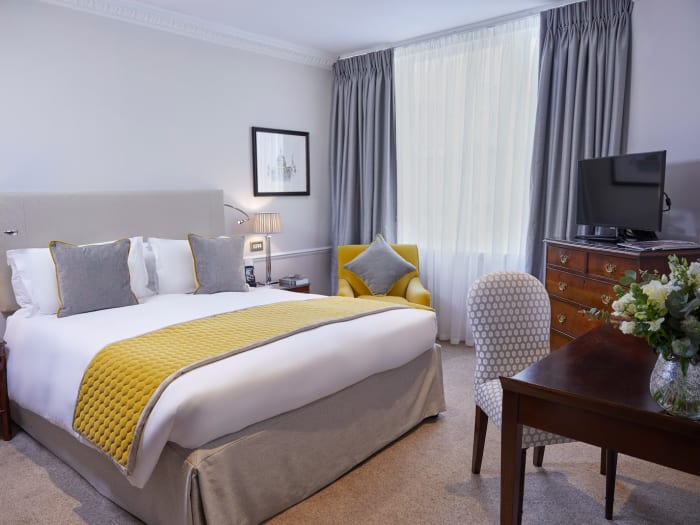
Contemporary British elegance comes into its own. The rooms combine classic references with current functionality.
Beautiful materials, a calming palette, well-proportioned furniture, and appropriate lighting create a harmonious ensemble. The intimate atmosphere is among DUKES London’s strengths.
In a high-end urban hotel, comfort relies as much on ergonomics as on aesthetics. The quality of bedding, smooth circulation, a sense of order, and relative calm make a significant difference.
The turndown service contributes to this impression of continuous care. It extends a hospitality tradition attentive to the rhythm of the stay.
The suites follow a more residential logic. They offer more space, as well as a different way to inhabit London.
For longer stays, a trip for two, or a visit blending work and leisure, this dimension transforms the experience. One can entertain, read, work, or simply enjoy a less constrained pace.
In St. James, this sensation of a private residence resonates particularly well. It extends the idea of a muted London, more interior than spectacular.
Daily housekeeping, laundry service, luggage storage, and a 24-hour reception complete the offering. They provide genuine flexibility for early arrivals, late departures, and busy stays.
In an international capital, this logistical fluidity is essential. It ensures that the comfort of the room is not compromised by practical details.
What often distinguishes the most appropriate rooms is their ability to leave a discreet sensory memory. A morning light, a relative silence, the feel of fabrics, the simplicity of a well-kept space.
DUKES London is part of this tradition of subtle hospitality. Here, one finds a quality of welcome that is measured by the duration of the stay.
For French travellers accustomed to major capitals, the appeal is clear. Having a central, refined, and calming London base from which to prepare for a day of meetings or sightseeing.
The rooms and suites fully contribute to this promise. They transform the hotel into an urban refuge rather than just a transient address.
The Dining Experience
In London, hotel gastronomy is no longer merely a convenience. At the best addresses, it contributes to the identity of the place.
At DUKES London, a five-star hotel in St. James, the culinary dimension is integral to the overall experience.
The primary challenge is one of rhythm. An intimate and refined hotel must offer dining times that align with its ambiance.
In the morning, this is reflected in a thoughtful breakfast, set in a calm environment, with well-selected products. It should cater equally to business clientele and leisure stays.
In both cases, perceived quality relies on consistency and precision rather than abundance.
At lunchtime and in the evening, a hotel of this category can serve as a refuge between meetings, an elegant meeting point, or a place to dine in.
In St. James, a district steeped in tradition and discreet addresses, this function takes on full significance. The traveller appreciates finding, within the hotel, an atmosphere consistent with that of their room.
This continuity remains a strong marker of well-conceived luxury hospitality.
Dining in a refined British hotel extends beyond the plate. It encompasses the art of service, the tempo of the dining room, the lighting, and the acoustics.
In a house that is a member of Small Luxury Hotels of the World, the approach is often more personalised and less standardised. It may manifest as an attention to the habits of regular guests and a certain flexibility.
As London is one of Europe’s most dynamic gastronomic capitals, the hotel must also engage with its surroundings. Even when dining out, its role remains essential.
Relevant recommendations, efficient reservations, and a good understanding of expectations naturally extend the culinary experience.
For the French traveller, this dimension remains important. A good London address is often judged by its ability to make meals simple, enjoyable, and well-orchestrated.
DUKES London, through its positioning, embodies this quiet mastery. The dining experience contributes to daily comfort and anchors one in the elegant London of St. James.
Concierge & Services
In luxury hospitality, the value of services lies in how they come together to create a seamless stay. DUKES London offers a 24-hour concierge service, a 24-hour reception, daily room service, a turndown service, luggage storage, laundry service, wake-up calls, and multilingual staff. Together, these elements create a precise promise: that of a hotel capable of accommodating varied travel rhythms with discretion and continuity.
The round-the-clock concierge service is among the most useful offerings in a city like London. An international capital demands irregular hours, late arrivals, early departures, and changes in plans. In an area like St. James, the quality of recommendations often makes a significant difference. A good concierge does not merely respond; it guides, prioritises, simplifies, and personalises.
The 24-hour reception complements this availability by providing reassuring continuity. For both business travellers and visitors on a getaway, knowing that a contact is available at any hour transforms the stay. Arrivals become more serene, and the hotel becomes a stable anchor point. This permanence is especially valuable in an establishment with an intimate atmosphere.
The daily room service and turndown service belong to a more sensitive dimension. They contribute to the impression that the hotel is looking after your stay without ever imposing itself. A well-maintained room, consistently tidied and prepared for the night, directly enhances the traveller's comfort.
Laundry services and luggage storage are sometimes underestimated, yet they are essential in a large city. The former is helpful for business trips, extended stays, or multi-stop journeys. The latter saves time upon arrival and departure. The wake-up call service remains relevant for early departures and important appointments.
The presence of multilingual staff is also worth highlighting. In an international clientele, this capability facilitates practical exchanges and enhances relational quality. Being understood accurately and receiving clear explanations contribute to a sense of control and comfort.
The services at DUKES London thus respond to a mature definition of urban luxury. It is not about accumulating offerings but about creating a reliable, flexible, and attentive environment. For clients who choose St. James, this quality of execution is crucial. It allows for an intense experience of London, followed by a return to a simple and orderly setting.
The London art of living around St James’s
Choosing DUKES London also means choosing a certain way of living London. Every capital has its ceremonial districts, creative zones, business centres and residential enclaves; few offer an area as singular as St James’s, where institutional history, commercial elegance and proximity to the parks combine into a way of life that is immediately perceptible. For the traveller, this means a city discovered less in haste than through continuity: on foot, in sequences, allowing the streets to reveal their own hierarchy.
In the morning, the nearness of Green Park gives the stay a rare sense of breathing space for such a dense city centre. Just a few minutes are enough to move from a highly codified urban atmosphere to a more open landscape, suited to a walk, a light run, or simply a promenade before appointments. This relationship with green space is an integral part of London’s charm, and St James’s offers a particularly elegant version of it. One can then head towards Piccadilly, turn into Mayfair, cross towards central cultural institutions, or continue into the world of traditional shopping.
One of the pleasures of this district lies in its discreet density. Here, luxury does not necessarily express itself through loud branding, but through quality of detail: an old shopfront, a renowned shirtmaker, a shoemaker, a gallery, a club, a tea room, a street that seems barely to have yielded to time. For French travellers, this restraint is often especially appealing. It evokes a London of tradition, yet a living one, where elegance remains tied to use and culture rather than social display alone.
The area also makes it possible to organise highly varied days without long journeys. A morning may be devoted to the shops of Jermyn Street or the surroundings of Piccadilly, the afternoon to a museum or exhibition, and the evening to a performance in the West End. Returning to the hotel then feels natural, almost like coming back to a familiar neighbourhood. This ease of moving about on foot is one of the great contemporary luxuries, especially in a metropolis where time is easily fragmented.
St James’s also offers a particular relationship to the representation of British power and tradition. Without necessarily seeking out the most touristic routes, one feels here the proximity of institutions, official residences and places that structure the London imagination. This gives the stay added depth: one is not merely visiting a city, but temporarily inhabiting one of its most emblematic settings. DUKES London makes full use of this location, offering an anchor point that grants access to historic London without sacrificing contemporary comfort.
In the evening, the district subtly changes tempo. Commercial bustle recedes, the streets become calmer, and one rediscovers that hushed urban feeling which is the true value of a well-chosen address. For couples, it is an especially pleasant setting; for solo travellers, the assurance of an environment that feels safe, legible and elegant; for professionals, the possibility of combining efficiency with quality of life.
Ultimately, the London art of living offered by DUKES London does not depend on artificial staging. It rests on the obvious strengths of a district, the quality of the itineraries it makes possible, and that very British way of allowing tradition, comfort and discretion to coexist. To stay here is to gain access to a London of nuance, subtler than spectacular, but often more memorable for precisely that reason.
Booking through MyConciergeHotel
Booking DUKES London through MyConciergeHotel means approaching this address with a methodical mindset. It is not merely a room in London, but a base that adapts to the journey, the season, and the style of stay. An intimate hotel in St. James is not chosen like a large, standardised establishment. Here, the choice of room category, the pace of the programme, the expectations for tranquillity, the proximity for walking, or the concierge assistance significantly alter the experience. The benefit of a guided reservation is to transform these nuances into tangible advantages.
For a weekend getaway for two, the focus is often on fluidity. A straightforward arrival, a suitable room, good recommendations for dining in the area or attending a show, and well-organised highlights. DUKES London is well-suited for this interlude, thanks to its refined atmosphere and its central yet discreet location. MyConciergeHotel helps steer the choice towards the most coherent configuration, taking into account the desire for intimacy.
For a business trip, priorities shift. One seeks efficiency in travel, flexibility in schedules, continuous quality service, and a genuine return to calm. In this context, the 24-hour reception and concierge, daily room service, laundry, and luggage storage take on real significance. Booking with assistance allows for the practical needs to be clarified in advance and ensures a frictionless stay.
For a first visit to London, the address also holds meaning. St. James provides a legible version of the city, elegant, central, and well-connected to major landmarks. This centrality lends itself even better to tailored advice. How to organise days on foot, which time slots to prioritise, or which restaurants align with the traveler's style. Again, MyConciergeHotel plays a role as a filter and interpreter.
Peak periods, particularly in summer, can make the hotel more sought after. In an establishment of this nature, anticipation is often crucial. It helps secure the best availability and choose the most suitable room. Booking early also allows for better travel planning. Transfers, table reservations, special requests, and the overall rhythm of the programme. The more intimate the hotel, the more this preparation matters.
Booking through MyConciergeHotel also means benefiting from an editorial perspective on the place. DUKES London does not cater to all travellers in the same way. It is suited to those seeking an elegant, discreet, well-located London that remains true to a certain tradition of British hospitality. Our role is to ensure that this promise aligns with your plans, and then to refine the parameters of your stay.
In a city as rich as London, the quality of a stay often depends on precise choices. DUKES London offers a setting suitable for those wishing to experience St. James with comfort and restraint. When reserved with discernment, it becomes the right address, in the right place, to discover the capital.