History & Heritage
In Antwerp, De Witte Lelie belongs to that rare category of establishments that favour subtlety over ostentation. The name, which evokes the white lily, already suggests a certain idea of the stay: something discreet, refined, almost homely. More than a grand, spectacular hotel, the establishment is rooted in a Flemish urban tradition. Elegance is evident in the proportions, materials, light, and quality of service. Its identity is based on the fusion of a historic setting and contemporary decorative language.
In a city like Antwerp, a hotel such as De Witte Lelie makes perfect sense. It caters to travellers who appreciate intimate spaces. One can still feel the spirit of a home rather than that of a hotel machine. The historical charm does not stem from a frozen or museum-like decor. It is expressed in the overall atmosphere. The old architecture converses with more contemporary design choices.
Belonging to the Small Luxury Hotels of the World also illuminates the philosophy of this address. This label brings together independent hotels where uniqueness takes precedence over standardisation. In the case of De Witte Lelie, this translates into a more personal experience, quieter, and more attentive to details than to effects. The focus is less on demonstration than on accuracy. Service is present without being intrusive. The common areas are designed for relaxation. The aesthetics are refined, without ever being intimidating.
This way of experiencing luxury is particularly relevant in Antwerp. The city possesses a culture of beauty nourished by fashion, design, and decorative arts. De Witte Lelie seems to extend this local heritage in its own way. The hotel does not merely offer a comfortable base. It provides a sensitive reading of the city, through a setting that values calm, intimacy, and a certain idea of contemporary Flemish elegance.
For the traveller, this heritage dimension does not imply any excessive solemnity. On the contrary, it adds a particular depth to the stay. One does not simply come to sleep in a five-star hotel. One settles in, for a few nights, in a place that cultivates an art of hospitality based on the personality of the location. De Witte Lelie fully embraces this lineage.
The Establishment
One of the major attractions of De Witte Lelie lies in its scale. In a segment where luxury is often associated with grandeur, this address opts for intimacy. From the moment of arrival, the tone is set: calm, fluidity, and plush comfort. Its location in a peaceful part of Antwerp allows guests to explore the city without sacrificing a sense of retreat.
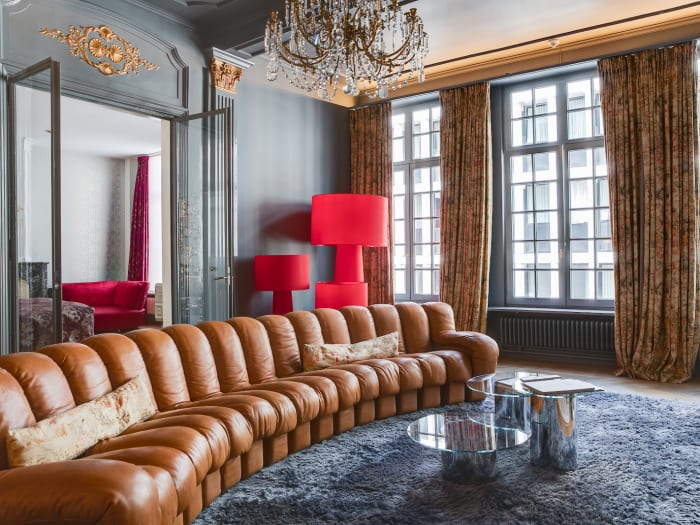
The architecture and interior decoration extend this impression. Historical charm interacts with design that has been thoughtfully reinterpreted. Contemporary lines, carefully chosen materials, and attention to ambience create an elegant atmosphere, devoid of rigidity. The common areas invite both relaxation and more intimate moments.
At De Witte Lelie, the idea of an urban refuge naturally asserts itself. There is a sense of shelter, almost like a private home, with the codes of five-star service. This duality allows guests to enjoy Antwerp and then return to a soothing environment. Whether for a cultural weekend, a romantic getaway, or a short business stay, this breathing space transforms the experience.
Here, design is not merely a matter of aesthetics. It also organises the way one experiences the place: natural flow, comfortable seating, controlled lighting, and details designed for relaxation. Elegance is measured less by accumulation than by coherence.
This address is suited to travellers seeking something beyond a traditional grand hotel. Luxury resides in attentiveness, silence, and the ability to feel acknowledged without being exposed. In Antwerp, this form of hospitality finds a natural resonance. De Witte Lelie offers a setting, and it is often this that distinguishes the places we recommend long after the stay.
Rooms and Suites
At De Witte Lelie, the room is the heart of the experience. In Antwerp, one can easily spend the day on foot, wandering between museums, galleries, fashion, cafés, and architecture. Returning to a soothing space naturally prolongs the pleasure of the stay.
The identity of the hotel evokes elegant rooms, devoid of coldness. Comfort is achieved through a precise balance. Welcoming volumes, generous bedding, controlled colours, thoughtful lighting, soft textiles, and well-chosen furniture compose the whole.
The blend of modernity and historical charm creates inhabited spaces. Here, intimacy is as important as comfort. In a human-scale establishment, the room becomes a universe. De Witte Lelie prioritises spaces where one feels immediately at home.
For couples, this quality of room is crucial. A successful getaway often relies on simple elements. Silence, the comfort of the bed, leisurely mornings, reading or resting set the rhythm of the stay.
The nightly turndown service enhances this impression of discreet attentiveness. The daily service extends this continuity. Together, they create a fluid experience, devoid of ostentation.
The suites extend this philosophy with more space. However, the essence remains the coherence between the spirit of the place and the comfort offered. De Witte Lelie stands out for its form of calm luxury, based on the quality of the atmosphere.
One does not merely choose a well-located address in Antwerp. One chooses a place where the room resonates with the city. After the cultural and urban intensity of Antwerp, returning to a harmonious, quiet, and personal interior adds depth to the stay.
The Dining Experience
At De Witte Lelie, the dining experience revolves around the Lilium Restaurant. This establishment prioritises locally sourced ingredients, crafted in a classic and generous style.
The menu features dishes with character. Foie gras, sweetbreads, scallops, and lobster stew create a precise journey, designed for indulgence as much as for balance.
The experience continues with a wine pairing, thoughtfully curated to complement each course of the meal. The pace remains relaxed, without rigidity, embodying the understated elegance that befits fine urban establishments.
When it comes to dessert, the crêpes Suzette uphold tradition. Those who prefer to conclude on a more savoury note can opt for a cheese aged for twenty months, served as a final flourish.
As evening falls, the Bronze Bar offers a different tempo. Guests are inclined to linger by the flickering fires, in an atmosphere conducive to slow conversations and leisurely end-of-day moments.
Concierge & Services
The luxury of an intimate hotel is often measured by the quality of its attentiveness. De Witte Lelie focuses on attentive and personalised service. In a human-scale establishment, this promise takes on a particular significance.
The well-known amenities confirm this orientation. The 24-hour concierge and reception ensure a valuable continuity. They facilitate late arrivals, early departures, and unexpected requests.
In Antwerp, a responsive concierge enhances the quality of the stay. It helps organise a day of museum visits, a shopping session, a restaurant reservation, or a transfer.
The daily room service, turndown service, luggage storage, laundry, and wake-up service form a foundation of discreet comfort. In a hotel oriented towards tranquility, this silent efficiency matters greatly.
The multilingual staff is an asset in an international destination like Antwerp. The ability to communicate easily and receive clear recommendations enhances the perceived quality of service.
For couples and travellers seeking calm, this personalised approach is invaluable. It allows for a precisely tailored stay. Organising a romantic arrival, reserving a table in a specific atmosphere, or suggesting a more peaceful itinerary becomes simpler.
De Witte Lelie asserts its difference here. Service is not an addition to the decor. It is part of the identity of the place. In Antwerp, this address suits those who seek a luxury of relationship as much as a luxury of setting.
The Art of Living in Antwerp
Staying at De Witte Lelie means embracing a particular way of experiencing Antwerp. The city reveals itself through its contrasts. Flemish heritage, creative energy, visual culture, and everyday elegance intersect here. Antwerp is a city steeped in history, a port, a fashion capital, and a museum destination. An hotel located in a tranquil neighbourhood offers a valuable advantage, allowing one to immerse in this urban richness at a leisurely pace.
For many travellers, the Antwerp experience begins with walking. The historic centre, shopping streets, squares, ancient façades, churches, and cultural institutions create a dense yet navigable landscape. One can move seamlessly from ancient heritage to a designer boutique, from a museum to a café, from a gallery to a lively table, without losing the thread of the city. Returning in the evening to a calm and intimate address makes perfect sense, as the hotel serves as a counterpoint between two urban sequences.
Antwerp also captivates with its relationship to style. Here, elegance is evident in shop windows, interiors, and the way the city is inhabited. De Witte Lelie, with its meticulous design and historical charm, naturally engages with this local culture of detail. The discerning traveller will find a pleasing continuity between the hotel and the destination. The establishment seems to share certain values: discretion, personality, and a refined taste.
The cultural programming in Antwerp further enhances the appeal of a well-planned stay. Exhibitions, events, artistic gatherings, and seasonal highlights lend a unique character to each visit. In this context, the concierge service at De Witte Lelie becomes an asset for organising one’s days with flexibility. The stay can revolve around a museum visit, a weekend of shopping, a romantic interlude, or a broader exploration of the city.
Summer aligns beautifully with the spirit of the address. The terraces, surrounding gardens, and evening light give Antwerp a distinctive tone. However, the city thrives out of season as well. One then favours interiors, cultural institutions, bookstores, restaurants, and characterful hotels. De Witte Lelie belongs to that category of addresses that maintain their relevance year-round, their allure resting on a quality of atmosphere.
Ultimately, the art of living in Antwerp may consist of balancing curiosity with restraint, intensity with comfort. Choosing De Witte Lelie is to adopt this very equilibrium: to explore extensively, then retreat to a place that knows how to slow down time.
Booking via MyConciergeHotel
Booking De Witte Lelie through MyConciergeHotel means approaching this address with a straightforward logic: prioritising bespoke service, clarity, and quality support. A five-star intimate hotel is not chosen based solely on a list of amenities. It is selected for its ambiance, its alignment with a travel project, and for a particular way of experiencing the city.
De Witte Lelie is ideal for travellers seeking tranquillity, couples on a getaway, and guests who appreciate design. If you are looking for a large urban resort, this is likely not the most suitable option. However, if your priority is an elegant, well-located, peaceful home with personalised service, the hotel meets a specific expectation in Antwerp.
MyConciergeHotel can assist you in considering the stay as a whole: ideal duration, suitable season, type of room, organisation of arrivals and departures, and any special requests to convey to the hotel. In a boutique address, these details matter. They directly influence the perceived quality of the stay.
The benefit of a supported booking is also reflected in the preparation of the Antwerp experience. The city offers a rich cultural programme throughout the year, with certain weekends being particularly sought after. Anticipating allows for securing availability and crafting a more coherent stay: booking in advance during peak periods, organising visiting times, planning the best moments to enjoy a terrace in season, or favouring a more subdued atmosphere out of summer.
Booking via MyConciergeHotel provides both an editorial and practical perspective. De Witte Lelie is not merely a hotel offering, but a place with a distinct personality. This approach aids discerning travellers in making an informed choice. Understanding that it is an intimate, peaceful, and elegant hotel allows for approaching the stay with clarity.
If this vision of luxury resonates with you, De Witte Lelie deserves your attention. MyConciergeHotel is here to assist you in booking under conditions tailored to your preferences.