History & heritage
In Bommes, at the heart of Sauternes country, Château Lafaurie-Peyraguey Hôtel & Restaurant LALIQUE is rooted in a cultural landscape where the history of wine and that of hospitality naturally converge. A stay here is not simply about checking into a charming address set among vineyards; it unfolds within an estate whose identity is closely tied to one of France’s great wine regions. The very name Lafaurie-Peyraguey evokes a sense of heritage shaped by long-worked land, transmitted know-how, patient observation of the seasons and a precise relationship with the landscape.
The hotel experience rests on this continuity between built heritage, wine culture and the art of receiving guests. The château, with its elegant architecture, retains the presence of a Bordeaux vineyard residence, noble in line yet measured in expression. There is that distinctly French sense of refinement: nothing ostentatious, but a constant attention to proportion, materials, light and the way a place can speak of its era without severing ties with what came before. That restraint is essential to understanding the atmosphere here.
The property’s contemporary identity is also expressed through the Lalique universe, whose name brings a distinctive artistic and decorative dimension. Without erasing the château’s spirit, this signature creates a dialogue between wine heritage and decorative craftsmanship, between the memory of an estate and a more current vision of French luxury. The result is neither a simple country hotel nor a static museum, but an address where one senses both the permanence of a great terroir and the desire to keep it alive in the present.
This dual belonging, to the world of wine and to that of high-end hospitality, explains the property’s very particular tone. Guests come to sleep in a château, certainly, but also to understand a territory. The rhythm of the vineyard, the proximity of the plots, the changing light over the vines, conversations around vintages and pairings at table all give the place unusual depth. Even travellers who would not describe themselves as seasoned wine lovers immediately grasp the setting: everything reminds you that you are staying on an estate where land, time and taste matter in concrete ways.
Its membership of Relais & Châteaux reinforces this reading. It places the hotel within a tradition of independent properties where character matters more than standardised format. At Lafaurie-Peyraguey, that means hospitality grounded in local identity, gastronomy, attention to detail and a certain idea of French elegance. History is not used here as mere décor, but as a living framework. That is what lends the stay its sense of rightness: the feeling of inhabiting, for a few nights, an estate with a genuine memory and a voice of its own.
The property
The first appeal of Château Lafaurie-Peyraguey Hôtel & Restaurant LALIQUE lies in its setting: a château among the vines, in an environment that immediately defines the tone of the stay. In Bommes, the countryside is anything but generic. It is shaped by viticulture, by tracks running alongside the plots, by shades of green in spring, gold and russet in autumn, and by the South-West light that alters the reading of façades throughout the day. The hotel makes full use of this setting without attempting to dominate it. It belongs here quite naturally.
The architecture contributes to that sense of harmony. The château presents an elegant silhouette, faithful to the idea of a great Bordeaux wine estate: noble in presence, yet never heavy-handed. The volumes, the openings and the relationship between the building and the landscape create an ensemble that favours clarity over effect. That restraint matters, because it leaves room for what truly defines the property: the meeting of vineyard heritage and a contemporary interpretation of high-end comfort.
Inside, the atmosphere sought is not that of an urban palace transplanted to the countryside. The vocabulary is more intimate, more rooted and quieter too. One expects spaces that extend the spirit of the vineyard, with careful elegance and a sense of calm that naturally accompanies the stay. The Lalique name suggests a particular aesthetic dimension, linked to the play of light, precision of detail and a certain decorative sophistication. In such a context, refinement is not there to impress; it is there to create continuity between the place, its history and the guest experience.
The château particularly suits travellers seeking a destination to inhabit as much as to visit. One comes here to slow down, to rediscover the pleasure of arriving at an estate, to take time over a glass facing the vines, a dinner that gives meaning to the surrounding terroir, or a walk nearby before returning to the calm of the property. That sense of retreat is one of the address’s greatest strengths. It allows the hotel to become an anchor point, not merely a convenient base for exploring the region.
Bommes itself adds to the appeal. The village and its surroundings belong to a part of Gironde where wine still strongly shapes local identity. Staying here therefore means choosing a direct relationship with the territory, far from a disconnected experience. Lovers of heritage, gastronomy and wine tourism find unusual coherence: the landscape, the table and the architecture tell the same story. It is that unity, more than any stylistic flourish, that gives the property its strength.
In practical terms, the hotel suits both a romantic escape and a more contemplative stay centred on the wines of the region. Its Relais & Châteaux character suggests a human-scale house where attention to the stay matters more than a catalogue of spectacular facilities. For many travellers, that is precisely the difference: the feeling of being in a lived-in place, conceived with coherence, where every element refers back to the spirit of the estate and the culture of Sauternes.
Rooms and Suites
At Château Lafaurie-Peyraguey Hôtel & Restaurant LALIQUE, the rooms and suites extend the experience of the estate without succumbing to decorative excess. They embody the character of the château, the serenity of the vineyard, and the standards of a five-star hotel, all while preserving the spirit of a local residence. Maintaining balance is essential; too much classicism would freeze the overall aesthetic, while excessive contemporary flair would sever the connection to the location.
The setting calls for accommodations where light plays a crucial role. In a vineyard property, the view is an integral part of the stay. It may open onto the rows of vines, the courtyard of the château, or the lines of the estate. The rhythm of the seasons thus becomes a component of the experience. In spring, there is a sense of renewal; in summer, the depth of green; and in autumn, warmer hues echoing the world of wine. This relationship with the landscape distinguishes a stay at the château from a night in a city hotel.
The name Lalique suggests a particular attention to materials, transparencies, luminous details, and the elegance of finishes. In this context, the decoration benefits from being precise and measured. Each element contributes to an atmosphere of calm and refinement. Luxury does not need to be ostentatious; it is reflected in the quality of rest, the silence, the comfort of the bedding, the sense of space, and the coherence between architecture, furnishings, and surroundings.
These rooms and suites cater to various needs. Couples find a refuge conducive to a romantic interlude, especially when the day revolves around a lunch in the region, a tasting, or a gourmet dinner on-site. They are also suitable for a more contemplative stay, allowing guests to read, write, gaze at the vineyard, or simply follow the rhythm of the estate. In such a setting, one often rediscovers the pleasure of staying at the hotel without the need to fill every hour.
Room service contributes to this quality of experience. Daily service, turn-down service, and discreet organisation ensure a seamless stay. Guests return to their rooms carefully prepared after dinner. The rhythm is respected, and discretion is maintained. The overall impression is one of perfectly orchestrated simplicity.
The rooms and suites at Château Lafaurie-Peyraguey are thus envisioned as an intimate extension of the estate. They do not distract from the landscape, the wine, or the dining experience; rather, they provide the perfect setting to fully enjoy them. Their value lies in this subtle function: transforming a destination experience into a residential experience amidst the vines.
The Table
Gastronomy lies at the heart of the identity of Château Lafaurie-Peyraguey Hôtel & Restaurant LALIQUE. It is not merely an addition to the stay; it is one of the reasons for the journey.
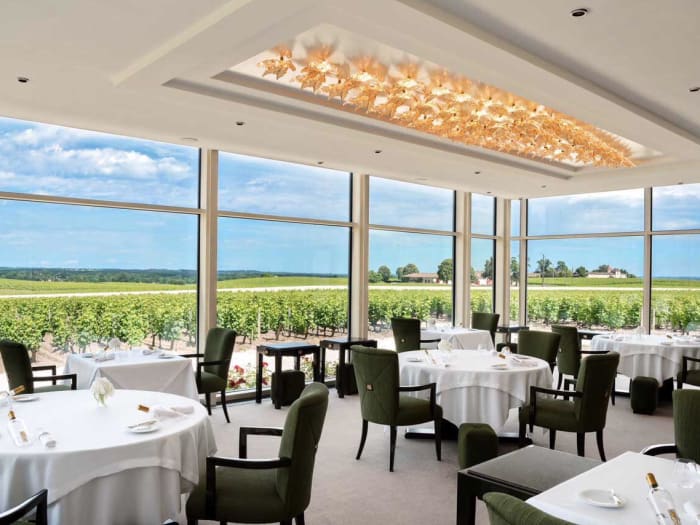
The presence of a Michelin-starred restaurant immediately positions the establishment among the great culinary destinations. Dining here is set within a vineyard, unfolding in a landscape shaped by the seasons, precision, and patience. This proximity to the vineyard transforms the dining experience, establishing an immediate connection to the territory.
Here, inventive and local cuisine finds its true meaning. It is rooted in the products, textures, and traditions of the South-West. It does not merely replicate them; rather, creativity enhances the flavours without overshadowing them. A contemporary interpretation of the terroir is anticipated, one that is attentive to balance, seasonality, and the accuracy of pairings. Refinement is measured by the precision of cooking, as well as the clarity of sauces and the intelligence of combinations.
The connection with wine is fundamental. Staying in a château in Sauternais lends a particular depth to the wine service, allowing for the discovery of the estate's expressions. It also aids in understanding the pairings with gourmet cuisine. Tasting can extend to encompass the entire Bordeaux region. Wine is not an added experience; it is an organic component of the place. The dialogue between the plate and the glass takes on an educational dimension, without losing its immediate pleasure.
The setting of the restaurant is equally significant. In a château, the gastronomic experience acquires a gentle gravity. Time becomes slower and more attentive. The service, lighting, table setting, and view of the estate contribute to the interpretation of the meal. The mention of Lalique suggests a particular care given to the overall aesthetics. The aim is not merely effect; it lies in the harmony between the place, the plate, and the act of service.
For hotel guests, this table often represents the highlight of their stay, allowing for a complete evening without leaving the property. For external visitors, it can serve as an entry point to the estate. In both cases, the restaurant reveals the spirit of the house: high standards, local roots, elegance, and clarity.
Château Lafaurie-Peyraguey does not merely combine a charming hotel, a great wine, and a Michelin-starred restaurant; it articulates them. This coherence avoids the impression of mere juxtaposition. The stay becomes a cohesive experience: a landscape of vines, a château, a precise dinner, and then the return to the tranquillity of a room at the heart of the estate.
Concierge & Services
At Château Lafaurie-Peyraguey Hôtel & Restaurant LALIQUE, the service is orchestrated with a masterful discretion. Arrival is made seamless thanks to the attentive valet, who adapts to the pace of each guest's stay.
The concierge is on hand to assist with everyday requests as well as more specific arrangements. This adds a welcome fluidity to the experience, without ever overwhelming it.
For transportation, a paid airport shuttle service is available, providing clarity for transfers. This is a convenient solution for connecting to the hotel without unnecessary detours.
Room service is available twenty-four hours a day, catering to both late arrivals and those who wish to extend their time in the comfort of their room.
Pets are welcomed with dedicated attentions. A basket and bowls are provided, ensuring that their presence fits naturally into the stay.
Overall, this creates a hotel experience that is precise, flexible, and serene. Here, comfort is as much about the quality of the attentions as it is about their perfect balance.
The art of living in Bommes and Sauternes country
Staying at Château Lafaurie-Peyraguey also means entering a certain idea of the Gironde art of living, and more precisely that of Sauternes country. Bommes is not a destination for hurried consumption; it is a territory discovered in successive touches, through its landscapes, wine estates, secondary roads, villages and that very local way of allowing time to add value to experience. For travellers accustomed to dense urban stays, the appeal lies precisely there: rediscovering a slower, more sensory and more tangible relationship with the place being visited.
The vineyard structures everything. It shapes the views, the scents, the rhythms of movement, the conversations and even the light. Depending on the season, the countryside around Bommes tells a different story. In spring, it conveys freshness and renewal; in summer, it invites early departures and slower returns at day’s end; in autumn, it reaches a particular intensity, when the colours of the vineyard and the activity of the estates make the landscape almost narrative. That is why this period is often considered one of the most compelling times to discover the region, without spring losing any of its appeal.
Wine tourism is naturally one of the main threads of a stay here. Estate visits, tastings, discovery of the specificities of the sweet wines of the Sauternes area, understanding neighbouring terroirs: there is much to explore for those wishing to go deeper. Yet the local art of living is not limited to wine. It also passes through the table, regional markets, South-West produce, walks in a worked and inhabited countryside, and attention to the details of everyday life. In this context, a simple lunch nearby, a vine-lined road or a pause in a village can carry as much meaning as a more structured visit.
The proximity of Bordeaux broadens the possibilities while also confirming the appeal of staying in Bommes rather than in the city when seeking a true destination experience. One can easily imagine a day alternating urban heritage with a return to the calm of the château, but many travellers will instead choose to remain within a closer radius in order to preserve the coherence of the stay. That is often the better option: not to disperse the experience too much, and to let the vineyard and the table remain the centre of gravity of the trip.
For couples, the address lends itself especially well to a romantic escape. The château setting, the vines, the gastronomic dinner and the possibility of visits and tastings create a naturally harmonious stay without any need to over-programme the days. That simplicity is a form of luxury. It allows guests to enjoy the place without tension, leaving room for the unexpected, for a longer pause, for a glass taken at the right moment, for a conversation that continues.
Ultimately, the art of living in Bommes lies in this alliance between wine culture, the discreet beauty of the landscapes and a sense of hospitality. Château Lafaurie-Peyraguey offers a particularly legible expression of it, because it brings together in a single address what the region has to offer in its most coherent form: an estate, a table, an atmosphere and direct access to a territory best understood when one takes the time to inhabit it.
Book with MyConciergeHotel
Booking Château Lafaurie-Peyraguey Hôtel & Restaurant LALIQUE through MyConciergeHotel means approaching the property as a destination to be shaped with care rather than as a simple overnight stay. In a place where the table, the vineyard and the château atmosphere matter as much as the accommodation itself, preparation genuinely changes the experience. The right rhythm, the right length of stay, the right moment for dinner, the organisation of a nearby visit or tasting: all these elements can turn a pleasant stop into a fully realised experience.
The value of concierge-led guidance lies first in coherence. A house like this rarely benefits from an overloaded programme. It is often better to think of the stay around a few well-chosen highlights: arriving early enough to enjoy the estate, securing dinner under the right conditions, devoting a morning to discovering the vineyard, then departing without haste. MyConciergeHotel can help shape that cadence, taking into account the season, the traveller profile and the intention behind the stay — a romantic escape, a gastronomic interlude, a wine-focused discovery or a refined stop on a Bordeaux itinerary.
Booking the restaurant is particularly important. When a Michelin-starred table is one of the pillars of the address, it is wise to plan ahead, especially during the most sought-after periods. The same applies to cellar or estate visits in the region, as suggested by the advice already associated with the hotel. In Sauternes country, some experiences are best enjoyed when arranged in advance, with suitable timings and a genuine sense of progression. The aim is not to make the stay rigid, but to avoid last-minute disappointment.
MyConciergeHotel also brings a useful editorial perspective. Not every traveller is looking for the same thing from a five-star vineyard château. Some will prioritise gastronomy, others the tranquillity of the estate, others direct access to a wine territory. Being able to orient the booking according to those expectations helps calibrate the stay more accurately: ideal duration, recommended period, balance between time at the hotel and outside discoveries, and practical advice for making the most of Bommes and its surroundings.
This approach is all the more relevant at a characterful Relais & Châteaux address. One does not choose such a house to accumulate services, but to inhabit a precise atmosphere. Booking with discernment therefore also means respecting the spirit of the place: allowing enough time, leaving room for dinner, accepting the slower rhythm of the vineyard and understanding that the value of the stay lies as much in its coherence as in its comfort.
By booking through MyConciergeHotel, travellers benefit from a perspective that goes beyond transaction. The point is not merely to secure a room, but to prepare an experience faithful to what Château Lafaurie-Peyraguey offers at its best: a stay among the vines, in an elegant château, shaped by a serious table and by an art of living that simply asks to be approached at the right tempo.