History & sense of place
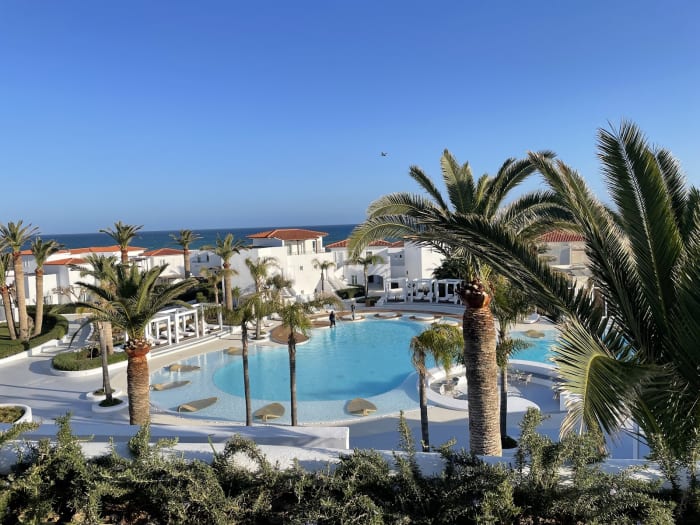
Caramel belongs to a contemporary vision of the Mediterranean seaside resort, deliberately more intimate in scale than the large beachfront complexes often found along the coast. Its appeal does not rest on a grand heritage narrative or a prominently advertised founding date, but on a particular way of inhabiting the Cretan shoreline: softer, more residential, and more attuned to the rhythm of a stay than to theatrical effect. The property is part of Grecotel, a Greek hotel group known for its local roots and for a polished understanding of high-end hospitality. That affiliation provides Caramel with a strong service framework while allowing the hotel to maintain a distinct personality centred on proximity, ease and lived comfort.
The name itself suggests warmth, texture and golden light, which suits the atmosphere of the hotel well. The aesthetic approach favours villas and low-rise volumes that create a sense of private space. There is an almost domestic interpretation of luxury here: circulation that feels closer to a well-designed holiday home, accommodation suited to couples as much as to families, and a constant relationship with the outdoors thanks to the immediate proximity of the beach.
Within Rethymno’s hotel landscape, Caramel stands out through its ability to combine five-star expectations with the mood of a boutique resort. It is not a property built around ostentation. Instead, it establishes a sense of trust: tailored service, discreet attention, and the feeling of being recognised without being watched. That distinction matters to contemporary travellers, who often value accuracy over display. Luxury here is expressed through continuity: round-the-clock reception, teams able to adapt the stay, and enough flexibility to leave room for spontaneous pleasures.
The spirit of the place is also shaped by Crete itself. Rethymno, with its Venetian and Ottoman layers, its seafront presence and its more rugged hinterland, gives the stay a depth that goes beyond the beach. Caramel allows guests to enjoy that richness without losing a sense of retreat. One can move from the shore to the old town and then return to a quieter atmosphere. That alternation defines the property: a resort facing the sea, yet not detached from its surroundings; a holiday hotel with a real awareness of place; and an address that welcomes families, couples and travellers seeking calm without flattening their different expectations.
The Establishment
The primary allure of Caramel lies in its seaside location, offering direct access to the beach. In Rethymno, this advantage truly transforms the experience. The beach becomes an integral part of daily life, from morning until the evening light. This continuity lends a precious simplicity to the stay. It caters to families, travellers alternating between swimming and relaxation, and couples seeking a slower pace.
The establishment presents itself as a boutique resort, with a limited capacity and a more personal atmosphere. The communal spaces encourage pleasant circulation and a sense of calm. It is easy to settle in without feeling anonymous. The stay feels less standardised, more fluid, and closer to a high-end address with a human scale.
The architecture of the villas is one of the most distinctive markers of Caramel. This uniqueness contributes to the hotel's identity, creating varied perspectives, differentiated volumes, and an impression of a private residence. In a coastal context, this approach preserves a sense of refuge while remaining open to the outside, light, and sea air.
Caramel is a holiday hotel in the truest sense of the term. It is a place where one can slow down without boredom. The day can begin with a walk on the beach, continue with relaxation and excursions, and then return to a residential softness in the late afternoon. The resort allows for personal use of the stay, offering options without imposing them.
For travellers discovering Rethymno, the address provides a balanced anchor point. The city is known for its old town, waterfront, and favourable position for exploring other parts of Crete. Staying at Caramel allows one to combine two desires: to enjoy a beach hotel with immediate access to the shore and to easily explore the region. This dual perspective contributes to the quality of the stay.
Finally, the establishment welcomes a variety of profiles without losing its coherence. Couples find a peaceful address, families enjoy practical arrangements, and travellers seeking rest appreciate a setting that does not strive to entertain at all costs. Caramel does not promise a uniform experience; it offers a well-designed environment by the sea.
Rooms, Villas, and the Art of Staying
At Caramel, accommodation plays a central role in the experience. The villas, particularly the two-bedroom duplexes, draw special attention.
This configuration meets the expectations of high-end travel, combining the services of a five-star hotel with the freedom of a more residential space.
For a family, two couples, or guests seeking comfort, the duplex facilitates a balance between shared moments and intimacy.
The architecture of the villas plays an essential role. The differentiated volumes and duplex layout evoke more of a holiday home than a standard room.
In a beach resort, this quality matters. After a day at the beach or an excursion in Rethymno and the surrounding countryside, one returns to a setting with a genuine presence.
The two-bedroom villas also stand out for their versatility. They accommodate multiple generations or a stay among friends without sacrificing rest.
The duplex introduces a gentle hierarchy of spaces. It is not merely a place to sleep; it is a space where one truly lives, even for just a few days.
For couples, the address retains the spirit of a boutique resort. Intimacy seems to be a guiding principle, extending beyond just the family villas.
The accommodations prioritise comfort, tranquillity, and a sense of retreat. Luxury here lies in practical details and smooth circulation.
The hotel service complements this residential dimension. Daily housekeeping and turn-down service reflect the five-star setting.
This combination allows guests to enjoy a sense of autonomy without sacrificing the discreet comfort of an attentive team.
The rooms and villas at Caramel thus cater to various uses of a Mediterranean stay. Rest, family life, moments for two, and returns from the beach naturally find their place here.
With its distinctive architectural villas and two-bedroom duplexes, the hotel offers a more flexible and liberated way to stay in Rethymno.
Dining: A Blend of Coastal Simplicity and Holiday Rhythm
At Caramel, dining follows a simple tempo, attuned to the bright hours and the gentle seaside atmosphere. The cuisine takes on a Mediterranean form, clear and without unnecessary embellishment.
The Gourmet Restaurant embodies this dialogue with clarity. Mediterranean cuisine is savoured by the poolside, in an atmosphere that naturally extends the day. The setting is as important as the dish, imparting a particular lightness to the meal, straddling the line between a leisurely lunch and an evening dinner in the evening air.
Further along, the Panther Restaurant & Bar introduces a different rhythm. This venue blends cocktails and à la carte dishes, offering the flexibility that suits a holiday. One lingers for a drink, then for a few plates, with no interruption between the aperitif and the meal.
Together, they create a coherent offering. On one side, a Mediterranean interpretation served by the water. On the other, a bar where the cuisine complements the moment with ease. At Caramel, dining does not seek to impress; it prioritises accuracy, fluidity, and a discreet way of allowing the day to unfold into the evening.
Wellness, Beach, and a Return to Calm
At Caramel, the return to calm is achieved through simple gestures and a slowed pace. The Spa & Wellness Centre extends this spirit with a focus on relaxation.
The venue offers a separate time, a silent pause, and a more expansive breath. After the bright light of Rethymno, this refuge invites one to ease off the pace.
The swimming pool naturally accompanies this moment. A few laps, a pause by the water, then the feeling of letting the day settle.
Here, wellness does not seek to impress. It establishes itself in the continuity of the stay, with discreet elegance and a sense of lasting tranquillity.
Between body treatments and mental relaxation, the overall experience creates a simple balance. A just way to rediscover calm, without breaking away from the ease of a holiday.
Concierge & Services
One of the strengths of Caramel lies in its bespoke service. This promise takes on a tangible meaning here, closely linked to the size of the resort and the range of services offered.
A 24-hour concierge and a continuously open reception provide invaluable availability. This is ideal for late arrivals, early departures, and last-minute requests.
The daily housekeeping and turn-down service extend the five-star experience. They offer a discreet continuity, from returning from the beach to preparing for the night.
Luggage storage, laundry, and wake-up services cater to very practical needs. They facilitate an early arrival, a late departure, or an unexpected situation.
The multilingual staff also plays a significant role in the overall experience. In Crete, the quality of human interaction directly contributes to the feeling of being well taken care of.
The concierge can also serve as a bridge between the hotel and the surrounding area. It allows for the booking of water activities, organising transportation, or discovering Rethymno at the right time.
Water activities are best reserved in advance, especially during the high season. This support enhances the fluidity of the stay.
The best services are distinguished less by their visibility and more by their precision. Caramel favours this approach, with an experience designed to remain simple, clear, and enjoyable.
For the traveller, this translates into a rare sensation: being free while being supported.
The Art of Living in Rethymno
Staying at Caramel also means choosing a particular way to discover Rethymno. The city holds a unique place in Crete, offering a genuine urban fabric while retaining a coastal identity. Its location also allows for the exploration of other landscapes on the island.
This plurality resonates with the spirit of the hotel. An intimate beachfront resort allows guests to savour the nuances of the territory before returning to a calmer setting.
Rethymno is cherished for its old town, winding streets, seafront, and rich history. Beyond the beach, a different rhythm emerges. Strolls, pauses, ancient facades, and daily scenes enrich the stay. This proximity between coastal relaxation and urban discovery allows for varied days without lengthy travel.
The coast remains one of the main themes of the stay. The Rethymno shoreline invites swimming, walking, and suspended moments facing the horizon. In this context, the direct access to the beach offered by Caramel becomes a genuine temporary lifestyle. One can follow the light, return several times throughout the day, and adapt their pace to the wind, heat, or desire.
For families, the region also presents particular appeal. The hotel emphasises activities suited for children. Rethymno is well-suited for this configuration. The sea structures the days, the city offers accessible outings, and the resort allows for a return to a comfortable setting. Holidays thus find a balance between discovery and ease.
Couples will find in Rethymno a backdrop conducive to discreet romance. The destination enchants with its blend of light, heritage, sea, and simplicity. One can craft days that are either fully packed or, conversely, delightfully light, without frustration.
From Caramel, the art of living in Rethymno consists of not having to choose between retreat and openness. One can enjoy the intimacy of a boutique resort, then set off to explore. Experience the beach as a daily ritual, then indulge in a city interlude. Organise water activities, then return to the languor of a late afternoon by the sea. This flexibility prevents the stay from becoming fixed in a single tone.
Booking via MyConciergeHotel
Booking Caramel through MyConciergeHotel means approaching your stay with a sense of support rather than merely a transaction. In a property where the intimate atmosphere, the quality of the villas, the fluidity of service, and the seaside location matter greatly, choosing the right configuration is crucial. Not all stays are the same. A couple does not seek the same experience as a family. A traveller torn between beach and exploration does not have the same priorities as a guest looking to unwind. Pre-booking support helps clarify these needs and guide the reservation accurately.
Caramel presents several advantages to consider before departure. Direct beach access becomes particularly significant with children or when the sea dictates the day’s rhythm. The two-bedroom duplex villas also cater to specific needs. Family stays, trips with friends, a desire for a more residential space, or a better balance between intimacy and conviviality. Being advised on these points often helps avoid a merely adequate reservation in favour of a truly tailored stay.
The peak summer season is especially sought after. In this boutique setting, the limited capacity contributes to its charm but also reduces availability. Booking early thus helps preserve choice. Dates, type of accommodation, pace of stay, and potentially organising activities in parallel.
Advance booking of water activities should also be considered. In a destination where the sea naturally structures the experience, it is wise to think of the stay as a coherent whole. Accommodation, beach moments, outings, children’s needs, rest periods, and potential transfers. A well-supported reservation allows for the construction of this balance in advance, without rigidifying the trip.
MyConciergeHotel provides a genuine understanding of the stay. It is not just about confirming a room but about comprehending what will make the stay successful at this specific address. Should one prioritise a villa for greater residential comfort? How best to organise a family stay? When to book to benefit from the widest choice? What elements to anticipate to fully enjoy the Rethymno coastline? These concrete questions transform a reservation into a thoughtfully prepared experience.
Choosing Caramel means opting for a 5-star resort that prioritises proximity, the sea, and a certain ease of living. Booking it through MyConciergeHotel ensures that this promise is fulfilled under the best possible conditions. A tailored selection, attention to practical details, and a sufficiently nuanced preparation so that once on-site, all that remains is to enter into the rhythm of the place. In luxury hospitality, this simplicity achieved in advance often represents the first form of comfort.