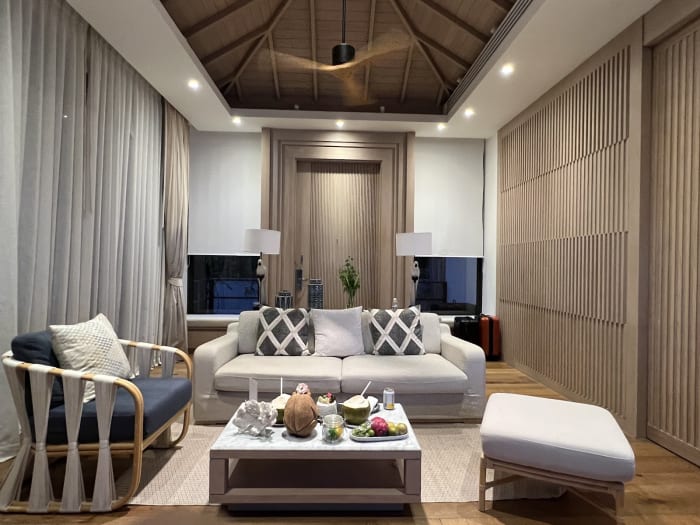
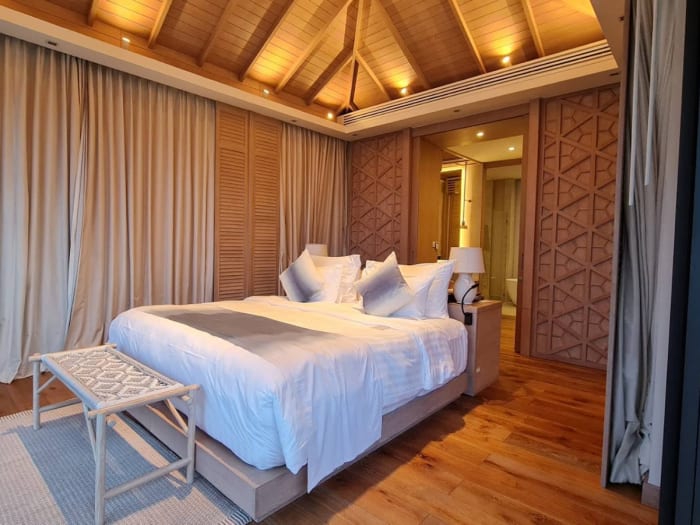
History & Spirit of the Place
Cape Fahn Hotel does not present itself as a grand urban palace steeped in centuries of opulence, but rather as a contemporary address conceived around a luxury of retreat. In Koh Samui, some properties opt for ostentation, while others prefer to engage with the landscape, light, and the rhythm of the sea. Cape Fahn belongs to the latter category. Its identity is built upon a way of inhabiting the site, harmonising with the coastline, vegetation, marine vistas, and the intimacy sought by today’s travellers.
As a member of the Small Luxury Hotels of the World, the hotel embraces a certain scale and a more personal approach to the stay. Its hospitality favours character over uniformity. Cape Fahn embodies a vision of luxury where discretion is as important as visible refinement. Guests come here to experience a sense of a unique place, distanced from noise, where they can slow down without sacrificing the attentions of a grand five-star hotel.
The modern architecture, seamlessly integrated into nature, contributes significantly to this impression. Here, modernity does not seek to be spectacular; it blends into the tropical setting. Contemporary lines, openings to the outside, and the emphasis on views create a constant dialogue between the built environment and its surroundings.
The spirit of the place is also defined by its intimate and peaceful atmosphere. Cape Fahn Hotel is not designed for social bustle or constant spectacle, but for breathing and rediscovering time. In Koh Samui, choosing an address like this means prioritising a serene base, almost insular within the insular.
Finally, the most tangible legacy of Cape Fahn lies in a culture of attentive service. In hospitality of this category, the difference often lies here—in the memory of preferences, the fluidity of interactions, and the ability to make the stay simple without rendering it impersonal. The hotel thus asserts a contemporary elegance, characterised by calm, precision, and restraint. More than just a setting, it offers a way of being on holiday in Koh Samui: surrounded, yet never overwhelmed; privileged, yet without ostentation; transported, without losing the comfort of impeccably delivered service.
The Establishment
Staying at the Cape Fahn Hotel means experiencing Koh Samui from a seaside sanctuary. The view shapes the essence of the place. The sea accompanies the hours of the day. In the morning, it opens up the space. At noon, it intensifies the light. In the late afternoon, it softens the lines and invites one to slow down. Cape Fahn seems to be designed around this dialogue between the interior and the horizon.
The intimate and peaceful atmosphere plays a central role here. In Koh Samui, it allows guests to enjoy the island without being overwhelmed by its tourist intensity. The location strikes a sought-after balance. It remains close to the attractions of the destination while preserving a genuine sense of retreat. This equilibrium relies on a thoughtful setting, a controlled scale, and spaces that protect privacy.
The modern architecture, integrated with nature, enhances this coherence. In a tropical environment, luxury also lies in the circulation of air, light, shadows, and views. The contemporary volumes extend the outside into the interior experience. The lines remain sharp. The materials converse with the landscape. The formal sobriety allows the vegetation and the sea to hold their place. This architecture suits a hotel that prioritises serenity.
The chosen sense of isolation also contributes to the charm. In Koh Samui, escape is about the quality of transition. The arrival marks a shift from movement to rest. One leaves the island's tempo to enter a slower, more personal time. It is this sensation that creates the impression of privilege.
The common areas extend this narrative. The hotel has been designed to offer comfort and elegance in a relaxed tone. It seeks spaces where one feels immediately at home. Without rigidity. Without burdensome protocol. With an impeccable level of decorum. Casual luxury is not an absence of form. It is a form sufficiently mastered to appear natural.
Finally, the establishment caters to various types of stays without losing its identity. Couples find a setting conducive to romance. Solo travellers, a reassuring address. Some families, a calm base to explore Koh Samui. This versatility does not dilute the character. The address remains true to its DNA: sea view, tranquility, contemporary architecture, attentive service. A place designed for those who seek less animation and more authenticity.
Rooms, Suites and the Art of Relaxation
At a hotel like Cape Fahn, the room is not merely a place to stay; it is the heart of the experience, embodying intimacy, tranquility, and comfort.
The rooms and communal spaces are designed to offer elegance and well-being. In Koh Samui, the search is less for functional accommodation and more for a space that invites light and retreat.
The modern architecture, seamlessly integrated into nature, enhances this ethos. Contemporary lines frame the views and create fluid transitions between indoor and outdoor spaces.
Comfort extends beyond just bedding and amenities; it is born from the volumes, acoustics, natural light, and the sense of space.
When a sea view is present, it transforms the experience entirely. A few moments spent gazing at the horizon can establish a different rhythm altogether.
Opening the curtains, letting in the light, observing the sky and the water—these simple gestures become integral to the stay.
The intimate and peaceful atmosphere of the hotel finds its true expression in the private space. A grand hotel room should provide protection without isolation.
Casual luxury often translates into ease of use; nothing feels complicated, and everything seems just right.
Service also plays a crucial role. The daily housekeeping and turn-down service contribute to this sense of continuous care.
Returning to a perfectly tidied room enhances the quality of the stay, with details anticipated without ostentation.
For couples, the room becomes a retreat. For solo travellers, it offers a rare sense of freedom and security.
At Cape Fahn, the experience of the room is intertwined with the surrounding landscape and calm. It offers a gentle and precise way to inhabit Koh Samui.
Dining, Between the Sea Horizon and Refined Simplicity
In Koh Samui, dining is an integral part of the island experience. Eating by the sea is different. The timings shift. Appetite follows the warmth. Fresh fruits in the morning, light lunches, dinners extended by the evening's softness. In a hotel with casual luxury, the dining experience aligns with this rhythm.
The setting matters as much as the moment. A sea view transforms the perception of a meal, even a simple one. Breakfast becomes contemplative. Lunch opens a luminous interlude. Dinner unfolds in a slower time, carried by the evening air and reflections on the water. In the finest seaside establishments, the decor sets the pace for the plate. One expects Cape Fahn to offer an approach consistent with its identity: elegance without stiffness, attention to detail, a peaceful atmosphere, and service that is present without being intrusive.
In this context, the cuisine benefits from prioritising clarity. Travellers who choose an intimate address often seek authenticity rather than showiness. Well-prepared ingredients, bold flavours, careful presentation, and adaptation to different times of the day. In the morning, a smooth service is essential. At noon, freshness and lightness are key. In the evening, deeper flavours are appreciated, and a dinner that allows for conversation. In a five-star hotel, this flexibility signifies true maturity.
Personalised service takes on great importance here. In dining, attention is not just about being pleasant. It involves understanding habits, dietary restrictions, the rhythms of the stay, and sometimes even the mood of the moment. Some travellers desire a quick breakfast before an excursion. Others prefer a late and leisurely meal. Still others seek a more intimate moment in the calm of their accommodation. A well-trained team knows how to read these expectations and respond naturally.
In Koh Samui, open to international influences and rooted in Thai culture, dining can become a gateway to the territory. A successful stay on the island often involves this interplay between familiarity and discovery. Rediscovering comfort while opening up to local tastes, textures, and customs. The ideal hotel supports this movement through menu composition, serving style, and respect for the tropical rhythm.
Finally, in an intimate setting, dining must preserve the sense of retreat. One does not come merely to eat but to extend an atmosphere. A successful meal strikes the right note. Neither too formal nor too relaxed. Neither ostentatious nor mundane. It leaves a memory of light, calm, and precision. At Cape Fahn, dining fits into this overarching logic. That of a stay where the sea, architecture, and service compose a discreet art of living, tailored to Koh Samui.
Wellness, Slowness, and Returning to Oneself
At Cape Fahn, wellness is primarily about the atmosphere. The intimate setting, the sea view, and attentive service establish a slower rhythm.
In Koh Samui, this sensation transcends the mere treatment menu. It plays out in sleep, silence, and the fluidity between spaces.
Casual luxury takes on its full meaning here. Rest is not imposed. It is accompanied by soothing spaces and a just presence.
Some travellers seek treatments. Others prefer calm or a balance between gentle activity and contemplation. A successful place allows everyone to find their own rhythm.
The relationship with the sea is significant. Seeing the water, hearing its movement, feeling the sea breeze, and following the light alters the perception of time.
Supported by architecture open to the outside, this sensory dimension becomes a resource for wellness.
The room extends this logic. Turn-down service, daily upkeep, and attention to detail create a stable and restful environment.
Comfort also lies in the absence of ordinary constraints. Finding a pristine space allows one to dedicate time to rest, reading, or contemplation.
For couples, this wellness takes the form of a shared retreat. Solo, it can become a time for re-centering. For families, it rests on a serene framework.
At Cape Fahn, wellness is less about discourse and more about atmosphere. In Koh Samui, this controlled simplicity leaves a lasting sensation of calm.
Concierge & Services
In the luxury hotel sector, service is not an add-on. It is the invisible structure that makes the experience seamless. The Cape Fahn Hotel emphasises a personalised and attentive approach. 24-hour concierge service, 24-hour reception, daily room service, turn-down service, luggage storage, laundry, wake-up service, and multilingual staff all contribute to this. Together, these elements create a fluid stay, where organisation fades in favour of the place.
The 24-hour concierge service is particularly important in an island destination like Koh Samui. Late arrivals, early departures, excursions, transportation, reservations, and last-minute requests often shape the stay. In an intimate setting, this function takes on even greater value. The relationship is more direct, more personal, and less standardised.
The continuously open reception extends this availability. It ensures a reassuring presence at all hours. For international travellers, short stays, or complex itineraries, this permanence is crucial. In the best hotels, it remains discreet and preserves the calm.
Daily room service and turn-down service represent another dimension of luxury: consistency. A great stay also relies on the repetition of well-executed gestures. Refreshing a room with precision, maintaining cleanliness, preparing the space for the night, and respecting the client's habits create lasting trust.
Laundry, luggage storage, and wake-up service address very concrete needs. They significantly enhance the comfort of the stay. Travelling light, managing an early arrival or late departure, relying on a reliable wake-up call before an excursion or transfer: these details make a difference.
The multilingual staff completes this ensemble. It facilitates a more natural relationship with an international clientele. In a hotel that values personalised attention, the quality of interaction matters as much as its efficiency.
At Cape Fahn, these services create a precise hospitality. It suits travellers who expect more than just a beautiful decor. They seek calm, impeccable organisation, intimacy, and flexibility. In Koh Samui, this is the hallmark of a contemporary five-star establishment.
The Art of Living in Koh Samui
Choosing the Cape Fahn Hotel means embracing a particular way of experiencing Koh Samui. The island is more than just a tropical postcard; it boasts a variety of rhythms and landscapes that explain its enduring appeal. Here, you can find beaches that range from lively to serene, viewpoints overlooking the Gulf of Thailand, quaint villages, bustling markets, temples, palm-lined roads, and access to other islands or sea excursions. This diversity enriches the destination but can also scatter the experience, highlighting the need for a hotel that offers a calm, elegant, and coherent focal point. Cape Fahn meets this expectation.
The art of living in Koh Samui primarily revolves around the management of time. One naturally alternates between moments of exploration and hours of retreat. A morning may begin early to enjoy the soft light, followed by an excursion or a leisurely stroll. As the heat intensifies, returning to the hotel becomes appealing. The afternoon often invites a slower pace, while the evening opens up possibilities for dining by the sea, taking a walk, or simply contemplating the surroundings. An establishment with an intimate and peaceful atmosphere perfectly complements this daily choreography, allowing guests to venture out, return, and set off again without disrupting the flow of their stay.
Between December and April, conditions are generally pleasant for discovering the island. This is also the season when one appreciates hotels that can accommodate demand without compromising service quality. In a sought-after destination, the difference lies in how the establishment preserves a sense of tranquillity. Cape Fahn, with its intimate positioning, is designed with this in mind.
For couples, Koh Samui provides a natural backdrop for romance. Sunsets, marine horizons, extended dinners, excursions for two, and suspended moments in the room or on a terrace create the perfect setting. For solo travellers, the island can become a space for reflection, balancing gentle discoveries with chosen solitude. For families, it offers the advantage of accessible change of scenery. The activities and varying rhythms cater to multiple generations. What matters is having a retreat that does not add to fatigue but restores energy.
The local art of living also embodies a form of simplicity. Even in a five-star setting, Koh Samui reminds us that the truest luxury is not always the most ostentatious. It can be found in a morning without a schedule, in an unobstructed horizon, in the quality of a warm welcome, in the ease of a well-organised transfer, or in the comfort of a room tidied during one's absence. This economy of gestures and tensions aligns perfectly with the identity of Cape Fahn.
Ultimately, experiencing Koh Samui from a place like this means accepting that not everything needs to be done. Perhaps this is the best way to enjoy it. The island often reveals itself more to those who allow it space. A peaceful hotel, facing the sea, precisely facilitates this availability. It encourages selecting rather than accumulating, observing rather than consuming, and savouring rather than rushing. In a world of travel often saturated with itineraries, this quality of presence is a luxury in itself.
Booking via MyConciergeHotel
Booking the Cape Fahn Hotel through MyConciergeHotel means preparing your stay with clarity and precision. In Koh Samui, the choice extends beyond just the price.
It is also about determining the right timing, pace, and level of support. In this five-star establishment, practical details matter from the outset.
Travel dates, traveller profiles, specific expectations, transfers, or activities—all are better prepared when the framework of the stay is well established.
The period from December to April is particularly favourable for enjoying Koh Samui, often necessitating advance booking.
Booking ahead secures accommodation and allows for a more serene organisation of the stay, including activities, arrival and departure times, and the needs of a trip for two, solo, or with family.
Choosing MyConciergeHotel also means opting for an editorial perspective on travel. Cape Fahn is not merely a list of amenities.
The choice of this address is based on its ambiance, relationship to the location, and a particular vision of the stay. Some travellers seek calm and sea views.
Others wish to alternate between retreat and island exploration, while some prioritise romance or attentive service.
In a destination like Koh Samui, this approach aids in making the right choice. The hotel offerings are vast and varied.
Not all beachfront addresses provide the same relationship to the landscape, silence, intimacy, or service. Cape Fahn possesses a distinct identity.
The hotel is a member of the Small Luxury Hotels of the World, combining modern architecture integrated into nature, a peaceful atmosphere, sea views, and personalised service.
Booking this address is a choice of style as much as a choice of destination. Before departure, the stay can thus be refined methodically.
Ideal duration, season, desired level of tranquillity, expected services, and activities to book during high season—all this preparation makes arrival simpler and more coherent with the spirit of the place.
Booking the Cape Fahn Hotel via MyConciergeHotel extends the promise of the hotel even before arrival. Thoughtful organisation is already part of the experience.