History & House Spirit
In Den Hoorn, on the southern side of Texel island, Hotel Bij Jef embodies a very specific idea of hospitality: that of an intimate house where refinement never relies on display. Its Relais & Châteaux affiliation immediately signals a property of character, where the experience is shaped by place, cuisine and attentive hosting rather than by scale. Here, the appeal lies not in grand architecture or theatrical luxury, but in a sense of balance. A stay unfolds within an island setting that naturally invites guests to slow down, observe and reconnect with the seasons.
Texel has a distinctive identity within the Netherlands. The island is known for its open landscapes, dunes, farmland, shifting light and constant proximity to the North Sea. In that context, Bij Jef feels like an address that engages with its surroundings rather than withdrawing from them. Even the name of the hotel suggests a locally rooted house, more insider recommendation than standardised international luxury property. That is precisely what makes it appealing to travellers in search of something more grounded: a place where one comes not only to stay, but also to understand a rhythm of life, a geography and an island culture.
The spirit of the house rests on a few clear principles. First, an attention to authenticity, a word often overused, yet here made tangible through local ingredients, closeness to nature and an atmosphere that favours warmth over formality. Second, a commitment to quality, expressed through the details of service, daily upkeep, discreet staff and the overall coherence of the experience. Finally, there is an easy elegance particularly well suited to Texel: guests come to breathe, walk, cycle and take in the landscape, then return to the comfort of a carefully run address where gastronomy plays a central role.
French travellers may recognise a sensibility akin to some of the finest country houses or contemporary inns: places where identity matters more than branding. Bij Jef does not attempt to recreate urban luxury on an island. Instead, it embraces its peaceful, slightly removed setting and turns it into the essence of the stay. That coherence matters. It gives time spent here a distinctive quality: quieter, more organic and more memorable.
In a European luxury landscape where many high-end hotels can feel interchangeable, the interest of a property like Bij Jef lies precisely in its calm singularity. It speaks to guests who value houses with a voice of their own, destinations that still operate on a local scale, and stays where dining, rest and landscape form an inseparable whole. It is less a hotel of demonstration than one of genuine belonging: you arrive for a few nights and quickly find yourself moving to its pace.
The Property and Its Island Setting
A stay at Hotel Bij Jef begins with Texel itself, and more specifically with Den Hoorn, one of the island’s most evocative villages. That location matters. Den Hoorn retains an intimate scale, an almost painterly character and an immediate relationship with the surrounding landscape. The prevailing impression is not that of a busy seaside resort, but of an island village where natural elements still shape daily life. The sky feels wider, the light more changeable, and distances are often best measured by bicycle or on foot. For travellers seeking calm, the setting is already a promise.
The hotel benefits from this context without overstating it. The peaceful environment listed among its highlights is not an abstract selling point; it is a tangible reality, noticeable from the moment of arrival. Guests come here to put a healthy distance between themselves and urban noise, to recover a sense of breathing space, and to spend a few days in a place where nature is never merely decorative. On Texel, it is everywhere: in the sea winds, the dunes, the paths, the cultivated land and the shifting light that transforms the scenery throughout the day. A successful hotel on the island must know how to welcome that presence. Bij Jef appears to be built around precisely that idea.
Closeness to nature is one of the stay’s great privileges. This does not necessarily mean total isolation, but rather a rare balance between hotel comfort and immediate access to the outdoors. Days can therefore be shaped very freely: a morning walk nearby, a cycle ride across Texel’s landscapes, time along the coast, a return to the hotel for lunch or rest, then dinner in a more intimate setting. That flexibility is part of the property’s charm. Here, luxury also lies in not having to force anything.
For travellers more familiar with urban Netherlands, Texel offers a striking counterpoint. The island is a reminder of the country’s deep relationship with water, wind, low-lying land and open horizons. Den Hoorn, with its quiet atmosphere, offers a particularly gentle way into that reading of the territory. The hotel then acts as an anchor point: comfortable and well run enough to provide all the markers of an upscale stay, yet sufficiently integrated into its surroundings that guests never feel sealed off from the island.
This quality of setting also explains why the address suits both couples and solo travellers. The former will find a destination well suited to a shared escape, shaped by meals, walks and silence. The latter will appreciate how easily time can be filled without a demanding programme: reading, walking, observing, tasting and resting. In high season the island naturally draws more visitors, but the appeal of Bij Jef extends well beyond summer alone. Cooler months may even heighten the island experience, giving the landscape a starker intensity and the hotel a more enveloping feel.
In a stay here, place is never just a backdrop. It shapes the mood, the activities, the rhythm of meals and even one’s perception of time. That is one of the reasons the address leaves such a lasting impression: it offers not simply quality accommodation, but a coherent way of inhabiting Texel for a few days.
Rooms and Suites
With only 12 keys, Hôtel Bij Jef cultivates a rare scale that fosters calm and discretion.
The layout is clear-cut. Eight rooms make up the main offering, complemented by four suites.
This compact format transforms the stay. Circulation remains simple, the atmosphere is subdued, and each arrival finds its place naturally.
The rooms cater to those seeking an elegant anchor point, without unnecessary distractions. The experience gains in tranquillity and clarity.
The suites provide a different kind of breathing space. They extend this feeling of intimacy, with a more pronounced presence and a freer rhythm.
In a hotel of this size, the relationship to space is experienced differently. Nothing evokes the anonymity of larger establishments.
This composition, with eight rooms and four suites, creates a unique address. The stay willingly takes on a more personal, almost residential tone.
In Den Hoorn-Texel, this scale imparts a particular quality to rest. Few keys, few passers-by, and a sense of retreat that settles in naturally.
The Dining Experience and Local Roots
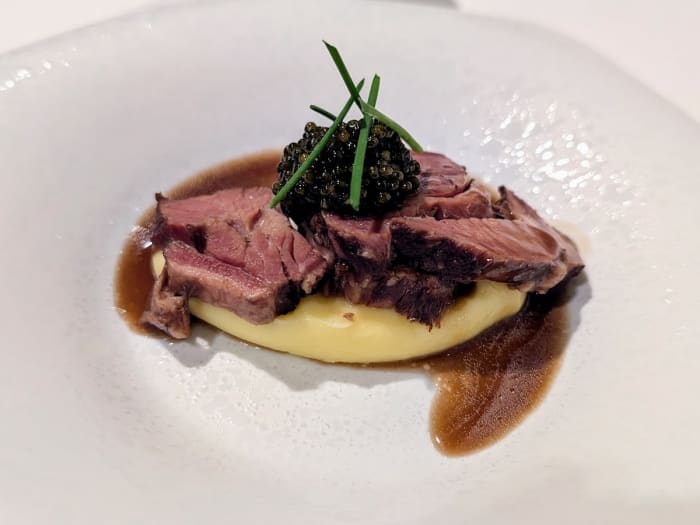
One aspect that distinctly sets Hôtel Bij Jef apart is its gastronomic dimension. The cuisine here highlights quality, authenticity, and local ingredients. Within the Relais & Châteaux universe, the dining experience is an integral part of the establishment's identity. On Texel, this promise resonates particularly strongly. The island offers a terroir and natural environment that invite a seasonal and regional culinary interpretation.
Discussing local products here is not merely a marketing ploy. On an island, proximity has a tangible reality. It requires attention to production rhythms, available resources, and surrounding expertise. The essence of island gastronomy is not about amassing luxurious references; it is about translating a landscape into culinary form. Bij Jef seems to follow this philosophy, seeking precision and fidelity to its location.
For the traveller, this transforms the nature of their stay. Dinner becomes more than just a hotel service; it evolves into a central moment of the day. After exploring Texel and traversing its landscapes, dining offers another way to experience the island. Local ingredients enhance this immersion, providing a narrative value to the meal. One does not simply dine well; one dines in a specific place.
The atmosphere, both elegant and relaxed, plays a significant role in this context. Here, refinement does not equate to rigidity. This is an important consideration for contemporary guests who appreciate quality without seeking the most ceremonial codes. Meals thus maintain a genuine gastronomic quality while remaining in tune with the spirit of Texel. A welcoming dining room, precise service, and clear cuisine are all the more appreciated.
Booking in advance to secure the best tables at the hotel’s restaurant makes perfect sense here. In establishments where the dining experience truly matters, residents and external guests gather around the same table. Anticipation ensures a guaranteed place and provides coherence to the stay. At Bij Jef, the meal is fully integrated into the identity of the establishment.
For culinary travel enthusiasts, the appeal of such a venue lies in the balance between destination and plate. One does not come solely for dinner, nor merely to stay on a preserved island. The allure lies in the interplay of the two. It is often in this alliance that the most compelling stays are born. The memory of a landscape remains intertwined with that of a meal, a quality product, and attentive service.
Concierge & Services
At Hôtel Bij Jef, the services offer a clear promise: 24-hour reception, 24-hour concierge, daily housekeeping, turndown service, luggage storage, laundry, wake-up calls, and multilingual staff. Together, they ensure a seamless and frictionless experience.
On an island like Texel, this fluidity is essential. Travellers often need to organise their schedules, adjust plans according to the weather, anticipate outdoor activities, or book a dinner. The quality of a concierge is measured by its accuracy and discretion.
The continuously open reception provides genuine comfort, especially for variable arrivals or multi-stage stays. It also enhances the sense of security. The luggage storage allows guests to enjoy one last stroll on the island without constraints. The laundry service becomes particularly meaningful during longer stays.
The turndown service and daily housekeeping exemplify a quiet hospitality. They significantly enhance comfort. A room prepared for the night and regularly maintained spaces alleviate the mental load for the traveller.
The multilingual staff also deserves special mention. In a destination hotel, the quality of communication is paramount. Being understood quickly and receiving clear directions immediately elevates the perceived level of comfort.
Finally, the 24-hour concierge establishes a continuous availability that structures the stay. It allows for the simple organisation, confirmation, or adjustment of details. The services complement the location with precision and create the conditions for a smooth stay.
The Texel Way of Life
Choosing Hotel Bij Jef also means choosing a certain way of travelling. On Texel, the art of living does not depend on accumulating activities or pursuing an overfilled schedule. It rests instead on a quality of presence. One learns to watch the sky, to take account of the wind and to accept that light can alter the landscape from one hour to the next. This openness to the environment transforms the stay. It encourages guests to slow down, walk more, favour detours, treat dinner as an important appointment and look forward to returning to the hotel.
Den Hoorn is particularly well suited to this experience. The village provides an ideal base from which to explore the island without losing contact with a peaceful atmosphere. One can imagine mornings devoted to discovering the surroundings, more contemplative afternoons, then evenings structured around a carefully prepared dinner. This rhythm, simple on the surface, is precisely what makes well-chosen island destinations so appealing. They allow travellers to step away from reflexive tourism and recover a finer form of attention. The aim is not to see everything, but to live well with what one sees.
Texel is also a destination understood through the senses. The scent of sea air, the texture of the paths, the relative silence of certain spaces and the constant presence of birds and open horizons together create an experience that is as physical as it is visual. In that context, a hotel such as Bij Jef plays an essential role: it offers a point of balance between outside and inside, between the energy of walking and the comfort of return. It is this alternation that gives the stay its depth. Without it, the island would be merely a beautiful backdrop; with it, it becomes a lived experience.
The property is especially suited to those who appreciate journeys in which gastronomy and landscape answer one another. On Texel, nature is not simply a setting for outdoor activities; it also nourishes local culture, habits, produce and a way of hosting. The stay then takes on a fuller dimension. One does not merely visit a territory; one enters its rhythm. That is an important distinction, and often the one that separates a good weekend from a true journey, however brief.
It is also worth noting that the island lends itself to different temporalities. In summer, long days and relative mildness favour extended exploration. Out of season, the experience becomes more introspective, sometimes more intense. The landscapes grow starker, the elements more present, and the hotel takes on an even more enveloping role. Bij Jef seems particularly well placed to accompany those shifts, thanks to its combination of calm, attentive service and a thoughtful table.
Ultimately, the Texel way of life may consist in rediscovering pleasures that have become rare: having time without needing to fill it, walking without practical purpose, dining attentively, sleeping deeply and beginning again the next day without urgency. Within that economy of travel, the hotel is not merely a provider. It becomes the setting for a more balanced interlude, one in which guests recover a simpler and more accurate relationship with their own pace. That is what many seasoned travellers seek today, and it is what gives an address such as Bij Jef its lasting relevance.
Booking via MyConciergeHotel
For a property such as Hotel Bij Jef, booking is not simply a matter of securing a room. It is about preparing the stay under the right conditions so that the experience retains its full coherence once on site. This is especially true of a characterful hotel located on an island and recognised for its dining. Availability may be more sensitive depending on the season, long weekends or holiday periods, and the value of booking through MyConciergeHotel lies precisely in approaching the reservation with greater precision and ease.
The first reason to book ahead is the nature of the address itself. Bij Jef appeals to travellers seeking calm, quality service and a carefully considered gastronomic experience. This kind of house often attracts guests who plan their stays attentively, particularly when the trip is a couple’s escape or a journey centred on dining and rest. Booking in advance therefore not only secures preferred dates, but also allows the wider stay to be shaped more comfortably: arrival times, dinner, pace, outdoor activities and any particular requirements.
The restaurant deserves special attention. The advice already given in the short description remains entirely relevant: it is wise to reserve ahead in order to enjoy the best tables. In properties where cuisine forms an essential part of the identity, it is always preferable to think about accommodation and dining together. This avoids last-minute compromises and ensures a smoother experience. MyConciergeHotel can help coordinate these elements so that the stay is not merely confirmed, but genuinely prepared.
Booking through an editorial and concierge intermediary also offers another advantage: placing the hotel within the wider context of the journey. Texel is not a destination approached in quite the same way as a major city. Its rhythm is different, logistics may require a little anticipation, and the success of the stay depends greatly on how transport, arrival, time on the island and dining reservations are combined. Thoughtful assistance helps calibrate that interlude more accurately, whether for a short break or a few fuller days devoted to discovering the island.
For couples, this may mean organising a simple yet perfectly considered escape, with dinner reserved, timings thought through and freedom left once on site. For a solo traveller, it may mean securing a serene framework without having to manage practical details at the last minute. In both cases, the value of a good booking lies in what it removes from the journey before departure.
Finally, booking via MyConciergeHotel also means choosing an approach based on the fit between a place and a travel desire. Bij Jef will not suit those seeking bustle or theatrical hospitality. For travellers looking instead for an authentic five-star house in a peaceful setting, close to nature and with a genuine gastronomic dimension, it offers a rare relevance. Booking then becomes the first step in a well-conceived stay: not a standardised purchase, but the beginning of an elegant, measured and deeply coherent island experience.