History & heritage
In Paris, some addresses do not rely on ostentation, but on a sense of rightness. Hotel Balzac Paris belongs to that discreet tradition of hospitality, rooted in a neighbourhood whose aura extends far beyond the postcard image. Just steps from the Champs-Élysées, the property occupies a Haussmann-style building, which already lends it a particular depth: cornices, balanced façades, classical proportions, and that distinctly Parisian way of combining urban presence with private intimacy. In a city where luxury hotels can sometimes lean towards spectacle, this address favours a more hushed reading of elegance.
The name Balzac naturally evokes an entire chapter of French literary memory. Without forcing an artificial narrative, it immediately sets a cultural horizon: one of salons, social observation, refinement and urban life. That resonance suits the spirit of the hotel especially well. One does not come here merely to sleep near the capital’s most famous avenue, but to inhabit, for the duration of a stay, a certain idea of Paris: layered, cultivated, sophisticated, yet never static.
Its membership of Relais & Châteaux also clarifies its position. This is not simply a decorative label; it suggests attention to the overall experience, to detail, to the quality of the welcome, and to the coherence between place, service and atmosphere. At Balzac, this translates into an intentionally intimate scale. Where some grand Parisian properties rely on monumentality, this one appears to prefer restraint, proportion and a style of service designed to accompany rather than impose.
The heritage of the address therefore lies less in a catalogue of dramatic historical facts than in its place within a very specific urban and cultural fabric. Haussmannian Paris, with its broad avenues, pale stone façades and reception apartments, forms the natural setting for a hotel that fully embraces its Parisian identity. That identity is neither museum-like nor theatrical. It can be read in the relationship between exterior and interior, in the immediate proximity to the Champs-Élysées, and in the idea of an elegant refuge at the heart of a lively district.
For today’s traveller, this heritage has a very practical consequence: the feeling of entering an address that does not imitate Paris, but proceeds directly from it. Balzac does not perform the role of a Paris hotel; it adopts its codes naturally. That is what gives it distinction. Its story is, in essence, one of continuity: that of a French art of hospitality, reinterpreted for business stays, romantic interludes or cultural escapes, in a setting that remains true to the spirit of the neighbourhood.
The Establishment
The primary allure of Hotel Balzac Paris lies in its location, which extends beyond merely being well-placed. Just a stone's throw from the Champs-Élysées, the hotel is situated in a strategic area of the right bank, nestled between business districts, shopping venues, cultural institutions, and urban strolls.
Fashion houses, galleries, restaurants, theatres, corporate offices, and major thoroughfares are all easily accessible. Once inside, the atmosphere shifts to a more tranquil setting.
This duality between the bustling exterior and the serene interior is one of the establishment's key strengths. The neighbourhood pulses with energy, yet the hotel offers a more intimate perspective.
Housed in a Haussmannian building, the experience begins from the moment of arrival. The façade places the establishment within a recognisable architectural continuum, while the interior presents a more calming version.
The Balzac caters to various types of stays. For business travellers, the proximity to major routes and transport links facilitates meetings. For a romantic getaway, the area is perfect for boutique shopping, museum visits, leisurely walks, and dining.
For first-time visitors to Paris, the address provides a clear anchor point. For regulars, it allows them to rediscover a central area with a more intimate atmosphere.
The establishment maintains a measured relationship with space. It seeks not the effect of grandeur but a coherent place designed for quiet hospitality. The intimate and refined atmosphere enhances this impression.
Luxury here is defined by the fluidity of the experience, the discretion of the staff, and the quality of attention given to each stay.
The Balzac finds its balance in a quintessentially Parisian promise: to live at the centre without being overwhelmed by its tumult. The Haussmannian architecture, the proximity to the Champs-Élysées, and its affiliation with Relais & Châteaux create a harmonious ensemble.
Rooms and Suites
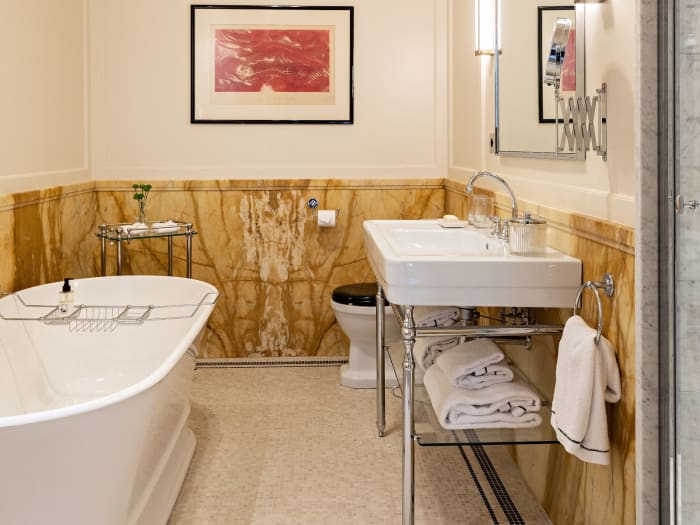
In an establishment of this calibre, the room becomes the focal point of the stay. At Hotel Balzac Paris, it extends the spirit of the house.
Here, one finds a refined elegance, an intimate atmosphere, and a serene relationship with time. The overall effect evokes a Parisian refuge.
Comfort, discretion, and aesthetic continuity align with the Haussmannian building that houses it. The charm lies in a subtle interpretation of the codes of Parisian hospitality.
A successful room here does not need to be ostentatious. It allows one to feel immediately at home, whether for a business night or several days in Paris.
There is an expectation of balance between style and functionality, between decorative details and practical use. Business travellers find a calm environment conducive to productivity.
Couples, on the other hand, appreciate the cocooning sensation and the muted character of the space. This address allows one to experience Paris without succumbing to the spectacular.
Service plays a crucial role in the perception of the room. Daily housekeeping, turn-down service, and attention to the guest's rhythm make a significant difference.
Returning to a perfectly tidied room after a day in the city is as important as the décor. Coming back from dinner to a setting prepared for the night is equally valued.
Luxury here is less about effect and more about continuity. A team available at all hours enhances this impression of fluidity.
The Haussmannian architecture suggests a unique relationship with light, volume, and the urban landscape. The room remains a protected interior, connected to the city through its windows.
This relationship between indoors and outdoors is significant. It allows one to enjoy the energy of the centre while maintaining a personal space.
At Balzac, the rooms and suites are envisioned as true places of residence. They cater to a clientele attentive to both intimacy and efficiency.
One seeks the sensation of being at home, with the best that high-end hospitality has to offer: availability, precision, and simplicity. For a romantic or professional stay, this is a precious promise.
Dining
In Paris, the dining experience at a luxury hotel is never merely an ancillary service. It contributes to the identity of the place and its daily rhythm.
At Hotel Balzac Paris, the dining options are aligned with this philosophy. Just steps from the Champs-Élysées, it complements the various moments of the stay. Breakfast, informal gatherings, and room service are as important as the setting.
Breakfast often sets the tone. In an intimate setting, it prioritises tranquillity, attentive service, and a French indulgence that is understated. For a business trip, it should remain fluid. For a leisure stay, it can transform into a slower ritual before heading to museums, shops, or grand boulevards.
Room service also enhances the experience. Enjoying a light meal, a morning coffee, or a late-night snack in one’s room extends that sense of intimacy. After a late arrival, a day of meetings, or an evening out in Paris, this attention takes on added significance. Here, luxury lies in reliability, discretion, and coherence.
The hotel's location plays a decisive role as well. So close to the Champs-Élysées, it provides access in just a few minutes to a wide variety of Parisian addresses. Balzac thus serves as a natural starting point for exploring the culinary scene of the neighbourhood and the capital. The concierge, available 24/7, can guide, recommend, reserve, and adjust suggestions according to the moment.
The dining experience at Balzac is thus part of a coherent art of hospitality that aligns with the entire hotel. Thoughtful cuisine, attentive service, and immediate access to Paris create a flexible experience suited to the different tempos of travel.
Wellness & Rhythm of Your Stay
At the Balzac, wellness is primarily about a form of discreet comfort. In a boutique Parisian address, it often manifests through tranquility, the fluidity of your stay, and a sense of time regained.
The intimate and refined atmosphere, its central yet slightly secluded location, along with the continuity of service, all contribute to a restful experience. For a short stay, the feeling of fluidity often matters just as much as the amenities.
A 24-hour reception, round-the-clock concierge service, nightly turndown service, and daily room maintenance all play a direct role in this. Rest often begins in this absence of friction.
In Paris, wellness also relates to rhythm. A well-located hotel reduces travel times, avoids unnecessary journeys, and allows for easy returns to unwind.
From the Balzac, the proximity to the Champs-Élysées and public transport facilitates this ease. One can head out early, return in the afternoon, go out for dinner, and then quickly retreat to the calm of their room.
The intimacy of the address also plays a significant role. Smaller establishments offer a more human scale. Here, one feels less exposed, more free to slow down, read, work in silence, or linger in the morning.
To enhance this aspect, the concierge can guide guests towards tailored external experiences. Whether it’s a workout session, a treatment at a spa, a stroll in a park, or a walking itinerary.
Thus, the Balzac lends itself to a bespoke stay. Wellness is cultivated through the quality of the setting, the discretion of the service, and the freedom to create a more personal Paris.
Concierge & Services
In luxury hospitality, the quality of a stay is often measured by what is not immediately visible. A beautiful decor captures the eye; attentive service fosters loyalty. At Hotel Balzac Paris, the 24-hour concierge, continuous reception, daily housekeeping, turn-down service, luggage storage, laundry service, wake-up calls, and multilingual staff create a seamless experience, invaluable in Paris.
The always-available concierge is one of the most essential services. In a neighbourhood rich with options, it assists in reserving a restaurant, organising transfers, refining itineraries, or recommending suitable addresses. Luxury also lies in the ability to navigate Paris with discernment, saving precious time.
The 24-hour reception caters to the rhythms of contemporary travel. Late arrivals, early departures, changes in plans, and evening requests necessitate continuous presence. This availability reassures and simplifies the stay.
Daily housekeeping and turn-down service reflect a silent hospitality. A meticulously maintained room, tidied at the right moments and prepared for the night, provides a welcome continuity. Laundry, luggage storage, and wake-up calls complete this practical offering, facilitating movement, a final day in Paris after check-out, or a busy agenda.
The multilingual staff also deserves mention. In an international capital, they foster clear communication, precise recommendations, and a sense of being understood effortlessly.
At Balzac, these services support a smooth stay. The service remains discreet yet constant, allowing each guest to experience Paris according to their priorities.
Parisian art de vivre around Balzac
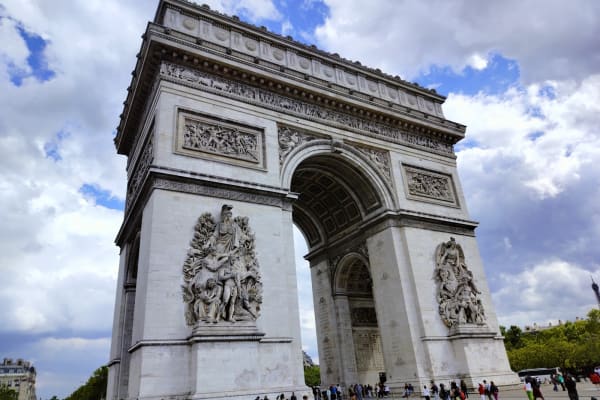
Staying at Hotel Balzac Paris means choosing a particular way of inhabiting the capital. The address does not merely provide a prestigious base; it places guests in an environment where several versions of Paris overlap. Just steps from the Champs-Élysées, one has immediate access to the Paris of grand perspectives, shopfronts, institutions and appointments. Yet it takes only a slight detour to rediscover other rhythms: quieter streets, cafés suited to observation, architectural walks, gardens, museums and neighbourhoods whose elegance lies as much in their history as in their everyday use.
This is where Balzac’s location comes fully into its own. It allows guests to compose a tailored stay without imposing a single narrative of the city. Some travellers will favour shopping, drawn by the concentration of major houses and fine addresses nearby. Others will shape their days around culture, alternating exhibitions, monuments and urban wandering. Others still will see the district as ideal business territory, thanks to its centrality and ease of access. The value of a hotel such as this lies precisely in making these different uses compatible, without ever feeling standardised.
The Paris discovered from Balzac is also a Paris of details. It reveals itself in the pale stone of Haussmann façades, in the regularity of balconies, in the perspectives opened by broad avenues, but also in subtler transitions between animation and retreat. One may begin the day in the district’s energy, then seek out a degree of calm a little further away, before returning in the evening to the lights of the avenue. This alternation is one of the great pleasures of a successful Paris stay. It prevents saturation and restores to each moment its own tone.
For couples, the area lends itself particularly well to a romantic reading of the city, provided it is approached with nuance. Parisian romance is not only a matter of monuments; it lies in a certain way of walking, pausing and looking. An intimate and refined hotel such as Balzac then becomes an excellent starting point for days without too rigid a programme: a slow coffee, a walk towards a museum, a pause in the room before dinner, then an evening out in a more nocturnal Paris. For business travellers, the same address makes it possible to introduce quality into a dense schedule, turning in-between moments into genuine city experiences.
Parisian art de vivre ultimately lies in this ability to combine efficiency and pleasure, culture and use, movement and retreat. Balzac appears to answer that logic coherently. Its Relais & Châteaux membership, Haussmann architecture and contained atmosphere make it an address that does not attempt to summarise Paris, but to offer a particularly well-judged point of entry into it. For those who wish to discover or rediscover the capital without giving in to cliché or frenzy, it is a valuable base: central, elegant and discreet enough to leave ample room for the city itself.
Booking via MyConciergeHotel
Choosing Hotel Balzac Paris means viewing the booking as the first step towards a thoughtfully planned stay. The address calls for preparation that matches its positioning. Central location, intimate atmosphere, clientele blending romantic getaways and business trips, immediate access to one of the most sought-after areas of Paris. The goal is not merely to confirm a room; it is also to anticipate the needs of the stay to ensure a coherent experience from the moment of arrival.
Booking through a specialised intermediary allows for a clearer understanding of expectations. A couple will not seek the same configuration as a business traveller. A first visit to Paris does not entail the same needs as a regular visit. A packed weekend does not require the same organisation as a more contemplative stay. By considering these parameters, MyConciergeHotel helps to guide the request, specify the desired pace, and prepare certain practical elements before arrival. This framing phase largely determines the success of the trip.
In the case of Balzac, this preparation is particularly beneficial given the hotel's location in an area where the external offerings are exceptionally rich. Restaurants, boutiques, exhibitions, business meetings, transfers, private tours, or neighbourhood recommendations are best planned in advance. Early booking secures accommodation and better aligns the entire stay around the chosen address.
MyConciergeHotel also provides a more accurate perspective on the Parisian offering. The Balzac is not defined solely by its five-star rating; it distinguishes itself through its Haussmannian architecture, its immediate proximity to the Champs-Élysées, its affiliation with Relais & Châteaux, and its more contained than ostentatious atmosphere. For the discerning traveller, at the right moment, these are decisive criteria. Editorial and concierge support helps avoid generic bookings and prioritises addresses that align with a clear intention for the stay.
Finally, booking via MyConciergeHotel allows for a more fluid experience on-site. Specific requests, preferences regarding pace, needs related to arrival or departure, as well as certain ancillary reservations can be anticipated with greater precision. In Paris, the quality of experience often hinges on the ability to avoid friction.
Hotel Balzac Paris is ideal for those seeking an elegant, central, and intimate address. MyConciergeHotel helps to maximise this by placing the booking within a comprehensive approach. Understanding the location, preparing the stay, simplifying the organisation, and then letting Paris do the rest.