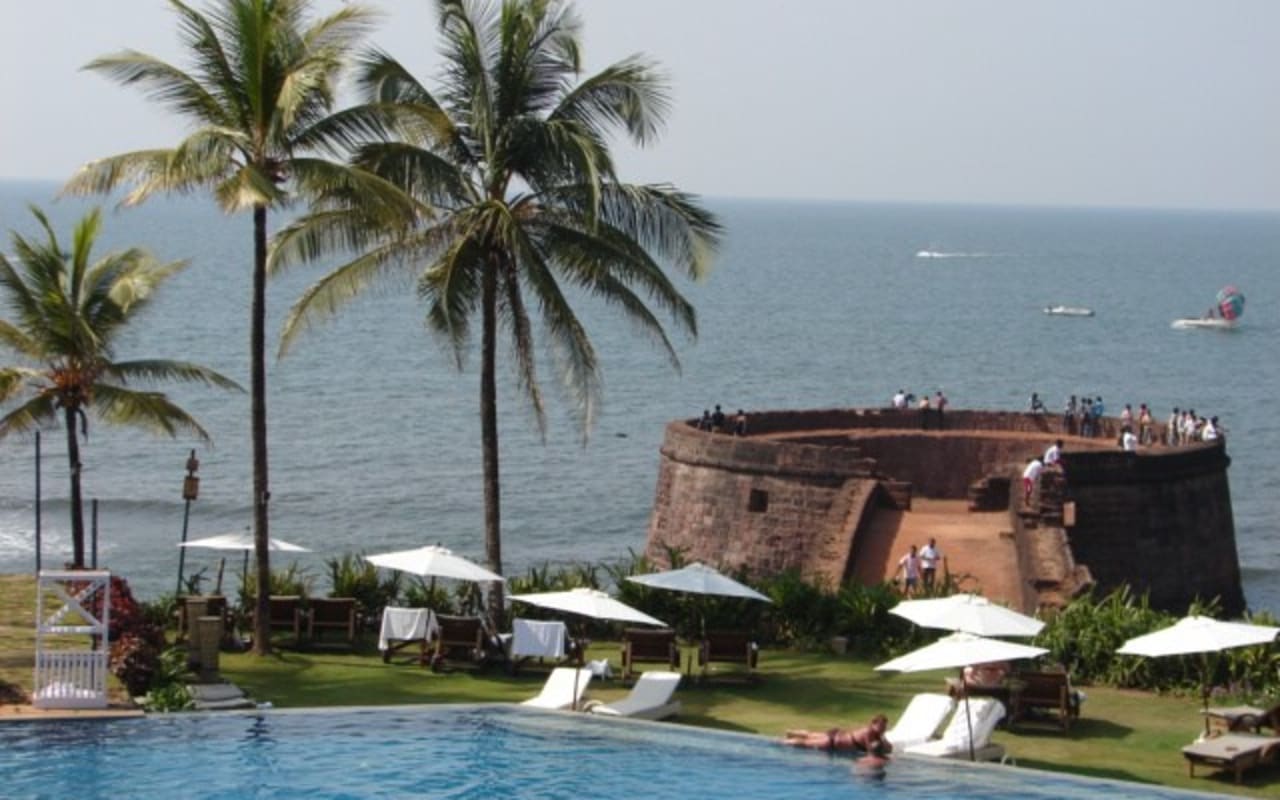
Discussing Taj hotels is to engage with a particular vision of Indian hospitality. The Tata group has been carrying this narrative since 1903. They have crafted a grammar of stay that intertwines urban addresses, lakeside palaces, and grand capital residences. For our readership, this segment meets a clear demand. Many seek an elegant, comprehensible India, deeply rooted in its heritage. They desire solid reference points for their first journey. Others wish to revisit already mythical places, but with contemporary service. Within this family, certain names consistently emerge. The Taj Mahal Palace in Mumbai and Taj Lake Palace in Udaipur hold a special place. Taj Mahal, New Delhi and Taj Lands End, Mumbai complete a coherent panorama.
At MyConciergeHotel, we do not rank hotels based solely on reputation. We first examine the facts. The Taj brand is one of the major signatures of Asian hospitality. Its historical grounding is well-documented. We then consider the strength of the location. A waterfront address in Mumbai does not tell the same story as a palace set on Lake Pichola. We also assess the clarity of the experience. Architecture, location, consistency of service, and the ability to host a honeymoon or a grand heritage itinerary are all significant factors. The Jiva spa, the prominence of Indian gastronomy, and the quality of communal spaces also play a role in our evaluation. Finally, our advisors pay particular attention to consistency. A great name must deliver on its promise, from the first contact to departure.
The overview of this Top 4 aptly illustrates the diversity of the Taj universe. In Udaipur, Taj Lake Palace belongs to the imagination of Indian palaces seen from the water. Its very location defines a journey. In Mumbai, The Taj Mahal Palace represents another realm. It is the hotel of the grand port city, of colonial history, and of arrivals facing the bay. Still in Mumbai, Taj Lands End offers a more contemporary interpretation of urban stays. The relationship with the sea alters the rhythm of the journey. In New Delhi, Taj Mahal, New Delhi embodies the diplomatic and cultural capital. This selection does not merely juxtapose four interchangeable hotels. It presents four gateways to high-end India. This is precisely what makes the ranking useful for planning an itinerary.
For 2025 and 2026, we are observing several strong trends in this segment. The first concerns multi-stage stays. Travellers are increasingly combining a capital, a metropolis, and a heritage destination. In this context, New Delhi, Mumbai, and Udaipur form a highly sought-after trio. The second trend relates to the duration of stay. Clients are extending each stage. They want to experience the hotel, not just sleep there. This enhances the appeal of establishments that offer a genuine architectural identity and spaces where one is happy to linger. The third evolution is the growing demand for highly personalised service. Not demonstrative service, but precise, anticipatory, and calm service. This is an area where Taj maintains a lead in the minds of many travellers. Finally, honeymoons are returning to Indian palaces. They seek narrative, not just a suite.
Our interpretation of luxury remains deliberately close to a culture of detail. It is French in its demands but open to Indian codes of hospitality. What interests us here is not ostentation. It is how a hotel organises space, silence, movement, and attention to the guest. In the best Taj addresses, luxury is often expressed in fluidity. A well-thought-out transfer. A table suited to the time of arrival. A room whose view truly justifies the category choice. An architecture that serves not as a backdrop but as a living framework. Also noteworthy is the emphasis on care. The Jiva spa is not merely a brochure selling point. It contributes to a vision of the stay that is slower and more enveloping. For a French or European clientele, this coherence often matters as much as the prestige of the name.
It is also essential to explain how to interpret this ranking. A number one does not negate the qualities of the others. Each hotel caters to a specific use, season, and sensitivity. Some travellers prioritise a historic palace. Others favour an efficient urban address, with open views and easier access. Some are on honeymoons. Others are crafting a grand cultural journey. Our role is not to create superlatives. It is to help make the right choice. What our advisors often observe is that a successful stay depends less on a theoretical rank than on a good match between the hotel and the project. Taj Lake Palace does not fulfil the same promise as Taj Lands End, Mumbai. The Taj Mahal Palace cannot be directly compared to Taj Mahal, New Delhi. Thus, this Top should be read as an editorial hierarchy, but also as a guide for orientation.
My advice, before delving into the ranking, is simple. Think of your journey in scenes. An arrival in Mumbai steeped in history. A more political and cultural time in New Delhi. Then a lakeside interlude in Udaipur. The Taj hotels make perfect sense in this perspective. They compose less a uniform collection than a map of the grand Indian journey. Here are now the four addresses that, in our view, best embody this legendary hospitality signed by Tata.