In Rome, the term 'villa' signifies more than just an address; it embodies a way of living within the city. The pace shifts immediately. One leaves behind the grand thoroughfares, theatrical façades, and bustling lobbies. Instead, one encounters more domestic proportions, rare gardens, and salons that retain a sense of residential memory. For a high-end stay, this category meets a specific expectation. Many travellers desire Rome, but without the feeling of an interchangeable large hotel. They seek a more direct connection to the neighbourhood, silence, and intimacy. In this selection, three names crystallise this promise. Sofitel Rome Villa Borghese, Villa Médicis, and Villa Spalletti Trivelli each embody a different interpretation of the Roman villa. It is precisely this nuance that makes the segment interesting.
At MyConciergeHotel, we do not rank a villa based solely on image. Our assessment relies on concrete and comparable criteria. First, the Roman anchoring. A villa convinces when it engages in dialogue with the city, without dissolving into it. Next, architectural coherence. We observe the fidelity between the place, its history suggested by its name, and the experience actually lived. Service is equally important. In a villa, attention must be present but never overwhelming. We also consider the quality of communal spaces, the sense of intimacy, and the relevance of the address for a first visit or a return to Rome. Finally, we take into account the clarity of positioning. A grand villa does not attempt to be everything to everyone; it embraces a clear personality.
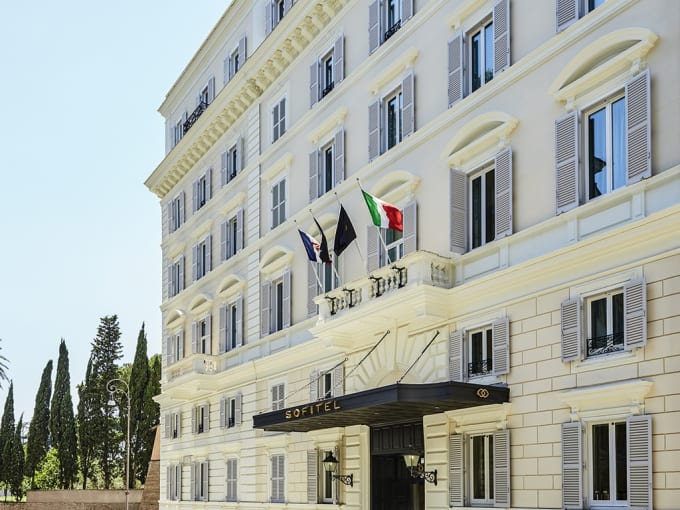
The panorama of this top 3 clearly shows the diversity within the category. Sofitel Rome Villa Borghese fits into an international interpretation of luxury, with a highly sought-after location in Rome and an immediately recognisable identity. Its name already suggests a privileged relationship with one of the city's most desirable areas. Villa Médicis, on the other hand, plays a more singular tune. The name evokes a strong Roman and aristocratic imagery. It suggests a more heritage-focused experience, more tied to the memory of the place than to mere hotel demonstration. Villa Spalletti Trivelli, finally, belongs to a family of addresses that our advisors closely monitor—those where one can still sense the scale of a private home. These three hotels are not alike, and this is a strength, not a dispersion. Together, they outline three credible entry points into Rome.
For 2025 and 2026, our observations confirm a clear evolution. The ultra-high-end clientele demands less visible ostentation and more precision. In a city as dense as Rome, the villa perfectly meets this expectation. The traveller seeks calm, but not isolation. They desire a central address, but not a permanent scene. They want elegance, but without unnecessary protocol. This tension between discretion and location becomes decisive. Another strong trend is the search for human-scale venues. Stays are sometimes shorter, but they become denser. People want to live better for three nights rather than merely ticking off must-sees. The villa then emerges as a relevant format. It allows for a gentler immersion. It also promotes a more personalised service, which our advisors often consider a true criterion for return.
There is also, within this theme, a distinctly French sensitivity to luxury. Not a style imposed upon Rome, but a certain idea of moderation. The French luxury we advocate does not rely on accumulation. It prioritises restraint, clarity, quality of materials, the sense of hospitality, and the ability to simplify at the right level. In a Roman villa, this approach takes on a particular significance. It enhances the volumes, the light, the reading of details, and the continuity between indoors and outdoors. It also allows for the luxury of time. A leisurely breakfast, a return in the late afternoon, a lounge where one prefers to linger rather than rush out immediately. It is worth noting that a successful villa does not seek to impress at every moment; it establishes trust. This is often what our clients remember most enduringly.
Thus, this ranking must be read methodically. The number one choice will not automatically be the best option for every traveller. Some will favour the most quintessentially Roman address. Others will prefer a more residential setting or a reassuring international signature. Still others will seek a more intimate relationship with the place. Our role is not to erase these differences but to make them clear. We do not seek verbal spectacle; we seek the right match between a hotel and its use. A villa can be ideal for a cultural weekend, for a discreet pause after an Italian itinerary, or for a first stay as a couple. My advice is to read this top as a compass. Each listed address has a reason for being there. The hierarchy helps in making a choice; it never replaces the right stay profile.
Before moving on to the top 3, keep this simple idea in mind. In Rome, the best villa is not merely the one that stands out; it is the one that makes the city more liveable.