In Saint-Tropez, a rooftop is more than just a backdrop; it offers a unique perspective on the peninsula. From a high terrace, the village transforms in scale. The port appears denser, the hills reclaim their prominence, and the light becomes a significant factor in the hotel experience. In this destination, the address matters, but the viewpoint is almost equally important. Our travellers often inquire about this specific aspect, seeking not just a scene but a proper position. A successful rooftop should provide a sense of space, extending the day without weighing it down. In Saint-Tropez, where the summer intensity can quickly overwhelm, this measured height makes all the difference. It allows one to reconnect with the landscape, regain a sense of rhythm, and experience the Côte d’Azur from a more reflective vantage point.
To compile this ranking, we do not rely on a vague notion of rooftops. We assess concrete elements. The hotel's location within Saint-Tropez and its proximity to the peninsula are paramount. Next come the visual openness, the usability of the terrace, and its coherence with the hotel's identity. A rooftop serves different functions in different contexts; it can be an observation point over the bay, a more intimate setting, or an extension of a restaurant, bar, or relaxation area. We also consider the hotel's standard, official distinctions, and consistency of service. Palace Atout France, prestigious international brands, historic houses, or characterful hotels, each address is evaluated within its own context. This is essential for making comparisons without caricaturing.
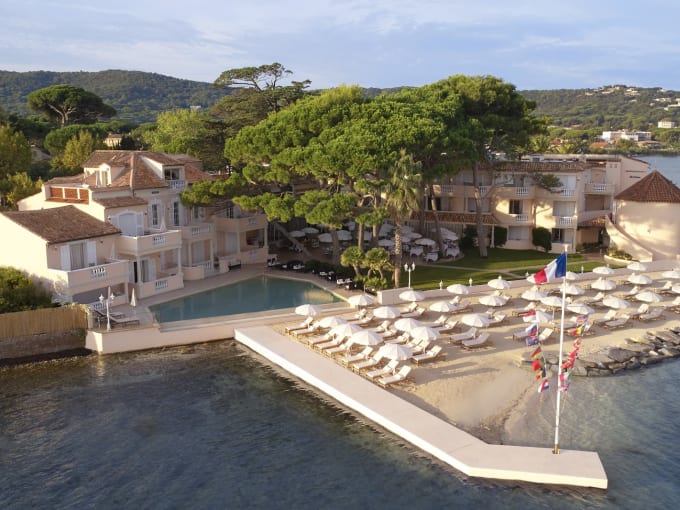
The Tropezian panorama is more varied than it seems. On one hand, institutions like Cheval Blanc St-Tropez or Hôtel Byblos Saint-Tropez remind us that the village knows how to blend prestige, local heritage, and contemporary desire. On the other hand, elevated establishments like Althoff Villa Belrose shift the gaze towards the gulf and its contours. Airelles Saint-Tropez Château de la Messardière, or its historical name Château de la Messardière, introduces another scale, that of a grand estate perched where the view almost becomes a territory. Further afield, La Réserve Ramatuelle - Hôtel, SPA and Villas demonstrates that a hotel near Saint-Tropez can fully partake in this rooftop narrative. The immediate proximity to the coastline, the topography, and architectural discretion create a different, often more contemplative experience.
For 2025 and 2026, we observe a clear evolution. The Tropezian rooftop is moving away from being solely event-focused. Travellers are seeking more accessible, better-integrated spaces that can function throughout the day—early morning, aperitif, dinner, or simply a moment of retreat. The high terrace is becoming a versatile space, yet not noisy. The demand also encompasses fluidity: easy access, well-designed furniture, wind protection, discreet service, and a direct relationship with the landscape. Another strong trend is the quest for visual authenticity. Clients want to see Saint-Tropez, not just be seen in Saint-Tropez. This favours hotels that frame the sea, the pines, the village rooftops, or the hills of Ramatuelle. What our advisors observe is a growing preference for rooftops that soothe as much as they impress.
This expectation aligns with a certain idea of French luxury. In Saint-Tropez, it is not merely about ostentation; it rests on a balance between intensity and restraint. A well-designed rooftop does not overshadow the site; it complements it. It allows the Mediterranean to speak before the decor. In the finest establishments, height is never a mere display; it becomes an instrument of precision. Here, one finds distinctly French codes: a sense of perspective, the relationship between architecture and garden, attention to the rhythm of service, and the ability to create an atmosphere without overcrowding the space. This is particularly evident in high-end hotels, whether they are Palaces or prestigious five-star brands. My advice is simple: in Saint-Tropez, choose the rooftop that aligns with your way of experiencing the destination, not just your desire for a view.
Thus, this ranking should be read methodically. We do not aim to designate a universal winner. Each hotel caters to a specific use. Some are better suited for a very central stay, with immediate access to the village and port, while others charm with their seclusion, tranquillity, or broader vision of the gulf. A Palace does not automatically eclipse a five-star hotel without Palace distinction. Similarly, an iconic address is not always the most suitable for a romantic getaway, a discreet interlude, or a wellness-oriented stay. We are ranking hotels here, not fantasies. The positions reflect a combination of observable facts, customer experience, and overall coherence. It is important to remember that a remarkable rooftop is not merely high or photogenic; it should enhance the stay, from the first drink to the last evening glance.
In the following Top 6, you will find six ways to experience Saint-Tropez from above. Some are spectacular, while others are more subdued. All deserve attention for specific reasons.