In Île-de-France, hotel romance is not merely about a room with a view. It begins with a unique geography. In less than an hour from Paris, the scenery changes dramatically. The royal vistas of Versailles contrast with the forests of Fontainebleau. Barbizon nurtures a discreet artistic memory. Bonnelles offers a more rural, breathable interlude. For couples, this proximity is significant. It allows for spontaneous getaways without heavy logistics. It also permits short stays that are genuinely refreshing. This is precisely where the region becomes intriguing. It offers various forms of romantic retreat. Some are heritage-focused, while others are more pastoral. All play on the themes of rediscovered time, walking, silence, fine dining, and attention to detail.
To establish this ranking, we do not seek a singular definition of romance. Instead, we observe concrete and verifiable signs. Location is, of course, crucial. A romantic hotel gains strength when it engages with a park, a forest, an artists' village, or a significant historical site. The architecture and scale of the place also matter. A couple experiences a castle, a characterful residence, or a more nature-oriented address in different ways. We then consider the coherence of the experience. Quality of communal spaces, opportunities for walks together, evening ambience, presence of a spa, or a setting conducive to relaxation are all important. What our advisors particularly note is the sense of inevitability. A romantic place never forces its effect.
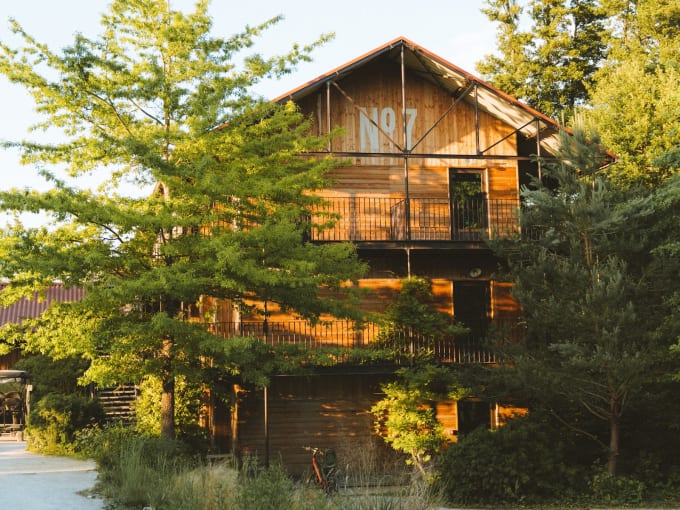
The selection presented here offers a concise yet clear panorama of sentimental Île-de-France. La Demeure du Parc in Fontainebleau appeals to couples drawn to heritage, gardens, and the elegance of a destination city. La Folie Barbizon occupies a more creative register. Its connection to Barbizon immediately evokes the painting school, the forest edge, and a form of cultural retreat. The Barn in Bonnelles shifts the focus to the Île-de-France countryside, where one seeks more air, space, and a more relaxed luxury. Finally, the Trianon Palace Versailles, A Waldorf Astoria Hotel, establishes romance in direct relation to Versailles. Four hotels, therefore, but four very different imaginations. This is enough to demonstrate that the region cannot be reduced to a single idea of a couple's getaway.
For 2025 and 2026, a clear trend is emerging. Couples are favouring authenticity over ostentation. They seek hotels that can provide immediate respite. The ideal distance is measured less in kilometres than in mental disengagement. Île-de-France meets this expectation well. It allows one to leave the city without wasting time on transport. In this context, the noteworthy addresses are those that offer a comprehensible environment. A forest accessible on foot, a historic park, lounges to linger in after dinner, a terrace, calming volumes. Contemporary romance becomes more sensory and tranquil. It is conveyed through light, materials, and the opportunity to disconnect. My advice is simple: pay less attention to the promised allure and more to the actual rhythm of the place.
There is also, within this selection, a distinctly French interpretation of romantic luxury. It does not rely solely on decor. It is about a certain way of inhabiting history without freezing it. In both Versailles and Fontainebleau, emotion often arises from the continuity between the hotel and its cultural surroundings. In Barbizon, it is nourished by a more intimate relationship with the landscape and creativity. In Bonnelles, it stems from a countryside designed to be experienced naturally, without rigid codes. This type of luxury prefers conversation over spectacle. It values the quality of sleep, morning strolls, foliage seen from a window, and the comfort of a thoughtfully designed lounge. It is important to note that romantic hotel experiences in Île-de-France are less theatrical than one might sometimes imagine. They operate through nuances, cadence, and precision.
This ranking should thus be read as a guide to affinities, not as a universal verdict. One couple may prefer the intimacy of a creative address. Another may seek the strength of a renowned international name. Others still may desire a refuge close to the forest or an elegant base to explore a historic city. We do not oppose these approaches. We arrange them according to their romantic relevance within the specific framework of this selection. The positioning reflects a balance between setting, coherence, emotional potential, and quality of escape. It does not detract from the qualities of the hotels ranked lower. It simply aids in choosing according to one's life moment—anniversary, marriage proposal, reconnection weekend, or a couple's pause without a particular occasion. The best romantic hotel remains the one that matches the couple's tempo.
Now, let us present the Top 4. Here you will find four very distinct ways to experience Île-de-France as a couple. It is this diversity that makes the ranking useful.