

Our Selection Criteria
When selecting the best hotel bars in Paris, several essential criteria come into play. The establishments that stand out combine a perfect blend of atmosphere, mixology, service, and setting. These elements, while distinct, complement each other to offer an unforgettable experience to visitors. Here’s what we analyse to establish our recommendations.
Atmosphere is the first criterion that captures attention. A Parisian hotel bar must provide an ambience that transcends the mere act of consuming a drink. Whether it’s dim lighting, carefully curated music, or an international clientele, every detail contributes to a unique identity. Some bars favour a subdued intimacy, while others focus on a more festive energy. The choice of atmosphere must cater to the varied expectations of clients, whether they are locals or travellers.
Next, mixology plays a central role. In a context where cocktails are no longer mere drinks but genuine creations, the expertise of mixologists is a significant asset. We pay attention to the quality of ingredients, the creativity of recipes, and the balance of flavours. Bars that stand out offer evolving menus, often inspired by the seasons or specific themes. In Paris, mixology also draws from the city’s rich cultural and gastronomic heritage, sometimes incorporating iconic ingredients like champagne or rare spices.
Service is another essential pillar. In a luxury hotel bar, the welcome and attention to detail make all the difference. Staff must not only be trained in the art of mixology but also capable of anticipating clients’ needs. Discreet yet attentive service, the ability to personalise recommendations, or to share the story behind a cocktail—this is what transforms an evening into a memorable moment.
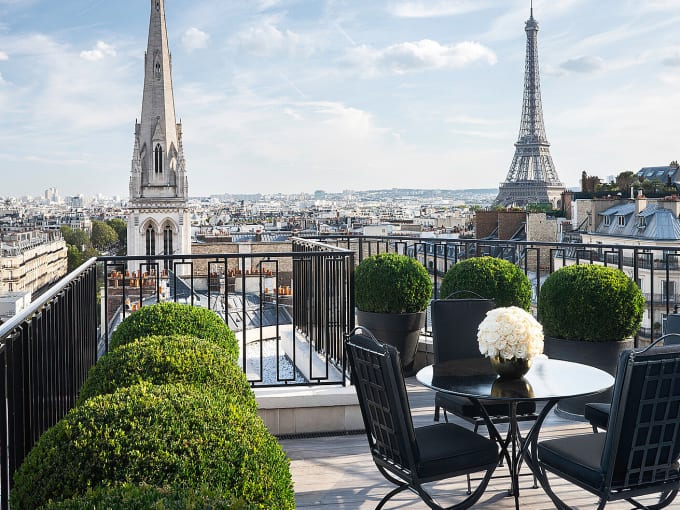
Finally, the architectural and decorative setting plays a decisive role. Paris is a city where design and history often meet in the most unexpected spaces. Some bars are located in historic buildings, while others are housed in modern structures with panoramic views of the city. The furniture, layout of spaces, and even the art on display contribute to reinforcing each venue’s identity. In Paris, the experience of a hotel bar is often as visual as it is gustatory.
In summary, our selection is based on a harmonious combination of these criteria. Each bar chosen excels in these areas, offering an experience that is both authentic and sophisticated. Our advisors ensure that every detail, from the ambience to the last sip, meets the expectations of enthusiasts of exceptional places.
Focus on Gastronomy
In Paris, certain hotel bars stand out for their gastronomic approach, blending mixology and haute cuisine. These venues do not simply offer classic cocktails; they collaborate with renowned chefs or create cocktail menus inspired by advanced culinary techniques. This trend, which was still discreet a few years ago, has now established itself as a marker of excellence for establishments wishing to provide a complete and refined experience for their visitors.
A notable example is the integration of complex and unexpected flavours into creations. Mixologists collaborate with chefs to use ingredients rarely seen in cocktails: vegetable infusions, syrups reduced from fresh fruit juices, or rare spices. These choices are not trivial. They respond to a growing demand from clients for unique sensory experiences, where each drink tells a story or evokes a gustatory memory. It is worth noting that bars adopting this approach leave nothing to chance; every detail is carefully considered.
Another highlight of these venues is their ability to offer food-cocktail pairings. Inspired by food-wine pairings, these suggestions allow clients to enjoy liquid creations designed to enhance a dish. This innovation appeals to gastronomy enthusiasts seeking a coherent and harmonious experience. Our advisors observe that these pairings often result from close collaboration between the head chef and the head bartender, two talents working hand in hand.
Finally, the presentation of cocktails in these bars reaches aesthetic heights. Hand-blown glasses, edible decorative elements, or theatrical presentations—all are designed to delight clients. These subtle details contribute to the aura of these establishments and reinforce their high-end positioning. My advice: if you are curious, do not hesitate to ask the staff for insights into the inspirations behind each creation. These anecdotes enrich the experience and provide a deeper understanding of the craftsmanship involved.
In summary, Parisian hotel bars focusing on gastronomy do not merely follow a trend. They redefine clients' expectations regarding cocktails and culinary experiences. These venues are much more than relaxation spaces; they become destinations in their own right, where the art of living in Paris is expressed in all its richness.
Questions about this section
What are the most popular cocktail styles in these hotel bars?
Bars offer reimagined classics and signature creations, often inspired by Parisian culture or local ingredients.
Trends 2025-2026
Trends in Parisian hotel bars are evolving rapidly, and the years 2025-2026 promise to be a turning point. Several themes are emerging, redefining the customer experience and the role of these exceptional venues. Among them, sustainability, the use of local ingredients, and immersive concepts stand out. These trends are not just responses to client expectations; they also reflect a deeper commitment from establishments to contemporary values.
Sustainability is now at the heart of hotel bar concerns. Parisian establishments strive to integrate eco-responsible practices into their operations. This includes reducing plastic waste, using recycled materials for decoration, and initiatives to limit food waste. Cocktails, for example, are often crafted from ingredients that are fully utilised, from zest to fruit pulp. Bars also seek to work with local producers to reduce their carbon footprint. Our advisors observe a desire to combine luxury with environmental responsibility, without compromising on quality.
Local ingredients play a central role in this transition. Parisian hotel bars are reinterpreting classics by highlighting French or regional products. For instance, artisanal spirits, such as gin or vodka produced in Île-de-France, are gaining popularity. Fresh herbs grown on-site, sometimes in urban gardens located on hotel rooftops, are also becoming staples. This approach not only strengthens the connection to the local terroir but also offers a more authentic experience rooted in local culture. It is important to note that these choices concern not only flavours but also the history and identity of the venues.
Finally, immersive concepts are redefining the hotel bar experience. The idea is to offer much more than a simple tasting moment. Establishments are creating complete universes, blending design, music, and storytelling. Some bars theme their spaces to transport clients to a particular time or place. Others focus on technology, with interactive experiences or cocktails personalised through artificial intelligence. My advice: seek out those establishments that transform each visit into a unique sensory adventure. These immersive concepts respond to a quest for originality and emotion.
In summary, Parisian hotel bars continue to reinvent themselves. Sustainability, local ingredients, and immersive concepts are the pillars of this transformation. These trends are not mere fads; they reflect a profound evolution of client expectations and hotel commitments. The years 2025-2026 promise to continue to surprise and inspire while grounding these venues in a respectful and creative modernity.
Questions about this section
Are Paris hotel bars following any specific trends right now?
Yes, current trends include alcohol-free cocktails, local ingredients, and immersive experiences like themed bars.
History and Heritage
Parisian hotel bars have a rich and fascinating history, inseparable from the evolution of the capital itself. Since the 19th century, these venues were much more than dining spaces: they represented cultural crossroads where international travellers, local artists, and intellectuals mingled. Paris, as a nerve centre of Europe, quickly saw its hotel establishments adapt to meet the expectations of a cosmopolitan clientele. The first hotel bars imported Anglo-Saxon concepts like the cocktail, previously little known in France, adding a distinctly Parisian touch of elegance.
The interwar period marked a decisive turning point for these establishments. During this time, several Parisian hotel bars became iconic venues of social life. They attracted major figures of the era, from writers to movie stars, who found an atmosphere conducive to inspiration or relaxation. It was also the time when Parisian bartenders began to make a name for themselves and develop original creations, some of which became global classics. Parisian hotel bars then established themselves as places where the art of the cocktail meets that of conversation.
In the 1970s and 1980s, a revival occurred, driven by a new generation of mixologists and the upgrading of hotel establishments. Major Parisian hotels invested in ambitious renovations, incorporating bars with bold designs and increasingly innovative menus. This period also saw the emergence of collaborations with personalities from the culinary and spirits worlds, further enhancing the prestige of these venues. It is worth noting that this evolution is not merely aesthetic or technical. It also reflects a desire to meet the expectations of a demanding clientele in search of unique experiences.
Today, Parisian hotel bars continue to play a central role in local culture. They are no longer solely reserved for hotel guests but also welcome a loyal Parisian clientele. These venues embody a subtle balance between tradition and innovation, offering spaces where one can enjoy contemporary creations while immersing oneself in the history and heritage of the capital. My advice: do not underestimate the importance of atmosphere. The best hotel bars know how to capture the spirit of Paris while constantly reinventing themselves.
In summary, Parisian hotel bars are much more than places of consumption. They are living witnesses to the evolution of the city and its international influences. Their history, marked by periods of transformation and innovation, continues to be written every day.


