Indonesia holds a unique position in the realm of luxury travel. The archipelago offers not just one interpretation of luxury, but several. Bali captures international attention with its shores, cliffs, and inland valleys. However, the country is not limited to this island. From Moyo Island and Magelang to the more discreet eastern Bali coasts, the experience varies profoundly. This is precisely what makes this ranking valuable. A grand hotel in Indonesia is not judged solely by its level of service. It is also reflected in its relationship with the landscape, local spirituality, architectural density, and ability to create silence. It is worth noting that here, the most compelling luxury is often that which knows how to slow down.
To establish our editorial perspective, we consider several criteria. The first remains hotel consistency, measured by the quality of welcome, accommodation, dining, and wellness spaces. The second concerns location. In Indonesia, the address is as important as the hotel itself. A cliff in Uluwatu, a valley in Ubud, or proximity to Borobudur tells different stories. The third criterion focuses on identity. We assess whether the establishment expresses a clear vision rather than interchangeable luxury. Finally, we observe lasting desirability. Does a hotel remain relevant after the novelty wears off? What our advisors observe is that the best establishments are those that travellers still recommend several seasons after their stay.
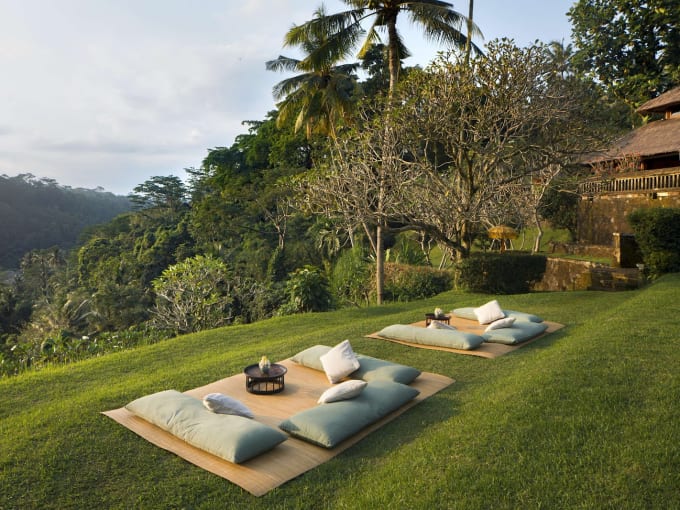
The selection presented here illustrates this diversity well. It features internationally recognised names such as Aman, Anantara, COMO, Capella, Banyan Tree, and Bvlgari. It also includes addresses whose appeal lies in their specific location. Amandari and COMO Uma Ubud engage with the landscapes of Ubud. Amankila gazes out to sea from Bali's east coast. Amanjiwo takes a different path in Magelang, embracing the cultural strength of Central Java. Amanwana, on Moyo Island, shifts the gaze towards a form of island retreat. Nearby, Jimbaran, Canggu, Seminyak, and Nusa Dua cater to different expectations. Some establishments prioritise the beach, others design, and still others disconnection. My advice: do not seek a single best hotel; seek the right tempo.
For 2025 and 2026, several trends are emerging in Indonesia. Firstly, demand is shifting towards more intentional stays. Travellers desire fewer addresses, but better chosen ones. Secondly, architecture that opens to nature continues to appeal, provided it is accompanied by true climatic and acoustic comfort. Wellness experiences remain central, but they are evolving. A spa is no longer sufficient. Clients expect coherence between sleep, nutrition, movement, and environment. We also see a growing interest in private villas and configurations suited for multigenerational stays. Finally, major brands maintain a clear advantage when they respect the local context. In Indonesia, the international reassures, but local grounding makes the difference. This is where the best addresses gain an edge.
There is also a more French interpretation of hotel luxury in Indonesia. It does not involve projecting a European model onto the archipelago. Rather, it recognises certain universal qualities. Discreet service is one of them. Clarity of spaces is another. A grand hotel does not need to overdo it to convince. It must evoke a sense of obviousness. This requirement speaks particularly to our role as concierges. We seek establishments where every detail supports the stay without overplaying it. This applies to a villa in Nusa Dua, a resort on the cliffs of Uluwatu, or a retreat in the heights of Ubud. Here, French luxury translates to moderation. A beautiful address imposes less than it accompanies.
This ranking should therefore be read methodically. It does not claim to designate an absolute winner for all travellers. A couple on their honeymoon, a family with teenagers, a surf enthusiast, a spa regular, or a loyal client of major brands will not have the same choice. This is why we avoid hollow superlatives. They do not aid in comparison or in making the right booking. One establishment may be remarkable for its seclusion, yet less suited for a first Balinese stay. Another may excel in beach access while offering a more vibrant atmosphere. Our role is not to oversimplify. It is to organise, contextualise, and guide. It is important to remember that each hotel ranked here deserves its place, but not for the same reasons.
In the following Top 10, you will find very different hotels, united by a common level of expectation. Some have become regional benchmarks. Others attract with a more recent vision. All contribute to the current Indonesian hotel conversation.