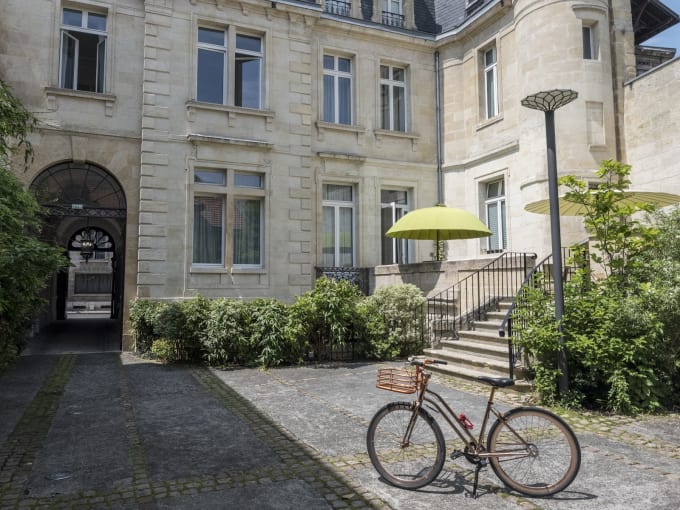
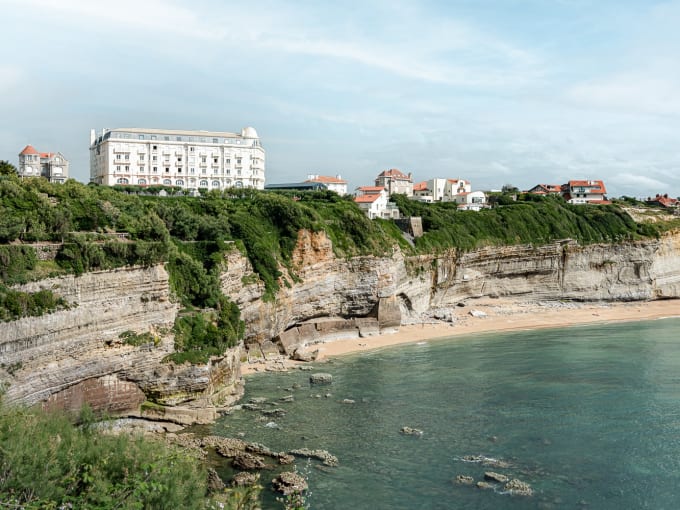
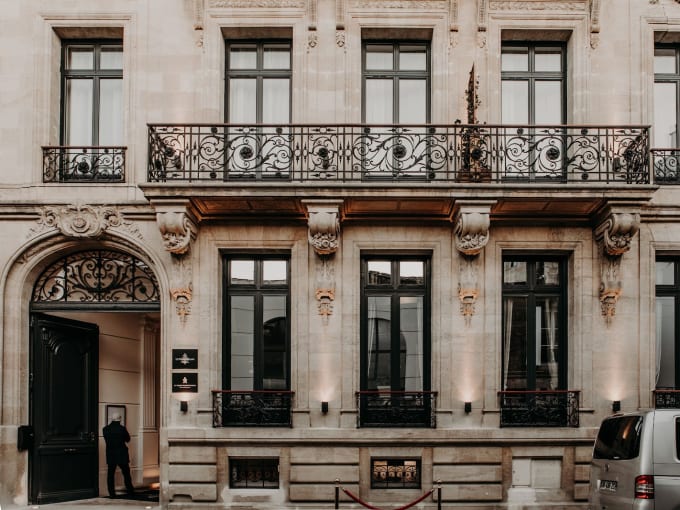
In the South-West, design hotels are not merely defined by a decorative signature. They engage in a dialogue with a clearly defined territory. Bordeaux showcases its classical façades and urban addresses. The Arcachon Bay favours low lines, natural materials, and changing light. The Basque coast embraces a more graphic vocabulary, often steeped in seaside history. The vineyards, on the other hand, introduce a different scale. Here, the landscape dictates the rhythm, the view, and sometimes the architecture. This is what makes this selection particularly intriguing. Design is not a superficial style; it becomes a way of inhabiting a place, framing a horizon, orchestrating movement, and providing coherence to the stay. Notably, this cluster allows for a comparison of various visions of contemporary French luxury.
To establish this ranking, we employed a rigorous editorial approach. We first observe the clarity of the aesthetic stance. A design hotel must offer an immediately perceptible identity without sacrificing comfort. Next, we consider the integration into the location. A fine address in Bordeaux cannot be judged in the same way as a house in Cap Ferret or a palace in Biarritz. We also take into account the quality of the volumes, the treatment of light, the dialogue between heritage and creation, as well as the consistency of common areas with the rooms. The level of service is, of course, important, but it does not overshadow the rest. This ranking primarily speaks of visual language and spatial experience. What our advisors observe is the overall coherence, not a fleeting trend.
The panorama is more varied than one might imagine. In Bordeaux, YNDO Hotel, Burdigala by Inwood Hotels, Le Palais Gallien Bordeaux, and Mondrian Bordeaux Les Carmes showcase four distinct approaches. One is more intimate, while another offers a more structured urban hospitality. A third plays with the character of a historic residence. The last integrates an international brand into a rapidly evolving neighbourhood. By the Bay, Cabane Yndo, Côté Sable Spa by Clarins, and La Maison du Bassin favour a softer narrative. The volumes breathe differently here. In Biarritz, Hôtel du Palais and Regina Experimental Biarritz remind us that design can also reinterpret a historical legacy. Finally, Les Sources de Caudalie, Château Troplong Mondot, Château-Hôtel Grand Barrail, and Badon Boutique Hotel illustrate how the vineyard inspires more grounded aesthetics.
For 2025 and 2026, several trends are solidifying in the South-West. The first concerns materials. Light wood, stone, ceramics, linen, and mineral palettes remain dominant. They respond well to the Atlantic light and the imagery of the vineyards. The second relates to the legibility of spaces. Travellers seek hotels that are less ostentatious, better designed, with simple circulation and rooms intended for longevity. Thirdly, relational design is progressing. It is no longer just about objects or furniture. The welcome, acoustics, intimacy, and rhythm of the spaces are becoming decisive criteria. My advice is to also observe how each address manages the transition between indoors and outdoors. In this region, terraces, patios, gardens, and views are integral to the aesthetic project.
This selection also conveys a certain idea of French luxury. Not a fixed idea, but rather a culture of moderation, composition, and precise detail. In the South-West, this philosophy takes on different forms. Les Sources de Caudalie expresses it through a close relationship with the vine and the landscape. Hôtel du Palais embeds it in a rare institutional history on the Atlantic coast. Côté Sable Spa by Clarins and La Maison du Bassin advocate for a more discreet elegance, tied to use and atmosphere. In Bordeaux, YNDO Hotel and Mondrian Bordeaux Les Carmes demonstrate that a hotel can be distinctly identified without becoming theatrical. This is an important point. The most compelling design does not overshadow the stay; it accompanies it, structures it, and then recedes at the right moment.
Thus, this ranking should be read with nuance. A number one is not a universal verdict. Each hotel responds to a specific expectation. Some travellers will seek an aesthetic manifesto in the city, while others will prefer a more tranquil address, oriented towards nature or heritage. A palace like Hôtel du Palais does not offer the same experience as a more intimate establishment like Badon Boutique Hotel. Regina Experimental Biarritz does not play the same register as Château Troplong Mondot. And that is perfectly fine. We do not reward the most spectacular here; we distinguish hotels where design creates a coherent, memorable, and situated experience. The right choice will depend on your tempo, your relationship with service, and the importance you place on architecture in your journey.
The following Top 10 prioritises addresses where the design of the spaces genuinely alters the perception of the stay. You will find urban, seaside, and vineyard signatures, all with a clear identity. The challenge remains to choose the one that resonates with you the most.