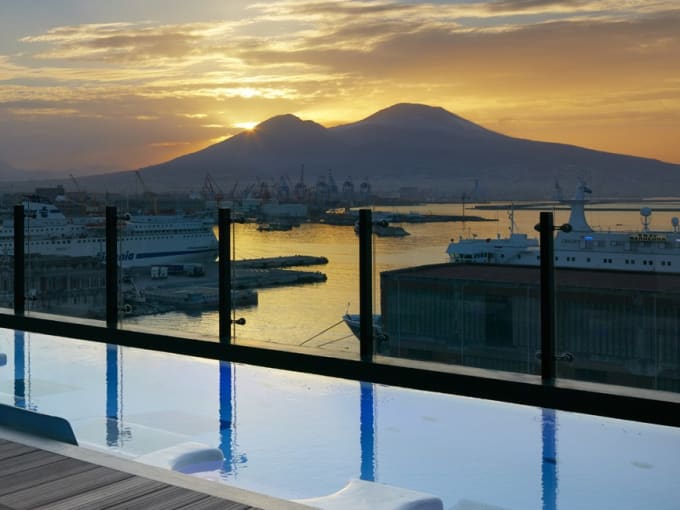
In Italy, hotel design is not merely a superficial adornment. It engages in a dialogue with museum-like cities, palaces, reconstructed villages, and highly codified landscapes. This is what makes this ranking particularly demanding. An Italian design hotel is not judged solely on its furnishings or photogenic qualities. It is measured by its ability to embed a contemporary vision within a context that is often heritage-rich. In Milan, the exercise involves the rigour of lines and the coherence of materials. In Rome, one must contend with monumental grandeur. In Venice, the memory of palaces looms large. Along the Amalfi Coast or in Sardinia, design confronts light, relief, and horizon. It is important to note: in Italy, design convinces when it structures the entire experience, from the threshold to the last lounge.
To establish this panorama, our advisors do not focus on fleeting aesthetics. We prioritise stable, observable, and comparable criteria. First, the clarity of the design intent. A design hotel must express a readable vision without dispersion. Next, the quality of architectural integration. The dialogue between the building, interior, and destination is as significant as the decor itself. We also consider longevity. Some places impress upon opening but age quickly. Others gain depth because materials, volumes, and uses have been thoughtfully conceived with discipline. Finally, we assess the coherence of service, common areas, and rooms. A great design hotel is never limited to a beautiful suite or a successful lobby.
The Italian landscape is particularly rich because it refuses uniformity. Aman Venice demonstrates how a grand Venetian palace can accommodate a contemporary interpretation without erasing its history. Armani Hotel Milano advocates a more urban, almost manifesto-like approach, where design becomes a brand language. Borgo Santandrea, in Amalfi, presents a sharp modernity facing the sea. Casa Monti, in Rome, offers a more liberated, decorative style in a neighbourhood undergoing a hotel reinterpretation. 7Pines Resort Sardinia illustrates another path, more horizontal, linked to the Mediterranean landscape. Finally, Borgo Egnazia reminds us that a design project can also involve the recomposition of a vernacular vocabulary. What our advisors often observe is that the best Italian design hotels know precisely what story they want to tell.
The years 2025 and 2026 confirm several underlying trends. The first concerns the return of tactile materials. Stone, wood, stucco, thick textiles, and ceramics are regaining importance against overly smooth interiors. The second relates to light. The most compelling projects now work more with shadows, transitions, and framing, rather than merely creating a spectacular staging. The third trend is the rise of hotels with strong identities in major Italian cities. Rome and Milan are advancing with more signature proposals, but also ones that are more liveable. Finally, sustainable design is becoming less demonstrative. It expresses itself through the longevity of choices, local anchoring, and the reversibility of layouts. My advice: beware of overly conceptual places. In Italy, design holds better when it embraces the patina and complexity of the context.
At MyConciergeHotel, we also interpret design through a certain idea of French luxury. This does not mean imposing a French taste on Italy. It means seeking accuracy, balance, and quality of use. A hotel can be very theatrical and still remain perfectly balanced. Another may seem discreet but assert itself through the precision of its details. True luxury, for us, lies in this silent coherence. Circulation must be intuitive. Volumes must breathe. Materials should reassure as much as they impress. And service must extend the aesthetic project without contradicting it. In a successful design hotel, nothing is gratuitous. Even simplicity requires great mastery. It is this demand that we seek, whether in a Roman palace or an island retreat.
This ranking does not claim to designate a universal winner. It offers ten different answers to the same question: what does it mean to stay in a grand design hotel in Italy today? Some travellers will seek a highly structured urban address. Others will prefer a coastal retreat, more open to the landscape. Some will desire a reinterpreted heritage. Others, a more pronounced decorative signature. This is why this top should be read as a curated selection, not as a fixed verdict. We highlight hotels that possess a vision, a presence, and relevance in their destination. None are meant to please everyone. And that is rather a good sign. In terms of design, unanimity often produces bland places. The addresses that matter, on the contrary, take a clear stance.
In the following pages, you will find our interpretation of the best design hotels in Italy. The common thread remains simple: places where aesthetics never separates from experience.