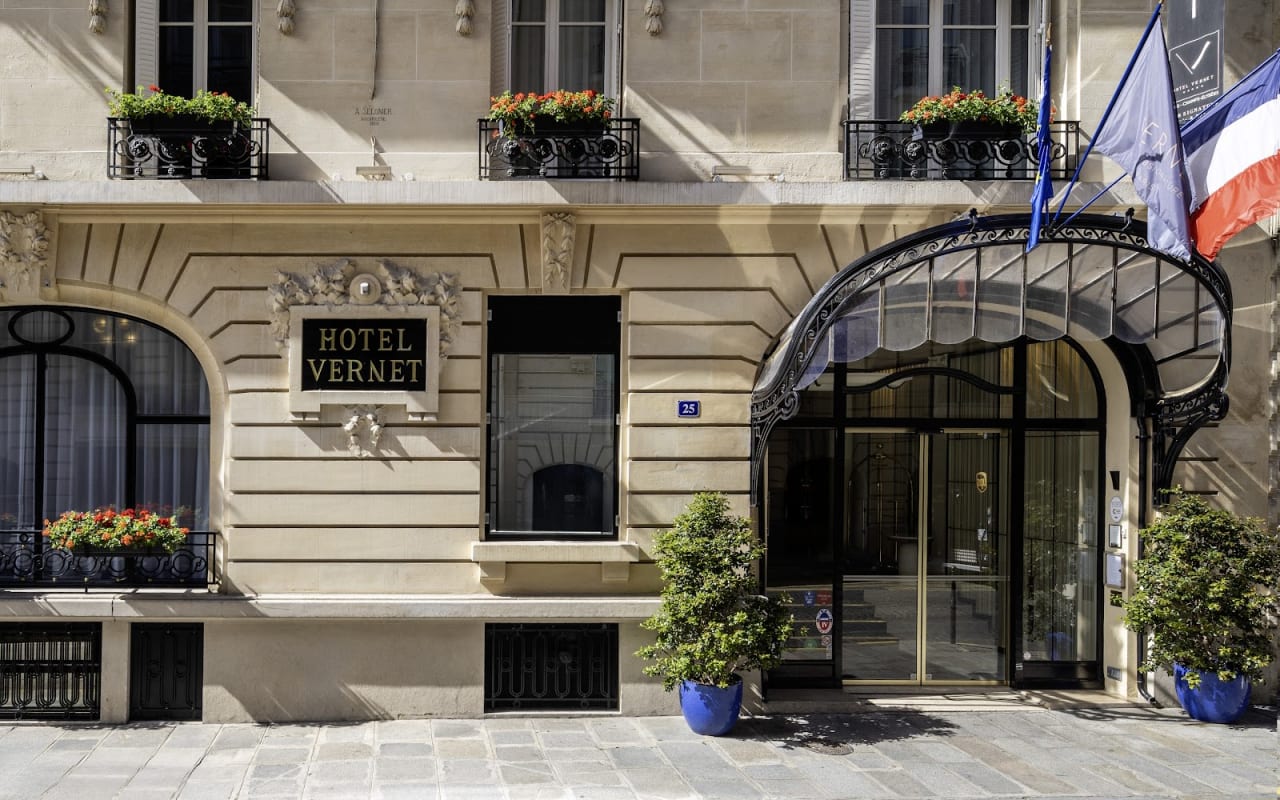
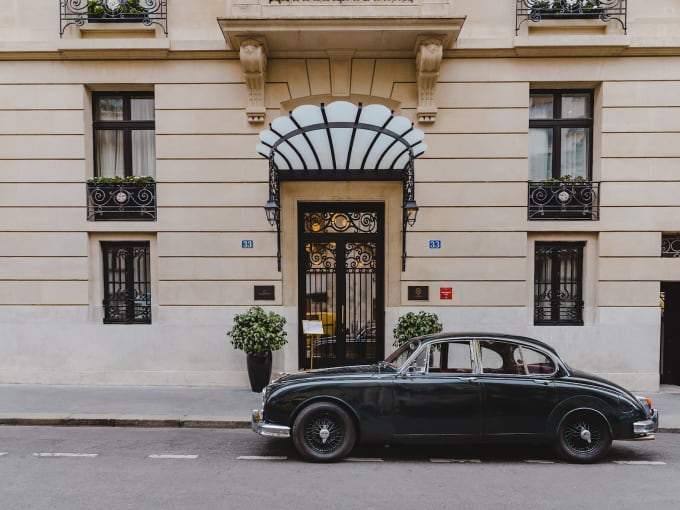
Surrounding the Champs-Élysées, the concept of a 'charming hotel' requires a nuanced interpretation. The area is primarily associated with major brands, iconic addresses, and palatial establishments. However, charm here takes on a more subtle form. It is reflected in a façade inherited from the Second Empire, confirmed by a discreet courtyard, a wooden lounge, an ancient staircase, and a more human-scale address. In the 8th arrondissement, heritage is never a mere backdrop; it structures the experience. Between Avenue George V, Avenue Montaigne, Place de la Concorde, and the quieter streets near Faubourg Saint-Honoré, the traveller chooses not just a place to stay but a relationship with Paris. This ranking aims to illuminate precisely that.
To establish this selection, MyConciergeHotel does not confuse prestige with relevance. We first observe the actual grounding in the broader Champs-Élysées area of Paris 8. We then consider the heritage strength of the address, including the building's history, the coherence of its restoration, the quality of its spaces, the presence of period elements, and its integration into the Parisian landscape. We also assess the style of hospitality. A charming hotel is not solely defined by its category; it depends on scale, atmosphere, and the manner of welcome. Our advisors finally distinguish those establishments that offer a unique interpretation of the neighbourhood. Some prioritise intimacy, while others embrace a more cosmopolitan dimension, and yet others create a dialogue between heritage and contemporary codes.
The panorama presented here showcases this diversity. Just minutes apart, the selected hotels tell different stories of Paris. Hôtel de Crillon, A Rosewood Hotel, embodies the grand monumental memory of Place de la Concorde. The Prince de Galles recalls the Art Deco elegance of the interwar period. Hôtel de Sers offers a more subdued interpretation, linked to the spirit of a private mansion. Four Seasons Hotel George V holds a unique position due to its historical status and longstanding relationship with the golden triangle. Royal Monceau Raffles Paris introduces another idea of heritage, that of a historic address reinterpreted through design. Finally, Hôtel Barrière Le Fouquet's Paris bridges the gap between a Parisian institution and local life, situated at the most theatrical corner of the avenue. Here, charm is anything but uniform.
For 2025 and 2026, we observe a clear evolution in expectations. Travellers still desire a central address, but they also seek a more contextualised, legible, and less interchangeable experience. In the Champs-Élysées sector, this favours hotels that can narrate their context. A listed façade matters; a standardised lobby matters less. There is also increasing demand for family suites, connecting rooms, and quiet spaces, despite the area's intensity. Another strong trend is the return of tangible details. Clients are paying more attention to woodwork, marble, fabrics, natural light, and acoustic quality. What our advisors observe is a shift in perspective. Luxury is no longer merely about ostentation; it is measured by the authenticity of the address, its memory, and its ability to offer a credible Paris.
This is where the French notion of luxury retains a particular significance. In this neighbourhood, it is not solely about rarity; it is about continuity. A grand Parisian hotel convinces when it respects the city that surrounds it. It must belong to its avenue, its century of origin, and its architectural neighbourhood. It must also know how to evolve without erasing its layers. Heritage is not a frozen showcase; it becomes hospitality when it is made habitable. A gallery, a courtyard, a lounge, a bar, a winter terrace, or a well-proportioned corridor can matter more than a spectacular effect. My advice is simple: in the 8th, choose the address whose language resonates with you. Some travellers desire the solemnity of a monument, while others prefer the spirit of a Parisian home, more restrained yet equally rooted.
Thus, this ranking should be read without absolute reflexes. The top entry is not necessarily 'better' for everyone; it is the most convincing according to our heritage criteria and our interpretation of charm in the sector. A palace can appear here if it retains a strong historical singularity. A less institutional hotel can also stand out due to its intimacy and coherence. We do not seek to oppose the establishments; we aim to assist in making the right choice. A fashion week stay does not call for the same address as a cultural weekend, a discreet anniversary, or a first discovery of Paris. It is important to remember that charm on the Champs-Élysées often hinges on a delicate balance. Location is essential, of course, but above all, there must be a readable soul, without narrative overload or interchangeable decor.
In the following top list, you will find six hotels that interpret the heritage of Paris 8 with different accents. Some confront history directly, while others stage it with more flexibility. All offer a credible way to inhabit the Champs-Élysées.