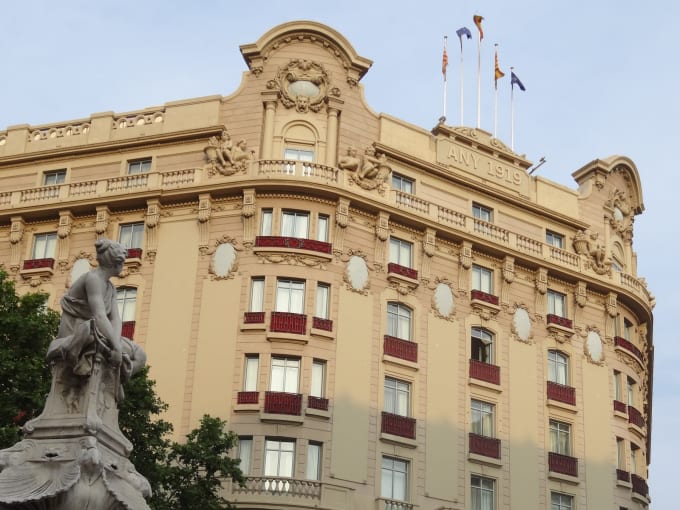
Barcelona holds a unique position in the European luxury travel landscape. The city combines a rich heritage, a maritime façade, a culture of design, and a distinctly vibrant urban rhythm. For a luxury stay, this diversity makes all the difference. Here, one does not simply choose a beautiful address; one also selects a neighbourhood, a pace, and a relationship with the city. Some travellers prefer the Eixample and its modernist perspectives, while others favour the waterfront, the Barri Gòtic, or a more discreet location. This is precisely what makes Barcelona intriguing for our selection. With renowned palaces, historic hotels, contemporary houses, and more intimate urban retreats, the offerings allow for nuanced choices. Barcelona's luxury is not merely defined by views or size; it is reflected in the location, architecture, service fluidity, and an hotel's ability to connect guests with the city.
To establish this ranking, we adhere to consistent editorial criteria. The foremost criterion remains the overall coherence of the experience. We consider the official category, institutional recognition where applicable, the hotel's grounding in Barcelona, and the clarity of its positioning. A palace like El Palace Hotel, Hotel Arts Barcelona, or Hotel Claris expresses luxury in different ways. It is precisely this contrast that informs our assessment. We also examine the perceived quality of communal spaces, the appeal of the address for first-time visitors or regulars, and the relevance of the promise versus execution. What our advisors observe is highly significant. A smooth arrival, consistent service, and a well-thought-out location often weigh more than decorative effects. Our approach remains deliberately factual, favouring hotels that sustainably maintain their standards.
The Barcelona panorama presented here reveals a hospitality scene more nuanced than one might expect. El Palace Hotel embodies a classic tradition, offering a heritage interpretation of the grand urban hotel. Hotel Arts Barcelona appeals more to travellers drawn to the coastline, contemporary volumes, and a strong presence along the waterfront. Hotel Claris connects a prestigious address to the Eixample within a more design-oriented setting. Around these landmarks, other establishments enrich the map. Alma Barcelona emphasises discretion and calm, while ABaC Restaurant & Hotel attracts those seeking a more secluded experience. Grand Hotel Central, Hotel Neri, Hotel Casa Fuster, and Hotel 1898 each provide a different interpretation of Barcelona. It is important to note that this selection does not convey a fixed hierarchy; rather, it outlines several credible ways to inhabit the city with discernment.
For 2025 and 2026, several trends are emerging in Barcelona's urban luxury. The first concerns the quest for intimacy. Even in a large tourist city, travellers prefer hotels capable of creating distinct breathing spaces. This includes gardens, terraces, improved acoustics, or less ostentatious communal areas. The second trend relates to practical location. Guests want to walk, limit transfers, and quickly grasp the city's geography. Well-located hotels in the Eixample, near the waterfront, or in the heart of the historic centre therefore maintain a clear advantage. We also observe an increased expectation regarding urban well-being. Spas, pools, rooftops, and natural light are becoming structuring criteria. Finally, luxury is becoming more transparent. Travellers expect less theatricality and more precision, consistency, and genuine attention.
At MyConciergeHotel, we advocate a simple idea of well-supported luxury. This owes much to a French culture of service, but it applies flexibly everywhere. A grand hotel does not need to overdo it to impress; it must first be just. Just in the welcome, in the rhythm, in the quality of the rooms, and in how it facilitates the stay. In Barcelona, this philosophy takes on a particular resonance. The city has energy, sometimes a lot of it. A luxury hotel serves as a point of balance. It protects without isolating, opens up the city without imposing it. My advice is to think of your address as a base for living, not just a backdrop. A traveller drawn to architecture does not expect the same experience as a couple on a getaway or a regular at the seaside. The right choice always depends on the actual use.
Thus, this ranking should be read methodically. The number one position is not the only valid answer; it represents an editorial synthesis at a given moment, based on defined criteria. A historic palace can rank above a more contemporary address without invalidating the preferences of certain travellers. Conversely, a more discreet hotel may be better suited for a short stay, a honeymoon, or a mixed trip. We reject automatic superlatives, as they obscure understanding. Each listed establishment has its reason for being. Some excel by their status, others by their location, atmosphere, or consistency. This is also Barcelona's strength. The city allows for choices between representational luxury, retreat luxury, or efficient luxury. Our role is to clarify these differences, ensuring the ranking remains useful before it becomes inspiring.
In the following Top 8, you will find distinct profiles, all relevant for discovering Barcelona with discernment. We have prioritised the most compelling addresses, according to their own promises.