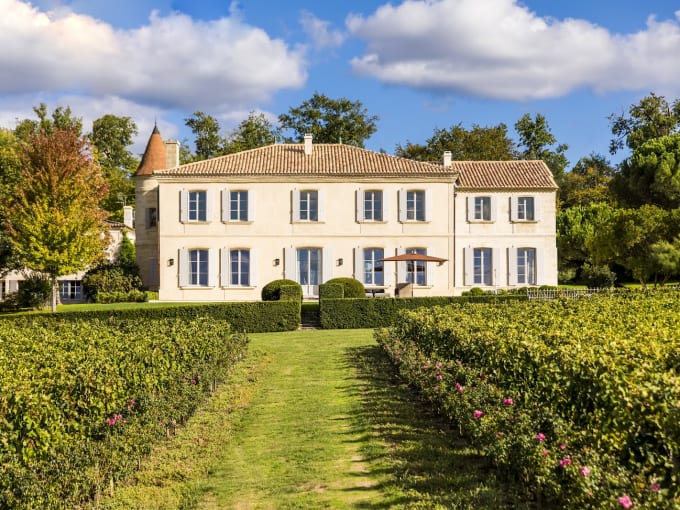
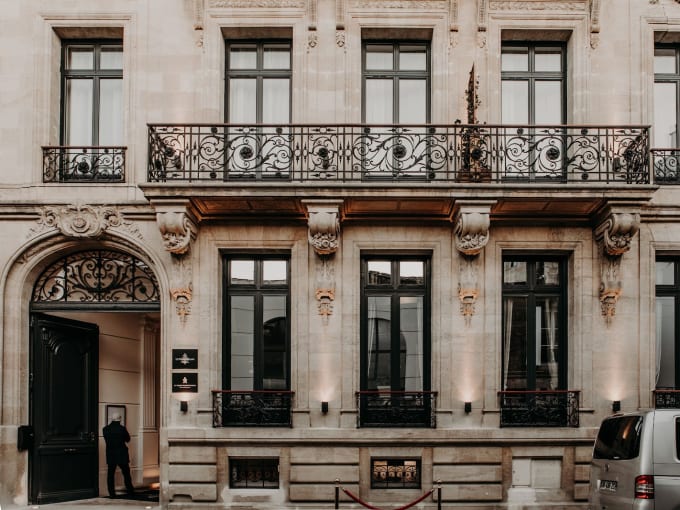
In the South-West, vineyard hotels are no longer just rooms with views of vine rows. They have become a way to inhabit a territory. Between Graves, Médoc, and Saint-Émilion, travellers now seek a place that connects landscape, wine culture, and the right rhythm. This is precisely what makes this segment so interesting today. Guests come not only to taste but to understand a geography, feel a season, walk between the plots, and then find a table, a spa, or a lounge that matches the location. Establishments like Les Sources de Caudalie, Château Troplong Mondot, and Hôtel de Pavie exemplify this evolution. The wine tourism experience is expanding. It is becoming a deeper, more precise experience, often more demanding.
To establish this ranking, we do not solely consider the reputation of an appellation or the prestige of a house. Our perspective is primarily hotel-centric. We first observe the actual integration within the vineyard. The view, direct access to the vines, and the relationship with the estate or village are of great importance. We then assess the coherence of the experience. Architecture, the size of the establishment, level of service, quality of common spaces, and the ability to convey the essence of the territory all come into play. Official distinctions also carry weight. A Palace like Les Sources de Caudalie does not hold the same status as a more intimate boutique hotel. Finally, our advisors look at a simple criterion: does the address inspire a desire to stay on-site, or merely to sleep between visits?
The panorama of this top 7 showcases a rare diversity within a relatively concentrated area. In Martillac, Les Sources de Caudalie offers a broad interpretation of the vineyard stay. The location combines estate, spa, and a sense of landscape. In Saint-Émilion, several interpretations coexist. Badon Boutique Hotel favours an intimate scale and a connection to the village. Hôtel de Pavie appeals more to travellers sensitive to characterful addresses, directly engaged with the historical fabric. Château Troplong Mondot and Château-Hôtel Grand Barrail embody two ways of experiencing the vineyard from a property—one more tied to the estate, the other more château-hotel. In Pauillac, Hôtel Château Cordeillan-Bages opens up the Médoc perspective. Even Le Palais Gallien Bordeaux, in the city, reminds us that a grand wine stay sometimes begins with a well-chosen urban base.
For 2025 and 2026, several trends are confirming themselves in the vineyard hospitality of the South-West. The first is a return to shorter, yet more intense stays. Travellers desire two or three well-structured nights. They expect a fluid programme, without cumbersome logistics. The second trend concerns space. Generous rooms, terraces, gardens, and unobstructed views are becoming decisive criteria. Our advisors also observe a rise in more transgenerational demand. People travel in pairs, but also with family or friends, each with different expectations around wine. Finally, wellness continues to progress. In this segment, it does not replace wine culture; it balances it. A spa like that of Les Sources de Caudalie meets the expectation of a stay where one alternates between tasting, walking, resting, and enjoying fine dining.
French luxury in the vineyards of the South-West is not primarily about ostentation. It is about precision. A successful establishment knows how to balance distance and warmth. It respects the silence of a landscape. It allows for the passage of time. In this region, refinement often expresses itself through concrete details. A room opening onto the vines at dawn. A library to extend the evening. A simple arrival, without excessive staging. A table that engages with the territory without folklore. It is also a certain idea of transmission. In Saint-Émilion as in Pauillac, the hotel is never entirely separate from the local history. It is part of a continuum. My advice is simple: here, choose less based on the number of activities, and more on how you wish to inhabit the landscape.
This ranking should also be read methodically. A number one is not a universal verdict. It is an editorial synthesis at a given moment. Some addresses may be better suited for a first stay in the vineyards. Others will be ideal for a return visit, when one already knows the region and seeks a more specific atmosphere. A Palace like Les Sources de Caudalie caters to those seeking a destination in itself. A more intimate hotel in Saint-Émilion may charm with its immediate proximity to the alleys and cellars. A château-hotel will appeal to those wanting a distance from daily life. An urban establishment like Le Palais Gallien Bordeaux can finally serve as an opening or conclusion to the journey. It is important to remember that we are ranking experiences, not just buildings.
Thus, our top 7 brings together hotels that each offer a different perspective on the vineyards of the South-West. Some gaze at the vines from their windows. Others extend the experience through service, dining, or the rhythm of the stay. All have a clear legitimacy within this landscape. Now, let us present the ranking.