In Île-de-France, a hotel with a spa meets a specific need. It allows guests to unwind without straying far from the heart of decision-making, museums, and train stations. The region offers a diverse range of stays. Some seek an urban escape between Parisian appointments, while others desire a more expansive weekend near forests, gardens, or former royal estates. This diversity makes the segment particularly intriguing. The spa is not merely an amenity; it serves as a lens through which to experience the area. In Fontainebleau, Barbizon, Bonnelles, or Versailles, it narrates an alternative way of inhabiting the region. Notably, in Île-de-France, well-being is as much about the location as it is about the rhythm it allows.
To compile this ranking, we did not rely on an abstract promise of well-being. Instead, we focused on concrete, comparable criteria. The quality of the spa is, of course, essential, but its size alone is not sufficient. We examine the coherence between the wellness space and the hotel's identity. We also consider the location, accessibility from Paris, the ability to create a genuine break, and the consistency of the hotel’s positioning. The level of service, brand reputation, clarity of the experience, and architectural setting also weigh heavily. What our advisors often observe is straightforward: a good hotel with a spa does not merely offer treatments; it orchestrates a rhythm of relaxation. This rhythm must be credible, from the lobby to the rooms, and then to the wet or relaxation areas.
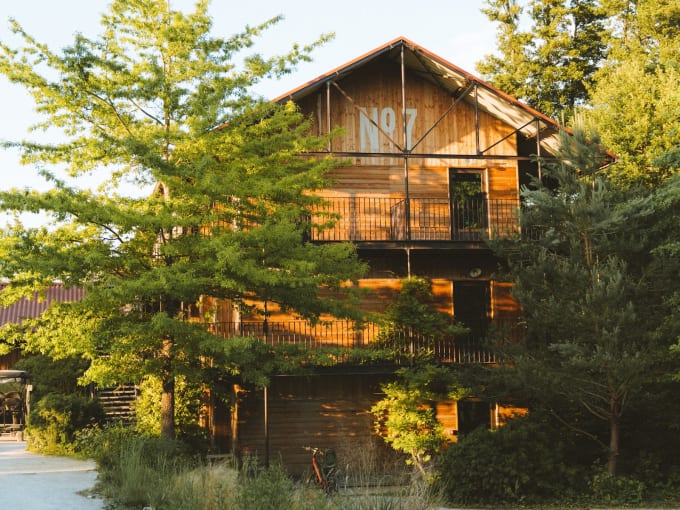
The landscape of Île-de-France is more varied than one might imagine. On one side, there are establishments close to nature, designed for slowing down. The Barn in Bonnelles exemplifies this desire for accessible countryside, with a contemporary interpretation of a relaxed stay. La Folie Barbizon, in the village of painters, attracts a clientele attuned to creativity, forests, and a form of cultural retreat. La Demeure du Parc in Fontainebleau occupies a different register, offering the elegance of a heritage city, proximity to the château, and a more intimate scale. Finally, the Trianon Palace Versailles, A Waldorf Astoria Hotel, reminds us that the grand destination hotel remains a benchmark. Its Versailles location alters the perception of the spa, where well-being interacts with a historical imagination, gardens, and an international tradition of prestigious stays.
For 2025 and 2026, several trends are solidifying in this category. The first concerns time. Clients desire shorter stays, but with better structure. One night can suffice if the experience is clear and seamless. The second trend relates to the immediate environment. The spa no longer operates in isolation; it should be complemented by a forest walk, a quiet terrace, an unobstructed view, or a domain that encourages stepping away from one's phone. The third evolution is the growing demand for discretion. Travellers seek places where well-being is not overly staged. My advice: favour addresses that know how to strike a balance. In Île-de-France, the most convincing sophistication often lies in not interrupting the silence. This restraint has become a strong marker of regional hotel luxury.
There is also a distinctly French interpretation of the spa, especially in this region. Luxury does not necessarily equate to excess; it often manifests as a balance between heritage, service, and just the right distance. A successful wellness hotel in Île-de-France knows how to manage transitions. One leaves the city, then the noise, then the agenda. This movement is as important as the treatment itself. That is why the best addresses do not resemble each other. Some focus on history and monumentality, while others prefer a homely spirit, the countryside, or contemporary creation. The common thread lies elsewhere: it is found in a certain discipline of comfort. Nothing should force the experience. The spa is part of a whole, with a well-thought-out room, fluid circulation, and a sense of coherence that lingers after departure.
This ranking should thus be read as an editorial selection, not as a universal verdict. A grand hotel spa does not serve the same purpose for everyone. Some travellers want to swim, book multiple treatments, and stay on-site all weekend. Others seek just an hour of relaxation after a busy day. There are also those who prioritise decor, proximity to a cultural site, or ease of access from Paris. We do not oppose these usages; we rank them according to the strength of the overall experience. This is an important nuance. A hotel may be perfectly suited for a couple on a getaway, but less so for a stay focused on wellness facilities. It is essential to note that each address listed here has its audience. Our role is to clarify what each establishment does best.
In the following Top 4, you will find four credible ways to associate Île-de-France with well-being. Versailles, Fontainebleau, Barbizon, and Bonnelles create a useful map, aiding in the choice based on current desires.