Kaminarimon Gate
In Asakusa, Kaminarimon Gate marks the approach to Senso-ji and Nakamise Shopping Street, one of Tokyo’s most recognisable landmarks.
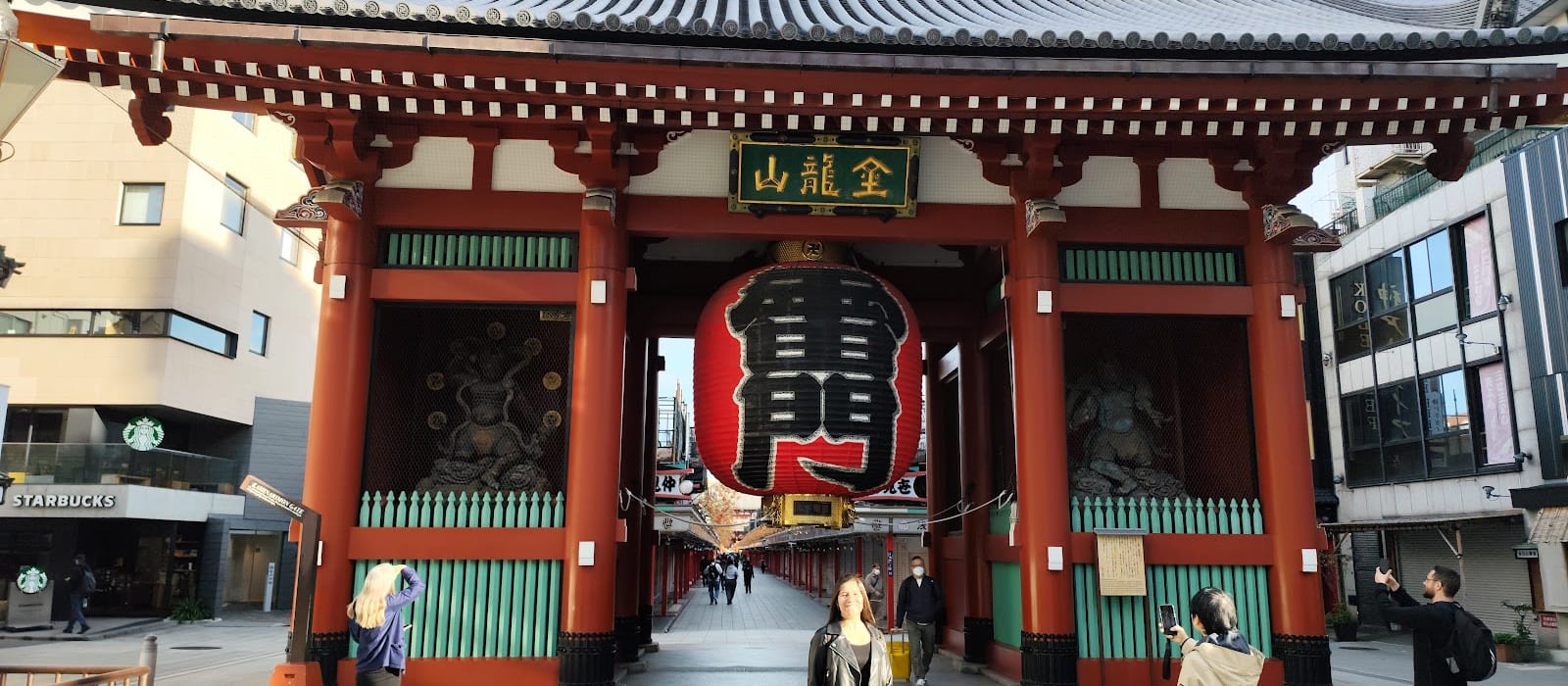
In pictures


About
Kaminarimon Gate Tokyo stands at the entrance to Asakusa, on the approach to Senso-ji. For many visitors, it is the first clear marker of Tokyo’s historic temple district.
The gate is best known for its large red lantern, which is easy to spot from a distance. It also frames the start of Nakamise Shopping Street, the traditional shopping lane leading toward the main temple grounds.
The stop itself can be brief if you only want to see the gate and take a few photographs. Allow more time if you continue into Senso-ji, explore nearby Asakusa streets, or walk on to Sumida Park.
Timing matters here. Early morning is usually more comfortable for photos and a quieter approach. Later in the day, the area feels busier and more social. In spring, combining the gate with Sumida Park works well. On clear days, you can also continue toward Tokyo Skytree for a contrasting skyline view.
Kaminarimon is less about a long standalone visit and more about orientation. It sets the tone for Asakusa at once, between worship, street life, and one of Tokyo’s most familiar urban scenes.
The Concierge's Tip
Go early if you want to enjoy Kaminarimon Gate with softer light and fewer people in the frame. The most practical order is Kaminarimon first, then Senso-ji, then Nakamise Shopping Street before the area fills up. In spring, add a walk through Sumida Park. If midday feels too crowded, cross toward the river or continue later in the afternoon for a different atmosphere.
Ask the Concierge
Our Concierge arranges your visit: skip-the-line tickets, a private guide, off-hours access.
Ask the ConciergeFrequently asked questions
- What does Kaminarimon mean?
- Kaminarimon is commonly understood as “Thunder Gate.” The name refers to the famous outer gate at the entrance to the Senso-ji area in Asakusa. For visitors, the practical point is simple: it is the best-known landmark for starting a walk through the temple approach and Nakamise Shopping Street.
- What is the formal name of Kaminarimon Gate?
- It is generally referred to as the outer gate of Senso-ji in Asakusa, though most people simply say Kaminarimon. In practical terms, that is the name to use when navigating the area. It is the term most visitors recognise, and it is the clearest reference point on arrival.
- What is the famous red lantern in Tokyo?
- The large red lantern most visitors associate with Tokyo is the one hanging under Kaminarimon Gate in Asakusa. It is one of the city’s most recognisable visual markers. Many people stop here first for photos before continuing toward Senso-ji and the shops along Nakamise.
- What is the name of the famous temple in Asakusa, Tokyo?
- The best-known temple in Asakusa is Senso-ji. Kaminarimon Gate is its most famous entrance marker, and Nakamise Shopping Street leads from the gate toward the main grounds. If this is your first visit to the area, following that route is the easiest way to understand the layout.
- How much time should I allow for Kaminarimon Gate?
- If you only want to see the gate, the stop can be very short. Allow around thirty minutes to an hour if you plan to take photos, walk along Nakamise Shopping Street, and continue to Senso-ji. Crowds can slow the pace, especially later in the day or on weekends.
- When is the best time to visit Kaminarimon Gate?
- Early morning is usually the easiest time to enjoy Kaminarimon Gate with lighter foot traffic and cleaner photo angles. Later in the day, the area feels more animated and social. If you visit in cherry blossom season, pairing the gate with a walk in nearby Sumida Park works especially well.
- Is Kaminarimon Gate suitable for families?
- Yes, it works well for families because the visit can be kept short and easy to follow. The route from the gate through Nakamise to Senso-ji is straightforward. The main point to watch is crowd density, so morning tends to be more comfortable if you are visiting with children.
Hotels nearby
Our selection of extraordinary hotels a short walk from this place.

