Musée d'Orsay
The Musée d'Orsay in Paris presents major 19th-century works in a former railway station, with a clear visitor route and temporary exhibitions.
In pictures


About
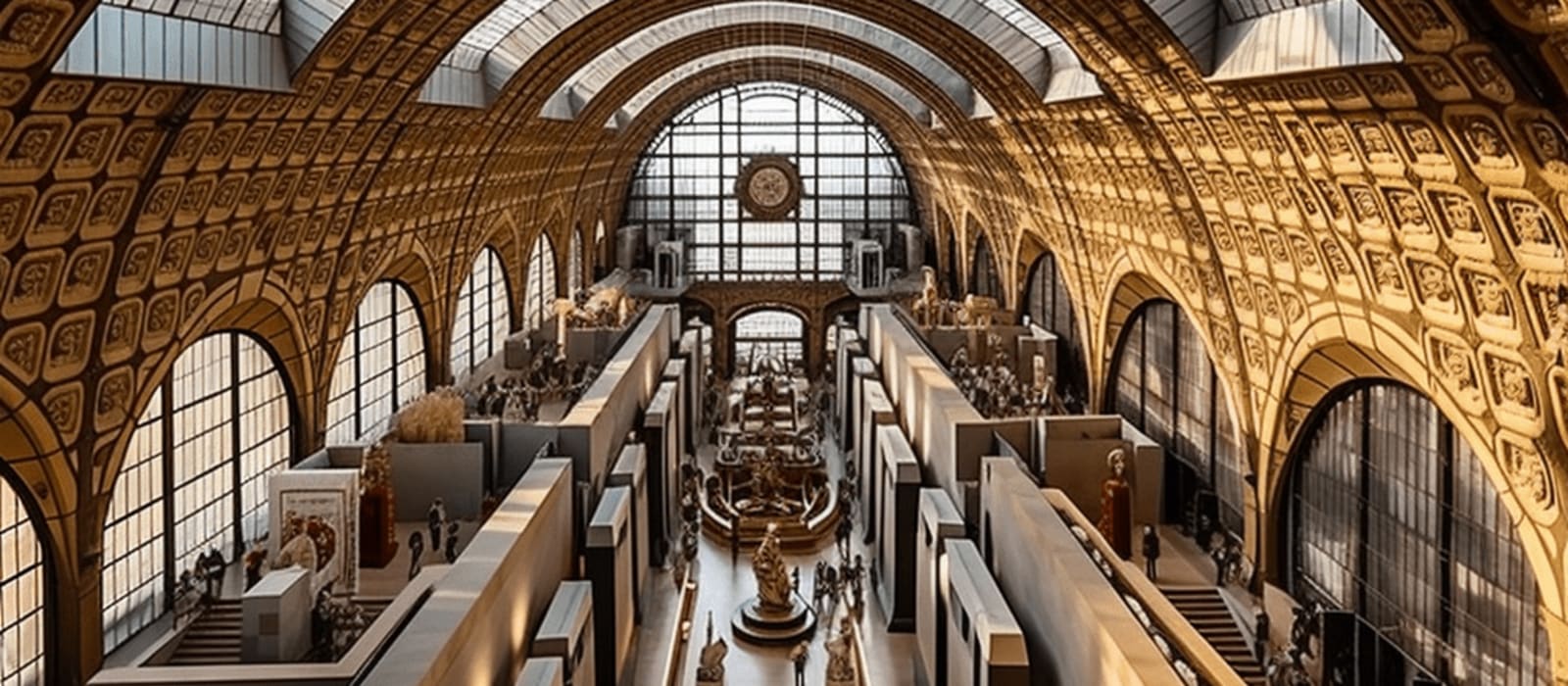
The Musée d'Orsay in Paris occupies a former railway station on the Left Bank. Its appeal lies as much in the building as in the collection.
The museum focuses on the late 19th and early 20th centuries. You move easily between painting, sculpture, decorative arts, and photography. The layout feels more readable than in some larger Paris museums.
Many visitors come to the musée d'Orsay to see celebrated works at close range, but the experience is not only about highlights. The central nave gives clear orientation. Side galleries offer quieter moments and a slower pace. That balance makes the museum approachable, even on a first visit.
To visit well, it helps to choose two or three sections instead of trying to cover everything. Allow extra time if you also want to see the musée d'Orsay expositions actuelles. For lighter crowds, the start or end of the day is often easier. In cooler months, this is a very comfortable indoor visit. In fair weather, pair it with a walk along the Seine or continue toward the Tuileries.
The Concierge's Tip
Start with the upper levels if your priority is the most sought-after paintings. Then work back through the central halls at a slower pace. If you are visiting without a timed booking, keep some buffer for a possible queue. In winter or on rainy days, arrive earlier than you think. As an alternative, pair Orsay with the nearby Orangerie on another day rather than rushing both.
Ask the Concierge
Our Concierge arranges your visit: skip-the-line tickets, a private guide, off-hours access.
Ask the ConciergeFrequently asked questions
- What should you definitely see at the Musée d'Orsay?
- For a first visit, focus on the main painting galleries, the central nave, and a few sculpture rooms. A short, well-chosen route works better than a long checklist. The building itself is part of the visit. If photography or decorative arts interest you, save one dedicated section for the end, when your pace is clearer.
- What is on display at the Musée d'Orsay?
- The museum mainly presents works from the late 19th and early 20th centuries. You will find painting, sculpture, decorative arts, and photography, alongside temporary exhibitions. The exact display changes over time. For the most current information, the official website remains the most reliable source before you plan your visit.
- What are the current exhibitions at the Musée d'Orsay?
- Current exhibitions at the Musée d'Orsay change with the season and the museum's program. Because they rotate, the official website is the best place to check shortly before your visit. If a temporary show is your main reason for going, allow extra time. It can affect both your route and crowd levels in nearby galleries.
- Can you visit the Musée d'Orsay without a reservation?
- It may be possible to visit without a reservation, but you should expect some uncertainty. Waiting times depend on the day, the season, and temporary exhibitions. If your schedule is tight, a planned entry is usually more comfortable. Without one, aim for quieter periods and avoid placing another fixed appointment immediately afterward.
- What is the best day to visit the Musée d'Orsay?
- The best day mostly depends on how much crowding you are willing to accept. Weekdays often feel easier than peak leisure periods. More important than the exact day is avoiding the busiest middle hours. Rainy weather in Paris can also push more visitors indoors, so a dry morning or late visit may feel more comfortable.
- How long do you need for the Musée d'Orsay?
- Around two to three hours works well for a satisfying visit of the main sections. You can do less if you focus on a few priorities. Add more time if you want to include a temporary exhibition or take a proper break. The museum is usually more rewarding with a selective route than with a full-coverage approach.
- What makes the Musée d'Orsay so special?
- What sets the Musée d'Orsay apart is the balance between the building and the collection. The former station gives the visit a strong identity without overwhelming the art. The route feels clear and manageable. For many visitors, it offers famous works in a setting that still feels close, readable, and less intimidating than larger museums.
Hotels nearby
Our selection of extraordinary hotels a short walk from this place.