Times Square
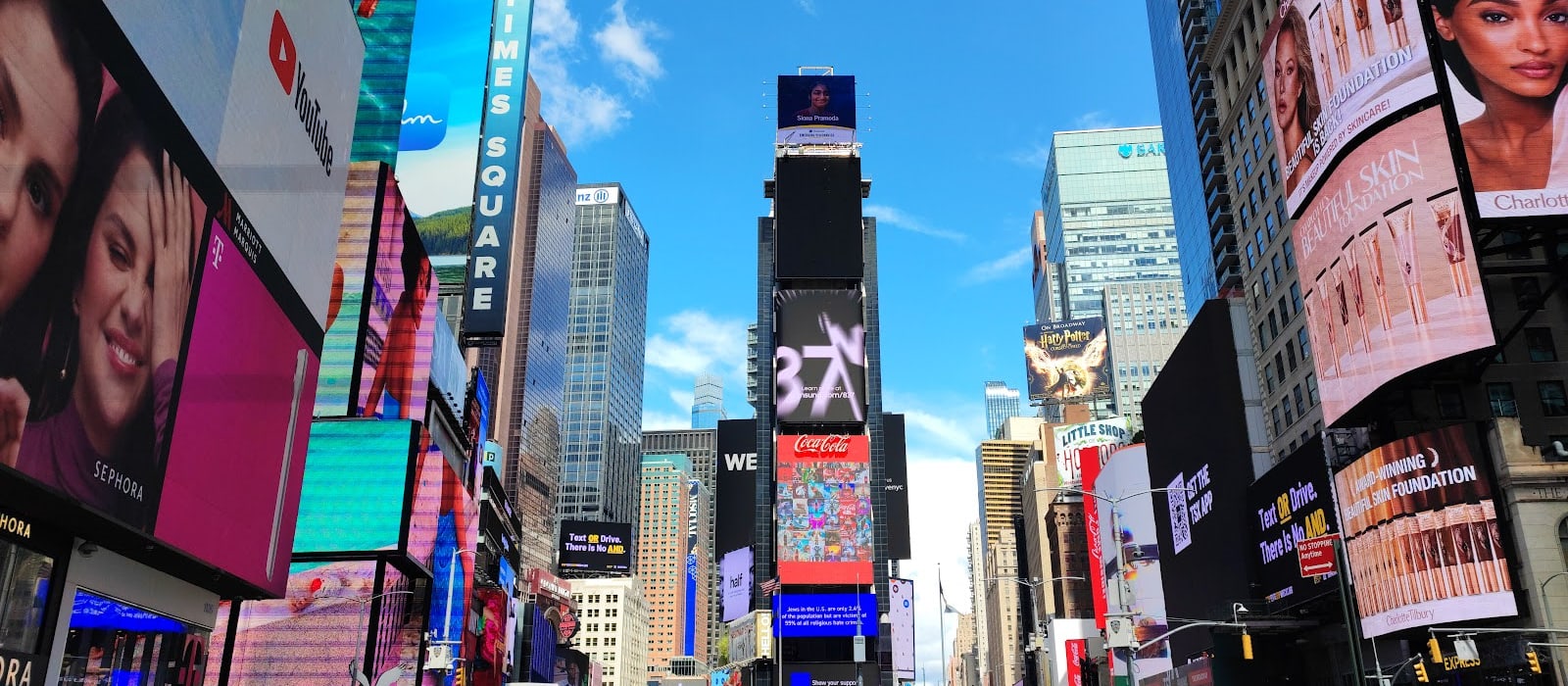
Times Square in New York brings together giant screens, Broadway theaters, and constant foot traffic in Midtown. The atmosphere is usually calmer early in the day.
In pictures


About
Times Square is one of New York’s best-known landmarks. In Midtown Manhattan, it brings together giant digital screens, Broadway theaters, flagship stores, and a near-constant flow of people.
Visitors come less for a single monument than for a specific urban atmosphere. It captures the pace, noise, and visual intensity many travelers associate with Manhattan, especially after dark.
To visit Times Square New York wisely, timing matters. Early morning is usually easier for walking and photos. Late afternoon and evening feel livelier, but also much more crowded. If you want the lights without the heaviest foot traffic, aim for the period just before nightfall.
The area pairs well with Bryant Park, Rockefeller Center, or a walk west toward Hell’s Kitchen. If you join a guided tour, check the meeting point carefully. Distances can look short on a map. Crowds often slow everything down. In winter, allow extra time and dress for wind between the avenues.
The Concierge's Tip
Go before late morning if you want easier walking and cleaner photos. After sunset, the atmosphere is stronger, but the crowds can slow every short distance. For a well-paced first visit, pair Times Square with Bryant Park, then continue to Rockefeller Center. In colder months, add extra time between stops. Wind tunnels along the avenues can make the area feel much colder than expected.
Ask the Concierge
Our Concierge arranges your visit: skip-the-line tickets, a private guide, off-hours access.
Ask the ConciergeFrequently asked questions
- What exactly is Times Square?
- Times Square is a major intersection and entertainment district in Midtown Manhattan, known for giant digital billboards, Broadway theaters, and constant activity. It is not a single monument or enclosed attraction. People visit for the atmosphere, the lights, and the sense of being in the middle of New York’s urban rhythm.
- Why is Times Square so famous?
- Times Square is famous for its giant illuminated screens, its close link to Broadway, and its constant presence in films, television, and travel imagery. For many visitors, it embodies a fast, bright, unmistakably New York atmosphere. Its central location and heavy foot traffic also make it one of the city’s most recognizable public spaces.
- What makes Times Square special?
- What sets Times Square apart is the mix of scale, light, and constant motion. The digital façades, dense pedestrian flow, and nearby theaters create a very specific urban experience. It feels less like a traditional sightseeing stop and more like a concentrated snapshot of Midtown energy. This is especially true once the screens become more visible after dark.
- When is the best time to visit Times Square?
- It depends on what you want. Early morning is better for easier walking and clearer photos. Evening brings the full effect of the illuminated screens, but also heavier crowds. A practical middle ground is late afternoon. You can watch the area shift into night without stepping straight into the busiest part of the day.
- What should you not miss in Times Square?
- Do not miss the intersection itself from more than one angle, then continue along Broadway or into the surrounding streets. The appeal comes from the contrast between the screens, theaters, and constant pedestrian movement. If time allows, connect the visit with Bryant Park or Rockefeller Center. This gives the area more context and balance.
- How much time should I plan for Times Square?
- For a first visit, many travelers spend around 30 minutes to 1 hour, depending on crowd tolerance and interest in the surrounding area. If you add shopping, a Broadway show, or a longer Midtown walk, the stop can naturally grow. It usually works best as part of a nearby itinerary. It is less effective as a standalone destination.
- Is Times Square suitable for families?
- Yes, provided you plan for crowds, noise, and a fast-moving environment. Daytime is often easier with children. Keep a clear meeting point and avoid the busiest hours if you are using a stroller. It also helps to combine the visit with a quieter nearby stop, such as a park or a calmer Midtown block.
Hotels nearby
Our selection of extraordinary hotels a short walk from this place.