Place Jemaa el fna
Place Jemaa el Fna in Marrakech is the medina’s main square, beside the souks, with changing activity from daytime to late evening.
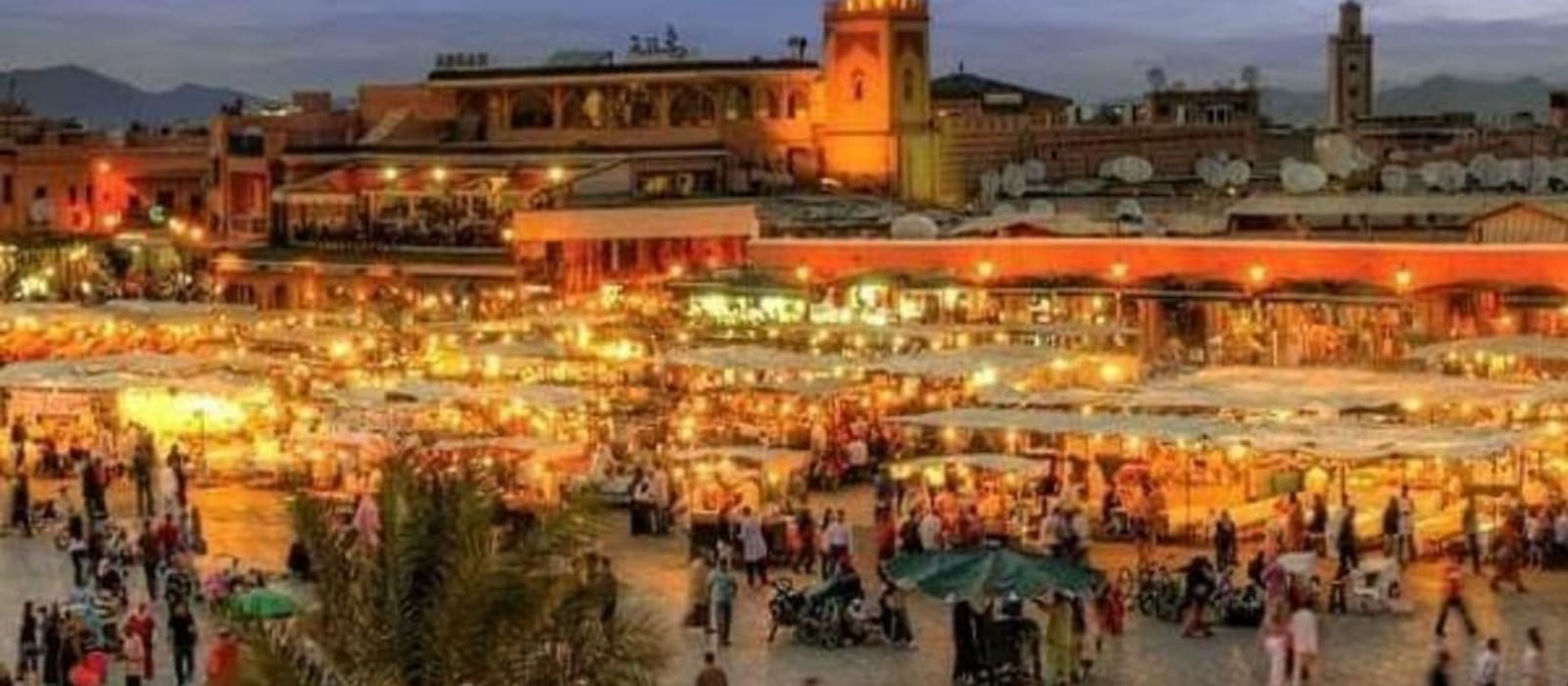
In pictures


About
Place Jemaa el Fna is the living center of Marrakech’s medina. It connects the souks, trading lanes and several routes toward nearby historic sites.
During the day, the square feels easier to read. You will see juice stalls, small vendors and street entertainment. Late afternoon brings a clear shift. In the evening, Marrakech Place Jemaa el Fna becomes louder, denser and more performative.
What matters here is its urban role. The square helps you understand how the old city works. It is also a practical landmark between the souks and the surrounding quarters.
The smartest visit is usually done in short stages, on foot. A daytime pass helps with orientation. A second visit near sunset shows a different mood. If you want a wider view, choose a terrace at the edge of the square. Keep personal items close, and ask before taking photos of people or performers. In warmer months, go later in the day. In cooler weather, late afternoon is often the most comfortable balance.
The Concierge's Tip
Start with a first pass in late afternoon. Use it to understand the layout and your return route. Come back after dark for the evening atmosphere. The square feels very different then. Keep cash discreet and your phone secure. If you plan to eat there, watch which stalls have steady turnover before choosing. In hotter months, later is easier. In winter, sunset often gives the best balance.
Ask the Concierge
Our Concierge arranges your visit: skip-the-line tickets, a private guide, off-hours access.
Ask the ConciergeFrequently asked questions
- What is Place Jemaa el Fna?
- It is the main public square in Marrakech’s medina. It works as a central landmark between the souks, shops and several walking routes. Its importance is both practical and cultural. The atmosphere changes a lot from daytime to evening, which is part of the experience.
- What can you do at Place Jemaa el Fna?
- The best approach is to visit twice. Go once in daylight to understand the layout, nearby souks and walking connections. Return in the evening for the atmosphere, lights and food stalls. If you prefer a calmer overview first, stop at an edge terrace before exploring on foot.
- What is there to do around Place Jemaa el Fna?
- Around the square, you can move straight into the souks, browse trading lanes and continue toward other medina sights. It works best as a starting point rather than a standalone stop. Plan a flexible walk with breaks, especially if you want time for photos or a terrace view.
- Can you eat at Place Jemaa el Fna?
- Yes. The square is well known for its evening food stalls and casual dining atmosphere. It is lively rather than quiet. Before choosing, look at turnover, visible cleanliness and how locals are using the stand. If you want a calmer meal, nearby streets often offer a more settled alternative.
- Is Place Jemaa el Fna dangerous?
- It is not a place to avoid, but it does require the usual care of any crowded square. The main issues are density, persistent approaches and unsecured belongings. Keep valuables close, agree on a meeting point if needed, and clarify any price before accepting a service or photo.
- Are there snake charmers at Place Jemaa el Fna?
- You may sometimes see snake charmers on or around the square, although visibility can vary with timing and crowd levels. If that is not for you, it is easy to keep your distance. For photos, ask first and clarify expectations before taking out your phone or camera.
- When is the best time to visit Place Jemaa el Fna?
- For a complete impression, split the visit in two. Daytime is better for orientation and easier movement. Late afternoon into early evening shows the square at its busiest and most atmospheric. In hotter months, going later is usually more comfortable. In cooler weather, sunset is often ideal.
Hotels nearby
Our selection of extraordinary hotels a short walk from this place.


