History & Sense of Place
In Luang Prabang, hospitality is never merely about an address. It is rooted in a way of inhabiting the landscape, respecting the rhythm of the river, working with light, trees, seasons and the memory of a former royal capital. The Namkhan belongs to this sensitive reading of place. More than a five-star hotel, it offers a stay shaped by calm, discretion and a measured sense of luxury, in keeping with the spirit of Luang Prabang, a UNESCO World Heritage city.
The hotel’s name itself signals a geographical and cultural anchoring. In this part of Laos, waterways shape movement, scenery and imagination alike. They also suggest a different relationship to time: slower, more organic, more attentive to transitions than to spectacle. The Namkhan reflects this in its approach to hospitality. The stay feels like a chosen retreat, removed from bustle without being disconnected from the historic town.
Its membership in Small Luxury Hotels of the World also helps define the property. This affiliation speaks less of display than of character, human scale and individuality. At The Namkhan, that singularity comes through an intimate atmosphere, thoughtful integration into nature and a constant dialogue between Lao tradition and contemporary comfort.
Rather than relying on monumental heritage, the hotel’s interest lies in expressing a contemporary Laos: one that values its past without freezing it, welcomes international travellers while preserving local gentleness, and makes well-executed simplicity a true signature. Decorative references draw on regional aesthetics without slipping into cliché. Wood, natural fibres, soft tones and restrained lines create a coherent visual language designed to let the landscape speak as clearly as the interiors.
This restraint is essential to understanding the experience. In a hospitality world often drawn to visual excess, The Namkhan chooses another path: luxury expressed through space, quiet, quality of sleep, fluid service and the feeling of being anticipated without being watched. It is particularly well suited to travellers who care about context and who wish to experience Luang Prabang without losing what makes the city distinctive: its diffuse spirituality, its unhurried rhythm and its closeness to nature.
In that sense, The Namkhan’s heritage is not only architectural or decorative; it is atmospheric. It resides in a way of conveying Laos without over-staging it, and in the balance between intimacy and openness, international comfort and local grounding.
The Property
The Namkhan is defined first by its setting. In Luang Prabang, where travellers come as much for cultural depth as for light, vegetation and atmosphere, the choice of site shapes the entire experience. Here, the peaceful environment amid lush nature is not a brochure phrase but the very substance of the stay.
Rather than pursuing urban immediacy, the property favours a sense of retreat. This is not isolation, but a way of sharpening one’s perception of what makes Luang Prabang distinctive: birdsong, shade, morning humidity, late-afternoon softness and a feeling of space. Luxury is expressed through the ability to slow down without giving up comfort or service.
The architecture and interiors appear designed to extend that impression. The décor, blending Lao tradition with modern touches, acts as a bridge between indoors and out. Natural materials, open volumes and calm tones create visual continuity with the surrounding greenery. Nothing feels over-stated. The result is a discreet sophistication, legible in proportions, textures and the ease with which one moves through the property.
Its intimate atmosphere is equally important. In a market where scale can sometimes be mistaken for quality, The Namkhan demonstrates the virtues of a more human dimension. Guests come here to feel welcomed, not absorbed. This suits Luang Prabang particularly well, as the city often attracts travellers seeking something more contemplative than theatrical.
The location also allows for easy exploration of Luang Prabang’s cultural wealth. The city remains central to the experience, and the hotel works as a place of return: somewhere to decompress after temples, markets and walks through the historic town. That alternation between cultural immersion and natural retreat is one of the property’s strongest qualities.
Overall, The Namkhan feels like a hotel that understands its context. It does not impose an interchangeable idea of luxury, but proposes a form of hospitality adapted to Luang Prabang: gentler, more porous to the landscape and more attentive to atmosphere than effect.
Rooms & Suites
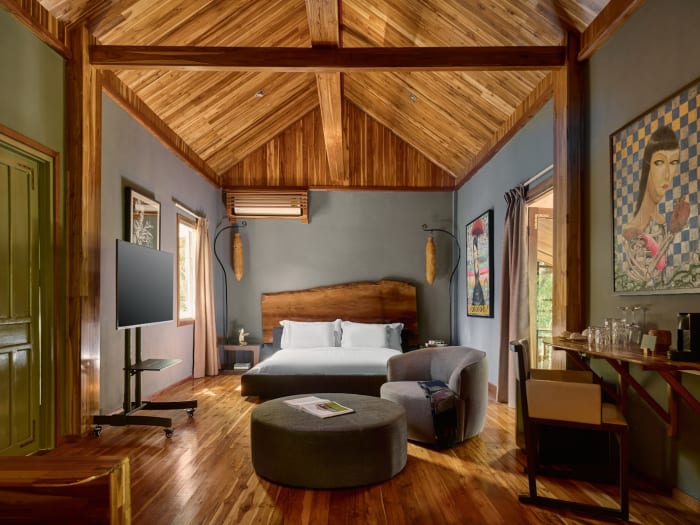
At a property such as The Namkhan, the room is not merely a functional space between excursions. It extends the hotel’s central promise: calm, intimacy and a gentle relationship with the surrounding environment. Travellers choosing Luang Prabang often seek deep decompression, away from urban pace and constant stimulation. Accommodation must therefore offer not only comfort, but also quality of silence, light and breathing space.
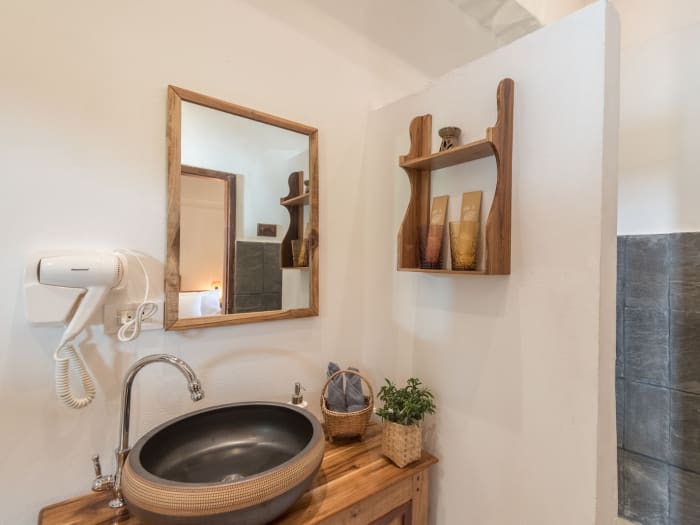
The décor, blending Lao tradition with modern touches, sets the tone. One can expect a restrained visual language in which local references are not treated as folklore but as living material. Wood, natural fibres, soft textiles and contemporary lines create an atmosphere of immediate ease. The point is not decorative display, but the way elements work together to produce a sense of welcome.
Comfort is also measured by fluency of use: intuitive circulation, restful bedding, practical storage, controlled temperature and privacy. Daily housekeeping and turndown service contribute to that overall quality, preserving a feeling of freshness without becoming intrusive. This is a form of luxury seasoned travellers value greatly: the kind that makes everything easier without drawing attention to itself.
The relationship to the outdoors matters as well. In such a verdant setting, rooms should not feel sealed off. Even when rest is the priority, guests generally want to remain connected to greenery, changing light and Luang Prabang’s tropical atmosphere. When well handled, that porosity turns a room into a refuge rather than a mere accommodation unit.
For couples, this intimacy supports the romantic dimension of the stay without artifice. For solo travellers, it offers security and retreat. In both cases, the experience rests on the same principle: a personal space that feels neither impersonal nor over-designed.
A successful room in Luang Prabang often knows how to step back in favour of the wider journey while remaining memorable for its comfort. The Namkhan appears to follow that logic closely.
Dining
In Luang Prabang, dining is part of the journey itself. The local culinary landscape is one of freshness, herbs, broths, rice, delicate grilled dishes and subtle balances of texture and aroma. At a property such as The Namkhan, the dining experience need not be theatrical to feel meaningful. What matters most is a cuisine in tune with the place: clear, well executed, suited to the climate and to the rhythm of the stay.
Breakfast is especially important. In Luang Prabang, early morning has a singular quality: cooler air, soft light and discreet activity. Breakfast therefore works best as a ritual rather than a mere service. Tropical fruit, sweet and savoury options, hot drinks, fresh juices and dishes adapted to both local and international preferences all make sense in a hotel of this category. The key is less abundance than freshness, consistency and the pleasure of beginning the day without haste.
At lunch and dinner, a property like The Namkhan benefits from clarity and seasonality. In a warm, verdant environment, heavy dishes quickly lose their appeal. Guests tend to appreciate cooking that respects ingredients, includes lighter options and leaves room for local inspiration without excluding familiar references for international travellers.
Setting matters as much as the plate. In a hotel where nature plays a central role, the dining environment becomes part of the experience. Eating in calm surroundings, amid greenery and changing light, alters one’s sense of time. Lunch may become a shaded pause between visits; dinner, a gentle return after the city.
For many travellers, hotel dining also serves a practical purpose. After a day exploring Luang Prabang, it is reassuring to be able to dine on site without compromising on quality. In that sense, the value of service lies in flexibility and quiet attentiveness.
Ultimately, dining contributes to the intimate atmosphere that defines The Namkhan. A well-prepared meal in a serene setting, served with discretion, can become one of the most lasting memories of a stay.
Wellbeing & Unwinding
Even when a hotel does not make wellness its primary argument, wellbeing remains central to the experience of staying in Luang Prabang. The destination itself encourages a slower pace. Its light, spiritual undertone and constant proximity to nature create ideal conditions for decompression. The Namkhan appears fully aligned with that logic.
In a property of this kind, the luxury of rest often begins with simple things: sleeping deeply, waking without noise, taking time over tea or coffee, reading in the shade, walking slowly through the grounds and recovering a sense of inner space. The hotel’s intimate atmosphere and peaceful setting already constitute a form of wellbeing before any more structured treatment or ritual is considered.
Wellbeing here is less about the accumulation of facilities than about coherence between setting, materials, service and rhythm. A décor informed by Lao tradition yet kept contemporary contributes to that feeling of ease. Natural textures, measured colours and visual connection with greenery all support rest.
For many guests, wellness will take the form of a personal routine rather than a prescribed programme: early starts, cool mornings, alternating cultural visits with pauses, returning to the hotel for quiet, and ending the day in a softer atmosphere. The Namkhan seems particularly well suited to this way of travelling.
Service also matters. A 24-hour reception, attentive concierge, discreet daily housekeeping and thoughtful turndown service all help lighten the traveller’s mental load. In high-end hospitality, wellbeing often begins there: not having to think about logistics, and feeling that needs are anticipated.
That is perhaps the property’s true wellness strength. It does not promise spectacle, but something more credible and often more valuable: the possibility of genuinely resting.
Concierge & Services
In high-end hospitality, the quality of a stay is often measured less by the list of services than by the way they work together. The Namkhan appears to understand this well. Its positioning rests on an intimate atmosphere and attentive, personalised service, both of which matter most in daily execution.
A 24-hour concierge and 24-hour front desk provide an essential sense of ease. For international travellers dealing with late arrivals, early departures or changing plans, round-the-clock availability makes the stay more flexible. Requests for practical assistance, transport arrangements or local recommendations can be handled without unnecessary rigidity.
The notion of attentive, personalised service is especially important. It suggests a relationship based on listening rather than protocol. Some guests will want to start early and explore the city in morning light; others will prefer slower days centred on rest and a few selected visits. Good service accommodates those differences without imposing a single model of travel.
Daily housekeeping helps maintain comfort in a tropical climate, while turndown service adds a discreet sense of evening ritual. Luggage storage is valuable for early arrivals or late departures, allowing guests to make the most of Luang Prabang without logistical inconvenience. Laundry service and wake-up calls answer practical needs that become particularly useful over several nights.
A multilingual team is also an obvious advantage for an international clientele. In a cultural destination such as Luang Prabang, the ability to communicate clearly about expectations, transport and local recommendations significantly improves the experience.
What truly distinguishes successful service, however, is the ability to remain at the right distance: present without being intrusive, available without insistence, efficient without coldness. That balance is often what turns a pleasant hotel into a memorable one.
The Luang Prabang Way of Life
Staying at The Namkhan also means choosing a certain way of approaching Luang Prabang. This is not a city to be consumed like a fast-paced capital or a simple exotic stop. It asks for a slower gaze, one more attentive to detail than to itinerary performance. A former royal capital with a strong Buddhist tradition and UNESCO World Heritage status, Luang Prabang offers a rare experience in South-East Asia: a city where heritage, spirituality, daily life and nature still coexist on a human scale.
Time is the first luxury here. One must accept walking without too precise a goal, pausing at a temple, observing light on façades, crossing a market and simply watching the day unfold. The Namkhan suits this approach well, as its peaceful setting prepares the mind for that kind of attention.
Luang Prabang reveals itself through rhythm: cool mornings, discreet activity, gentle animation later in the day, temples, old streets, timber houses and a constant presence of greenery. Its appeal lies less in an accumulation of monuments than in the harmony of the whole.
The relationship between culture and nature is equally important. Rivers, gardens, trees, hills and tropical humidity are never far away. The Namkhan, set amid lush surroundings, extends this feeling and allows guests to experience Luang Prabang not as a static backdrop but as a living cultural and natural ecosystem.
Ultimately, the Luang Prabang way of life is one of restraint: simple gestures well done, untheatrical attentions, natural materials, meals taken without haste and the pleasure of returning to calm at day’s end. The Namkhan appears to be a particularly fitting interpreter of that spirit.
Booking via MyConciergeHotel
Booking The Namkhan through MyConciergeHotel means approaching the stay as a curated experience rather than a simple transaction. In a destination such as Luang Prabang, that distinction matters. Travel here is not only about choosing a room; it is about pace, season, cultural interests and the balance between exploration and rest.
One of the main benefits of concierge-led booking is clarity about the type of stay desired. The Namkhan is particularly well suited to travellers seeking calm, nature and an intimate atmosphere: couples looking for a serene interlude, solo travellers wanting an elegant and reassuring base, and culturally minded guests who appreciate returning to a peaceful setting after visiting the city.
The dry season, from November to April, is generally the most favourable period for outdoor activities and sightseeing, and demand can be stronger at that time. Planning ahead is therefore advisable. Booking support is valuable not only for checking availability, but for thinking through the stay as a whole. Excursions are often worth arranging in advance to secure preferred options and avoid last-minute compromises.
A tailored booking approach also helps calibrate the length and rhythm of the stay. Luang Prabang rarely rewards haste. To appreciate both the city and The Namkhan properly, it is best to allow enough time for alternating visits with rest. Personalisation matters too, as not all travellers seek the same balance between heritage, relaxation and gentle discovery.
Ultimately, booking through MyConciergeHotel means benefiting from an editorial eye and a nuanced understanding of luxury hospitality. For a property such as The Namkhan, whose strengths are subtle and atmospheric, that added perspective is particularly relevant.