History & spirit of the lodge
Silvan Safari Lodge is not defined by the kind of history associated with an urban grand hotel, a listed façade or generations of society lore. Its story is rooted first and foremost in place: the Sabi Sand Game Reserve, one of southern Africa’s most sought-after safari landscapes, bordering Kruger National Park. Here, heritage is not built of stone but of a contemporary idea of African travel: more intimate, more responsive to the natural world, and more concerned with the quality of the experience than with display. The lodge belongs to this evolution of bush luxury, where refinement does not compete with nature but allows it to remain centre stage.
Its Relais & Châteaux affiliation offers a useful indication of its positioning. One finds the same standards of service, dining and atmosphere, translated into a setting entirely different from that of a historic European residence. Silvan favours a discreet form of elegance shaped by space, silence, light and a close relationship with the landscape. In an environment where everything recalls the presence of wildlife — an animal passing nearby, the movement of trees, the changing heat of the day — the lodge’s identity is built less around fixed décor than around a living, shifting experience.
The idea of “heritage” takes on a particular meaning here. It refers to the South African safari tradition, to bush knowledge passed on by trackers and guides, to an understanding of wildlife rhythms, and to a style of hospitality designed for travellers seeking more than a conventional stay. The lodge is part of that safari culture in which days are shaped by early-morning and late-afternoon drives, returns to camp, and meals timed to light and animal activity. It is a precise, almost ceremonial way of living that gives the stay its depth.
What appears to distinguish Silvan, based on the available brief, is its commitment to guest experience and its close attention to detail. In the world of high-end safari travel, this is essential: it is measured not only by facilities, but by a team’s ability to read expectations, adjust the pace, and personalise key moments without making the whole experience feel staged. True luxury in such a setting often lies in making everything seem effortless.
The lodge therefore suits different kinds of travellers — couples, solo guests and families — without losing its coherence. Each finds a different way of inhabiting the place: contemplation for some, the intensity of safari for others, shared memories for those travelling across generations. That flexibility is part of its identity. Silvan Safari Lodge is not a retreat cut off from the world in any simplistic sense; it is a meeting point between contemporary hospitality, safari culture and immersion in a protected landscape. Its story, ultimately, is that of a luxury property that steps back just enough to let the bush define the stay.
The lodge in the heart of Sabi Sand
A stay at Silvan Safari Lodge begins with a choice of place. The Sabi Sand Game Reserve holds a singular position in the South African safari imagination: a private reserve known for the richness of its wildlife, the quality of sightings and its ecological continuity with neighbouring Kruger National Park. That setting gives the stay a particular intensity. One does not come here simply to sleep in a luxury lodge, but to inhabit, for a few days, a territory in which nature shapes every hour. The sense of immersion is not a marketing line; it follows naturally from the fact that everything around you speaks of the bush.
The lodge is set within a protected natural environment, and that relationship with the landscape is one of its principal strengths. In the best safari properties, architecture and layout are designed less to impose a dramatic signature than to create viewpoints, breathing spaces and transitions between indoors and outdoors. Silvan appears to follow that logic: offering a setting refined enough for comfort, yet open enough to keep one’s attention on vegetation, light and wildlife movement. Luxury here takes the form of a carefully managed proximity to the wild.
Its location within Sabi Sand appeals both to travellers already familiar with southern Africa and to those embarking on a first safari. The former know the reserve’s reputation for exceptional sightings and highly structured guiding. The latter find a reassuring framework, in which the experience is accompanied from beginning to end. Guided safaris in search of the Big Five are naturally a highlight, but they do not define the place entirely. Between drives, the reserve remains present from the terrace, in the shared spaces, along the lodge pathways and during moments of rest. The stay is never confined to the safari vehicle.
The rhythm of the lodge is worth understanding before arrival. In a bush property, the day starts early, when temperatures are cooler and wildlife more active. It continues with a return to the lodge, time to rest, lunch or refreshments, then another outing in the late afternoon that may extend into the first hours of darkness. This tempo, so different from that of a beach resort or city hotel, is part of Silvan’s appeal. It encourages guests to slow down, observe, and accept that the programme is shaped in part by nature itself.
The setting is particularly suited to those seeking a genuine form of disconnection. Not an austere retreat, but a suspension of the everyday made possible by distance, relative silence and a renewed focus on essentials: watching, listening, sensing, waiting. For couples, the lodge offers a rare intimacy nourished by the scale of the landscape. For solo travellers, it can become a place of recentring. For families, it creates a shared field of wonder, provided they embrace the codes and timings of safari life.
Seasonality also matters. The period from May to September is often favoured for wildlife viewing, when vegetation is more open and conditions tend to be especially rewarding for safari outings. Yet whatever the time of year, the value of the place lies in its direct relationship with a living environment. Silvan Safari Lodge offers not merely accommodation in the reserve, but a way of entering it, with comfort, attentiveness and the right degree of restraint.
Suites, intimacy and immersion
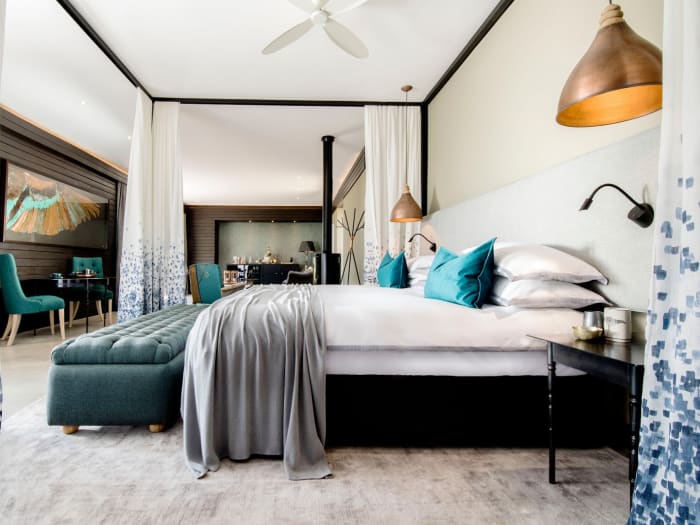
In a lodge of this calibre, the room is not merely a place to rest between activities; it is an integral part of the experience. It embodies what one seeks in the bush: tranquility, space, and a connection to the landscape. At Silvan Safari Lodge, the suite extends the spirit of the location. There is an elegance that is understated, a refined comfort, and a constant link to the outdoors. Even after an intense safari, the experience does not cease upon crossing the threshold of one’s suite; it simply shifts in pace.
Intimacy plays a central role here. In the finest safari lodges, accommodations preserve a sense of chosen isolation, allowing one to find silence after the morning or evening observations. This intimacy does not exclude service; it relies on discreet organisation, rigorous daily maintenance, attentive turn-down service, as well as laundry and luggage handling.
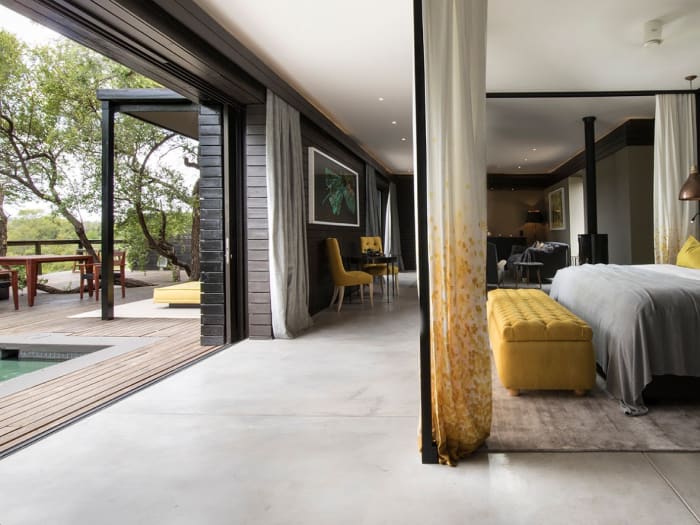
In the context of a safari, the ideal suite serves multiple functions. It must allow for rest, as early departures impose a demanding rhythm. It should also provide a transitional space—a place to reflect on the day’s images, sort through photographs, enjoy a cup of tea, or watch the light change. Finally, it must maintain a sensitive connection with the environment. This is less about decorative effects and more about how the volumes, openings, and materials invite the landscape inside. The true luxury here lies not in shutting oneself off from the outside, but in enjoying it without sacrificing comfort.
For couples, this configuration naturally fosters a romantic dimension. Time spent in the suite becomes an experience in itself. Returning after the safari, pausing in the afternoon heat, preparing for dinner, waking before dawn in almost absolute silence. For solo travellers, the room takes on a more introspective function. It becomes a personal refuge, a calm observation post, a space to appreciate the rarity of the stay. Families particularly value the quality of organisation, finding an orderly and restful environment after the intensity of outings.
In safari settings, comfort is often judged by very tangible details. The ease with which one can prepare for an early departure, the quality of the wake-up service, the flexibility of laundry after a dusty day, the consistency of maintenance, and the feeling that everything is designed to support a specific rhythm. It is often these more discreet elements, rather than spectacular decor, that define the most accomplished establishments.
At Silvan Safari Lodge, the suites are envisioned as private observatories as much as spaces for rest. They do not seek to distract from the reserve; rather, they provide the right setting to inhabit it. In a successful safari journey, one remembers as much the light glimpsed from the terrace as the tranquillity of returning to one’s room. It is this continuity between the outside and inside that gives the accommodation its true value.
Dining, between refinement and territory
At Silvan Safari Lodge, gastronomy is an integral part of the stay, adhering to different codes than those of an urban palace. The dining experience follows the rhythm of the safari: early morning departures, returns from outings, daytime pauses, and dinners that extend the narratives of observation. Culinary pleasure is as much about the moment as it is about the plate.
The refined cuisine showcases local flavours, aligning with the standards of a Relais & Châteaux establishment while maintaining a connection to South Africa. Balance is key here—enough precision for travellers accustomed to fine dining, yet sufficient simplicity to remain coherent with the bush.
Early mornings call for flexible and well-thought-out formats. During the day, one appreciates offerings that allow for relaxation. In the evening, dinner takes on a more narrative dimension. Conversations resume, observations are compared, and the meal becomes a natural extension of the safari.
In this context, service is as important as the cuisine. Attention to detail is paramount. Adaptation to outing schedules, consideration of preferences, fluidity in transitions, and an atmosphere free from rigidity all contribute. Culinary luxury in the bush is not about spectacle; it is measured by the sensation that everything has been thoughtfully arranged for a pleasant dining experience at the right moment.
A snack upon returning from a morning outing, a leisurely lunch, a more elaborate dinner after sunset—each of these moments contributes to the coherence of the stay.
For French or European travellers, the experience shifts the usual markers of hotel luxury. One finds the standards of a grand establishment in a setting where the relationship to the territory remains paramount. The cuisine does not overshadow the landscape; it complements it.
At Silvan Safari Lodge, dining is more an art of hospitality than a simple restaurant experience. It structures the day, provides comfort after early departures, and brings people together after safaris. It is this alliance between hotel precision and the wild context that gives the gastronomy its depth.
Wellness, Relaxation, and the Right Rhythm
At Silvan Safari Lodge, wellness extends beyond a traditional spa experience. In Sabi Sand, relaxation is also born from the rhythm of your stay, the silence, and the sense of space.
Luxury lies as much in comfort as in the opportunity to slow down. Between safaris, there is time to rest and reconnect with your senses.
A safari, even in the utmost comfort, demands both physical and mental engagement. Early morning departures, wildlife observation, temperature fluctuations, and the intensity of animal encounters create genuine fatigue.
The pauses at the lodge are therefore integral to the experience. A quiet late morning, a nap, a moment of reading, or simply enjoying the view from your suite can be profoundly restorative.
Wellness also hinges on the quality of organisation. Wake-up calls, daily housekeeping, seamless logistics, and the availability of the team lighten the stay.
This form of invisible comfort often matters more than an accumulation of facilities. It fosters a sense of continuity and ease.
For couples, relaxation often takes on an intimate dimension. Between outings, the suite transforms into a suspended space, far removed from everything, without sacrificing comfort.
For solo travellers, the lodge encourages a sense of re-centering. The silence of the reserve and the daily rhythm impart a meditative quality to the stay.
Families discover a different way to share time together. Fewer activities mean more observation, listening, and recuperation.
The natural setting plays a significant role. The flora, the sounds of the bush, the changing light, and the interplay between safari and serenity create a relaxation that is deeply rooted in the environment.
Thus, Silvan Safari Lodge offers a wellness experience that is coherent with its surroundings. It is grounded in rest, attentive service, intimate spaces, and immersion in the landscape.
Concierge and bespoke services
In high-end safari hospitality, the quality of service hinges on anticipating the traveller's needs. At Silvan Safari Lodge, personalised service and attention to detail set the tone. In the South African bush, this precision matters at every stage of the stay.
The lodge offers 24-hour concierge services, a 24-hour reception, daily housekeeping, turn-down service, luggage storage, laundry, wake-up service, and multilingual staff. In the heart of the Sabi Sand reserve, these services cater to a unique rhythm. Early morning departures, variable returns, and safari logistics require seamless organisation.
The concierge supports the stay as a whole. Before arrival, it helps organise the pace of the journey. On-site, it adjusts schedules, preferences, and coordination with the teams. In an environment far removed from urban markers, this continuous presence provides genuine comfort.
The wake-up service is essential for morning departures. Laundry facilitates stays punctuated by outings. Daily housekeeping and turn-down service enhance comfort upon returning from the bush.
The multilingual staff supports the quality of international hospitality. Clear communication aids in understanding schedules, lodge customs, and guidelines related to life in the reserve.
For couples, this level of service smooths the stay. For solo travellers, it creates an attentive framework. For families, it provides useful logistical support.
At Silvan Safari Lodge, the services form a discreet yet essential structure. They allow for immersion in nature with comfort, simplicity, and personalised attention.
The Sabi Sand safari way of life
To speak of an art of living in Sabi Sand may seem paradoxical if one associates the phrase with cities, cafés, cultural addresses and social habits. Yet there is indeed a way of life here, very different but no less codified: that of the safari. Silvan Safari Lodge belongs to this world in which luxury does not consist in multiplying stimuli, but in organising a more attentive relationship with time, landscape and living things. One comes to the reserve not to consume activities, but to learn how to inhabit a particular rhythm.
That rhythm begins before dawn. The early wake-up, the uncertain first light, the departure into the cool air: all this creates a rare quality of presence. Then comes the return to the lodge, time for a meal, rest, reading and quiet observation. In the late afternoon, another drive gives the day fresh momentum and leads into the most beautiful hours of the bush, when the light softens, shadows lengthen and the reserve changes tone. In the evening, dinner and conversation extend the experience. Together, these moments form a temporary yet highly structured daily life that lies at the heart of the stay’s appeal.
This way of living also depends on learning attention. On safari, one quickly discovers that wonder does not rest solely on the Big Five, however memorable those sightings may be. It also arises from subtler signs: a track in the ground, an alarm call from birds, the way vegetation opens into a clearing, a change in an herbivore’s behaviour, the quality of light on a tree or dry grass. The traveller gradually enters into a finer reading of the landscape. That education of the eye is one of the great privileges of the experience.
Silvan is especially suited to those who appreciate places capable of altering their relationship with time. In the reserve, one soon lets go of the reflexes of connected daily life. Schedules remain, of course, because safari imposes discipline, but that discipline has something liberating about it. It simplifies choices, refocuses attention, and restores the value of waiting and observing. Luxury then becomes a quality of inner availability.
For couples, this way of living takes the form of a shared interlude made up of silences, common emotions and memories created outside ordinary frameworks. For solo travellers, it can become an almost initiatory experience, so strongly does the reserve impose a different relationship with oneself and the world. For families, it offers a valuable field of learning: children and adults alike discover another way of looking, listening and telling stories.
Finally, Sabi Sand reminds us that luxury travel can be deeply connected to nature without becoming rustic. Comfort, service and thoughtful dining make it possible to live this immersion without giving up hotel standards. That is precisely what makes the experience distinctive: an alliance between discreet sophistication and the force of the wild.
The Silvan Safari Lodge way of life lies in that balance. It does not promise a decorative version of Africa, but an inhabited experience shaped by safari, enriched by service, and carried by the tangible beauty of a living territory. For many travellers, it is a rare way of returning to essentials without sacrificing comfort.
Booking via MyConciergeHotel
Booking Silvan Safari Lodge through MyConciergeHotel means approaching this stay as a journey in its own right. A safari lodge in the Sabi Sand reserve operates on a different rhythm compared to a conventional hotel. Guided safaris structure the days, and the season matters. Certain practical details need to be arranged in advance.
The first challenge is to ensure that the location aligns with your travel style. Silvan is well-suited for couples seeking an immersive getaway, solo travellers drawn to tranquility, and families ready to embrace the safari tempo. Bush luxury is neither experienced like a beach holiday nor a city break. Days begin early, and highlights are tied to guided outings. A well-prepared traveller knows what to expect.
The travel period also deserves special attention. The best season runs from May to September, when wildlife is more active. This period is highly sought after, making early booking essential. It is advisable to reserve safaris in advance, especially during peak season.
Booking with MyConciergeHotel also allows for better preparation of expectations regarding service. Silvan emphasises personalised hospitality and attention to detail. Some guests may prioritise intimacy and romance, others the quality of wildlife observation, and still others the logistical comfort or ease of a family stay. The clearer these expectations are set beforehand, the more accurate the experience will be on-site.
In a destination like Sabi Sand, preparation does not detract from spontaneity; it makes it possible. Understanding the rhythm of the days, the role of safaris, the practical needs associated with a reserve stay, and choosing the right period allows for greater peace of mind while travelling.
MyConciergeHotel advocates this approach: selecting places with strong personalities, placing them within a faithful narrative, and supporting the booking process with tailored advice. For Silvan Safari Lodge, this method is particularly meaningful. A successful safari hinges as much on the quality of the lodge as on understanding its rhythm, environment, and what it promises.
By booking through MyConciergeHotel, you opt for a more nuanced interpretation of travel: a stay designed holistically, attentive to both practical details and emotional dimensions, and true to what Silvan Safari Lodge offers most precious: a refined immersion in one of South Africa's great safari territories.