History & heritage
In Milan, some addresses tell the story of the city as much as they host it. Principe di Savoia belongs to that rare category of hotels whose scale, rituals and way of receiving guests embody a particular idea of the great Italian hotel. Its name immediately suggests a tradition of representation, refinement and urban sociability that sits naturally with the Milanese temperament: elegance that is more constructed than ostentatious, a taste for fine materials, and genuine attention to efficient service. Here, luxury does not rely on spectacle; it is expressed through continuity of hotel know-how, the quality of the public spaces, and that distinctly Italian ability to combine décor with ease.
Its place within Dorchester Collection positions the hotel within an international lineage of reference properties without diluting its local identity. That dialogue between exacting standards and Milanese character is precisely what makes the address compelling. Guests encounter the codes of a grand house — attentive welcome, round-the-clock concierge, turndown service, careful daily housekeeping — together with an atmosphere that could not simply be transplanted elsewhere. The lobby and lounges, conceived as places to spend time rather than merely pass through, recall the importance of lingering in classical hospitality: one does not simply cross them, one settles in, arranges to meet, reads the papers, waits for the opera, a meeting, or dinner in town.
Principe di Savoia also belongs to a broader history: that of Milan as an economic, creative and social capital. In a city where fashion, design, finance and culture constantly intersect, grand hotels have long served as discreet stages. Business travellers, couples in search of an art-and-architecture weekend, families on an Italian journey and loyal guests attached to a certain way of inhabiting the city all pass through. This mix gives the hotel its particular energy: structured enough to meet the demands of a professional schedule, yet sufficiently enveloping to become a refuge after the pace of a Milanese day.
What remains, ultimately, is a sense of permanence. In a hotel world often tempted by passing trends, Principe di Savoia upholds a more enduring vision of luxury: a classical décor sharpened by contemporary touches, personalised service that values accuracy over unnecessary ceremony, and a way of hosting that leaves guests feeling recognised without ever feeling managed. That fidelity to a certain hotel tradition explains the property’s singular place in Milan. One comes for the address, certainly, but also for its bearing, its memory and its promise of continuity.
The Establishment
The first encounter with the Principe di Savoia evokes a sense of order and calm, a precious quality in a bustling metropolis like Milan. The hotel is situated in a lively urban environment, with convenient access to the city’s major landmarks and transport links. It serves as a coherent base for a stay that combines meetings, sightseeing, and moments of respite. This location allows for a seamless exploration of Milan. Reaching shopping districts, cultural sites, major thoroughfares, and business areas becomes effortless. As evening falls, guests find themselves in a unique setting, shielded from the external pace.
Inside, the establishment strikes a balance between decorative tradition and contemporary comfort. It embodies the codes of a grand European hotel. Generous volumes, carefully selected materials, and lounges designed for conversation or comfortable waiting create a cohesive whole. The decor establishes a visual and emotional continuity. The lobby plays a central role. More than just an arrival space, it serves as a threshold between the city and the hotel. It acts as a landmark and a place of transition, offering a clear, fluid, and reassuring experience.
The lounges significantly contribute to this identity. Designed for relaxation, they extend the notion of a hotel where one can inhabit the communal spaces. This quality is important in a city marked by professional engagements and social representation. Settling in before dinner, taking a break between visits, or hosting a professional contact in a more intimate setting than an outdoor café—Principe di Savoia naturally caters to these needs. The refinement of the surroundings never compromises functionality; rather, it enhances it.
The establishment appeals to a diverse range of travellers. Couples find a classic and urban address, conducive to cultural stays. Business travellers appreciate the consistency of service, the constant availability of the reception and concierge, and the logistical simplicity of a well-established hotel. Families benefit from a structured and reassuring environment, with the expected services at this level. This versatility does not result in a neutral identity; it reflects a hotelier's expertise capable of accommodating varied rhythms without losing its tone.
Ultimately, what distinguishes the establishment is its ability to stage relaxation at the heart of the city. The organisation of spaces seems designed to cushion the intensity of Milan without denying it. Guests enjoy proximity to iconic sites, the energy of the neighbourhoods, and the ease of movement. Then, they find an interior that prioritises balance, continuity, and quality of service. For many travellers, this interplay between an urban address and a classic refuge defines the luxury of a grand Milanese hotel.
Rooms and Suites
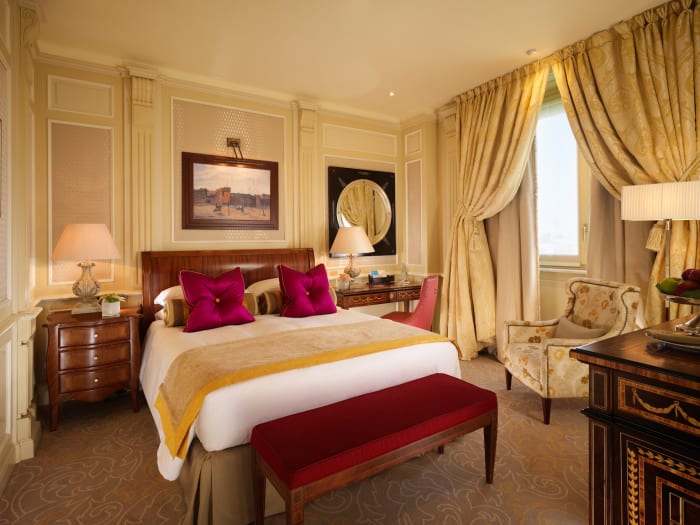
In a hotel of this calibre, a room is never merely a place to stay; it becomes the setting where the rhythm of the visit is redefined.
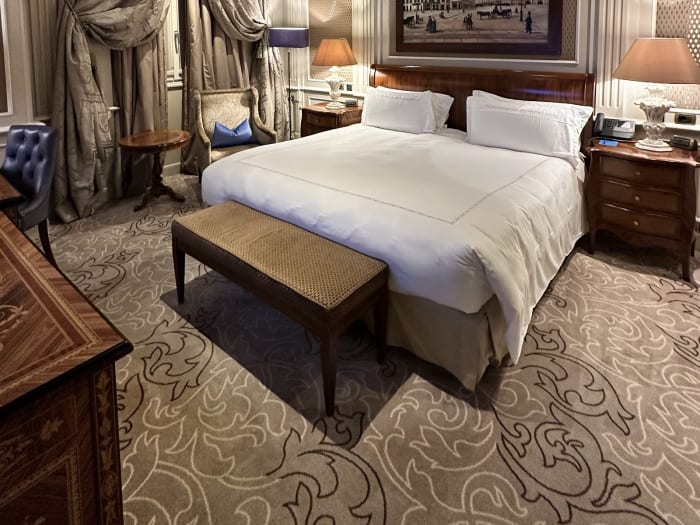
At the Principe di Savoia, this aspect is particularly pronounced. The identity of the establishment, classic and refined, calls for private spaces designed for comfort.
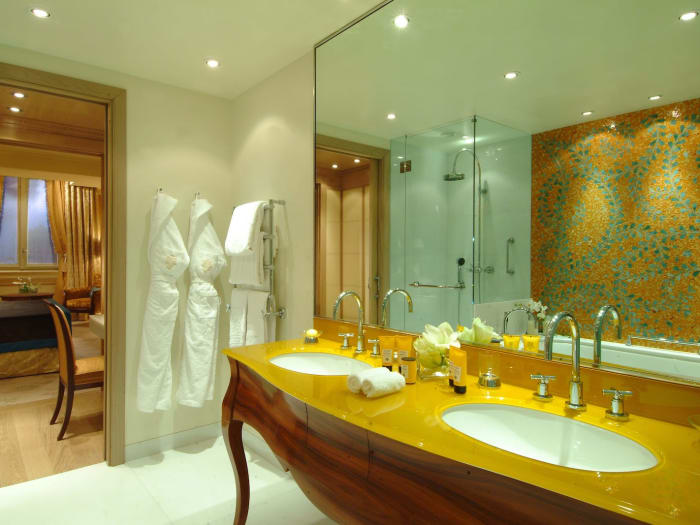
The rooms and suites extend this sense of continuity. The decorative elegance is complemented by a genuine clarity of purpose.
This is often where the distinction lies between a spectacular hotel and one that feels like home. It is in the way the room welcomes, soothes, and facilitates.
A discerning traveller expects a Milanese hotel of great repute to offer a characterful setting. They also anticipate a clear organisation, well-maintained bedding, and a sense of tranquility.
Daily maintenance, turn-down service, and the constant availability of staff contribute to this. These elements ensure a seamless stay, whether for one night or several days.
Suites hold a special place in the imagination of Italy's grand hotels. They offer a more residential and flexible way to experience the venue.
They are ideal for extended stays, family trips, or agendas that blend work and leisure. In Milan, this additional space becomes a tangible advantage.
It allows for preparation, relaxation, and brief entertaining. Here, luxury is as much about the atmosphere as it is about the freedom to organise one’s time.
The classic aesthetic suggests interiors that resist international uniformity. This is an important consideration for travellers seeking more than an interchangeable standard.
A successful room in a grand Milanese hotel retains something of the place itself. A decorative density, a measured warmth, and a sense of staging without excess.
Contemporary touches avoid any impression of nostalgia. They root comfort firmly in the present.
Finally, service plays a significant role in the experience of the rooms and suites. The 24-hour concierge, round-the-clock reception, luggage service, laundry, and multilingual staff all contribute.
Guests can arrive late, depart early, adjust their plans, or arrange for a departure. The room thus becomes the discreet and efficient base for a Milanese stay.
Dining
In a great Italian hotel, dining is never a mere auxiliary service. It forms part of the property’s identity, its daily rhythm and its ability to retain the traveller beyond the overnight stay. At Principe di Savoia, the existing advice — reserve a table at the main restaurant as soon as you arrive — is revealing. It suggests a sought-after dining room, a diary that fills quickly, and above all the importance given to the culinary experience within the overall stay. In Milan, a city of appointments, business lunches, aperitivi and late dinners, a hotel of this standing must offer more than convenience: it must provide a credible address, capable of fitting into local habits as well as the expectations of an international clientele.
Here, the setting matters as much as the plate. In a house defined by a classical atmosphere with contemporary touches, one expects dining spaces aligned with the rest of the hotel: elegant without chill, refined without stiffness, suitable both for a composed breakfast and for a more ceremonial dinner. In the morning, the restaurant of a grand Milan hotel often plays a strategic role. It is where the different tempos of the stay intersect: business travellers in a hurry, couples planning a day of visits, families organising their route. The quality of service, the ease of the welcome and the ability to adapt the pace to the guest matter as much as the offer itself.
At lunch or dinner, the table becomes a natural extension of Milanese life. Guests may seek a calm interval between meetings, a formal meal, or simply the ease of remaining in the hotel after a full day. True luxury often lies in that freedom of choice. A leading address must respond to very different expectations without losing coherence: precision of service, discretion, accurate reading of needs, and the ability to preserve intimacy within a lively setting. The hotel’s lounges, designed for relaxation, reinforce this dimension by allowing the experience to extend around coffee, tea or a drink, in a logic of staying rather than consuming quickly.
Hotel gastronomy in Milan also maintains a close relationship with the city itself. Without claiming to summarise the richness of Lombard cuisine, it may reflect some of its principles: respect for product quality, a sense of seasonality, attachment to classics well executed, and openness to contemporary influences. In an international property, this balance between local identity and cosmopolitan clarity is essential. Travellers want to recognise where they are, while benefiting from the comfort and consistency of a great house.
In practical terms, dining at Principe di Savoia belongs to a broader promise: that of a hotel in which several moments of the day can be lived without leaving a trusted setting. Breakfast before a meeting, a discreet lunch, a pause in the lounges, dinner reserved in advance to avoid waiting: these are the sequences that structure the stay. Rather than simply a hotel restaurant, one should understand it as an essential component of the experience, on a par with the room, the service and the Milan address itself.
Spa & Well-being
In a city as dense and dynamic as Milan, well-being at the hotel takes on a special significance. It creates a genuine counterpoint to the urban intensity. Even for a business, shopping, or cultural stay, the body registers the rhythm of movement and appointments. At Principe di Savoia, the spa is part of this art of hospitality. It offers a setting where one can slow down, where silence returns, and where care rebalances the stay.
A spa or wellness area is not merely defined by its facilities. It is judged by the quality of the experience. The traveller first seeks a sense of retreat. Soft lighting, controlled acoustics, discreet service, and a different tempo from that of the lobby or the city. In a hotel with a classic and refined atmosphere, this transition occurs seamlessly. Well-being extends the overall promise of comfort, precision, and personalised attention.
For couples, a moment of relaxation can structure a Milanese weekend, allowing for a balance between visits and rest. For business travellers, a few moments of recovery before dinner, after a flight, or between two busy days can transform the perception of travel. Families also appreciate finding a more tranquil environment at the hotel compared to public spaces.
Well-being in luxury hospitality also relies on invisible gestures. The availability of the staff, coordination with the concierge, the organisation of a suitable schedule, and the fluidity between room, treatments, and other services are as important as the decor. At Principe di Savoia, care is integrated into a stay, into a schedule, into a way of travelling.
The spa and well-being at Principe di Savoia thus embody a promise of respite. In this address of classic elegance, this respite contributes to the overall balance of the experience. Luxury also consists of modulating one’s energy, alternating intensity and retreat, activity and recovery. In Milan, this interlude at the heart of the city is among the most cherished privileges of a grand hotel.
Concierge & services
The true level of a grand hotel is often measured less by what is visible than by what works quietly in the background. At Principe di Savoia, the services currently known already sketch the portrait of a solidly structured house: 24-hour concierge, 24-hour front desk, daily housekeeping, turndown service, luggage storage, laundry, wake-up service and multilingual staff. Taken individually, these elements may seem expected in high-end hospitality; brought together and well executed, they form the practical backbone of the stay. It is this invisible infrastructure that allows guests to focus on the city, on meetings or on rest, without having to manage logistical friction.
The concierge occupies a central place here. In a destination such as Milan, where schedules can change quickly between exhibitions, restaurant bookings, transport, shopping, cultural events and professional obligations, having a reliable point of contact at any hour profoundly changes the experience. A good concierge does not merely respond; it anticipates, prioritises and simplifies. It recommends without imposing, organises without theatricality, resolves without dramatising. In a hotel of tradition, this skill is almost a discreet art. It saves time, prevents missteps and makes the city more legible.
Round-the-clock reception complements this sense of operational security. Late arrivals, very early departures, last-minute adjustments and the need for immediate assistance are all situations in which the constant presence of a trained team makes a difference. In a major international city, such availability is not a secondary luxury; it is a condition of peace of mind. It is particularly valuable for business travellers, but also for families and for anyone combining several stages of travel.
Housekeeping and in-room services play an equally essential role, even if they are less visible. Daily cleaning and turndown contribute to a genuinely accomplished room experience. They restore order, comfort and a sense of care to the flow of the day. Laundry, luggage storage and wake-up service respond to very practical needs which, when handled well, significantly lighten a stay. Here again, luxury lies in reliability: knowing that things will be done, on time and with discretion.
Finally, the presence of multilingual staff reflects the international vocation of the address. Milan welcomes guests from around the world, and a grand hotel must be able to create the conditions for simple, precise and courteous communication from the outset. This linguistic ease is more important than it may appear: it fosters trust, reduces misunderstandings and allows service to be more finely adjusted. At Principe di Savoia, all these elements combine into a calm and efficient form of hospitality. It is often this kind of mastery, more than any decorative effect, that turns a good stay into one that feels genuinely smooth.
The Milanese art of living
Staying at Principe di Savoia also means choosing a particular way of entering Milan. The city does not always reveal itself immediately; it requires some attention to disclose what distinguishes it from other major Italian capitals. Less theatrical than Rome, less overt than certain art cities, it seduces through aesthetic discipline, attention to detail, a culture of work well done and an urban elegance visible as much in architecture as in daily habits. A grand hotel plays the role of interpreter here: it helps guests understand the local rhythm and move from one district to another, from one register to another, without losing the thread of the stay.
Its proximity to Milan’s landmark sights is an obvious advantage. It allows the city to be explored flexibly, according to personal interests and pace. Some travellers will prioritise major cultural institutions, historic façades, squares and monumental axes; others will come mainly for boutiques, design, galleries, professional appointments or seasonal events that punctuate Milanese life. In every case, the hotel offers a stable, elegant and well-connected base from which the city becomes easier to read. This matters in Milan, where the quality of a stay often depends on how well movement is organised.
The Milanese art of living also rests on a certain economy of gesture. Well-kept places, efficient service, punctual appointments and interiors conceived with rigour are all valued. Principe di Savoia aligns naturally with that culture. Its classical atmosphere, personalised service and lounges dedicated to relaxation extend very local values: a taste for composure, a refusal of approximation, and the idea that true comfort depends on precision. For visitors, this coherence between hotel and city greatly enriches the experience. One does not simply stay in Milan; one enters a particular language of the city.
There is also, of course, the social dimension of a Milan stay. The city lives through appointments: a coffee taken at the right moment, a well-placed lunch, an aperitivo at day’s end, a dinner booked in advance. In this context, the hotel’s public spaces take on their full meaning. The lobby and lounges are not merely beautiful or comfortable; they participate in a way of inhabiting time, preparing an outing, extending a conversation or creating a pause between two sequences. This quality of use is deeply in tune with the Milanese spirit.
Finally, staying here allows guests to experience Milan beyond the clichés of fashion and business. Certainly, the city is a capital of creation and influence. But it is also a city of measure, loyalties, elegant routines and discreet urban pleasures. Principe di Savoia, through its positioning and style, offers privileged access to that subtler dimension. It suits both dense itineraries and more contemplative escapes, always giving the traveller a reliable point of anchorage. Perhaps that is the essence of Milanese luxury: a sophistication that is never loudly declared, but felt in the quality of transitions, places and attentions.
Book with MyConciergeHotel
Booking Principe di Savoia through MyConciergeHotel means approaching this Milan address with a logic of stay rather than a simple logic of availability. A grand hotel is not chosen solely for its status, but for the fit between its style, location, services and the way one wishes to experience the city. In this case, the value of guidance lies precisely in that perspective. Couples, business travellers, families and Milan regulars do not expect the same things from a five-star address; the stay needs to be shaped accurately, taking into account travel rhythm, season, city events and individual priorities.
MyConciergeHotel makes it possible to approach the booking with that degree of nuance. The aim is not merely to confirm a room, but to help structure a coherent experience around the hotel’s genuine strengths: a Milan address within Dorchester Collection, a refined setting, a classical atmosphere sharpened by contemporary touches, public spaces designed for relaxation, and personalised service supported by a 24-hour concierge. For some travellers, this means favouring the smoothness of a business stay with optimised arrivals and departures; for others, it means arranging a cultural weekend with a comfortable pace, sound reservations and intelligent use of the hotel as an urban refuge.
This support becomes particularly valuable in the details. In Milan, some periods are busier, some restaurants more sought after, some districts more strategic depending on the purpose of the stay. The concierge’s advice to reserve the main restaurant promptly is a good example: a simple recommendation, yet one that reveals the importance of anticipation. Booking through MyConciergeHotel also means being able to integrate this type of attention in advance, avoiding last-minute compromises and securing the moments that matter most. In a city of calendars, fairs, design weeks, professional appointments and short stays, such preparation changes the quality of travel.
There is also a question of trust. Faced with abundant hotel supply, travellers seek not more information, but a reading that is reliable, clear and contextualised. The role of MyConciergeHotel is to convey the spirit of the address without distorting it, to distinguish what is essential from what is merely promotional effect, and to guide the booking according to real use. Principe di Savoia is especially suited to those who wish to combine Milan’s energy with the comfort of a grand classical house, well served and well located.
Ultimately, booking this address through MyConciergeHotel means choosing an editorial and concierge-led approach to travel. One does not settle for a well-rated hotel; one selects a setting, an atmosphere, a level of service and a way of inhabiting the city. In Milan, where so much depends on the quality of transitions, that approach is particularly relevant. It allows the stay to begin with greater clarity, better anticipation and, in the end, more freedom.