History & heritage
In Lech am Arlberg, hospitality is not merely an extension of alpine tourism; it forms part of the village’s identity. Hotel Post Lech Arlberg belongs to this mountain culture of welcome, where guests come as much for the quality of the snow and scenery as for a certain idea of a well-orchestrated stay. Its membership of Relais & Châteaux clearly signals its positioning: a characterful house attentive to a sense of place, continuity of service and a way of receiving guests that goes beyond comfort alone. Here, the experience does not rely on display, but on a kind of alpine rightness in which materials, proportions and the rhythm of the stay converse with the surroundings.
Lech am Arlberg has long held a strong reputation among winter travellers, discerning skiers and regular visitors to mountain resorts who seek a village that remains legible and human in scale without giving up high-level hospitality. Within this setting, Hotel Post occupies a distinctive place. Its very name evokes an older European tradition, that of coaching inns and post houses that once structured travel routes through the mountains. Without needing to insist on a precise chronology, one senses in this address a continuity between historic hospitality and the contemporary expectations of an international clientele. The result is a house that seems to have absorbed the codes of the grand alpine hotel while retaining an intimate scale.
This sense of heritage is expressed more through atmosphere than theatrical décor. Timber, warm tones and spaces designed for returning from the slopes or for long evenings after a day outdoors all contribute to an impression of permanence. The hotel does not try to detach itself from its territory; it borrows its lines, customs and restraint. That is precisely what gives it credibility. In the Alps, the most convincing properties are often those that avoid overplayed folklore. Hotel Post Lech Arlberg appears to follow that path: one of rooted elegance, where tradition is not frozen but interpreted with judgement.
The fact that it suits both couples and families reinforces the idea of a house designed to endure, almost in a patrimonial sense. Some mountain addresses specialise in one clientele or one stage of life; others accompany seasons, generations and travel habits. Here, a stay may take different forms depending on the calendar and one’s wishes: a structured ski week, a summer interlude centred on hiking, or a quiet retreat in one of the best-known villages in the Arlberg. Such versatility, when properly handled, is often the mark of hotels that understand their environment over the long term.
In a region where standards of service are high, Hotel Post Lech Arlberg seems to cultivate a discreetly precise hospitality. That may be where its true heritage lies: in the ability to make the traveller feel they are entering a house that understands mountain codes, the expectations of an international clientele and the value of time spent well. More than a simple base for skiers, the property reads as a true destination stay, a place to return to for the balance of location, atmosphere and quality of attention.
The property
One of the first strengths of Hotel Post Lech Arlberg lies in its setting within Lech am Arlberg, a village whose reputation extends well beyond the circle of winter-sports enthusiasts. Lech retains a scale that is increasingly rare among renowned alpine resorts: it offers the efficiency expected of a leading ski destination while preserving a certain restraint that protects the quality of the stay. The hotel benefits from this duality. It allows easy access to mountain activities while maintaining a genuine sense of calm, something not always guaranteed in destinations that become highly sought-after during the snow season.
The peaceful alpine setting listed among its highlights is not a generic claim. In a village such as Lech, the quality of a stay depends greatly on how a property positions itself in relation to the movement of the resort. Some travellers want immediate slope access; others value the feeling of being slightly set back, with the luxury of real quiet once the day is over. Hotel Post appears to strike that balance: remaining connected to mountain life without being consumed by its bustle. For an international clientele accustomed to major ski hotels, that nuance matters.
Architecturally and decoratively, the house suggests a dialogue between tradition and modernity. This is a phrase often used loosely, yet here it takes on a more precise meaning when considered in an alpine context. Tradition, in this kind of address, is generally expressed through materials, protective volumes, the use of timber and an attention to visual warmth and convivial public spaces. Modernity does not mean rupture; rather, it tends to show in smoother circulation, a cleaner reading of interiors and comfort designed for contemporary habits. When this balance is properly handled, it creates places that do not date quickly, because they are neither trapped in demonstrative chalet styling nor tempted by an abstraction that would deny the mountain setting.
The property suits both couples and family stays, which implies a coherent spatial organisation. In the best alpine hotels, this versatility is visible not only in the room offering but in the way shared spaces absorb different rhythms: early departures for the slopes, slower returns in the late afternoon, reading time, conversations over a drink and moments of rest between activities. A successful mountain hotel is one that can welcome the energy of the outdoors without losing the serenity of indoors. Everything suggests that Hotel Post Lech Arlberg has been conceived in that spirit.
Outside winter, the address takes on another dimension. Lech am Arlberg becomes a favoured starting point for hiking and outdoor pursuits. This seasonal shift matters because it reveals the intrinsic quality of the place beyond the promise of skiing alone. A hotel that works well in summer as well as winter is often one with genuine roots. Guests come not only for a sports programme, but for an environment, a light, an altitude and a way of inhabiting the mountains. From that perspective, Hotel Post is more than a resort address: it reads as a complete alpine house, capable of accompanying both active itineraries and more contemplative stays.
What emerges, finally, is a sense of coherence. The property, the village, the level of service, the decorative style and the Relais & Châteaux positioning form a legible whole. For the traveller, that clarity is valuable: it allows one to understand immediately the tone of the house. Hotel Post Lech Arlberg does not promise a theatrical mountain spectacle; it offers a subtler experience built on balance between access, calm, hotel tradition and contemporary comfort.
Rooms and Suites
In a mountain hotel, the room is never just a simple sleeping space. It becomes a transitional area between the outside and the inside, balancing the intensity of days spent on the slopes or trails with the need to unwind.
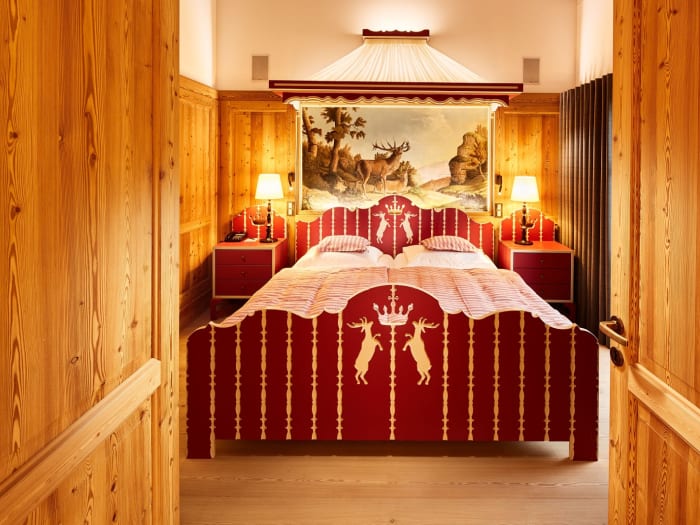
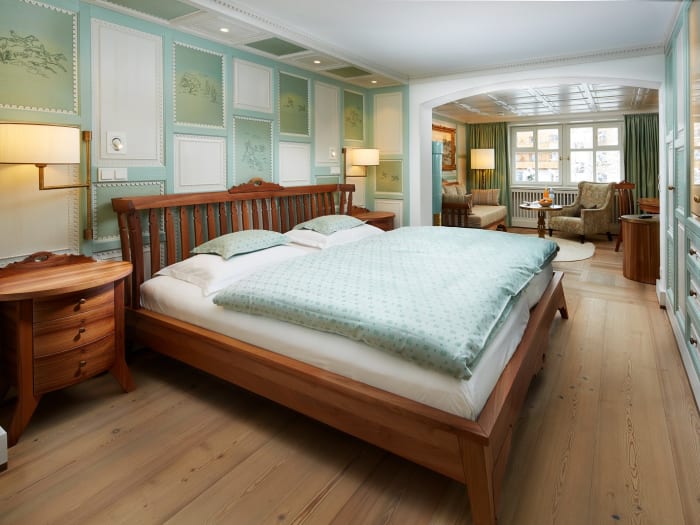
At the Hôtel Post Lech Arlberg, the rooms and suites extend the philosophy of the establishment. They offer high-level comfort, a warm atmosphere, and a measured interpretation of alpine style.
In the Alps, the most successful rooms adapt to the season. In winter, they provide immediate warmth, practical storage, and a sense of refuge. In summer, they invite more light in and foster a more open relationship with the landscape.
This adaptability is also reflected in the service. The daily housekeeping and turn-down service contribute to this quality of use, ensuring that the room is consistently maintained and prepared for various moments throughout the day.
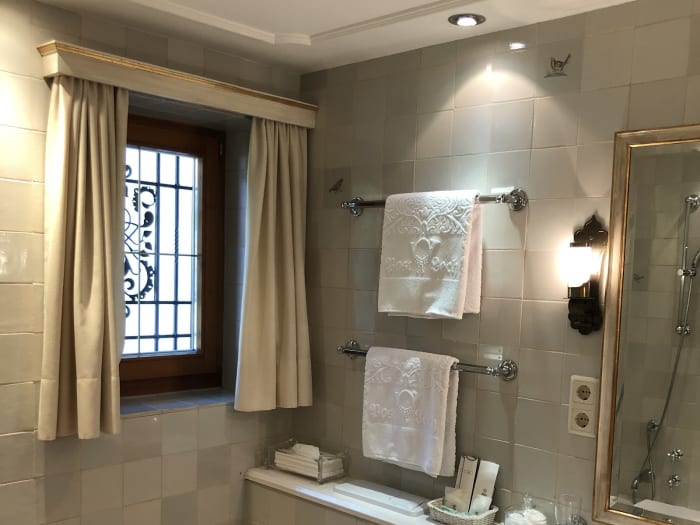
The five-star positioning and affiliation with Relais & Châteaux demand particular attention to detail. Careful bedding, a subdued ambiance, and bathrooms designed for comfort are all part of the experience. The overall design strikes a balance between traditional elements and contemporary amenities.
In a village like Lech, where guests are well-acquainted with alpine offerings, the details matter. Soundproofing, perceived volumes, ease of installation, and aesthetic coherence make a significant difference.
The suites appeal to travellers who wish to extend their time at the hotel. For couples, they allow for a more leisurely pace. For families, they offer valuable flexibility, especially in a resort where rhythms vary according to age and activities.
The hotel is family-friendly, and this aspect is naturally integrated into the accommodation offerings.
In the rooms of a grand alpine hotel, continuity with the rest of the establishment is essential. One seeks a room that speaks the same language as the lobby, lounges, dining area, and service.
At the Hôtel Post Lech Arlberg, this continuity is achieved through a hospitality that is relaxed yet attentive. Refinement never overshadows warmth and friendliness.
For the traveller, this means rooms and suites designed as true bases for their stay. They are places to return to for warmth, rest, preparation for dinner, or simply to enjoy a moment of silence. In a destination where the outdoors plays a major role, the accommodation rebalances both body and mind.
The Dining Experience
In a mountain destination, dining is a key element of the stay. It punctuates the day, accompanies the return from the cold, and extends conversations.
For an establishment that is a member of Relais & Châteaux, the gastronomic dimension is naturally significant. At the Hôtel Post Lech Arlberg, it is central to the overall experience.
The context of Lech am Arlberg calls for a cuisine with multiple registers. The mountains invite comforting meals rooted in regional traditions.
A five-star address frequented by an international clientele must also offer finesse, quality of ingredients, and attentive service. This balance is crucial.
In the morning, breakfast is one of the pleasures of a stay at altitude. Before a day of skiing or hiking, it sets the tone.
One expects a smooth service, a carefully curated selection, and an atmosphere suited to every pace. An efficient start for the active, a slower awakening for others.
In the evening, dinner takes on a different tone. It embodies the return, relaxation, and the warmth of being together again.
In mountain hotels, dining spaces become places of intimate sociability. They offer a blend of conviviality and elegance.
The decor, balancing tradition and modernity, also plays its part. In the dining areas, it can create a coherent and inviting setting.
The contemporary traveller appreciates places where the plate harmonises with the atmosphere. Thoughtful lighting, warm materials, and attentive service contribute to this.
In Lech, this coherence is as important as the menu content. It plays a significant role in the quality of the stay.
Dining also encompasses service in a broader sense. It accommodates the rhythms of meals, the expectations of families, and those of couples.
In winter, the dining experience becomes a refuge. In summer, it aligns with a more open, brighter, and sometimes lighter relationship with time.
Thus, the Hôtel Post Lech Arlberg emerges as a dining destination integrated into the stay. A discreet approach designed to nourish, gather, and rhythm the days in the mountains.
Spa & wellness
In the world of fine alpine hotels, wellness is not an optional extra; it is one of the pillars of the stay. The mountains engage the body in a particular way, whether one skis intensively, walks at altitude or simply enjoys the climate and landscape. At Hotel Post Lech Arlberg, even without technical details about facilities, it is natural to see the wellness dimension as an essential component of the five-star experience. In a house of this level, rest does not end with the bedroom: it is organised through spaces, rhythms and a quality of attention that allows for genuine recovery.
The peaceful alpine setting plays a fundamental role here. Wellness in the mountains is not only about facilities; it also arises from the relationship between indoors and outdoors. After several hours spent in cold air, wind or the bright light of snow, the body seeks another quality of warmth, more enveloping and more stable. The best hotels know how to translate this need into interior architecture and into the atmosphere of their relaxation spaces. One looks less for spectacle than for a sensation of gradual decompression. In that spirit, Hotel Post seems to correspond to an idea of alpine wellness founded on continuity, discretion and lasting comfort.
For travellers accustomed to ski stays, recovery is an art in itself. It depends on the time taken after exertion and on the possibility of slowing down without entirely leaving the energy of the place. A successful wellness area allows precisely that: it offers a transition between the active day and the evening, between the intensity of outdoors and the softness of indoors. In a house that welcomes both couples and families, this dimension must adapt to different uses. Some will seek a silent interlude, others a shared moment of relaxation, and others still a simple end-of-day ritual before dinner. The quality of a hotel is then measured by its ability to make these uses compatible.
Summer brings another reading of wellness. The body may not need the same muscular recovery as after a day of skiing, yet it remains sensitive to altitude, walking, sun exposure and the deep restfulness that the mountains inspire. In this context, relaxation spaces take on a different tone: less oriented towards immediate comfort, more towards overall balance. An alpine hotel that works across seasons must know how to accompany these variations without losing its identity. This is often where the most accomplished houses reveal themselves: they do not merely have a spa, they know how to integrate wellness into a broader culture of the stay.
Service also plays a decisive role. A concierge available around the clock, continuous reception and a team attentive to guests’ rhythms all contribute indirectly to the wellness experience. Feeling expected, guided and helped in organising one’s days reduces the friction of travel and frees mental space. In a mountain hotel, that fluidity matters as much as a treatment or a relaxation room. True luxury often lies in this absence of effort imposed on the guest.
Thus, even without detailing a treatment menu or specific facilities, Hotel Post Lech Arlberg may be understood as an address where wellness naturally forms part of the overall experience. It is not only about recovering after skiing or hiking, but about finding a more balanced rhythm in tune with the mountains. It is this promise of physical and mental recalibration that gives a well-conceived alpine stay its full value.
Concierge & Services
Luxury in hospitality is often measured not by the sum of facilities but by the quality of their orchestration. At the Hôtel Post Lech Arlberg, the 24-hour concierge, 24-hour reception, daily housekeeping, turn-down service, luggage storage, laundry service, wake-up calls, and multilingual staff paint a picture of a property attentive to the fundamentals of a grand stay.
Individually, these elements may seem expected in a five-star establishment. Collectively, they define an essential promise: that of a seamless stay. In a destination where schedules, weather, and outdoor activities demand flawless organisation, this coherence is vital.
The concierge occupies a strategic position in a mountain hotel. In Lech am Arlberg, it becomes the coordination point for the stay. Booking activities, adjusting schedules according to the weather, organising transfers, facilitating arrivals or departures—these attentions save precious time.
The continuously open reception contributes to this same logic. Mountain hotels often welcome late arrivals and early departures. Knowing there is a constant presence is reassuring and simplifies matters.
Daily housekeeping and turn-down service reflect a more understated hospitality. In an alpine stay, the room is used at various times throughout the day. Regular maintenance and careful evening preparation maintain a sense of constant comfort.
The laundry service and luggage storage further enhance this fluidity. They cater to very practical needs associated with the mountains: technical clothing, split stays, arrivals before check-in, or departures after room release.
The multilingual staff also deserves special mention. In an international address in the Arlberg, this skill goes beyond mere convenience. It shapes the quality of interaction, the precision of recommendations, and the hotel's ability to welcome diverse clientele.
Ultimately, a concept of service emerges that is based on anticipation rather than demonstration. The Hôtel Post Lech Arlberg prioritises elegant efficiency, where each service supports the stay without overwhelming it. For the traveller, this approach allows for a focus on what truly matters: the mountains, relaxation, and shared moments.
The art of living in Lech am Arlberg
Staying at Hotel Post Lech Arlberg also means entering a certain idea of Lech am Arlberg. The village cannot be reduced to its ski area or its winter reputation, even though skiing remains one of its major attractions. What distinguishes Lech in the European alpine imagination is a rather rare combination of discreet prestige, mountain culture and legibility. One finds the efficiency of an international destination, but also an atmosphere that remains village-like in the best sense: a controlled scale, relatively simple circulation and a feeling of order and continuity that makes a stay immediately pleasant.
In winter, the local art of living is organised around the movement of ski days. Mornings begin early, departures are methodical, and by late afternoon comes that very particular mountain-resort moment: the gradual return to the hotel, as the light fades, equipment is put away and the sporting day gives way to another form of conviviality. In a hotel such as the Post, this transition is essential. It allows guests to experience the resort without suffering its agitation. Lech offers precisely that luxury: real intensity, but rarely disorder.
Summer reveals another side of the village. The landscapes open up, the trails redraw one’s relationship to the territory and the overall rhythm becomes more contemplative. Guests then come to walk, breathe, observe the relief and recover a sense of space. Alpine villages that remain interesting outside winter are often those with a genuine identity independent of lifts alone. Lech belongs to that category. Its name may evoke skiing first, yet the summer experience has its own coherence, particularly for travellers seeking a mountain destination that is inhabited, well-kept and accessible without becoming banal.
The art of living in Lech also lies in a certain quality of clientele. Without resorting to social clichés, one may say that the village has long attracted guests sensitive to discretion, consistency of service and the value of well-kept habits. This is felt in the overall atmosphere: less display, more control. For many travellers, that is precisely what makes the destination so appealing. One does not come merely to consume a resort; one comes to rediscover a way of staying in the mountains that still retains poise.
Within this context, Hotel Post Lech Arlberg acts as a natural interpreter of the place. Its décor blending tradition and modernity, its Relais & Châteaux positioning and its easy access to mountain activities make it a coherent base from which to understand Lech from within. The traveller may live several versions of the stay here: sporting, family-oriented, contemplative, culinary or simply restful. This plurality lies at the heart of the local art of living. The mountains are not reduced to performance; they remain a temporary way of life, with their rituals, silences, appointments and simple pleasures.
Ultimately, Lech am Arlberg appeals because it offers a civilised mountain experience in the best sense of the term. A mountain where one can be active without constant agitation, elegant without ostentation and well looked after without stiffness. It is this rare and durable balance that Hotel Post seems to extend. For the visitor, the stay then takes on a broader dimension than a simple ski or hiking trip: it becomes an immersion in an alpine culture where comfort, nature and restraint move together.
Book with MyConciergeHotel
Booking Hotel Post Lech Arlberg through MyConciergeHotel means approaching the stay with a logic of precision rather than mere availability. In a destination such as Lech am Arlberg, where peak winter periods quickly alter booking conditions, the quality of support before arrival becomes decisive. A five-star Relais & Châteaux hotel is not chosen solely on a rate or a handful of photographs: it is booked according to a travel rhythm, a season, a stay project and a very concrete level of expectation. It is precisely here that the guidance of a specialist concierge takes on its full meaning.
The first advantage lies in clarifying the experience sought. Are you planning a stay primarily centred on skiing, with a structured schedule and highly active days? Do you prefer a quieter interlude, with the hotel serving as an elegant refuge in a well-known mountain village? Are you travelling as a couple, as a family, for a few nights or for a full week? These nuances influence the choice of period, room category and overall rhythm of the stay. Booking intelligently means asking these questions before arrival so that the address truly matches the way you travel.
Lech am Arlberg follows strongly marked seasonal patterns. Winter naturally attracts winter-sports enthusiasts, and the best availability narrows quickly around the most sought-after weeks. Summer, for its part, offers a calmer reading of the mountains, ideal for hiking and contemplative stays. Tailored guidance helps identify the right moment according to your priorities: access to activities, village atmosphere, need for quiet and ideal stay length. This approach is especially useful in alpine destinations, where a difference of only a few days can transform the experience.
Booking through MyConciergeHotel also means benefiting from an editorial and practical reading of the property. The point is not to multiply promises, but to assess whether the hotel truly corresponds to what you are looking for: a house with character, a peaceful alpine setting, an aesthetic blending tradition and modernity, and logistics favourable to mountain activities. This qualitative reading helps avoid approximate bookings, especially when the destination is unfamiliar or when one is hesitating between several styles of alpine hotel.
The support can also simplify the peripheral organisation of the stay. In a mountain trip, the room is only one element among others: arrival times, laundry needs, special requests, luggage handling and coordination with planned activities. The fact that the hotel offers 24-hour concierge and reception, multilingual staff and services designed for active stays already provides a strong foundation. The question is how to align those strengths with your own programme. That is where an attentive intermediary makes the difference.
Finally, booking through MyConciergeHotel means restoring travel to a logic of a chosen stay rather than an endured one. In the best cases, everything feels simple on arrival because much has been anticipated beforehand. For an address such as Hotel Post Lech Arlberg, that preparation is particularly valuable: it allows guests to make the most of the mountains, the calm, the service and Lech’s distinctive rhythm without losing energy on organisational details. Luxury often begins before departure, at the moment when the booking itself becomes a form of reassurance.