History & sense of place
Pangkor Laut Resort is not defined by the kind of heritage associated with a grand city hotel or a listed historic building. Its identity begins with its setting: a private island off Malaysia’s west coast, wrapped in tropical rainforest and edged with pale sandy beaches. Here, hospitality is inseparable from landscape. The resort belongs to a broader South-East Asian tradition of island retreat, where the experience is shaped less by display than by a direct relationship with sea, timber, light and the slower rhythm of the day. That connection to place, more than a conventional historical narrative, forms its true legacy.
The property sits within a category of addresses that helped define a certain idea of tropical luxury: one based on seclusion, quiet, space and immersion in nature. Its membership of Small Luxury Hotels of the World is telling. Guests do not come here for spectacle or scale, but for a more intimate setting, a discreet atmosphere and a style of hospitality that allows the island itself to remain the main event. That affiliation also suggests character: a hotel that does not rely on standardised codes, but expresses a distinct personality rooted in its island environment.
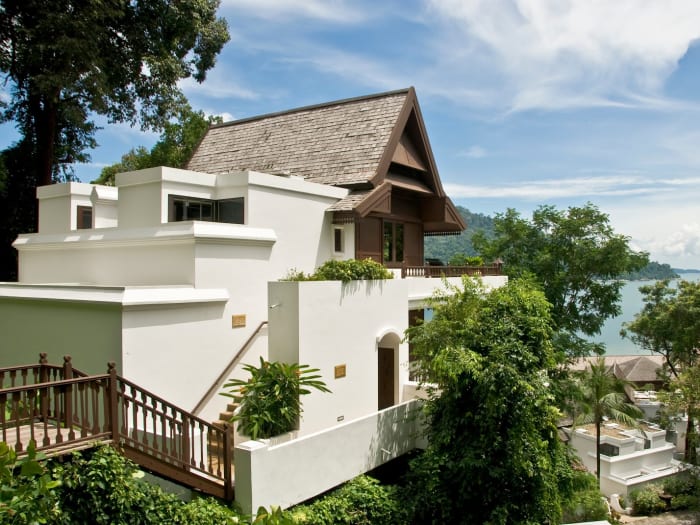
Architecture plays an important part in this reading. Villas and pavilions are set within the vegetation or poised above the water, extending a regional aesthetic of timber, airy roofs, open volumes and circulation designed to work with the climate. Nothing appears intended to overpower the landscape; everything seems calibrated to find the right balance between contemporary comfort and the presence of the natural world. This way of inhabiting the site, rather than fixing it into a rigid composition, gives the resort an enduring and almost timeless quality.
Pangkor Laut Resort has therefore established itself as a retreat rather than a conventional beach hotel. Couples, travellers in search of rest and guests looking to slow down away from urban life all arrive for a similar promise: a stay in which one gradually yields to the island’s pace. The attentive, personalised service is central to that feeling. In a place like this, luxury lies not only in facilities, but in ease, in the ability to anticipate without intruding and to accompany without disturbing the sense of chosen seclusion.
What remains, ultimately, is the idea of refuge. A refined refuge, certainly, yet never detached from its surroundings. The sound of waves, the shade of trees, the soft humidity of morning, the changing light over white-sand beaches: these are the elements that shape the memory of the place. More than an address to collect, Pangkor Laut is one of those resorts chosen for its coherence: an island, a rainforest, villas open to the landscape, and a vision of travel in which elegance is measured by the quality of experience rather than by excess.
The setting
A stay at Pangkor Laut Resort begins with a particular geography: that of an island which immediately creates a break from the mainland. That physical separation changes the nature of travel. One does not arrive here by accident, nor for a simple stopover; one comes to inhabit a limited, almost self-contained territory, where the sea frames every movement and the rainforest shapes the horizon. This insular setting gives the resort a rare quality: it feels both sheltered and fully open to the elements.
The natural environment is one of its defining features. The white-sand beaches bring instant visual softness, while the dense vegetation creates deeper, shadier and more secluded perspectives. Between the two, the hotel unfolds with restraint. Paths seem to wind through the trees, views open suddenly onto the sea, and terraces and thresholds blur the line between indoors and out. In a resort of this kind, landscape is not a backdrop; it structures the stay, influencing the hours of the day and the desire to swim, read or simply rest.
The overall mood is described as intimate and serene, and here that description feels entirely apt. The island allows for a form of retreat that is difficult to reproduce in more accessible or more developed destinations. Silence is never total, of course; it is made up of natural sounds, wind in the foliage, waves, birds and tropical rain depending on the season. That discreet soundtrack contributes to the sense of calm. For many travellers, this is exactly what sets Pangkor Laut apart: the feeling of being in a fully serviced five-star resort while remaining close to a preserved natural environment.
The placement of villas and pavilions reinforces this impression. Their integration into nature avoids the effect of a single hotel block. The estate is discovered in fragments, as though each part of the resort maintained a different relationship with the island: here immediate proximity to the beach, there deeper immersion in the forest, elsewhere a direct connection with the water. This variety creates nuanced stays without compromising the overall coherence.
The drier, sunnier period between November and March is often considered particularly appealing. That seasonal marker matters because Pangkor Laut is deeply tied to the tropical climate. Light, humidity, warmth and occasional rain are not incidental details; they are part of the experience. Guests adjust their rhythm accordingly, favouring certain hours for walking, swimming or going out on the water, and retreating to the shade during the middle of the day.
Ultimately, the resort appeals through its territorial coherence. Everything seems to follow the same principle: respect the site, allow the landscape to speak and provide a high level of comfort without erasing the sensation of being on a tropical island. For couples, the address has an obvious appeal, given the intimacy of the setting. Families can also enjoy it, provided they are looking for a calm environment. Pangkor Laut is not a destination of restless beach energy; it is a place of space, contemplation and chosen slowness.
Rooms, Villas & Pavilions
At Pangkor Laut Resort, accommodation is primarily expressed through villas and pavilions designed to extend the relationship with the landscape.
In an island resort of this nature, it is not merely about sleeping on-site, but about inhabiting the island. The volumes, materials, orientation, and sense of openness are as important as the amenities. The overall design is distinguished by its elegance and integration with the surrounding nature.
The aesthetic is rooted in a subtle tropical vocabulary, with wood playing a significant role. The architecture favours clear lines, protective roofs, and transitional spaces. Terraces, verandas, and openings to the vegetation or sea create a sensory experience. Luxury here is more about atmosphere than accumulation. There is a focus on air, soft light, and a fluid flow between the bedroom, bathroom, outdoor space, and horizon.
The villas and pavilions also exhibit a diversity of placement. Some accommodations prioritise proximity to the shore, while others are nestled within the tropical forest or have a more direct relationship with the water. This aspect is crucial when making a choice. The experience of a villa surrounded by foliage differs from that of a pavilion facing the sea. Couples often prefer the more secluded or panoramic categories, while other travellers may opt for easier access to communal spaces or the beach.
Service plays a decisive role in the perception of comfort. Daily housekeeping and turn-down service reflect the codes of high-end hospitality within a relaxed setting. After a day spent swimming, walking the grounds, or enjoying the facilities, returning to a villa that has been tidied and prepared for the evening enhances the sense of well-being.
The overall atmosphere is particularly conducive to romantic getaways. The resort is presented as romantic, and the accommodation naturally contributes to this. More private spaces, a direct connection to nature, and a sense of seclusion combine with comfort. Families can also find their place here, provided they embrace the contemplative rather than animated spirit of the location.
It is advisable to anticipate your reservation, especially for a category linked to a specific location on the island. Here, the question is not only about size or decor. The relationship to the site is equally important: proximity to the beach, immersion in greenery, sense of retreat, or ease of access. A well-chosen villa can impart a very personal tone to your stay.
Dining
In an island resort like Pangkor Laut Resort, gastronomy holds a special place. It enhances the overall experience of the stay, punctuating the days and showcasing the landscape.
Breakfast bathed in morning light, a light lunch between swims, and a more leisurely dinner as the heat subsides. Each dining moment here takes on a different tone. The charm of this establishment lies in its ability to harmonise cuisine, tropical climate, and natural surroundings.
In this context, the first luxury is often the setting. Dining on an open terrace, hearing the distant waves, feeling the evening's humid air, or observing the darkening forest adds a unique intensity to meals. In the finest resorts of this calibre, the service complements this atmosphere without overwhelming it. Attentive presence, relaxed pace, tailored recommendations. A hospitality that adjusts to the rhythm of the stay, without excessive formality.
The location in Malaysia naturally opens the door to a rich culinary palette, influenced by diverse cultures. One expects a cuisine that embraces regional flavours, fresh seafood, and a freshness suited to the climate. In a beach and tropical forest environment, the most memorable meals are not always the most extravagant. They are often those that feel just right, clear, and in tune with the place and the time of day.
For couples, dining often extends the romantic character of the hotel. A dinner in a tranquil setting, with the feeling of being slightly removed from the world, is among the evident pleasures of a stay on the island. However, the culinary experience is not limited to these intimate moments. It can also take the form of an informal break after a water activity, a leisurely meal upon returning from the beach, or a breakfast that one savours simply because the setting invites one to slow down. In this type of resort, enjoying good food also means being able to choose one’s own pace.
If one wishes to organise a more intimate dinner or mark a special occasion, it is wise to plan ahead. In establishments where the environment plays such a central role, the exact location of a meal is almost as important as the menu. A well-placed table at the right time of day can easily transform a dinner into a lasting memory.
The gastronomy of Pangkor Laut Resort is appreciated as a component of a broader art of hospitality. Here, one seeks coherence rather than mere display. Coherence between the plate and the climate, between the service and the atmosphere, between the meal and the landscape. It is this precision that makes the difference in great nature resorts. The feeling that everything, from the first drink in the morning to the last dinner on the island, contributes to a shared experience of calm, attentiveness, and escape.
Spa & Wellness
Pangkor Laut Resort caters to travellers in search of relaxation. This focus naturally extends into the wellness experience.
On a private island surrounded by beaches and tropical forest, rest occupies a central position. Well-being begins with the rhythm of the place.
The warmth of the air, the sound of water, and the shade of trees invite one to slow down. Here, the spa is part of a broader experience of unwinding.
From the moment one arrives on the island, the body shifts into a different rhythm. One walks more slowly, often sleeps better, and spends more time outdoors.
Swimming, reading, resting, and enjoying light meals easily compose the day. Treatments then prolong this state of relaxation.
The tropical forest and white sandy beaches play a soothing role. The view of the calm sea, the protective vegetation, and the island's isolation cut one off from usual distractions.
For travellers accustomed to an intense urban pace, this combination has a tangible effect. One finds a renewed attention to time, sleep, appetite, and breathing.
A massage, a facial, or a relaxation ritual takes on a different dimension here. They fit into a context already conducive to letting go.
Couples often find in this wellness dimension an additional reason to choose Pangkor Laut. A romantic stay also hinges on the quality of presence to oneself and to each other.
Sharing moments of calm, allowing for a morning without a schedule, or extending a relaxation session with a swim fully contributes to the experience. The resort lends itself well to this balance between intimacy, nature, and comfort.
To make the most of this aspect of the stay, it is wise to anticipate certain reservations, especially during peak periods. The most pleasant slots are often early in the morning or late in the afternoon.
Well-being at Pangkor Laut revolves around a simple idea. That of a luxury that helps one retreat from noise, screens, obligations, and speed.
The spa embodies this philosophy. It offers a few days of re-centering in a setting where nature, space, and service restore a sense of lasting calm.
Concierge & services
In a resort of this category, the quality of a stay depends as much on how it is supported as on the setting itself. Pangkor Laut Resort highlights attentive, personalised service, and the available brief confirms a strong service foundation: 24-hour concierge, 24-hour front desk, daily housekeeping, turndown service, luggage storage, laundry, wake-up service and multilingual staff. Considered individually, these may seem standard in high-end hospitality; taken together in an island context, they become especially important because they ensure ease far from the mainland.
The concierge is central here. On a private island, planning often requires more anticipation than in a city. Guests may need to think about water activities, the best times according to weather, transfers, dining moments they wish to reserve, or simply how to balance beach time, rest and treatments. A good concierge does more than execute requests; it helps shape a coherent stay suited to the traveller’s profile. For a couple, that may mean prioritising quieter, more intimate experiences. For a family, it may involve organising days in a more practical and flexible way.
A front desk open around the clock is equally valuable in this type of destination. It provides a constant point of reference, whether for an arrival at a particular hour, information, a booking adjustment or a comfort-related request. That availability contributes to the discreet sense of security that defines the best resorts: one feels removed, but never stranded.
Daily housekeeping and turndown service contribute to a quieter form of comfort. In an environment where much of life takes place outdoors, and where one may return from the beach or the water wanting immediate rest, coming back to an immaculate villa makes a real difference. These are not dramatic gestures, but they very concretely shape the perceived quality of a stay. Laundry and luggage storage extend the same logic of ease, particularly useful in a tropical climate where one may change clothes several times over the course of a day.
The wake-up service, often overlooked in hotel descriptions, can also be useful in a resort where certain experiences are best enjoyed at specific hours: an early departure to catch calmer water, a morning wellbeing session, or simply the wish to see sunrise without relying on a phone. As for multilingual staff, they are an obvious asset for an international clientele, making communication more precise and more fluid.
Ultimately, service at Pangkor Laut appears to answer a simple but essential requirement: to make island life feel effortless and legible for the guest. The real luxury here is not staff omnipresence, but rightness: being there when needed, stepping back when appropriate, solving without drama and advising without imposing. In a place designed around calm, that quality of interaction makes all the difference.
The Pangkor Laut way of life
The appeal of a stay at Pangkor Laut Resort goes beyond the sum of its facilities. What endures is a particular island way of life, very different from that of denser or more overtly fashionable beach destinations. On Pangkor Laut, time seems both to contract and to expand: days are simple in structure yet rich in sensation. One wakes with the light, looks at the sea before breakfast, decides at the last moment whether to swim, walk, read, book a water activity or do nothing at all. That quiet freedom is perhaps the place’s real signature.
The island encourages a renewed quality of attention. Attention first to climate: heat, humidity, shifting light and the possibility of tropical rain. Attention next to the body: knowing when to seek the sun, when to prefer shade and when to slow down. And finally attention to the landscape, which is never static. The sea changes colour through the day, the forest alters its sounds and the beaches do not tell the same story in the morning as they do in late afternoon. In a world of over-programmed travel, this availability to the present moment becomes a luxury in itself.
For couples, Pangkor Laut offers a setting particularly conducive to calm intimacy. The romance here does not come from staged effects but from a series of favourable conditions: space, relative quiet, natural beauty, accommodation integrated into the landscape and discreet service. It becomes easy to share simple moments that take on value precisely because they are freed from usual agitation.
Families can find a different kind of quality here, provided they are looking for calm rather than constant animation. The island allows for time together in a setting that feels secure and legible, where nature provides much of the spectacle. Children often discover a more direct relationship with the environment — sea, sand, trees and sound — while adults appreciate the logistical ease of a well-run resort.
The period between November and March, often considered especially appealing, also reminds us that this way of life is seasonal. One does not stay on a tropical island in the same way one stays in a European capital. One must allow oneself to be guided by weather, light and sea conditions. That adaptability is not a drawback; it is part of the charm.
In that sense, Pangkor Laut offers a very contemporary definition of luxury: not possessing more, but becoming available to fewer things, better chosen. A beach, a villa, a few quiet hours, reliable service, the ability to reserve in advance what matters most — particularly water activities — and to leave the rest open. For many travellers, it is precisely this orchestrated simplicity that turns a pleasant stay into a genuine interlude.
Booking via MyConciergeHotel
Booking the Pangkor Laut Resort through MyConciergeHotel means approaching this address as a stay to be crafted methodically. In an island resort, the placement of accommodations, the rhythm of the days, and the anticipation of certain experiences are just as important as the price or dates. The right choice depends on the type of trip, the desire for seclusion, the relationship with the beach or vegetation, and the level of intimacy sought.
For a couple, the priority may be a villa or pavilion offering the utmost tranquillity, or a location favourable for enjoying the landscape together. For a longer stay, one might favour accommodation whose balance between comfort, accessibility, and sense of space aligns with the intended pace. For a family, the focus will be more on practicality, movement within the resort, and ease of daily organisation. In all cases, booking wisely at Pangkor Laut requires thinking beyond the mere displayed category.
Another consideration concerns the timing of the stay. It is advisable to book water activities in advance. Certain experiences benefit from being secured ahead of time, especially between November and March. This may involve water activities, wellness moments, or a special request related to a particular occasion. The goal is not to over-schedule the trip, but to lock in the essential elements.
Using MyConciergeHotel also allows one to place the hotel within a broader travel context. Pangkor Laut is not an interchangeable address. It is a destination in its own right, with its access, climate, and style of stay. Relevant guidance helps to verify the alignment between the traveller's expectations and the reality of the place. Are we seeking a lively resort or a peaceful retreat? Do we wish to multiply activities or prioritise rest? Do we want a highly romantic stay or a more general nature escape?
The value of a guided reservation lies finally in the quality of details. Requests for special attention in the room, preferred location, assistance in organising key moments of the stay, advice on the best period or ideal duration: all these elements often change the quality of the experience. In a resort where luxury rests on precision, these nuances matter.
Booking Pangkor Laut Resort via MyConciergeHotel means choosing a more precise, contextualised, and serene approach. Securing what matters: the right accommodation, the right pace, the right reservations at the right time. For a destination rooted in nature, calm, and intimacy, this measured preparation preserves the quality of the stay once on-site.