History & heritage
Hastings House Country House Hotel belongs to a tradition of hospitality built on human scale, continuity and a strong sense of place rather than display. On Salt Spring Island, the property first suggests the idea of a waterside country house designed for stays in which time resumes a slower rhythm. Its membership of Relais & Châteaux provides a clear frame of reference: an independent house whose identity rests on cuisine, service and local rootedness. Luxury here is not expressed through ostentation, but through the coherence between landscape, domestic architecture, gardens and hospitality.
The very name of the hotel, with its reference to a country house, says much about its spirit. One does not come here for spectacle, but for an elegant retreat in which the natural surroundings matter as much as the house itself. This idea of an island residence, set among lush gardens and close to the sea, recalls a discreet Anglo-Canadian tradition of leisure, one that values light, seasons, natural materials and the ease of personalised welcome. The hotel appears to extend a culture of travel that favours returning guests over rapid turnover, and remembered preferences over standardisation.
In a house of this kind, heritage is not simply a matter of a founding date or a line of famous owners. It is better understood in the way a property sustains a certain tone over time: attentive service without stiffness, cuisine that looks to nearby farms, and an atmosphere that genuinely encourages rest. The fact that guests readily associate Hastings House with tranquillity, intimacy and the quality of its table suggests that this continuity has been preserved. It is often the most reliable sign of a well-kept house.
The setting of Salt Spring Island deepens this impression of living heritage. The island belongs to that category of destination chosen as much for a state of mind as for a checklist of activities. In such a context, a five-star hotel does more than provide attractive rooms; it becomes a mediator between visitor and territory. Hastings House seems to embrace that role naturally, foregrounding produce from local farms, proximity to the sea and the restorative quality of a nature-led stay. This direct relationship with the landscape and resources of the island gives the property a particular depth: it could not simply be transplanted elsewhere without losing something essential.
What remains, ultimately, is the idea of a destination house: a place chosen to withdraw, to mark time together, to step back from daily pace, or to rediscover the simple pleasure of a stay shaped by thoughtful care. In luxury hospitality, that sense of rightness is often rarer than visual effect. Hastings House Country House Hotel appears to cultivate it steadily: island elegance, a clear devotion to hospitality, and fidelity to the qualities that give a great house its lasting value.
The property
A stay at Hastings House Country House Hotel means choosing a property where the setting does more than provide a backdrop: it shapes the entire experience. The hotel stands on Salt Spring Island, close to the sea, within lush gardens that immediately create a sense of retreat. The island, already known for its unhurried rhythm and close relationship with nature, offers a setting especially well suited to the spirit of a five-star house devoted to rest, discretion and intimacy. The first luxury may well lie there: in the ease with which one slows down from the moment of arrival.
Its position near the shoreline brings the quality of light and air associated with coastal stays, yet without adopting their more demonstrative codes. One imagines a quieter relationship with the landscape rather than a theatrical one: views revealed gradually, gardens filtering perspectives, outdoor spaces designed as much for contemplation as for movement. This way of allowing the site to speak for itself suits a characterful property. It creates an atmosphere in which one feels invited rather than impressed.
The gardens play a central role in this composition. Their presence is not merely ornamental; it forms part of the house’s identity. In a hotel of this kind, the garden acts as a transition between architecture and island territory. It softens edges, brings the seasons into daily life, and fosters the sense of refuge so many travellers seek. Whether for a morning walk, an outdoor reading pause or a quiet return after a day of exploring, these landscaped spaces become genuine open-air living rooms.
The intimate atmosphere noted by guests is another defining element. It suggests a carefully judged scale, far removed from large impersonal resorts. In a house like this, shared spaces matter most when they invite real use rather than mere admiration. One looks for sitting rooms in which to linger, fluid circulation, and a natural relationship between indoors and out. Comfort then comes from proportion, quiet, the presence of staff at the right moment, and an overall sense of harmony. It is a form of sophistication that does not ask to be announced.
The peaceful setting makes Hastings House especially suited to restorative stays. Couples seeking a pause, travellers drawn to coastal scenery, lovers of nature, or guests simply wishing to recover a gentler pace all find a favourable environment here. Salt Spring Island makes it easy to alternate between time at the hotel and discoveries nearby: walks, beaches, hikes, shoreline views, and visits to farms or studios on the island. The property thus seems to function as a serene base from which one can explore without ever losing the feeling of being on retreat.
This ability to combine character, nature and comfort is perhaps what defines the place best. Hastings House is not merely a well-located hotel; it is a house whose position gives concrete form to its promise. The nearby sea, the gardens, the island softness and the refuge-like atmosphere create a rare whole, especially persuasive for travellers seeking a luxury of calm, presence and well-judged simplicity.
Rooms and suites
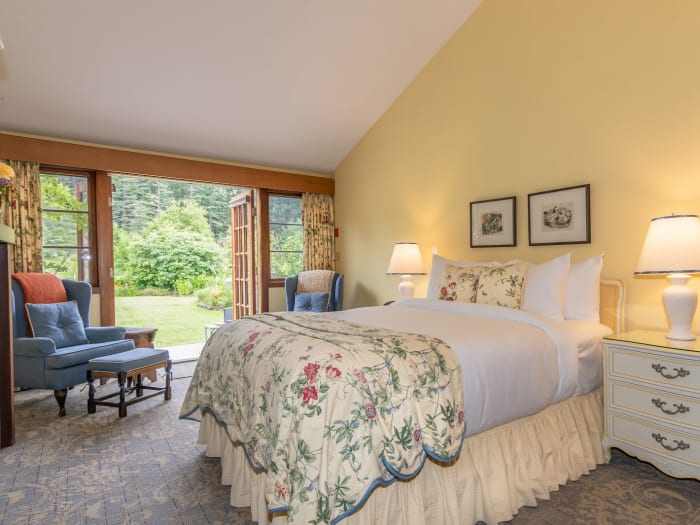
At a property such as Hastings House Country House Hotel, rooms and suites are not merely accommodation units: they extend the idea of the house and give daily substance to its promise of calm. The available brief does not specify categories or sizes, and in the end that is secondary to what appears to be the hotel’s real strength: an intimate atmosphere in dialogue with the gardens, the nearby sea and the peaceful rhythm of Salt Spring Island. It is therefore less a matter of decorative display than of a way of temporarily inhabiting a carefully chosen setting.
In the best country houses, comfort begins with a sense of obviousness. The most successful rooms are those in which one immediately understands how to live in the space: where to leave a book, where to sit with morning light, how to let the day in, how to recover silence after hours outdoors. In a Relais & Châteaux property, this legibility of comfort matters as much as materials or furnishings. It implies attention to practical details, turndown service, daily housekeeping, and the sense of order and care that accompanies a stay without weighing it down.
The island character of the hotel suggests rooms conceived as retreats rather than showcases. The lush gardens and proximity to the shoreline imply soothing outlooks, openings onto greenery, and a gentle relationship between indoors and out. In this context, luxury is often expressed through the quality of rest: a room well protected from noise, welcoming bedding, controlled temperature, proportions that do not overwhelm, and decoration that does not insist on itself. True elegance here lies in restraint.
For couples, among the guests most naturally drawn to the property, this residential quality becomes especially important. A successful room should allow for conversation, withdrawal, the small ritual of tea or coffee, and the pleasure of returning after dinner to extend the evening without haste. For longer stays, it should also provide a sense of continuity, as though one were adopting a well-kept house for a few days rather than merely occupying a hotel room. It is precisely this feeling of cultivated familiarity that often distinguishes great character properties.
Service plays an essential role in this experience. The known amenities — daily housekeeping, turndown service, luggage storage, laundry and wake-up service — outline a discreet yet complete framework of comfort. They allow guests to focus on what matters most: enjoying the place, the landscape and recovered time. In a destination chosen for restoration, such smoothness matters greatly. It removes unnecessary friction and gives the room its primary function: that of a genuinely restful personal space.
Ultimately, the rooms and suites at Hastings House are best understood as natural extensions of the house’s spirit. More than décor, they offer a way of staying: peaceful, attentive and enveloping. One comes here not for surprise effects, but for the rightness of sensations — morning light, evening quiet, the presence of the garden, the quality of linen, the feeling of being expected. It is often in this accumulation of silent details that the true level of a five-star address is measured.
The Dining Experience
Gastronomy is one of the most defining elements of Hastings House Country House Hotel. The cuisine is rooted in local farm produce, a focus that clearly shapes the spirit of the establishment.
On Salt Spring Island, nature, the seasons, and the proximity of producers shape daily life. The dining experience is thus closely tied to the territory, offering a direct way to understand the locale.
Belonging to Relais & Châteaux enhances this interpretation. The dining experience expresses the identity of the house just as much as its architecture or landscape. At Hastings House, the cuisine prioritises local resources, the freshness of supplies, and respect for the ingredients.
The setting is as important as the plate. In this island country house, meals naturally extend a day spent among gardens, by the seaside, and on walks. Attentive service plays a significant role here. A great dining experience is also judged by the rhythm, knowledge of the products, and discretion of the staff.
The connection to local farms sends a strong signal. It reflects a responsible hospitality grounded in practical engagement. Working with nearby producers fosters an ongoing relationship with the territory and an adaptation to the seasons. For guests, this often translates into a sense of authenticity.
The recommendation to reserve a table in advance underscores the importance of dining in the overall experience of the house. For residents, it allows them to fully enjoy their stay without leaving the estate. For outside visitors, it signifies a dining experience that contributes to local life.
Thus, the dining experience at Hastings House embodies a more rooted approach to culinary luxury, attentive to provenance. Dinner holds a central place in the stay.
Concierge & Services
In a house of this nature, the services are designed to blend seamlessly into the background. They enhance the stay, making it smoother, simpler, and more restful. Hastings House Country House Hotel features a reception and concierge available 24 hours a day. Additional services include daily housekeeping, turn-down service, luggage storage, laundry, wake-up calls, and a multilingual staff.
Together, these elements create an essential quality of attentiveness. The continuously open reception plays a discreet yet crucial role. On an island where arrivals can sometimes depend on ferry schedules or road conditions, knowing that a welcome is available at any hour brings genuine peace of mind. This also applies to early departures and last-minute adjustments.
The concierge takes on a special significance in an environment like Salt Spring Island. Its role extends beyond practical requests. It can shape the stay, suggest a pace, recommend a walk, assist in organising an outing to the coastline, or facilitate a deeper exploration of the island.
The daily room services and turn-down service contribute to the feeling of a well-kept home. Returning to a tidied room, finding an atmosphere prepared for the night, and noticing that practical details have been anticipated are all signs that allow for relaxation.
Laundry services, luggage storage, and wake-up calls may seem secondary. However, they become invaluable during a multi-day stay, balancing outdoor activities with more formal moments. They lighten the experience without cluttering it.
Finally, the presence of a multilingual staff underscores that international hospitality also hinges on clarity and quality of communication. In a Relais & Châteaux affiliated house, this relational dimension remains fundamental. The service knows how to be present without ever being intrusive.
The Art of Living on Salt Spring Island
Choosing Hastings House Country House Hotel also means selecting Salt Spring Island as your holiday backdrop. The island is not merely a setting; it imposes a rhythm, a way to spend your days, and a particular attention to the landscapes and local resources. For many travellers, this is precisely what makes it appealing: one comes here less to accumulate visits and more to rediscover a quality of presence. Nature, the coastline, gardens, farms, and paths contribute to a lifestyle where the notion of useful time fades in favour of time fully experienced.
In this context, the hotel serves as an ideal gateway. Its tranquil setting allows guests to immediately attune to the island's spirit without a jarring transition. Mornings can begin slowly, with light spilling over the gardens and the promise of a day free from urgency. Subsequently, Salt Spring Island unfolds in gentle layers: a stroll along the shore, a light hike, a pause on a beach, a detour through agricultural landscapes, or viewpoints that remind one of the ever-present proximity of water. The interest lies not so much in performance but in the succession of calm and clear sensations.
The island is also generally associated with a local culture that pays attention to craftsmanship, local produce, and a certain gentle autonomy. One does not consume Salt Spring Island as a standardised destination; rather, one learns to embrace it. Its distances, silences, variations in weather, and moments of retreat are accepted. For the guests of Hastings House, this mindset finds a natural echo in the intimate atmosphere of the house.
Couples will find it particularly conducive to romance. The island invites days built around simple gestures: walking, observing, enjoying leisurely lunches, returning to the hotel for rest, and then heading back to the coast in the late afternoon, culminating in dinner as a central event. This economy of the stay, far removed from urban hustle, revalues the interim moments. The journey matters as much as the destination, and the pause is as significant as the activity. It is often in such places that travellers rediscover the pleasure of not having to rush.
For nature enthusiasts, Salt Spring Island also offers a form of discreet diversity. The sea is never far away, yet it coexists with gardens, paths, gentle hills, and a local life that extends beyond the tourist season. This plurality makes stays interesting from spring to autumn, the recommended period in the existing description for its mild climate. The light changes, the vegetation evolves, days stretch or contract, and the experience of the place nuances without losing its unity.
Ultimately, the art of living on Salt Spring Island rests on a simple idea: to inhabit time differently. Hastings House appears to be one of the most refined expressions of this for a traveller in search of comfort, gastronomy, and tranquillity. The address allows one to experience the island without haste and to understand that the true privilege here is not to see everything but to be open to what is present.
Book with MyConciergeHotel
Booking Hastings House Country House Hotel through MyConciergeHotel makes particular sense when the property is understood not as simple accommodation, but as a destination in its own right. An island house, a member of Relais & Châteaux, close to the sea, set among gardens and known for its table, often requires more thoughtful preparation than a standard city stay. The right time to travel, the desired rhythm, the ideal length of stay, and the balance between dining and island discovery all influence the final experience. The value of assistance lies precisely in turning a reservation into a coherent stay.
The first advantage is the clarification of the travel plan. Some travellers come to Salt Spring Island for a few days of retreat as a couple; others wish to combine nature, walks and carefully considered meals; others again intend to make the hotel the absolute centre of the stay. Depending on the case, arrival times, special requests and meal arrangements will not be approached in the same way. In a house where atmosphere and dining matter so much, such details have a real impact. Anticipating a restaurant reservation, for example, can make all the difference, especially when places are limited.
Booking with MyConciergeHotel also allows the stay to be approached with a more qualitative logic. It is not only a matter of confirming a room, but of thinking through the whole: travel preferences, expectations of quiet, need for assistance before arrival, coordination with transport constraints to the island, or simply the wish to experience the property under the best possible conditions. In an establishment where service plays a central role, this upstream preparation naturally extends the spirit of the house.
For couples, travellers marking a special occasion, or guests seeking a genuinely restorative pause, this tailored dimension is especially valuable. A good booking is not one that merely secures availability; it is one that protects the important moments of the stay. Dinner on the first evening, a stress-free arrival rhythm, a specific request passed on in advance, a clearer reading of the island’s highlights: all of this helps create the sense of flow that distinguishes successful stays.
MyConciergeHotel also brings a useful editorial perspective. A property such as Hastings House deserves to be chosen for the right reasons: its peaceful setting, intimate atmosphere, local rootedness, farm-led cuisine and proximity to the sea. By placing these elements in context, the booking becomes more informed. One knows why one is coming, and can therefore make better use of what the house genuinely offers.
Ultimately, booking through MyConciergeHotel means giving this stay the attention it deserves. Hastings House Country House Hotel does not call for haste or rapid consumption. It is an address of breathing space, dining and landscape. Thoughtful assistance helps honour that very nature, preparing a stay that is calmer, more fitting and more personal from the earliest stages of travel.