History & Spirit of the Place
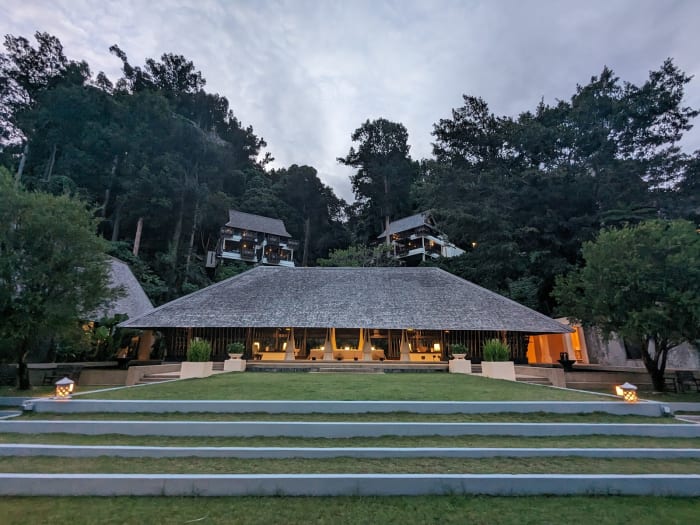
Gaya Island Resort is set in a rare geography: a preserved tropical island off the coast of Kota Kinabalu. Its essential backdrop consists of forest, coastline, and sea.
Here, luxury is founded on a balance between hotel comfort, immersion in the landscape, and the island's rhythm. This identity imbues the stay with a tone of silence, salty air, and dense vegetation.
The resort prioritises a human scale and a certain aesthetic restraint. Its affiliation with Small Luxury Hotels of the World defines its positioning: a high-end hotel with a distinct personality.
Attention to service and atmosphere is as important as the amenities. The experience is crafted through details: a seamless arrival, attentive welcome, and spaces open to light and the landscape.
The spirit of the place is also tied to its sensitive natural setting. On an island, every choice of materials, water, or energy has a visible impact.
The traveller perceives the necessity for measured luxury, capable of offering comfort without disrupting the site's balance. The architecture engages in dialogue with the topography. Pathways open to the outside.
Staying at Gaya Island Resort means choosing a destination that regards its environment as its greatest asset. The feeling of escape arises from a change in pace.
One can relish the pleasure of a bright morning, a walk between the villas and communal spaces, an accessible beach, and a sea that structures the day.
For couples, the island offers a peaceful interlude. For families, it provides a gentle exploration ground. For solo travellers, it can become a refuge conducive to rest.
Gaya Island Resort emerges as a place of atmosphere. Its identity is rooted in an island, a tropical forest, a shoreline, and contemporary hospitality attentive to the natural surroundings.
The Establishment
The primary privilege of Gaya Island Resort lies in its location. Nestled on a pristine tropical island, the establishment offers an experience that begins even before arrival. The crossing and approach to the shore gradually immerse you in a more verdant, tranquil, and secluded environment than the urban front of Kota Kinabalu. This transition immediately creates a gentle sense of separation. It is not a radical isolation, but rather a different relationship with time and space.
The hotel seems designed to extend this impression. In this type of island resort, communal spaces play a vital role. They serve as a threshold between nature and the intimacy of the accommodations. Gaya Island Resort stands out for its peaceful atmosphere and its integration into the natural surroundings. The architecture does not seek to dominate the site but to blend in discreetly. Luxury is expressed in the quality of transitions, the fluidity of pathways, and the space afforded to the landscape.
Access to beaches and the surrounding nature constitutes another significant advantage. For many travellers, the success of an island stay depends on this proximity to the outdoors. The ability to easily reach the sea, alternate between swimming, strolling, reading, and resting, or organise an excursion without losing the refuge of the hotel transforms the experience. The resort meets this expectation, allowing guests to experience the island not as a distant backdrop but as a daily presence. The beach, the forest, the trails, and the viewpoints are all integral to the hotel experience.
This location will particularly appeal to those seeking tranquillity. Couples and families will find different yet compatible uses of the space. Couples will appreciate the contemplative nature of the place and the opportunity to slow down. Families will benefit from an environment that invites exploration, in a spirit of nature-based leisure. Solo travellers may see it as a destination for introspection, where space, relative silence, and the presence of the landscape facilitate disconnection.
The dry season, from May to September, is particularly favourable for outdoor activities. Here, the stay is closely linked to the climate, light, and maritime conditions. This is what makes Gaya Island Resort special: a destination where the site and the experience are inseparable.
Rooms and Suites
At Gaya Island Resort, accommodation fully contributes to the promise of escape. In this island and tropical setting, the room becomes a temperate refuge between hours spent outdoors, returns from the beach, and quiet evenings.
The rooms and suites are designed with a clear vision. There is a beautiful flow of air and light, materials suited to the climate, a calming palette, and a visual connection to the outside. The overall design favours a natural continuity between indoors and outdoors, without sacrificing privacy.
The atmosphere remains peaceful, immersive, and respectful of the environment. Comfort is evident in the quality of use, the controlled simplicity, and the constant relationship with the landscape.
Daily service enhances this feeling of a well-cared-for stay. Daily housekeeping and turn-down service discreetly punctuate the day. Guests return to a room that has been tidied, refreshed, and prepared for rest.
For couples, the accommodation creates a bubble without excessive isolation. For families, it offers a serene base between outdoor activities and quiet moments. Solo travellers find a balance between retreat, security, and service.
Here, the rooms and suites accompany the stay without diverting attention from the island. Comfort, attentive maintenance, discreet service, and openness to the landscape compose a subtle luxury, tied to the quality of the site.
The Dining Experience
In an island resort, gastronomy serves multiple functions. It nourishes, structures the day, and accompanies the return from excursions. At Gaya Island Resort, the culinary experience is framed by its environment. A place oriented towards nature, tranquility, and a tropical way of life.
The first luxury lies in the context. Breakfast facing the greenery or the sea. Lunch after a morning spent outdoors. Dinner in a more subdued atmosphere as the heat subsides. A successful dining experience incorporates its setting. One expects cuisine adapted to the climate, fresh and straightforward. Seafood, tropical fruits, and light preparations naturally fit into this realm.
For travellers, the appeal of dining also lies in its flexibility. A couple will seek a quiet dinner after a day spent between the beach and strolls. A family will appreciate the balance between simple moments and more elaborate meals. A solo traveller will be sensitive to the quality of the welcome. The dining experience should remain coherent with the spirit of the resort: attentive, elegant without formality, and rooted in the locale.
In an island environment, sourcing, seasonality, and resource management take on particular significance. A credible environmental commitment is felt in the way the culinary offerings are conceived. Just portions, products suited to the local context, freshness, and simplicity.
Ultimately, dining at Gaya Island Resort is envisioned as an extension of the landscape. One comes to attune to the island's tempo. The pleasure arises from the whole: the light, the air, the service, and the controlled simplicity of a well-conceived plate. A cuisine that complements a place, a climate, and a way of inhabiting time.
Spa & Wellness
At Gaya Island Resort, wellness revolves around the Spa Village Gaya Island, embodying a spirit of tranquil retreat and a slower pace of life. The venue embraces a straightforward approach to relaxation, where time naturally expands between treatments and moments of silence. The spa thus provides a muted counterpoint to the vibrant energy of the shore and the days spent outdoors.
The experience continues by the infinity lap pool. Its waterline invites regular, almost meditative swimming, offering that unique sense of openness characteristic of infinity pools. Guests come here to release tension, rediscover deep breathing, or simply allow the day to shift its rhythm.
The entire setting fosters an environment conducive to recovery, without emphasis or excessive staging. The Spa Village Gaya Island and the infinity lap pool establish a concept of wellness grounded in continuity, discretion, and tranquility.
Concierge & Services
In an island resort, the quality of service is measured by the fluidity of the stay. Gaya Island Resort offers a 24-hour reception and a 24-hour concierge service.
The establishment also provides daily room service, turn-down service, luggage storage, laundry, and wake-up calls. The staff is multilingual.
On an island, organisation is as important as comfort. Transfer schedules, activities, early departures, or late arrivals require precise coordination.
A concierge available at all times simplifies these adjustments. It helps guests enjoy the surroundings without burdening their stay with practical constraints.
Daily room service and turn-down service reflect a discreet care. They accompany the guest's rhythm and enhance comfort.
The laundry service and luggage storage meet very practical needs. They facilitate tropical stays and late departures.
The wake-up call service retains genuine utility here. It is suitable for early excursions, transfers, and organised early departures.
The multilingual staff improves the accuracy of exchanges. It also fosters a simpler and more personalised relationship.
At Gaya Island Resort, these services support a seamless experience. The overall organisation reflects a rigorous approach without ever being intrusive.
The Art of Living in Kota Kinabalu and on the Island
Staying at Gaya Island Resort means living between two complementary registers: the energy of Kota Kinabalu and the more contemplative retreat of the island.
This duality greatly enhances the appeal of the stay. The city reminds visitors of the regional anchorage of the destination, its maritime openness, and its role as a departure point to the islands.
The resort allows guests to enjoy the proximity of Kota Kinabalu while rediscovering calm. This balance is precious. One benefits from a connected destination without sacrificing the feeling of being elsewhere.
On the island, the art of living is based on the simplicity of practices. Starting the day early, organising an outing or a stroll, returning to rest during the hottest hours, and then extending the afternoon by the water.
This rhythm is at the heart of the experience. It is not an imposed programme but a natural way of inhabiting a tropical place.
The environment encourages a more attentive relationship with nature. Access to beaches and the surrounding nature invites guests to approach their stay with greater awareness.
To observe rather than to collect, to take time rather than to multiply activities, to prioritise the quality of an excursion or a swim.
For couples, this art of living takes the form of a gentle retreat, punctuated by meals, walks, and moments of shared silence.
For families, it becomes an opportunity to impart a different relationship to travel, one that is more sensory, more patient, and more rooted in observation.
For solo travellers, it offers a rare chance to refocus without austerity. Gaya Island Resort thus provides a way to stay amidst the sea, vegetation, and attentive hospitality.
Booking via MyConciergeHotel
Booking Gaya Island Resort through MyConciergeHotel makes sense for a simple reason: such a destination lends itself to meticulous preparation of the stay. A five-star resort on a preserved tropical island is not chosen like a transient hotel. Guests come for a holistic experience. The transfer, the rhythm of the days, outdoor activities, the season, and the type of traveller significantly influence the stay. Pre-trip assistance allows for precise adjustments to these parameters.
It is advisable to book activities in advance, especially during peak season. In island destinations, the availability of experiences often depends on the weather, limited capacities, or highly sought-after slots. Planning ahead secures the essential moments of the trip. It also avoids an overly packed or poorly ordered itinerary. The value of expert concierge services lies in prioritisation. Knowing what needs to be arranged before arrival, what can remain flexible, and how to preserve free time.
Booking with MyConciergeHotel also provides an editorial perspective on the destination. Gaya Island Resort will suit those seeking a high-end natural immersion, a peaceful stay, and a direct connection to the beaches and surroundings. It will be less suitable for travellers expecting continuous urban entertainment or a packed schedule. This contextual understanding helps in choosing the hotel for what it truly is.
The assistance can also aid in determining the right time to depart. The dry season, from May to September, is ideal for enjoying outdoor activities. This information is particularly useful for travellers for whom the beach, excursions, and outdoor life are central. Similarly, the choice of stay duration deserves consideration. Too short a visit risks reducing the island to a mere interlude. Well-calibrated, it allows one to enter its rhythm.
Finally, booking through MyConciergeHotel prioritises an approach to travel based on the alignment between a place and an expectation. Gaya Island Resort is not just a beautiful address. It is a hotel of context, cadence, and atmosphere. To fully enjoy it, one often needs to compose rather than accumulate. Choosing the right period, planning essential experiences, allowing time for rest, and understanding the island logic of the stay. This is what tailored assistance enables one to orchestrate with clarity.