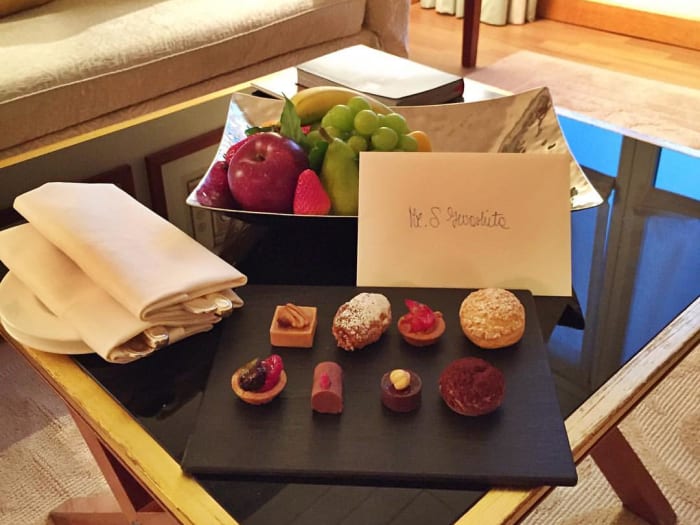
History & Contemporary Presence
The Four Seasons Hotel Montreal embodies a generation of luxury addresses that do not merely replicate the codes of historic European palaces. It translates, in contemporary language, a very high level of urban hospitality.
In Montreal, this approach takes on particular significance. The hotel is set within a metropolitan landscape where contemporary architecture, design, and social life occupy a central place. Its identity is built on a form of precision. Clean lines, carefully chosen materials, and a fluid circulation of spaces structure the whole.
In a city like Montreal, luxury hospitality is not merely conceived as a refuge. It must also serve as an anchor within the local rhythm. The Four Seasons Hotel Montreal meets this expectation with a discreet yet assured presence. The establishment presents itself as a contemporary downtown address, designed for stays that blend business meetings, dining, relaxation, and exploration of the city.
This interpretation of luxury places a central emphasis on atmosphere. The overall environment prioritises a warm ambiance. The common areas are elegant and vibrant. The service is attentive. The address cultivates a lived-in and human tone.
This establishment can also be understood on the scale of Montreal. The city has established itself as one of North America's major cultural capitals. Its identity combines bilingualism, creativity, and openness. In this context, the Four Seasons Hotel Montreal acts as an interface between the visitor and the city. It offers solid international references while allowing glimpses of Montreal's unique character.
Rather than a classic heritage narrative, this address tells the story of a successful contemporary establishment in a demanding environment. It expresses a certain idea of modern luxury. Less ostentatious, more fluid, it remains attentive to the quality of execution. This coherence, between international standards, architectural modernity, and warm hospitality, shapes the personality of the hotel.
The establishment in the heart of Montreal
In the heart of Montreal, this address is steeped in a hotelier history that began in 1961, marking the opening of the first hotel conceived by Isadore Sharp.
Since its inception, Four Seasons has shaped a distinctive vision of urban luxury. Personalised service is at the forefront, with constant attention to the rhythm of each guest's stay.
The architecture of the establishment reflects a broader continuity, extending a vision that emerged in the early 1960s when international hospitality was seeking new codes.
In Montreal, this lineage creates a framework designed for the contemporary city. The lines, circulation, and volumes primarily serve to provide a fluid, discreet, and precise experience.
Nothing here appears ostentatious. The overall design favours a refined elegance, in harmony with the Four Seasons spirit since its inception.
This Montreal address serves as a reminder that successful hotel architecture transcends mere appearance. It orchestrates a way of inhabiting the city, with comfort, clarity, and a keen attention to detail.
Rooms and Suites
In a hotel of this calibre, the room is not merely a place to sleep. It is the gravitational centre of the stay. At the Four Seasons Hotel Montreal, the rooms and suites extend the overall narrative of the establishment: contemporary design, evident comfort, warm atmosphere, and attention to detail.
This nuance is significant. A successful contemporary room is not just a composition of pure lines and noble materials. It must also evoke an immediate sense of ease. The arrival should be simple, the setup intuitive, and the uses obvious. One should be able to work, rest, prepare for dinner, or extend a morning without friction. In the best urban addresses, this fluidity relies on concrete choices: clear circulation, well-proportioned furniture, appropriate lighting, sufficient storage, enveloping bedding, and bathrooms designed as an extension of comfort.
The warm character avoids the coldness sometimes associated with contemporary luxury. In Montreal, where the seasons strongly influence the perception of the city, this quality takes on a particular dimension. After a day in the bustling downtown, one appreciates a room that can isolate from the external rhythm while maintaining a connection to urban energy. This is achieved through light, views, texture choices, or the immediate impression of a space that genuinely welcomes.
The suites cater to various uses. Some are suitable for extended stays. Others allow for entertaining, working in better conditions, or marking a special occasion. What matters is not just the size but the quality of composition: separation of functions, a sense of ease, the possibility of experiencing multiple timelines within the same space. A suite should serve as a private refuge, a discreet lounge, or an elegant base for a packed itinerary.
Service plays a decisive role here. Daily room service, turn-down service, laundry, concierge, and 24-hour reception directly contribute to the in-room experience. They maintain this impression of effortless continuity, which is invaluable during a high-end stay. A well-designed room gains its full value when supported by precise execution: linen refreshed at the right moment, requests handled accurately, discreet attention to the client's rhythm.
For business travellers, the challenge often lies in managing time. For couples, it is about atmosphere. For families, it is flexibility. A good hotel room should meet these expectations without losing its essence. The Four Seasons Hotel Montreal aligns with this logic of mastered versatility. It seeks less the spectacular effect than the accuracy: a room that soothes, a suite that structures the stay, and everywhere, comfort thoughtfully considered in its most concrete details.
Dining and Moments of Togetherness
In a prominent urban establishment, the culinary offering extends far beyond mere dining. It contributes to the identity of the place, its daily rhythm, and its integration within the city.
At the Four Seasons Hotel Montreal, dining plays a pivotal role in the overall experience. Situated in the heart of Montreal, it caters to various occasions—be it breakfast, a business lunch, an informal pause, a more relaxed dinner, or a drink in a refined atmosphere.
Montreal is a city that holds high standards for its culinary scene. The culinary and social realms naturally intersect here. A hotel restaurant must provide a fitting proposition. Luxury is defined by the setting, the service, and the tempo. A good hotel restaurant knows how to welcome both residents and locals alike.
The contemporary design of the establishment suggests spaces that are coherent with the rest of the hotel. Clean lines, carefully chosen materials, and elegance without rigidity define the ambiance.
Breakfast holds a special significance here. It is often where the true level of a hotel is measured. The quality of the welcome, the pace of service, and the flexibility of execution are all crucial. They reveal the culture of the establishment.
In the evening, dining extends the overall atmosphere. After the intensity of the downtown area, a hotel restaurant or bar offers a transitional setting. Guests can entertain, observe hotel life, gather before heading out, or choose to stay in.
This social function is essential. It transforms the hotel into more than just a collection of rooms and services. It becomes a living space, with its own rhythm.
The quality of service remains decisive. It is recognised by simple signs: the precision of recommendations, the memory of preferences, the discretion of attention, and the appropriateness of tone according to the context.
For the traveller, the dining experience at the Four Seasons Hotel Montreal represents more than just a convenience. It is a way to experience the city from within, in a controlled environment. It accompanies the stay, punctuates it, and can leave one of the most vivid memories.
Spa & Wellness
In high-end urban hospitality, the wellness space is no longer a mere complement. It often transforms an efficient stay into a more balanced experience.
At the Four Seasons Hotel Montreal, it is wise to book your wellness experience in advance. This aspect is significant in the hotel's rhythm.
This idea is particularly relevant in Montreal. The pace of the city, especially in its centre, can be intense. Busy workdays, social agendas, travel, and marked climate shape the stay.
In this context, a dedicated relaxation space plays a role in rebalancing. It reintroduces long moments into a stay that is often fragmented. A few hours of treatment or a moment of recovery can change the perception of the hotel.
It is no longer merely a stopover. It becomes a place that cares for the body as much as the itinerary.
The luxury of contemporary wellness relies less on accumulation and more on the quality of attention. The best spaces create a clear transition from the outside. Softer light, controlled acoustics, calm reception, and fluid protocols set the tone.
The client should feel they are entering a different tempo. In a venue with modern design, this experience often gains clarity. The spaces are designed to reassure, simplify, and envelop without overwhelming.
The challenge is to produce an immediate sensation of relaxation. This requires great precision in the details, from the first contact to the return to the room.
The fact that slots fill up quickly suggests genuine patronage. This is generally a good sign. In upscale hotels, a vibrant and well-organised wellness space contributes to the energy of the establishment.
It is not just about offering treatments. It is also about fostering a culture of care. Staff availability, quality listening, and adaptability to immediate needs make a difference.
A late-arriving traveller, a couple on a getaway, or a regular on a business trip do not expect the same thing. For some, the spa is a central ritual of the stay. For others, it marks an arrival or concludes a journey.
In both cases, coherence is essential. Wellness must extend the identity of the hotel. Contemporary, elegant, warm, and precise, it must remain fully integrated into the hospitality.
Booking in advance thus becomes a wise reflex. It allows for choosing a time and integrating this moment into the stay. At the Four Seasons Hotel Montreal, this anticipation contributes to the art of staying.
Concierge & Services
At the Four Seasons Hotel Montreal, the services create a clear promise: 24-hour concierge, 24-hour reception, daily room service, evening turndown, luggage storage, laundry, wake-up calls, and multilingual staff. Together, they support a seamless stay.
The concierge holds a special place at the heart of Montreal. It helps prioritise desires, save time, and avoid approximations. For a business traveller, this may involve arranging a transfer, suggesting a suitable venue for a meeting, or accommodating last-minute requests. For leisure stays, it can guide the day, recommend a neighbourhood, a stroll, or a dining option.
The continuously open reception provides essential continuity. Late arrivals, early departures, changes in plans, or travel surprises are seamlessly integrated without disrupting the flow of the stay.
The in-room services play a more discreet role. Daily room service and evening turndown contribute to ongoing attentiveness. Laundry and luggage storage cater to very practical needs, particularly useful during an urban stay.
Multilingual staff is also significant in a city like Montreal. Being welcomed and assisted in the most comfortable language fosters precision and ease.
The services at the Four Seasons Hotel Montreal thus cater to a diverse, mobile, and discerning clientele. They ensure a smooth stay, centred around appointments, discoveries, or relaxation.
The Montréal Art of Living
Choosing a hotel such as Four Seasons Hotel Montreal is not merely selecting a level of comfort; it is also adopting a certain way of entering Montréal. The city possesses a singular art of living within North America. It combines genuine metropolitan intensity with a certain suppleness in habits, a neighbourhood culture, a marked appreciation for food, creativity, festivals, urban walks and places where one can move from one register to another without rupture. That fluidity corresponds particularly well to the spirit of a contemporary address in the centre.
Montréal does not reveal itself in quite the same way as other major Canadian cities. Its identity lies in nuances: the coexistence of French and English, the importance of the cultural scene, the relationship to the seasons and the way residents inhabit cafés, terraces when in season, institutions and shopping streets. One finds there an elegance less codified than in certain capitals, yet very perceptible in the quality of places, in the attention paid to design and in the relationship to conviviality. A well-located hotel allows one to enter that urban texture without excessive effort.
From downtown, several versions of Montréal coexist within reasonable reach. There is the city of business and major events, of museums and performance venues, of boutiques and destination addresses, but also that of neighbourhoods where one walks more, observes façades and lingers in a café or bookshop. A traveller does not need to see everything in order to understand the city; rather, they must accept its rhythm, made of contrasts and transitions. A day may begin in a highly structured way, continue in a cultural register and then slide into a more social or gastronomic evening. It is precisely this kind of stay that a central, elegant and well-serviced hotel makes easier.
The seasons strongly alter the way Montréal is lived. Winter intensifies the need for refuge, comfort and well-heated, well-considered places; summer, by contrast, opens the city, lengthens the days and multiplies opportunities to enjoy public space. Spring and autumn, often particularly beautiful, give the city a distinctive quality of light and tempo. A great urban hotel should know how to accompany these variations. At times it becomes a cocoon, at others an active base, at others still a privileged observatory of local life.
For French or European visitors, Montréal also has the rare advantage of being immediately accessible in certain cultural codes while remaining deeply North American in scale and energy. That relative familiarity makes for a very pleasant stay, provided one chooses a base that allows navigation between those two dimensions. Four Seasons Hotel Montreal appears to answer that expectation: to offer very solid international standards while still allowing the city to enter the experience.
Ultimately, the Montréal art of living cannot be reduced to a list of sights. It lies in a way of composing one’s days, alternating intensity and ease, culture and sociability, efficiency and pleasure. A hotel that understands this becomes more than accommodation. It becomes a partner in the stay, a place from which Montréal appears not as a checklist, but as a city to inhabit, even briefly, with style and simplicity.
Book with MyConciergeHotel
Booking Four Seasons Hotel Montreal through MyConciergeHotel means approaching the property with a stay logic considered in advance, rather than as a simple room transaction. In an urban hotel of this category, the quality of the experience depends as much on the room choice as on the way the stay is prepared: arrival and departure rhythm, wellness expectations, concierge needs and the nature of the trip — business, a couple’s city break, a cultural interlude or a family stay. A well-supported booking makes it possible to align these parameters before arrival.
The value of an editorial and concierge intermediary lies precisely in this capacity for interpretation. Not every traveller is looking for the same thing in an address such as this. Some will prioritise a central location in order to optimise a demanding schedule. Others will mainly want an elegant refuge from which to discover Montréal on foot or by car. Others still will place particular emphasis on wellness and benefit from planning time slots in advance, as suggested by the Concierge’s advice. Booking with discernment therefore means asking the right questions: what tempo for the stay, what degree of intensity, how much rest, what place for in-house dining and what expectations regarding services.
MyConciergeHotel can also add depth to the experience by helping to think about the stay as a whole. In a major metropolis, the difference between a correct trip and a successful one often lies in the quality of the transitions: a stress-free arrival, a suitable room, relevant recommendations, restorative moments reserved in advance and simple organisation of practical requests. These may appear to be details, yet they profoundly alter one’s perception of the stay. The more exacting the hotel, the more it deserves preparation to match.
This approach is particularly relevant for Montréal, a city where the offer is dense and where rhythms shift according to seasons, events and travel profiles. A supported booking helps avoid choices that are too generic. It helps turn a good address into the right address for the individual guest. That may mean favouring certain dates, integrating a wellness moment, planning an early arrival or optimised departure, or simply clarifying priorities so that the hotel can respond precisely.
Booking through MyConciergeHotel also means choosing a more qualitative relationship with luxury hospitality. One is not merely seeking to secure a room, but to create the conditions for a coherent, fluid stay that remains faithful to one’s expectations. In the case of Four Seasons Hotel Montreal, that approach makes complete sense. The hotel brings together highly sought-after elements — central location, contemporary design, warm atmosphere and structured services — and deserves to be approached with the same degree of attention.
For the traveller, the benefit is straightforward: save time, reduce uncertainty, prioritise desires more clearly and arrive in a setting that has already been prepared. In an address where detail matters, that quality of preparation is not secondary. It forms an integral part of the pleasure of the stay. Booking then becomes the first stage of the experience, rather than its administrative formality.