History & heritage
Staying at Euphoria Retreat means choosing a property whose story is first written by its surroundings. The hotel is set in Mystras, in Laconia, a part of the Peloponnese where Byzantine history, monastic memory and the presence of the landscape create a setting of unusual depth. Here, luxury is not expressed through display, but through coherence: that of a contemporary wellness retreat placed within a territory long associated with contemplation, stillness and a certain slowness of life. This relationship between the hotel and its setting is central to understanding its identity.
Mystras holds a singular place in the Greek imagination. The former fortified town on the hillside remains linked to the late Byzantine world, to its churches, monasteries and a topography that seems naturally oriented towards elevation. Without turning the hotel into a heritage annex, this proximity lends the stay a particular resonance. One does not come here merely to sleep in a beautiful setting or to book a few treatments; one also comes to inhabit, for a few days, a cultural landscape where silence, stone, hills and light carry almost narrative force.
The property’s traditional architecture contributes to this continuity. It does not attempt to compete with the nearby historic site, nor to impose an overly demonstrative modernity. Instead, it relies on lines, materials and volumes that converse with the local landscape. This restraint matters: it allows the hotel to preserve a sense of belonging, as though the project had been conceived less as a rupture than as a contemporary interpretation of the spirit of the place. In a wellness market often dominated by interchangeable settings, this rootedness is significant.
Its membership of Small Luxury Hotels of the World also helps define its positioning. It suggests a more intimate scale than that of a large standardised resort, with attention paid to character, service and the lived experience. Here, that translates into hospitality that seeks to combine high hotel standards with the atmosphere of a retreat. The word is important: retreat does not imply austere isolation, but rather the possibility of recentring oneself in a setting designed to slow the pace and restore balance.
Euphoria Retreat’s heritage is therefore not that of a grand historic palace in the traditional European sense, with social chronicles and aristocratic archives. Its heritage is subtler and more contextual. It lies in the way the property draws from a historic landscape, a traditional architectural language and a Mediterranean culture of self-care. Together, these elements give the stay a distinctive, almost timeless tone. In Mystras, wellbeing is not framed as a simple consumer interlude, but as an experience that finds a natural echo in the history of the place.
The property
Euphoria Retreat presents itself as a property designed for immediate decompression. From arrival, the prevailing impression is not that of a city hotel transplanted into the countryside, but of a place conceived around a different rhythm. The natural setting, traditional architecture and constant Mediterranean light shape an atmosphere in which everything seems to invite guests to lower the volume of daily life. This quality of mood is often what travellers seek when choosing Mystras: not continuous animation, but a sense of space, calm and breath.
The setting plays a major role. Being placed within a historic landscape alters the perception of the stay. The views, contours, vegetation and proximity to a site steeped in memory lend time spent here a particular density. One may of course come to Euphoria Retreat for a structured wellness programme, yet the hotel also works for those who simply wish to withdraw for a few days into an environment quieter than Greece’s major seaside destinations. The Peloponnese offers another Greece, more inward-looking and more grounded, where the relationship to the land remains tangible.
The property appears to have been conceived to preserve this connection with the outdoors. Its traditional architecture suggests not a folkloric pastiche, but a desire for continuity with local forms. In a place of this kind, materials, circulation and the scale of the buildings matter as much as decoration. They determine how one inhabits the hotel: the way one moves from a resting space to a treatment area, from a sheltered interior to a terrace open to the landscape, from a reading moment to a more active walk. The sense of harmony often comes from this discreet fluidity.
Its membership of Small Luxury Hotels of the World reinforces a promise of character and personalised service. For the traveller, this generally means a less standardised experience, with greater attention paid to the details of the stay. At Euphoria Retreat, that promise seems consistent with the very idea of a wellness retreat: one expects such a place to preserve privacy, avoid a sense of crowding and offer a setting in which each guest can find their own pace. Couples, travellers seeking tranquillity, guests wishing to recentre themselves or simply to pause away from noise all find their place here.
The property is therefore not merely a hotel with a spa; it is a complete environment, shaped around a certain quality of presence. One imagines days governed not by accumulation, but by balance: a slow waking, a treatment booked in advance, time for reading, an unhurried meal, a walk in the surroundings, then a return to calm. This apparent simplicity is in fact carefully orchestrated. It requires discreet organisation, reliable service and architecture capable of supporting the experience without weighing it down.
Rooms and Suites
At Euphoria Retreat, the room is an integral part of the rejuvenation experience, extending the promise of the communal spaces. Visual calm, genuine comfort, smooth circulation, and a sense of retreat are paramount.
Here, luxury is less about accumulation and more about the quality of the atmosphere.
The traditional architecture and natural surroundings suggest rooms that are in harmony with the environment. Light, soothing views, and a calming palette take precedence over ostentatious decor. Rest begins with what the eye perceives: the right materials, balanced proportions, discreet furnishings, and impeccable bedding.
For couples, the room often becomes the focal point of their stay. It is a place to return to after a treatment, a walk, or a leisurely meal. It must accommodate various uses without losing its serenity—deep relaxation, reading, conversation, and sometimes light work.
In an establishment focused on relaxation, acoustics, the quality of linens, temperature, and evening lighting are as important as the space itself.
Daily housekeeping, turn-down service, and a 24-hour concierge and reception enhance this comfort. These details allow the room to remain a refuge, where returning to a tidied space, finding a bed prepared for the night, and requesting discreet assistance at any hour are all part of the experience.
The rooms and suites at Euphoria Retreat appeal to travellers seeking less social representation and more inner alignment. The room is judged by its effect on the body and mind: Does it promote sleep? Does it allow for slowing down? Does it inspire reading, listening to silence, or gazing at the landscape?
To fully enjoy the stay, it is best to approach the room as an active element of the experience. Choosing a category that suits one’s rhythm and allowing time to savour it is essential. In Mystras, rest becomes a way of inhabiting the place.
Dining
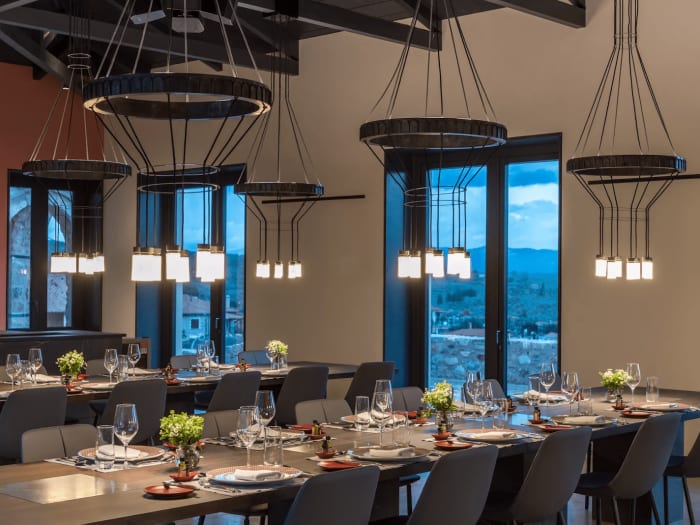
At Euphoria Retreat, dining naturally forms part of a broader vision of the stay. In a property devoted to health and relaxation, eating is not merely a matter of indulgence or hotel ritual; it is a component of overall wellbeing. Without advancing unconfirmed details about restaurants, chefs or culinary concepts, one can say that such an address is expected to deliver one essential thing: cuisine in keeping with the spirit of the place, meaning clear, balanced, carefully prepared and generous enough never to make wellbeing feel punitive.
The Greek context adds an evident richness. The Peloponnese is a land of produce, seasons and deeply rooted culinary traditions. Olive oil, aromatic herbs, vegetables, fruit, grains, yoghurt, fish depending on the catch, and preparations that may appear simple yet demand precision: local cuisine offers a vocabulary particularly suited to a contemporary retreat. When interpreted well, it allows pleasure and lightness to coexist, without slipping into austerity or overly didactic dietary messaging.
In a hotel of this kind, meals also have a temporal function. They structure the day without forcing it. Breakfast can be an anchoring moment, especially when the stay includes treatments or gentle activities. Lunch often calls for clarity, something that supports energy without heaviness. Dinner accompanies the return to calm. This progression matters greatly to the overall experience: a well-conceived table does more than feed; it helps the body settle into the rhythm of the place.
The setting naturally plays its part. In a property surrounded by nature and placed within a historic landscape, one readily imagines meals taken with a view, in a peaceful atmosphere where conversation remains low and service finds the right distance. The true luxury here may lie in restoring the meal to its primary function: a moment of presence. No rush, no excessive staging, but attention to flavours, textures, seasonality and the time of day. This controlled simplicity feels entirely in keeping with the spirit of Euphoria Retreat.
Spa & Well-being
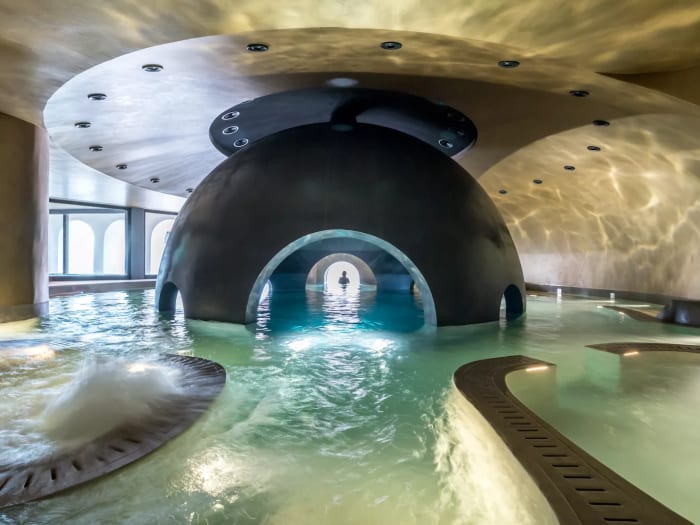
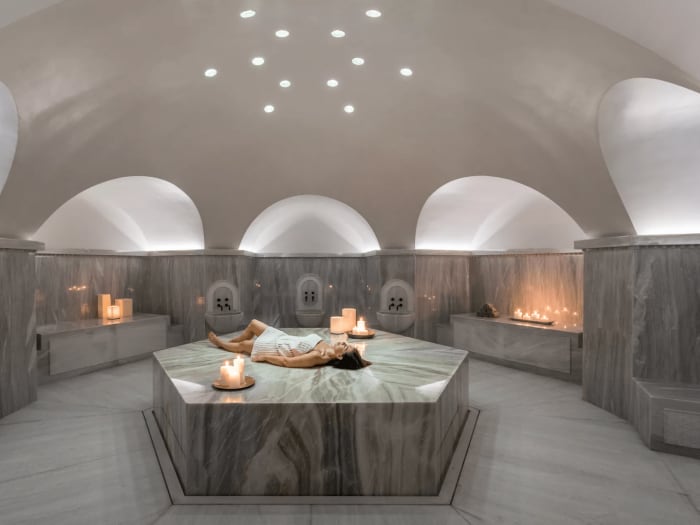
The heart of Euphoria Retreat lies in its approach to well-being. The establishment stands out for its commitment to health, relaxation, and dedicated facilities.
Here, well-being is not an ancillary service; it is the very reason for the journey.
This focus transforms the way one experiences the hotel. Guests do not merely follow a treatment menu; they enter an environment designed to encourage slowing down and re-centering.
This can take the form of spa treatments, relaxation facilities, recovery time, gentle activities, or more structured programmes. Euphoria Retreat caters to guests seeking more than just a fleeting moment of relaxation.
The setting of Mystras enhances this promise. Well-being unfolds within a historical landscape, far from the hustle and bustle of major tourist hotspots.
The hills, the light, the nature, and the Byzantine cultural horizon create a context conducive to introspection. Here, the spa extends what the environment already inspires.
To fully enjoy the stay, it is advisable to plan the programme in advance. Booking treatments ahead of time helps maintain the fluidity of the experience, especially during peak periods.
In a hotel where well-being is central, complete improvisation may lead to missing out on desired slots. It is better to alternate treatments, rest, light meals, walks, and free time.
The spa is not merely about performance; it is a space where one learns to inhabit their time differently.
For some travellers, this involves bodily rituals. For others, it may be found in silence, regained sleep, or a sense of mental clarity.
Euphoria Retreat is particularly suited to couples and travellers in search of tranquillity. Guests come here to reconnect with themselves, and sometimes with each other.
This destination responds to a contemporary aspiration: to find enough calm to engage with the world with greater balance.
Concierge & Services
In a wellness hotel, the quality of services is measured by their ability to make the stay simple, smooth, and serene. Euphoria Retreat offers a 24-hour concierge, continuous reception, daily housekeeping, turn-down service, luggage storage, laundry, wake-up calls, and a multilingual team. Together, these services enable travellers to shed logistical concerns and fully immerse themselves in their stay.
The 24-hour concierge plays a central role here. In a destination like Mystras, it manages the practical aspects of arrivals and departures. It can also rhythm the experience, assist in planning treatments, suggest visiting times, facilitate local transport, or respond to last-minute requests, all without disrupting the sense of calm.
The 24-hour reception aligns with this philosophy, ensuring a reassuring presence that is neither intrusive nor overwhelming. For international travellers, those arriving late, departing early, or needing assistance at any hour, this continuity of service provides genuine comfort.
Daily housekeeping and turn-down service contribute to this impression of attentive care. In a stay focused on relaxation, returning to a perfectly maintained space is not a secondary detail. The room remains an orderly refuge, prepared for the day and then for the night, without the guest needing to think about it.
Laundry, luggage storage, and wake-up calls follow the same logic. They concretely facilitate the stay, especially when it is part of a treatment programme or a short getaway. A multilingual team is essential in an international address that is a member of Small Luxury Hotels of the World, allowing for more natural and precise communication, and thus a more accurate service.
Ultimately, the services at Euphoria Retreat support a simple idea: luxury often consists of not having to think about the details. In a setting dedicated to health and relaxation, this truth carries even more weight. Every service gesture should lighten the load, never burden. Every interaction should be useful, never intrusive.
The Art of Living in Mystras
Choosing Euphoria Retreat also means choosing Mystras and a particular vision of travel in Greece. Far from the coastal itineraries, this destination offers a more introspective, cultural experience tied to the landscape and the memory of the places. For French travellers, this dimension is significant. One does not come here to tick off attractions but to inhabit a landscape, understand its rhythm, and allow the destination to nourish their rest.
Mystras is primarily associated with its historical site, one of the most remarkable Byzantine ensembles in Greece. This proximity transforms the stay. Between moments of relaxation, a walk or a visit places the journey within a broader historical continuity. The stones, churches, slopes, and valley views invite observation. It is a destination that reveals itself to those willing to slow down.
Spring and autumn are the most suitable seasons to grasp this art of living. The light is gentle, temperatures are milder, and travel becomes more pleasant. One can naturally alternate between spa time and outings in the surrounding areas. The stay gains balance: a morning devoted to wellness, an evening focused on the landscape, a cultural visit, a leisurely meal, and then a return to the calm of the hotel.
This region of the Peloponnese also allows for a rediscovery of Greece, less saturated with conventional imagery. Here, local identity is not reduced to a postcard. It is expressed in the relationship to the land, in the villages, in the cuisine, in the olive groves, and in the way the terrain shapes distances. For many travellers, this is what makes the stay more memorable: the feeling of having approached a real territory, with its own density.
The art of living in Mystras also hinges on a certain quality of silence. This silence is not the absence of life but the absence of unnecessary noise. It allows one to hear more: the wind, footsteps, rare conversations, the rhythm of the day. In the context of a wellness retreat, this dimension is invaluable. It gives the stay a depth that more bustling destinations rarely offer. One leaves feeling rested but also reconnected to a different measure of time.
It is here that the spirit of Euphoria Retreat and that of Mystras meet most harmoniously. The hotel does not impose itself on the destination as an autonomous bubble; it engages in dialogue with it. It extends the slowness, the light gravity, and the understated beauty of the place. For travellers seeking a venue that unites self-care, local culture, and tranquillity, this alliance makes sense. Mystras imposes nothing; it offers. It is this restraint that makes it suitable for a stay focused on rejuvenation.
Booking via MyConciergeHotel
Booking Euphoria Retreat through MyConciergeHotel means approaching this stay as a carefully curated experience. A wellness destination requires more attention in advance than a standard hotel. The choice of dates, the desired pace, the emphasis on treatments, and the balance between relaxation on-site and exploration around Mystras significantly influence the quality of the stay.
The first question concerns the nature of the trip. Is it a two or three-night interlude, a stay structured around the spa, or a romantic getaway? Euphoria Retreat is particularly suited to couples and travellers seeking tranquillity. Some may wish to prioritise treatments and time spent in relaxation facilities, while others might prefer to alternate with cultural visits and more free moments.
The second essential point concerns the season. Spring and autumn offer a milder climate, beautiful scenery, and a better balance between indoor and outdoor experiences. For a wellness stay, the quality of light, the opportunity to walk in the surroundings, and thermal comfort play a significant role. Booking at the right time means choosing the season that best serves the intention of the trip.
It is also advisable to anticipate spa treatments. Slots fill up quickly, especially in high season. In a place where well-being is at the heart of the experience, failing to book in advance may limit options on-site. Through MyConciergeHotel, it is ideal to consider the room and treatments as a cohesive whole.
Booking thoughtfully also means embracing the spirit of the place. Euphoria Retreat is better suited to those who wish to slow down and enjoy a soothing environment in the heart of a historical landscape. Our role is to help you choose the right duration, pace, and most harmonious organisation for your stay.
In practice, booking via MyConciergeHotel means prioritising a qualitative understanding of the experience. We do not merely seek to confirm availability; we ensure that the destination truly meets your expectations. For a hotel like Euphoria Retreat, this nuance is essential. When it comes to well-being, this preparation is already part of the relaxation.