History & Spirit of the Place
In Gothenburg, the Dorsia Hotel & Restaurant occupies a unique position within the luxury hotel sector. This establishment favours atmosphere over ostentation.
More than just a five-star hotel, it is part of a European tradition of independent houses. Its visual identity, attention to detail, and quality of service create a coherent experience. Its membership in the Small Luxury Hotels of the World highlights this philosophy, offering a more intimate scale, a distinct personality, and a hospitality approach centred on style, comfort, and human connection.
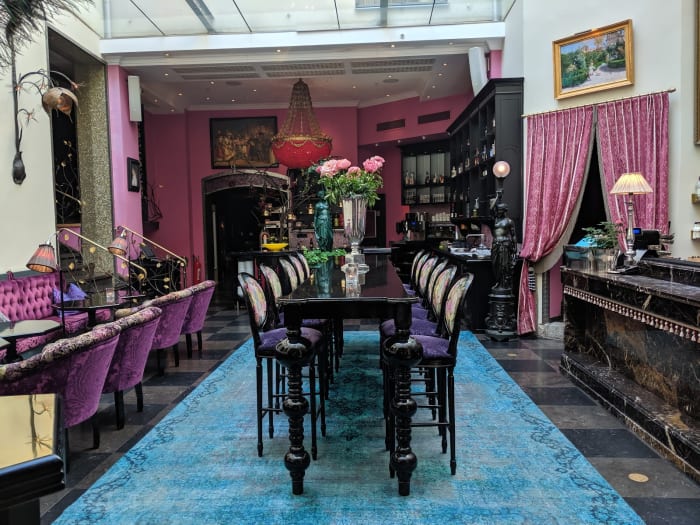
Dorsia does not present itself as a grand historic palace. Instead, it is a city address shaped around a refined imagination. The charm of the decor interacts with modern comfort, evoking an immediate emotional response without compromising the contemporary demands of a high-end stay. The hotel cultivates a subtle theatricality, with a succession of details, materials, colours, and atmospheres giving the place its signature.
In Gothenburg, this proposition finds its natural place. The Swedish culture of design and comfort meets a more European sense of decor, clearly distinguishing the establishment from standardised business hotels. Dorsia appeals to travellers who appreciate hotels with a distinctive voice—those remembered for their light, a lounge, attentive service, or a room where every element seems perfectly placed.
This identity does not exclude warmth. Refinement serves as a backdrop for personalised and attentive hospitality. It is this blend that makes urban addresses successful. The sensation of being in a thoughtfully designed space, yet never intimidating. Whether for a weekend getaway, a cultural interlude, or a business trip, Dorsia offers a well-rounded interpretation of city centre hospitality. Aesthetic and service advance in concert.
The identity of Dorsia is rooted in a particular idea of hospitality. The decor tells a story. Comfort is not standardised but intelligently staged. From the very first moments, the address leaves a precise impression—one of an elegant and personal refuge in the heart of Gothenburg.
The Establishment
The Dorsia Hotel & Restaurant creates a rare bubble in the heart of the city. In Gothenburg, this sense of refuge is equally important for both cultural and professional stays.
Refinement extends beyond the rooms. It continues into the lounges, corridors, and shared spaces. One does not merely pass through the hotel; one lingers between meetings, strolls, and dinner.
The welcome is an integral part of the experience. The lobby serves not just as a thoroughfare but sets the tone upon arrival. At Dorsia, the artistic direction asserts a true personality, evident in the volumes, furniture, textiles, lighting, and rhythm of the spaces.
The central location facilitates movement around Gothenburg. For a short stay, one can easily reach shopping districts, cultural institutions, restaurants, and major points of interest. For business trips, this address combines efficiency with a vibrant atmosphere.
Dorsia thus caters to various uses without losing its identity, appealing to both couples and business travellers.
Here, comfort transcends mere material dimensions. It encompasses the ambiance, scale, attention to service, and its fluidity. The carefully curated decor, welcoming common areas, and personalised service create an experience that is both accompanied and liberating.
In Gothenburg, this address offers an alternative to the more minimalist codes of contemporary Nordic hospitality. It presents a more enveloping interpretation of urban luxury, chosen for both its central location and its atmosphere.
Rooms and Suites
Rooms often serve as the true test of a character hotel. A spectacular decor in the common areas is not enough; the room must extend the initial promise.
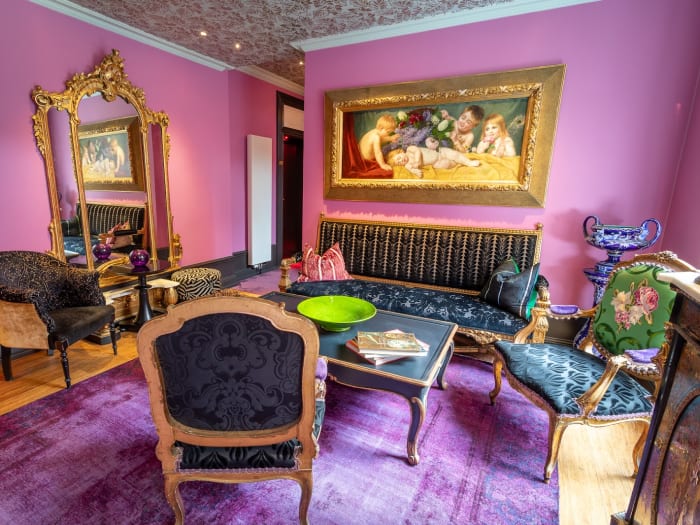
At Dorsia, the meticulous design is also reflected in the rooms. In an urban setting, they must serve as a refuge, a space for rest, a reading nook, and an occasional office.
Comfort transcends mere functionality. The materials, colours, and furnishings create a distinctive atmosphere. The quality of light, the arrangement of seating, and the balance between aesthetics and practicality are equally important.
A successful room does not impress through accumulation; it creates a sense of harmony. At Dorsia, the spaces extend the hotel's refined universe while preserving the necessary calm for rest.
For business travellers, this quality of design makes the time spent in the room feel more fluid and less anonymous. One can work for a few hours and then return in the evening to an environment that does not resemble a standardised hotel room.
For couples, the room fully contributes to the experience of their stay. It invites them to slow down, enjoy a coffee, leaf through a book, and linger over the morning before heading back into the city.
Modern comfort also relies on ease of use and quality maintenance. The daily housekeeping service and turn-down service enhance this impression of continuous care.
At Dorsia, the rooms are integral to the overall identity of the establishment. Refined without rigidity, expressive without excess, comfortable without banality.
It is often here that an attachment to a place is born. One may forget the exact list of amenities but will remember the silence, a bed prepared for the evening, and the coherence of the decor.
The Dining Experience
At Dorsia, hospitality is cultivated with a rhythm and attention to detail. Each morning, breakfast is served daily, featuring breads and pastries from the hotel's own bakery. The coffee, brought to the table piping hot, sets the tone for attentive service. The menu blends local inspirations with more distant influences, thoughtfully curated for quality.
In the afternoon, tea time follows a classic format. Served daily in a London-inspired manner, it embraces a measured ceremonial approach that transforms tea into a special occasion. There is nothing ostentatious here—just the pleasure of a slowed-down tempo and a presentation true to the genre's codes.
From lunch until late evening, the bistro takes over. The menu features a mix of hot and cold dishes, rustic or more refined, depending on the time of day and one's cravings. There are also snacks, cheeses, and desserts, offered in a flexible selection suitable for various moments throughout the day.
Overall, this creates a clear and well-maintained offering. A home-style cuisine that embraces contrasts, prioritising the consistency of service as much as the comfort of familiar habits.
Concierge & Services
In upper-end hospitality, the most valuable services are not always the most visible. They often consist of a series of discreet attentions that make a stay simpler, smoother and more personal. Dorsia clearly highlights this dimension through service described as personalised and attentive, supported by a strong operational foundation: 24-hour concierge, 24-hour front desk, daily housekeeping, turndown service, luggage storage, laundry, wake-up service and multilingual staff. Taken separately, these may seem expected in a five-star hotel; together, however, they form a very concrete promise of urban comfort.
The presence of a concierge available at all hours is especially important in a city-centre address. It means the hotel can support the traveller beyond basic accommodation: practical arrangements, recommendations, logistical help, and assistance with unexpected changes on arrival or departure. In a city one does not yet know well, that mediation often makes all the difference. It saves time, avoids approximate choices and turns a standard stay into something more closely tailored to one’s wishes. For a couple, that may mean dinner arranged at the right moment; for a business trip, a day that unfolds without unnecessary friction.
A 24-hour front desk contributes to the same peace of mind. Transport schedules, late arrivals, early departures and changes of plan are all part of contemporary travel. Knowing that the welcome remains assured at any hour provides a welcome sense of freedom, especially on a short stay where every half-day matters. This continuity of service is all the more important in a hotel with a strong personality: it ensures that the refinement perceived in the décor is matched by genuine reliability in execution.
Turndown service and daily housekeeping belong to that quiet luxury which regular travellers recognise immediately. A room consistently refreshed, prepared for the evening and maintained with care profoundly changes the perception of a stay. These are not spectacular gestures, but they create a sense of continuity and consideration. Laundry, luggage storage and wake-up service complete the same logic of discreet support: the hotel takes charge of what might otherwise clutter the traveller’s mind, allowing them to focus on what matters, whether rest, discovery or work.
Lastly, the personalised nature of the service deserves emphasis beyond the simple list of amenities. In fine houses, the difference lies not only in what is available, but in how it is delivered. Attentive staff know how to read a guest’s rhythm, understand whether they seek conversation or discretion, suggest without imposing, anticipate without intruding. That is where true sophistication in service resides. At Dorsia, everything suggests that this relational quality forms an integral part of the experience. For the traveller, it translates into a rare and valuable impression: that of being recognised as a guest rather than processed as a room number.
The Gothenburg Way of Life
Staying at Dorsia also means choosing a particular way of approaching Gothenburg. The city does not possess the monumental character of certain European capitals, and that is precisely part of its appeal. It reveals itself through nuances: a port-city elegance, a culture of design, an unhurried relationship with daily life, and a culinary and creative scene that has asserted itself over recent decades. In that context, a hotel with a strong personality plays a valuable role. It does not merely provide a well-located bed; it offers a way of reading the city, a tone, a fitting way to enter into it.
Gothenburg is especially well suited to stays in which one alternates between walks, leisurely meals, cultural visits and moments of returning to the hotel. Its centre allows for flexible days without overly rigid planning. One may devote a morning to shops and lively streets, continue with a museum or cultural institution, and then return to pause before dinner. Within that gentle city-break rhythm, Dorsia appears an ideal anchor point: central enough to simplify movement, yet distinctive enough to make one want to return before the day is even over.
The local art of living also lies in this alliance between sophistication and simplicity. Sweden cultivates a form of everyday comfort that does not necessarily rely on spectacle, but on the quality of use, materials, light and the time given to things. A hotel such as Dorsia, with its declared refinement and warm welcome, allows guests to experience that under a more enveloping form. It offers an interesting counterpoint to the sometimes strictly minimalist image of the North: here, modern comfort is accompanied by a more decorative and emotional dimension, without losing clarity or elegance.
For couples, Gothenburg can be enjoyed as a particularly pleasant weekend destination, human in scale, where one privileges the pleasure of rhythm over the race for monuments. For business travellers, the city offers an efficient setting that feels less strained than some larger European centres, making the choice of a hotel with a genuine identity all the more rewarding. Between obligations, being able to return to a welcoming lounge, attentive service and a sought-after restaurant changes the texture of the trip. Travel is no longer merely useful; it becomes genuinely inhabitable.
Dorsia fits fully within this idea of urban luxury lived as an art of life. It accompanies Gothenburg rather than overplaying it. It takes up certain local traits — discretion, comfort, attention to detail — while adding a more theatrical and intimate dimension. For the visitor, this creates a balanced experience: one enjoys the city, its measured energy, its addresses and its atmosphere, then returns to a hotel that does not seek to erase the context but to interpret it. The most successful stays are often born in precisely this way: not through an accumulation of activities, but through the rightness of a place that gives the journey its rhythm and its memory.
Book via MyConciergeHotel
Choosing the Dorsia Hotel & Restaurant through MyConciergeHotel means opting for a guided reservation experience. For an address like this, the difference lies not only in the room but in the understanding of the place and the organisation of the stay. Dorsia is not an interchangeable hotel; its appeal rests on an ambiance, a style, a rhythm, a sought-after dining experience, and personalised service. This perspective allows you to align the address with your travel plans, whether it’s a romantic getaway, a cultural weekend, or a business trip.
One of the primary advantages of a guided reservation is anticipation. The hotel’s restaurant is often in high demand, making it essential to consider the stay as a whole. Room, arrival and departure times, dinner, and special requests can be coordinated more easily. Good preparation avoids last-minute compromises, allowing you to fully enjoy the experience from the moment you arrive.
Booking through MyConciergeHotel also provides a selective perspective on the offerings. Not all five-star addresses meet the same expectations. Dorsia appeals to those seeking a city house with a strong personality, featuring bold decor, an enveloping atmosphere, and attentive service. This precision matters, helping to avoid generic choices and favouring a place that aligns with your travel style.
The guidance can also extend to details that enhance the experience, such as noting a special occasion, organising a late arrival, arranging luggage storage before check-in or after check-out, or integrating the restaurant into the itinerary. In a hotel where personalised welcome is part of the house’s identity, these elements take on significant meaning.
Finally, booking Dorsia via MyConciergeHotel means choosing a high-end journey that is less standardised and more coherent. A beautiful hotel is not merely defined by its category or rating; it is chosen for what it represents and how it fits into a city. In Gothenburg, Dorsia is among those addresses recommended for their precise and embodied experience.