History & heritage
The name Hotel Diepeschrather Mühle already hints at its identity. In German, “Mühle” means mill, immediately evoking water, landscape, slow time and a sense of regional continuity. In a place like this, the interest lies not in display but in the way a building and its surroundings appear to belong together, later reinterpreted for contemporary hospitality. In Bergisch Gladbach, on the edge of a region known for gentle hills, woodland and villages, that idea of heritage takes on a particular resonance. This is not a transient urban hotel, but a house rooted in both a cultural and natural setting.
Its membership of Relais & Châteaux also helps define the property. The collection brings together hotels that privilege character, local anchoring, attentive hospitality and a serious approach to dining. In that context, Hotel Diepeschrather Mühle reads as an address where the experience depends less on spectacle than on overall coherence: a peaceful setting, thoughtful service, gastronomy treated as an integral part of the stay, and a pace that encourages guests to slow down. Here, luxury is expressed through precision rather than performance.
This kind of house appeals to travellers seeking more than a comfortable room. They come for a sense of retreat, for the feeling of inhabiting a place rather than merely using it. The natural setting plays an essential role: it is not a backdrop but a structuring element of the experience. In the morning, the light, the views over greenery and the softer soundscape than in town all contribute to immediate decompression. By evening, the atmosphere suits more introspective stays centred on the table, conversation, reading or a walk outdoors.
The heritage of a property such as Diepeschrather Mühle can also be measured by its ability to speak to different kinds of travellers without losing its identity. Couples find a discreet refuge, food-minded guests a destination in its own right, and business travellers a calmer environment than that of major city centres. Such versatility only works when it remains faithful to a clear line. Here, that line appears to be that of a refined country house, open to its region, where attention to detail, quality of service and the relationship between indoors and outdoors are all carefully valued.
In a hotel landscape often dominated by concepts, Diepeschrather Mühle suggests continuity instead. The property seems to invite guests back to simple yet exacting pleasures: sleeping well, eating well, walking, breathing and taking time. That may well be its most meaningful heritage: a way of embodying a quiet, rooted luxury that does not seek to impress at first glance, but to remain in the memory long after the stay.
The property
Hotel Diepeschrather Mühle is first understood through its setting. In Bergisch Gladbach, the natural environment is not merely a brochure promise: it shapes the stay. Green landscapes, walking paths and an atmosphere more open than that of a town centre create a genuine sense of retreat without cutting guests off from the world entirely. That balance is precisely what makes the address appealing. One comes here to step back from daily tempo without giving up comfort, service or the standards of a five-star house.
The property’s peaceful character appears to structure every part of the day. In the morning, the dominant impression is one of a gradual awakening, carried by light and proximity to nature. During the day, the shared spaces come into their own: one imagines lounges or quiet areas designed to extend that sense of calm, with an easy flow between rest, meetings, meals and excursions. By evening, the hotel seems to recover that rare quality found in well-run houses: a hushed atmosphere that never feels stiff, but instead encourages presence, both to oneself and to others.
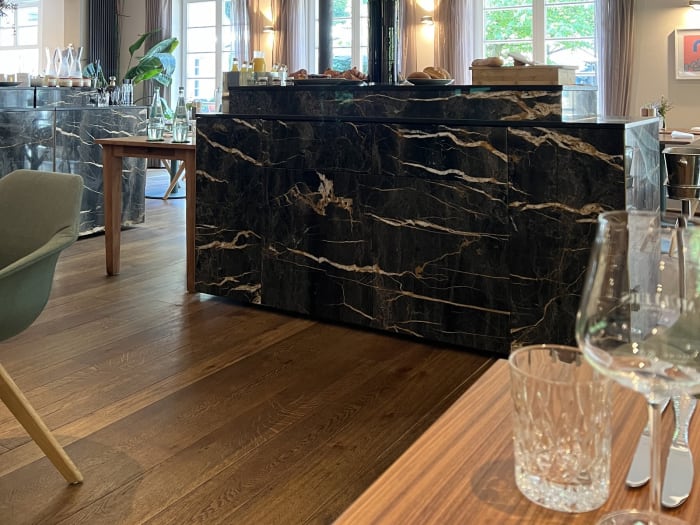
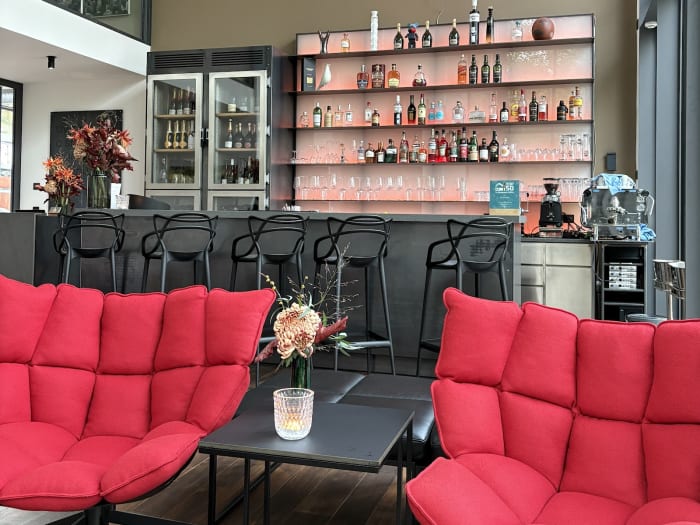
In a property of this kind, interior architecture matters as much as the site itself. Even without a precise decorative inventory, the spirit of the place can be inferred from the known elements: personalised hospitality, attention to detail, Relais & Châteaux membership and an emphasis on conviviality. This suggests a hotel where refinement is expressed less through accumulation than through harmony. Materials, volumes and the way spaces are distributed all likely contribute to a sense of natural ease. The most convincing luxury is often the kind that never tires the eye.
The address suits both a romantic escape and a stay combining work with breathing space. That is one of the advantages of hotels set in natural surroundings yet within reach of an urban area: they allow a change of rhythm without requiring an expedition. Guests may come for a long weekend, a gastronomic interlude, a few days of walking and rest, or a business trip they wish to make more agreeable. In each case, the place acts as a filter, softening the pace of the stay.
What truly distinguishes the property, beyond its five-star status, is its apparent ability to turn calm into an active experience. The silence here is not empty; it is inhabited by the landscape, by attentive service, by the promise of a good table and by the possibility of experiencing time differently. It is a valuable quality, especially for travellers accustomed to highly performative hotels where everything seems designed to be seen before it is lived. At Diepeschrather Mühle, everything suggests that the essential lies in the duration of the stay, in nuance, and in that sense of rightness that allows a house to remain memorable without ever trying too hard.
Rooms and Suites
At Diepeschrather Mühle, the room extends the essence of the place. It reflects, on a more intimate scale, the tranquility, comfort, and harmonious relationship with the environment.
In a five-star establishment within the Relais & Châteaux collection, a room must provide thoughtful hospitality, a seamless stay, and genuine attention to rest.
The foremost expectation is silence. In a natural setting, it becomes an integral element of comfort, accompanying sleep and those moments that enhance the value of a stay.
Savouring a cup of coffee slowly, reading a few pages before dinner, taking a break between activities, or simply enjoying the view outside. The vistas of greenery or the surrounding landscape amplify this feeling of retreat.
Service plays a crucial role in this experience. Daily housekeeping, turn-down service, and 24-hour concierge and reception create a sense of continuity. Nothing should feel approximate.
Comfort often lies in discreet gestures. A room tidied with care, a bed prepared for the night, requests handled with ease. A team capable of tailoring the stay to the guest's habits.
The rooms and suites at such an establishment charm with their ability to blend elegance and clarity. The contemporary traveller appreciates spaces that are not overly ostentatious.
One seeks impeccable bedding, a bathroom designed for comfort, inviting seating, coherent storage, and well-considered lighting. In a peaceful environment, these elements take on even greater significance.
For couples, the room becomes the heart of a discreet getaway. For business travellers, it should also facilitate brief work in pleasant conditions.
For all, the challenge remains the same. To find, beneath the sophistication of a five-star establishment, a form of controlled simplicity. When the room feels immediately right, it allows the traveller to truly settle in.
The Dining Experience
Gastronomy is one of the distinguishing features of Hôtel Diepeschrather Mühle. Within the Relais & Châteaux universe, the dining experience often forms part of the identity of the place.
In Bergisch Gladbach, where nature plays a significant role, the cuisine naturally aligns with this relationship to the surroundings.
What matters in a fine hotel restaurant is not just technical skill, but coherence. The dinner should feel as though it belongs to the location.
In a tranquil setting, surrounded by greenery, the culinary experience relies on precision, clarity of flavours, and measured service. The meal then shapes the memory of the stay.
Breakfast also deserves attention. In a natural setting, starting the day facing the greenery, with attentive service, immediately sets the tone.
The strength of a gastronomic establishment also lies in its ability to appeal to diverse audiences. For some, the dining experience justifies the journey. For others, it becomes a highly anticipated event.
This diversity requires an experienced service team, capable of adjusting the tone according to expectations. Whether it’s a celebratory dinner, an intimate meal, a light lunch, or a wine recommendation.
The emphasis on gastronomy naturally positions the hotel among those where reservations are made for the dining experience as well. The traveller arrives with the expectation that dining will be part of the experience.
Here, the cuisine complements an overall experience. A calm atmosphere, personalised service, a connection to nature, and a slower pace of time. The meal is one of the most sensitive centres of this experience.
Concierge & Services
In the realm of luxury hospitality, the quality of services is defined by their seamless integration into the guest experience. At the Hôtel Diepeschrather Mühle, the 24-hour concierge, round-the-clock reception, daily room service, evening turndown service, luggage storage, laundry service, wake-up calls, and multilingual staff create a cohesive offering.
The concierge plays a pivotal role. In a destination where the natural surroundings are of paramount importance, it connects the hotel to its locale. Recommending a stroll, suggesting an itinerary, directing guests to a historical site, or organising a more active day enhances the overall experience.
The continuously open reception provides genuine peace of mind. It facilitates late arrivals, early departures, and last-minute adjustments. This fluidity enhances the stay without disturbing the tranquil atmosphere of the establishment.
The daily room service and evening turndown service reflect discreet attentiveness. A well-maintained room, tidied at the right moment and prepared for the night, significantly enhances comfort.
Laundry services, luggage storage, and wake-up calls cater to very practical needs. Arriving before check-in, departing after check-out, needing to store luggage, refreshing an outfit, or ensuring punctuality: these services smooth out the travel experience.
The presence of multilingual staff reinforces the international openness expected of a Relais & Châteaux member. Here, the quality of service is measured not by abundance but by precision.
The Art of Living in Bergisch Gladbach
Staying at the Hôtel Diepeschrather Mühle offers a unique way to experience the surroundings of Cologne. Bergisch Gladbach combines accessibility with a sense of space. It is a destination for those seeking a balance between regional culture, nature, and a measured pace. The stay lends itself to walks, excursions, gourmet breaks, and an appreciation for detail.
The region is renowned for its lush landscapes and tranquil villages. This geography invites exploration on foot. A few hours are enough to capture its essence: tree-lined paths, gentle hills, and changing light throughout the seasons. It is a nature that is close at hand, accompanying the stay without overwhelming it. It suits travellers seeking a gentle disconnection without sacrificing comfort.
Historical sites add another dimension to the experience. The interest lies in the alternation of rhythms: a morning spent outdoors, lunch at the hotel or nearby, an afternoon of cultural discovery, followed by a return to tranquillity before dinner. Bergisch Gladbach allows for a stay tailored to one’s own pace.
The seasons significantly alter the experience. In spring and summer, the region is perfect for long walks and extended evenings outdoors. Autumn imbues the landscapes with a particular depth, ideal for gastronomic getaways. Winter accentuates the hotel’s refuge-like character, with its dining, room comfort, and sense of retreat.
For couples, Bergisch Gladbach offers a romantic interlude. For business travellers, the region allows for an extension of a trip with a few quieter hours. For food enthusiasts, it becomes the backdrop for a culinary escape. For those simply looking to slow down, it offers the chance to leave some hours unfilled.
The local art of living is not merely a checklist of activities. It embodies a quality of attention: observing the landscape, taking the time for a meal, accepting a less hurried pace, being guided by the hotel’s recommendations, and discovering the surroundings without a performance mindset. Diepeschrather Mühle fosters this harmony between place, service, and the traveller.
Book with MyConciergeHotel
Booking Hotel Diepeschrather Mühle with MyConciergeHotel means approaching the property in the right spirit: not as a simple room to compare with others, but as a stay to be composed. A five-star Relais & Châteaux house set in a natural environment and known for its attention to gastronomy and personalised hospitality deserves an approach that is both editorial and concierge-led. The right stay depends not only on rate or room category, but also on timing, desired pace, the place one wishes to give to dining, walks, rest, or even a business trip extended into something gentler.
This is precisely where tailored guidance becomes meaningful. Some travellers will be seeking a romantic escape, with the idea of a carefully considered dinner, a quiet awakening and long unstructured hours. Others will prioritise a gastronomic stay, where booking the table and organising time around meals become central. Others still will wish to combine efficiency and breathing space, using Bergisch Gladbach’s peaceful setting to turn a work trip into a more balanced experience. In each case, the value of advice lies in adjustment: choosing the right length of stay, anticipating practical needs, thinking through arrival and departure times, and integrating any desire to explore locally.
Booking through MyConciergeHotel also makes it possible to place the hotel back within its context. A property such as Diepeschrather Mühle is not understood solely through its facilities, however solid they may be, but through the quality of stay it makes possible. The natural setting, relaxing atmosphere, personalised welcome and strong emphasis on gastronomy form a coherent whole. The question is how best to enjoy it. Is it better suited to a one-night stop or to two or three days of genuine disconnection? In which season does the experience best match expectations? How should one balance rest, local discovery and time at the table? These are the questions that turn a booking into a stay project.
MyConciergeHotel operates exactly at that point, between information and orchestration. The aim is not to overcomplicate matters, but to make travel clearer and more fluid. For a couple, that may mean favouring a stay centred on calm and dining. For a business traveller, it may mean optimising useful services — continuous reception, concierge, laundry, wake-up calls — while preserving moments of breathing space. For a nature-minded guest, it may mean shaping the stay around walks and local landscape. In every case, the principle remains the same: matching the property to the traveller’s actual use.
In a market saturated with standardised offers, this way of booking becomes valuable again. It restores depth to the hotel choice. Rather than reducing the experience to a transaction, it treats the stay as a set of sequences to be harmonised. That is particularly relevant for a house like Diepeschrather Mühle, whose appeal rests on nuance: silence, nature, the table, quality of service, and the feeling of being expected without being constrained.
Finally, booking with MyConciergeHotel means choosing a demanding reading of luxury hospitality. One that privileges accuracy over effect, context over mere promise, and lived experience over the simple accumulation of features. For a property of this nature, it is probably the best way to enter the stay: with well-calibrated expectations, a flexible plan, and the certainty of leaving the place enough space to reveal what is most convincing about it.