History & heritage
In Lille, Clarance Hôtel belongs to a tradition of hospitality that values precision over display. The property is best understood as a characterful house set within the city’s historic fabric, with that distinctly Lille way of combining discreet nobility, domestic warmth and careful detail. Its Relais & Châteaux affiliation offers an immediate clue: the experience rests on the individuality of a residence, on an intentionally intimate scale, and on a French approach to hosting in which guests feel they are entering a lived-in place rather than a standardised hotel.
Clarance Hôtel naturally speaks to Lille’s urban history. A former mercantile capital of French Flanders, the city has long cultivated a way of life shaped by trade, townhouses and a refined yet understated domestic culture. In that context, an address such as this makes particular sense: it extends the spirit of the great northern houses, where architecture, volume and materials tell a story as much as they provide shelter. There is a specifically Lille relationship between heritage and contemporary use, where old buildings matter because they continue to live.
The property’s heritage is therefore not only about a date or a style. It is about atmosphere: that of an urban residence that preserves the idea of private hospitality, with shared spaces suited to conversation, repose or a discreet meeting. This sense of house is central. It sets Clarance Hôtel apart from larger anonymous establishments and helps explain its appeal to travellers seeking a place with genuine personality. Luxury here is expressed through restraint, perceived quality, and coherence between décor, service and the rhythm of a stay.
That heritage-led approach does not exclude modernity; it frames it. The comfort expected of a five-star hotel is integrated into a setting that does not try to erase its past. On the contrary, the interest of Clarance Hôtel lies in this balance between memory and present-day use: a historic house adapted to contemporary expectations without losing its identity. That is what gives the address depth. One comes here not merely to sleep in central Lille, but to inhabit, for a night or a weekend, a particular idea of the city: cultivated, elegant, attentive to the table as much as to service, and deeply committed to the quality of welcome.
The property
Clarance Hôtel’s first strength is its location in the heart of Lille, in a setting that allows guests to experience the city on foot while recovering, once inside, a sense of retreat. That duality is particularly valuable in an urban destination: to be central without being permanently exposed to the city’s movement. For a cultural stay, a weekend for two or a business trip, the address provides a highly relevant base, all the more so as it offers convenient access to public transport, making arrivals and movement across the wider city straightforward.
The property stands out for its human scale. Where some city-centre hotels focus on pure efficiency, Clarance Hôtel favours a more residential experience. The shared spaces contribute to that impression of measured calm: attention is paid to materials, light and circulation, to everything that allows one to move from public time to private time without rupture. The carefully composed décor suggests not spectacle but continuity of taste. It is a place designed to be inhabited naturally, whether one is staying for a single night or several days.
This quality of atmosphere matters in Lille, a city of culture, fairs, business meetings and heritage-led breaks. Clarance Hôtel responds to varied uses without losing focus. Couples will find a softly elegant address suited to a refined city stay. Business travellers, meanwhile, value the central location, the smoothness of service and the chance to return to a setting more personal than a large chain hotel. In both cases, the experience rests on the same promise: a precise, coherent place where one quickly feels expected rather than merely checked in.
Its Relais & Châteaux character reinforces this reading. It is not only a label but a way of thinking about hospitality: local anchoring, strong identity, regard for the table and individualised attention. At Clarance Hôtel, this translates into hospitality that seeks balance between discretion and availability. Personalised service is not an abstract claim; it takes the form of relevant advice, attentive handling and an ability to adapt the stay to the traveller.
Finally, the property appeals through its capacity to connect historic Lille with contemporary Lille. From the hotel, it is easy to explore shopping streets, cultural institutions, older quarters and the newer addresses that animate the city today. Returning afterwards, one finds a calm, orderly and welcoming house. This alternation between outside and inside is one of Clarance Hôtel’s real strengths: offering full urban immersion without sacrificing intimacy.
Rooms and Suites
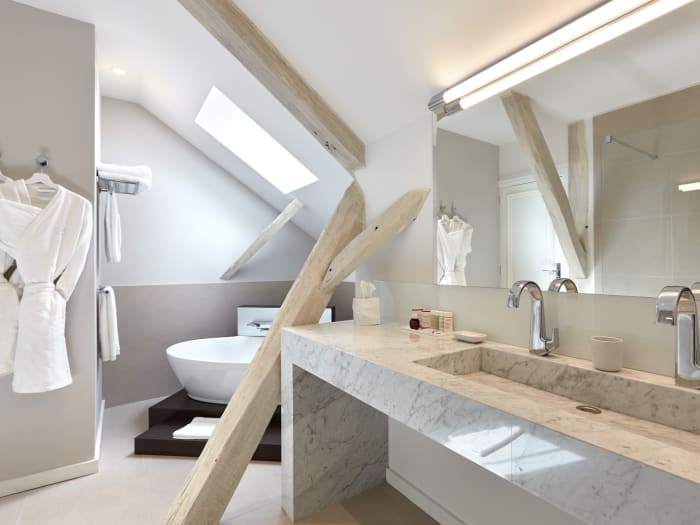
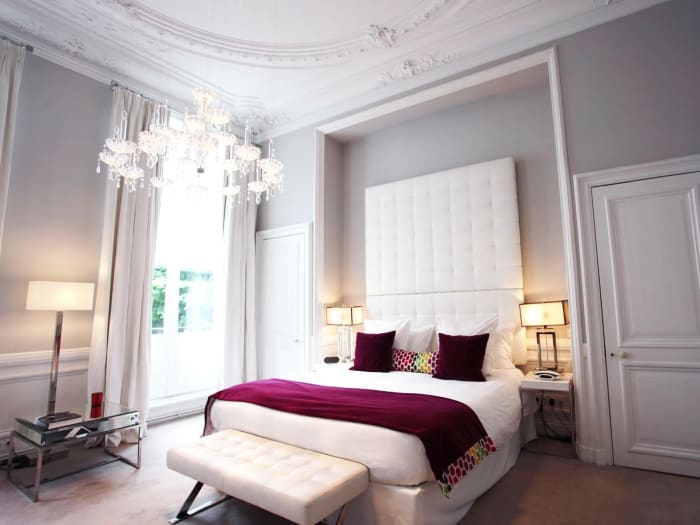
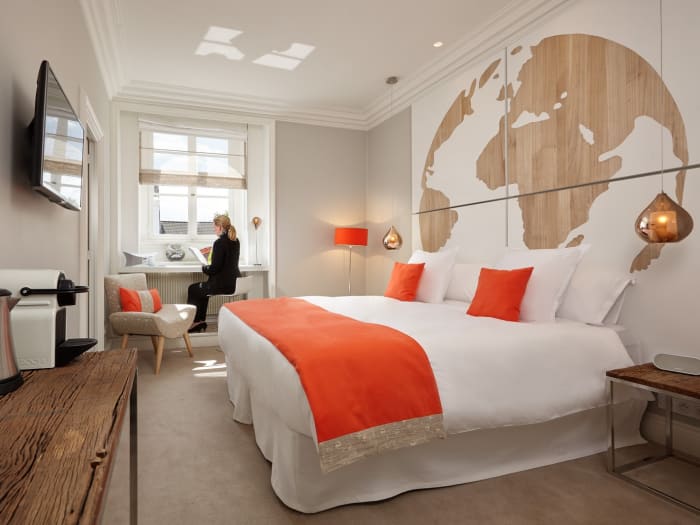
At the Clarance Hôtel, the room embodies the spirit of the house: high-level comfort, a subdued atmosphere, and the sensation of inhabiting a unique place.
Here, success lies in the quality of composition. The room is designed to be restful, clear, and well-thought-out in both its proportions and its use.
In Lille, attention to the surroundings is paramount. A well-designed room accompanies the various moments of the day.
In the morning, it welcomes pleasant light. During the day, it serves as a retreat between meetings or visits.
In the evening, it takes on a more enveloping, almost domestic function. The turn-down service contributes to this transition and enhances the feeling of discreet care.
For couples, the room remains the centre of their stay. It is a space sought for intimacy, tranquility, and a sense of urban softness.
The Clarance Hôtel responds to this with a warm ambiance and a measured scale. For business travellers, expectations differ slightly.
It is essential to be able to work, rest effectively, and organise an early departure or a late return without friction. Daily housekeeping, 24-hour reception, wake-up calls on request, laundry services, and luggage storage all contribute to this.
In a five-star hotel in the heart of the city, the quality of a room is also measured by its relative silence and the fluidity of its amenities.
The traveller should immediately understand how to inhabit the space, where to place their belongings, how to relax, and find their rhythm once again.
Ultimately, what remains is the idea of an urban refuge. After a day in Lille, returning to the Clarance Hôtel means finding a calm, orderly, and personal interior.
The Dining Experience
Culinary excellence is a key element highlighted by the Clarance Hôtel. Within the Relais & Châteaux universe, the dining experience contributes significantly to the identity of the establishment, its hospitality approach, and its local roots.
In Lille, this promise resonates particularly well. The city lies at the crossroads of French and Flemish traditions. Its gastronomic culture is characterised by generosity, a love for seasonal produce, and a certain boldness in flavours.
In a contemporary five-star hotel, the aim is not to replicate a regional culinary heritage literally. Rather, it is about preserving its spirit. Attention to ingredients, clarity of presentation, and a sense of hospitality are paramount here. A good city-centre hotel restaurant should cater to both destination dining and more spontaneous meals.
Reserving a table at the hotel’s restaurant suggests that dining is a compelling reason to visit in its own right. This is an obvious advantage for guests staying on-site. The experience continues without leaving the premises, in a setting that is coherent with the rest of the establishment.
For the local visitor or the passing traveller, it also offers the opportunity to discover a restaurant integrated within a characterful residence. Authenticity is reflected in both substance and form. It is evident in the quality of the service, the rhythm of the dining experience, and the ability to recommend a menu or wine pairing without pretension.
It is also apparent in how the restaurant fits into the life of the hotel. Whether it’s a leisurely breakfast, a business lunch, a more ceremonial dinner, or an intimate moment over dessert, a successful dining experience knows how to accompany these occasions without losing its essence.
For the traveller, the gastronomy at Clarance Hôtel represents more than just a meal. It offers a sensitive interpretation of the hotel and, more broadly, of Lille. Dining on-site means immersing oneself in the rhythm of the place and discovering a contemporary expression of Northern hospitality.
Concierge & services
In character-led hospitality, service quality is often measured by its discretion. Clarance Hôtel highlights personalised service, and the known amenities confirm an organisation designed to support a stay at any hour: 24-hour concierge, 24-hour front desk, daily housekeeping, turndown service, luggage storage, laundry and wake-up calls. Taken separately, these elements may seem expected in a five-star hotel; taken together, they outline a more interesting promise — that of a house able to adapt to the traveller’s actual rhythm.
The concierge function is central here. In a city such as Lille, where one may come for a cultural weekend as easily as for a tightly scheduled business trip, having a readily available point of contact changes the quality of the experience. A good concierge does not add ceremony; they simplify. They help organise transport, recommend a walking route, suggest a restaurant according to the evening’s mood, and facilitate an early arrival or late departure whenever possible. In a human-scale address, this role often takes on a more personal tone: the advice feels less standardised and more closely adjusted to each stay.
A 24-hour front desk provides essential flexibility, particularly for business travellers and for arrivals shaped by rail timetables. In Lille, a major crossroads between several European capitals, round-the-clock availability is not merely a comfort; it responds to the realities of contemporary travel. Wake-up calls, luggage storage and laundry continue the same logic of fluidity. They allow guests to use the hotel as a reliable base, whether the aim is to maximise a day of meetings or to enjoy a few extra hours in the city before departure.
Daily housekeeping and turndown service belong to another register: that of invisible care. These are services that do not seek attention, yet they deeply alter the perception of a stay. A room reset with precision, a bed prepared for the night, a general sense of continuity and attentiveness — all of this builds trust. In the best hotels, luxury is not only what one sees; it is also the absence of friction.
Finally, personalised service matters most when it matches the tone of the place. At Clarance Hôtel, one expects less a display of protocol than a measured, attentive availability. It is often this nuance that distinguishes a fine house: knowing how to be present without intruding, efficient without coldness, considerate without automation. For the traveller, this results in an experience that is simpler, smoother and ultimately more restful. And perhaps it is here, in this quality of relationship, that the most lasting form of hotel luxury resides.
The Lille way of life
Staying at Clarance Hôtel also means choosing a particular way to discover Lille. The city is not revealed only through its monuments or cultural institutions; it is understood through a rhythm, a sociability and a distinctive relationship between elegance and simplicity. Capital of northern France, Lille has a strong identity shaped by its Flemish history, mercantile past, student life, economic dynamism and a conviviality that remains one of its defining traits. A hotel in the heart of the city allows guests to enter that urban texture directly.
A stay may begin on foot. Lille lends itself well to walking, especially from a central base. One moves from older streets to broader squares, from brick-and-stone façades to contemporary shopfronts, from cultural institutions to cafés where one lingers. This controlled density is part of the city’s charm. Unlike certain metropolises that require long journeys, Lille often offers the pleasure of natural sequence: a visit, a pause, a shop, lunch, an architectural detour. Clarance Hôtel fits perfectly into that logic of structured wandering.
The Lille way of life also rests on the table and on hospitality. Here, conviviality does not exclude standards; it makes them more approachable. One can move from a gastronomic address to a more informal local restaurant, from a major cultural appointment to a stroll through shopping districts, without ever losing the sense of a human-scale city. For the traveller, this is a real luxury: that of a destination that is active yet legible, rich yet not intimidating. Clarance Hôtel, through its warm atmosphere and personalised service, naturally extends that urban quality.
Lille is also a city of connections. Its position in northern Europe, ease of access and transport links make it a meeting point as much as a destination. This draws a varied French and international clientele, whether passing through or returning regularly, for business, culture, shopping or a simple weekend away. In that context, choosing a hotel with a strong identity becomes essential. It is no longer merely a matter of staying in the centre, but of finding a place capable of interpreting the city and giving it a face.
That is where Clarance Hôtel comes into its own. It offers a reading of Lille based on discreet elegance, quality of welcome and a taste for well-composed experiences. After a day spent outside, one returns to a continuity of tone: neither folklore nor coldness, but a very balanced form of hospitality. For travellers wishing to discover Lille as more than hurried visitors, this address provides a particularly convincing setting.
Book with MyConciergeHotel
Booking Clarance Hôtel with MyConciergeHotel means approaching the property not as a room to be confirmed, but as a stay to be composed. For a characterful address in the heart of Lille, that distinction matters. A Relais & Châteaux house is not chosen solely for its category or location; it is chosen for its atmosphere, its relationship to service, and the coherence between dining, décor, rhythm and the city around it. The value of an assisted booking lies precisely in turning those elements into a concrete experience shaped to the purpose of the trip.
A weekend for two does not call for the same arrangement as a business night or a longer stay intended to explore Lille. In the first case, one may wish to combine the room reservation with dinner on site, flexible arrival times and a few targeted recommendations to enjoy the city efficiently. In the second, logistical ease may matter more: access, 24-hour reception, wake-up calls, laundry and luggage handling. MyConciergeHotel makes it possible to think through these details in advance so that the hotel responds as closely as possible to the traveller’s actual programme.
This approach is particularly relevant in a destination such as Lille, where stays are often short but full. People come for an exhibition, a business meeting, a concert, a food-focused break or an impromptu weekend from Paris, Brussels or London. In that context, preparation quality makes an immediate difference. Knowing whether to prioritise the hotel restaurant, organise a walking itinerary, optimise arrival and departure times, or simply secure a calm base in the city centre — all these factors shape both the choice and the way the stay is experienced.
Booking through MyConciergeHotel also means benefiting from an editorial reading of the property. Clarance Hôtel cannot be reduced to a list of amenities; it proposes a particular idea of Lille, one that is more intimate, more residential and more attentive to the art of receiving. Our role is to place that identity in context and help each traveller determine whether it matches their expectations. When the fit is right, the experience becomes more obvious: the place immediately feels suitable, the service feels natural and the city is discovered more fluidly.
In practical terms, this accompanied reservation is especially suited to travellers who care about the tone of an address. If you are looking in Lille for a five-star house with a clear character, personalised service, a restaurant worth considering seriously and a central location that makes everything easy, Clarance Hôtel deserves close attention. MyConciergeHotel helps you book that stay with the right level of information and with attention to the details that matter once you arrive.