History & Heritage
In Montluçon, Hôtel Château Saint-Jean belongs to a distinctly French tradition: that of characterful residences turned into places of hospitality without losing their sense of memory. The very word château suggests a certain kind of stay, shaped by quiet, perspective, gardens and architecture, but also by a slower relationship with time. The appeal of the address does not lie in grand heritage theatrics; rather, it rests in the measured way a historic setting is brought into dialogue with the expectations of a contemporary five-star hotel. The result is neither a museum nor a frozen backdrop, but a place to stay where one still senses the original logic of a distinguished property: balanced volumes, the presence of the grounds, a feeling of remove from the urban pace, and an eye for detail.
In a town such as Montluçon, whose history combines medieval heritage, industrial development and bourgeois life, an address of this kind carries particular resonance. It reminds guests that central France holds a discreet patrimony, less exposed than that of the major regional capitals, yet often more intimate in its relationship to place. Staying at Château Saint-Jean also means encountering another geography of French luxury hospitality: one defined by retreat, breathing space and local rootedness, far from resorts and social theatre. That restraint is part of its identity.
Its Relais & Châteaux affiliation offers a clear framework. It implies exacting service, attention to the character of the house and a certain coherence between setting, welcome and art de vivre. In the case of Château Saint-Jean, this membership feels less like a label than a natural affinity: the old-world charm is not set against modern comfort, but integrated with tact. Guests are not simply booking an elegant room; they are inhabiting, for a night or a weekend, an environment conceived as a complete experience.
The heritage of the place is also legible in its atmosphere. A successful château hotel does not merely assemble decorative codes; it creates a sensory continuity between architecture, interior circulation, light, views over the gardens and the quality of silence. Here, the prevailing impression is one of refuge. The common areas, described as elegant and welcoming, contribute to that sense of a preserved house where one can move from lounge to terrace, from garden path to bedroom, without any break in tone. That coherence is essential: it gives the stay its depth.
Finally, it is worth noting what such an address represents today. In a hotel landscape often divided between standardised urban properties and highly demonstrative resorts, Château Saint-Jean appears to defend another path: a character-led luxury grounded in the quality of its environment, the precision of its service and the continuity of its spirit of place. That is likely what gives it lasting appeal. One comes for the comfort, certainly, but also for the increasingly rare feeling of inhabiting a place with density, history and its own way of receiving guests.
The Establishment
The Hôtel Château Saint-Jean stands out primarily for its setting. Its tranquil environment, gardens conducive to relaxation, and the balance between old-world charm and modern comfort set the tone.
The experience begins before one even steps into the room. It starts with the approach to the estate, the perception of the façades, and that immediate sense of retreat that slows the pace.
The château acts as a threshold. One leaves the city without completely distancing oneself from it, entering a space oriented towards calm, light, and the quality of its volumes.
The architecture of a château-hotel creates a welcome sense of distance. High ceilings, openings, and perspectives from the lounges or corridors structure the stay.
Even adapted to the needs of contemporary hospitality, such a building retains a particular way of welcoming guests. It is not inhabited like an anonymous hotel.
One settles in with the sensation of entering a home. The refinement here is not merely decorative; it is also spatial.
The gardens play an essential role in this context. In an estate, the park is not limited to visual appeal. It punctuates the day.
One breathes in the morning air, lingers over a coffee, and strolls between meetings. It is also a place to find silence upon returning from an outing.
This continuity between the house and its exteriors allows guests to experience the hotel as an environment, rather than a mere succession of services.
The overall atmosphere, warm and welcoming, is equally important. In luxury hospitality, warmth never excludes high standards.
A grand establishment knows how to avoid coldness without falling into familiarity. It creates spaces where one feels expected, without ever feeling observed.
The elegantly decorated common areas contribute to this balance. They offer genuine places to pause, beyond their function as thoroughfares.
Thus, Château Saint-Jean caters to various uses. Whether a romantic getaway, a relaxing interlude, a characterful stopover, or a stay blending work and leisure.
This versatility remains discreet. It reflects a flexible hospitality, without compromising the identity of the place.
What remains in one’s memory is an overall impression. The setting, architecture, and tranquillity compose an art of hospitality.
Rooms and Suites
In a château-hotel, the room is not merely a place to rest. It extends the spirit of the location with the comfort expected of a five-star establishment.
At Château Saint-Jean, this blend of modern comfort and old-world charm requires a precise balance. It is about preserving the character of the place without losing usability.
When successful, this meeting of heritage and comfort creates rooms without ostentation. The sensation of appropriateness is immediately apparent.
Here, one expects spaces where architecture sets the tone. Generous proportions, natural light, views of the gardens or the estate, and details reminiscent of a characterful home.
Old-world charm does not rely on a few decorative signs. It manifests in the volumes, perspectives, circulation, and sometimes in an irregularity that marks the identity of the room.
Modern comfort is present without being intrusive. It is evident in the bedding, ergonomics, soundproofing, bathrooms, and control of light.
The beautiful château rooms offer more than aesthetics. They establish a rhythm. One sleeps well here, but also stays with ease.
One can enjoy a coffee, read by a window, or prepare for dinner without feeling cramped. In a peaceful setting like that of Saint-Jean, this aspect is significant.
The room becomes a vantage point overlooking the surrounding calm. It privately extends the atmosphere of the park and the estate.
For couples, this quality of retreat is as important as the décor. For business travellers, it transforms a stopover night into a genuine time for recovery.
The service naturally complements the experience. Daily housekeeping, turndown service, 24-hour reception and concierge, luggage storage, laundry, and wake-up calls create an attentive environment.
A well-designed room is not judged solely by its appearance. It is also measured by the quality of the support provided.
Returning to a prepared room in the evening, having a logistical need taken care of at any hour, relying on discreet and reliable service—all of this builds real comfort.
The rooms and suites of Château Saint-Jean form the intimate heart of the experience. They allow one to enjoy a historic place without sacrificing modern expectations.
Their success lies in a form of restraint. Here, coherence takes precedence over effect.
Dining
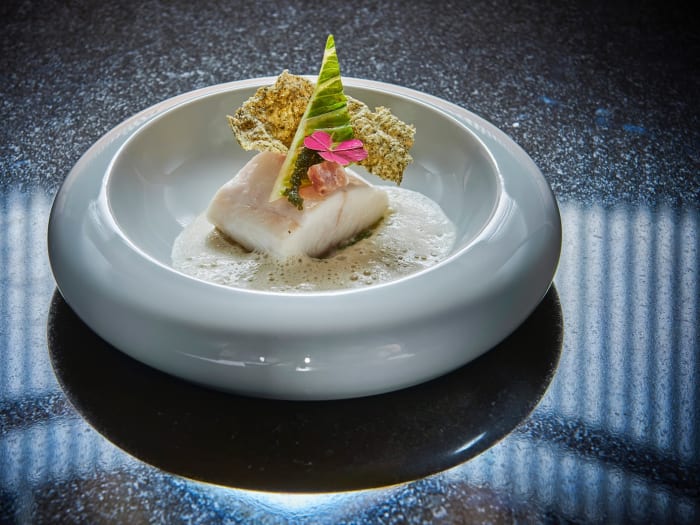
In a Relais & Châteaux property, gastronomy almost always plays a structuring role, even when one chooses not to define it through an accumulation of titles or signatures. Without venturing into unconfirmed detail, it is fair to say that dining at Château Saint-Jean likely forms part of a broader vision of the stay, one in which guests come as much for atmosphere as for the quality of the plate. In a château surrounded by gardens, food and drink take on a particular resonance: they belong to a setting, a tempo, a way of inhabiting the day. Breakfast, a light lunch, a more composed dinner or simply a drink in one of the lounges all become moments that extend the experience of the place.
What gives a table value in this type of establishment is not culinary execution alone. It is also the coherence between setting, service and the style of cooking offered. In peaceful surroundings such as these, one expects a certain clarity: cuisine that respects the seasons, allows ingredients to speak, avoids gratuitous effect and aligns with the elegance of the house. At table, luxury is often measured by this controlled simplicity. A fine dining room, a terrace when the season allows, precise mise en place, attentive service without excess: all this matters as much as the menu itself.
In the morning, a hotel of this calibre is often judged by the quality of its gastronomic awakening. In a château, breakfast is not merely a functional service; it sets the tone of the stay. Light over the gardens, the quiet of the estate, the recovered time around a carefully laid table create a moment apart. For leisure travellers, it is often among the most enduring memories; for those passing through on business, it offers a rare sense of comfort at the start of the day. In both cases, the environment transforms a daily ritual into an act of hospitality.
Dinner naturally takes on a more ceremonial dimension, though without any need for solemnity. In a house of character, there is real pleasure in being able to remain on site, without breaking the thread of the stay by leaving the estate in search of an outside restaurant. The meal then becomes an extension of the château itself. One moves from garden to lounge, from lounge to dining room, and finds the same continuity of tone. That is one of the privileges of well-conceived properties: they allow several sequences of the day to unfold without ever losing the feeling of unity.
Finally, gastronomy here forms part of a broader reading of Montluçon and its region. A fine hotel table should not detach itself from its territory; it gains, on the contrary, by interpreting it with measure. Without presuming a specific menu, one may expect from an address of this nature a sensitive relationship with ingredients, seasonality and the culinary identity of central France. It is often in that discreet fidelity to local context that the true personality of a table reveals itself. More than a display, it becomes a way of telling the story of the place.
Spa & Wellness
Even when a brief does not detail the full wellness offering, the very nature of a stay at Château Saint-Jean invites a reading centred on rest, recovery and a slower pace. The peaceful setting, gardens designed for relaxation and the overall atmosphere of the house already amount to a form of architectural wellbeing. This is often underestimated: in the finest addresses, care does not begin only in a dedicated space, but in the way the entire place soothes. Silence, air quality, the presence of greenery, light filtered through lounges or bedrooms, the possibility of walking aimlessly for a few minutes through the grounds — all this contributes to a very tangible experience of renewal.
In high-end hospitality, wellness can no longer be reduced to a list of treatments. It refers to an overall quality of stay. A château surrounded by gardens naturally offers what many establishments try to recreate artificially: distance from noise, a sense of space, a direct relationship with cultivated nature. For urban travellers, that simple sense of remove already has a perceptible effect. One sleeps differently, takes more time, and rediscovers an attention to body and rhythm that purely functional stays rarely allow. Château Saint-Jean seems particularly well placed to offer this form of quiet luxury.
If the property does provide dedicated facilities or treatments, they are ideally understood as part of that continuity rather than a break from it. The most successful wellness in a house of character is that which respects the spirit of the place. One expects less a spectacular display than a precise, discreet experience coherent with the environment. That may take the form of simple but essential moments: an unhurried awakening, an early walk in the gardens, time to read after a treatment, returning to a room prepared for the evening, a genuinely restful night. In that sense, turndown, daily housekeeping and the constant attentiveness of reception and concierge also play their part: they lighten the logistics of the stay and leave more room for rest.
Wellness in a place such as this also has to do with temporality. One does not consume the château as one would use a facility. One settles into it; one adjusts to it. The day may be built around gentle alternations: an extended breakfast, an outing into town or the surrounding region, a return to calm, time in the lounges or garden, dinner on site. That rhythm is precious, especially on shorter stays. It creates the impression of having genuinely stepped away from one’s usual pace, even without travelling far or for long.
Ultimately, Château Saint-Jean recalls an often forgotten truth: the most lasting wellbeing sometimes arises simply from a well-composed environment. A harmonious place, dependable service, spaces in which to withdraw, an atmosphere that imposes nothing and supports everything. Seen in that light, the château and its gardens are already a programme in themselves. They offer that form of silent luxury which does not seek to multiply promises, but to create the real conditions for rest.
Concierge & Services
Luxury hospitality is often recognised less by ostentatious facilities than by the quality of its invisible services. On that point, Château Saint-Jean presents strong fundamentals: 24-hour concierge, 24-hour front desk, daily housekeeping, turndown service, luggage storage, laundry, wake-up service, as well as multilingual staff among the known amenities. Considered separately, these may seem expected in a five-star hotel; taken together, they in fact outline an essential promise: that of a stay that is smooth, supported and free of friction. And it is precisely this fluidity that distinguishes great houses from establishments that are merely well equipped.
A round-the-clock front desk is not only a practical convenience. In a destination property such as this, it means the hotel can adapt to varied rhythms: late arrival, early departure, an unexpected request, assistance needed at an unusual hour. It creates a discreet sense of security, particularly valuable for international travellers, couples on a short break or business guests whose schedules may shift. The concierge adds another layer to the stay. Beyond simple information, it helps orchestrate time on site: arranging a visit, recommending an itinerary, facilitating a booking, adapting the experience to the guest’s mood. In a setting such as Montluçon and its surroundings, that human mediation can make the difference between a correct stay and one that feels truly inhabited.
Room and housekeeping services also say a great deal about the level of attention in a house. Daily housekeeping ensures consistency of comfort; turndown service, often underestimated, marks that subtle passage from day to night which is part of the charm of fine hotels. Returning to find the room prepared for the evening is not merely a ritual gesture: it is a way of anticipating the guest’s needs, making the return gentler, more orderly and more restful. Laundry and luggage storage, for their part, address very concrete needs, whether for a stylish short stay or a longer stopover. These are services that immediately lighten the mental load of travel.
What matters in a property such as Château Saint-Jean is that these services are embedded in a setting that gives them meaning. Service here is not conceived as a display, but as a natural extension of the atmosphere of the house. In a château with peaceful surroundings, efficiency must remain discreet; it should support without interrupting. That is a rare quality. The best teams know how to be present without occupying the space, attentive without insistence, precise without rigidity. This relational accuracy lies at the heart of the high-end experience.
For the traveller, the result is a simple yet decisive impression: everything feels easier. One can focus on the stay itself, on discovering Montluçon, on time as a couple or on a professional engagement, without being held back by logistical details. In luxury hospitality, true service consists precisely in making that ease almost imperceptible. When done well, as one may expect here, it becomes one of the most enduring memories of the stay.
The Art of Living in Montluçon
Staying at Château Saint-Jean also means choosing Montluçon as the setting for one’s journey. The town does not belong to the realm of demonstrative tourism; it is better discovered through strolling, attention and quiet curiosity. That is precisely what suits an address set in peaceful surroundings. One does not come here to tick off icons at speed, but to compose a human-scale stay in which the hotel serves as an elegant refuge between a few hours of urban discovery, a walk and dinner. This balanced relationship between the property and the town is part of the experience’s charm.
Montluçon has a layered identity. Its medieval past, still perceptible in the old centre, coexists with a more modern history linked to industrial development. This overlap gives the town a particular relief. It does not offer the monumental obviousness of certain French heritage destinations, but rather a more discreet, more lived-in substance, approached in fragments: an old street, a perspective over rooftops, a square, a market, a façade, a local rhythm. For travellers who respond to the texture of a town rather than to prestige alone, that nuance is valuable.
Château Saint-Jean allows guests to experience Montluçon without being absorbed by it. After a few hours in town, one returns to the calm of the estate, its gardens and its atmosphere of retreat. This alternation between discovery and a return to silence is one of the great pleasures of staying in characterful hotels near an urban centre. It avoids both total isolation and saturation. One can explore, then withdraw; observe, then slow down. It is a very French way of travelling, in which art de vivre depends as much on the quality of transitions as on the destinations themselves.
The surrounding region adds another dimension. Central France lends itself particularly well to flexible itineraries, detours and unplanned stops. One travels there less in urgency than in continuity. A hotel such as Château Saint-Jean can then become an ideal base from which to range out, while retaining a strong identity of place. This dual role — refuge and point of departure — is valuable both for couples and for business travellers wishing to give greater depth to their trip.
Ultimately, the art of living in Montluçon, as one may imagine it from Château Saint-Jean, rests on a certain economy of gesture. Taking time over breakfast, going out without an over-packed programme, returning for a walk in the gardens, enjoying the lounges, letting the evening settle slowly: nothing extraordinary in appearance, and yet all the essentials of a successful stay. Luxury is not always found in the exceptional; it often lies in the recovered ability to inhabit one’s time fully. Seen in that light, the address appears as a rare point of balance between heritage, hospitality and douceur de vivre.
Booking via MyConciergeHotel
Booking the Château Saint-Jean through MyConciergeHotel means approaching this remarkable establishment with precision. For this characterful property, a member of Relais & Châteaux, the choice of dates, the pace of the stay, and the type of getaway are as important as the reservation itself.
Seasonality can influence the level of demand. It is advisable to plan ahead, especially during peak periods. In a house where the setting, gardens, and atmosphere are paramount, the right timing can transform the experience of the place.
MyConciergeHotel allows for a reservation process that aligns with this logic. A stay at Château Saint-Jean can cater to various expectations: a romantic interlude, a stopover on a journey through France, a restful weekend, a business trip, or an exploration of Montluçon and its region.
The key is to turn these intentions into a coherent stay. It is not merely about checking availability; one must also consider the duration, the moments to prioritise, and the balance between the hotel and the destination.
For couples, the address lends itself to a retreat focused on tranquillity, gardens, and the quality of communal spaces. For business travellers, it offers a serene environment. In both cases, making a discerning reservation makes all the difference.
An arrival that is too late, a stay that is too short, or a tight schedule can diminish the experience. Conversely, a well-timed, extended night, if possible, allows for full enjoyment of the location.
Montluçon should not be treated as just a stopover. The Château Saint-Jean truly comes into its own as a gateway to a more understated and relaxed way of life. This perspective aids in selecting the right stay formula, whether it be a weekend, a stop along the way, or a trip that blends work and leisure.
In practice, the best advice remains simple: book in advance as soon as the dates are set, especially for a high-demand period or a couple's getaway. This allows for greater flexibility and enables one to approach the journey with clarity.