History & heritage
On Capri, a hotel’s story matters almost as much as its views. Hotel Caesar Augustus belongs to that island tradition of holiday houses, hanging gardens and terraces opening onto the gulf, where hospitality feels both worldly and secluded. Without leaning on cliché, the property embodies a very specific idea of a Caprese stay: a retreat set above the bustle, where guests come for light, relative quiet and the sensation of being suspended between sky and sea. Its membership of Relais & Châteaux says much about its positioning: a characterful house, intimate in scale, where the spirit of place takes precedence over display.
On an island such as Capri, heritage is rarely about a single date or a straightforward chronology. It is better understood as continuity of use and outlook. Since the nineteenth century, Capri has drawn writers, artists, affluent travellers and lovers of dramatic Mediterranean scenery. The island’s most sought-after hotels have therefore had to reconcile two ambitions that do not always sit easily together: delivering a very high level of service while preserving the sense of privacy that makes a stay here so desirable. Caesar Augustus belongs to that lineage. Even its name evokes a certain Grand Tour imagination, shaped by classical references, theatrical panoramas and an almost ceremonial relationship with beauty.
What sets the hotel apart, beyond its five-star status, is the way it allows Capri to speak for itself. The property does not need an accumulation of obvious luxury signals to establish its standing. Instead, it relies on more enduring qualities: an exceptional setting on the island, an intimate and refined atmosphere, a direct relationship with the landscape, and service designed to support the guest’s rhythm rather than interrupt it. At a time when many luxury addresses favour overt spectacle, that restraint reads as a more persuasive form of elegance.
The hotel’s heritage is also visible in the way it converses with Capri itself. Here, luxury is not only a matter of materials, proportions or facilities, but of spatial experience. One inhabits a terrace, watches the Mediterranean light shift, understands the value of breakfast taken facing the horizon, and returns from a walk with the sense of having regained a point of anchorage. That relationship to duration, contemplation and geography sits at the core of the hotel’s identity.
For the contemporary traveller, this results in a stay that does not try to impress at every turn, but instead creates a quality of presence. Hotel Caesar Augustus will appeal to those who prefer hotels with a clear personality to interchangeable luxury. It suggests a quieter, more elevated Capri, where one comes less to tick off sights than to inhabit a landscape. That may be its truest inheritance: extending, through the codes of the grand hotel, a Mediterranean tradition of travel shaped by views, light and discretion.
The property
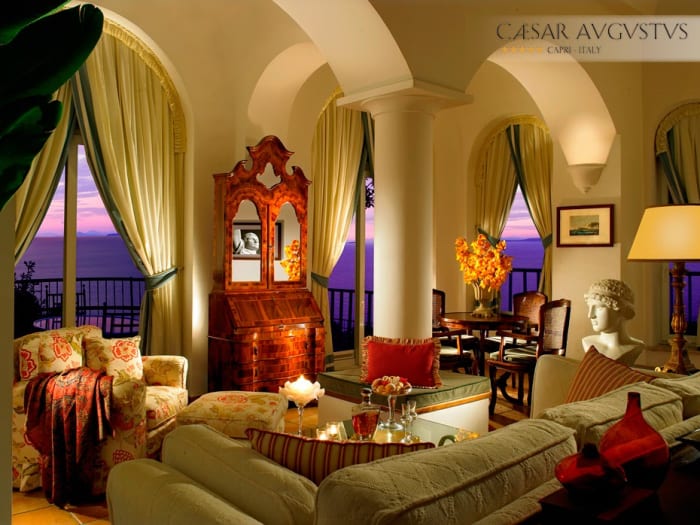
One of Caesar Augustus’s greatest privileges lies in its immediate relationship with the landscape. On Capri, not every hotel experiences the island in the same way: some are oriented towards the social scene, others towards gardens, others still towards departures by sea. Here, elevation is the defining element. The hotel stands out for its panoramic Mediterranean views, an asset that shapes not only the property’s aesthetics but the daily experience of staying here. From the moment of arrival, the eye is drawn to the horizon, and that openness sets the tone: this is a place designed to make one breathe more deeply.
The property appeals through an intimate, refined atmosphere, quite distinct from that of larger seaside resorts. Luxury is expressed through proportion, through the quality of quiet, through the way the public spaces create pauses rather than effects. Terraces, lounges, circulation areas and viewpoints all follow the same logic: admit the light, frame the sea, and offer places where one can linger without agenda. That sense of calm ease is especially valuable on an island whose summer season can at times feel intensely busy.
Its location on Capri, with straightforward access to beaches and local sights, further strengthens the appeal. Days can be arranged very freely: set out early to explore a corner of the island before the crowds, return for lunch or rest, then head out again in the late afternoon when the light softens. In that sense, the hotel functions as both lookout point and retreat. It allows guests to enjoy Capri without being constantly absorbed by its movement.
This ability to offer both openness and withdrawal helps explain why the address suits couples particularly well, while also appealing to solo travellers in search of calm. The hotel does not impose a social rhythm; it allows each guest to shape a stay to personal preference. Some will see it as a romantic hideaway, others as an elegant base for discovering the island, and others still as a refuge for reading, swimming, contemplating and slowing down. That discreet versatility is one of the most convincing forms of luxury hospitality.
Membership of Relais & Châteaux also provides a sense of coherence. In this kind of house, interior design, service, dining and atmosphere are expected to form a legible whole. At Caesar Augustus, that coherence is evident in the balance between the property’s character and the fluidity of the welcome. Nothing feels standardised; everything seems intended to extend the idea of a high-level Mediterranean residence opening onto an exceptional setting.
For first-time visitors, the hotel offers a particularly persuasive reading of Capri: not merely an iconic destination, but a territory of relief, perspective and contrast. For returning guests, it recalls what makes Capri endure when one steps slightly aside from the obvious: the feeling of a suspended world, bathed in light, where the most memorable stays are defined less by the number of activities than by the rightness of the setting.
Rooms and Suites
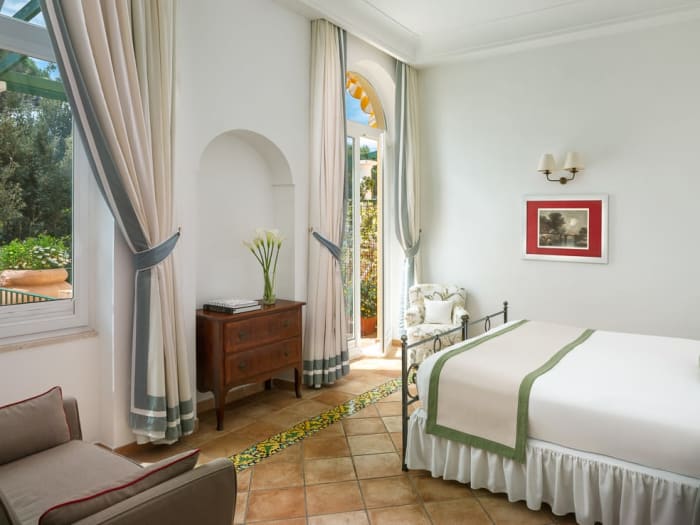
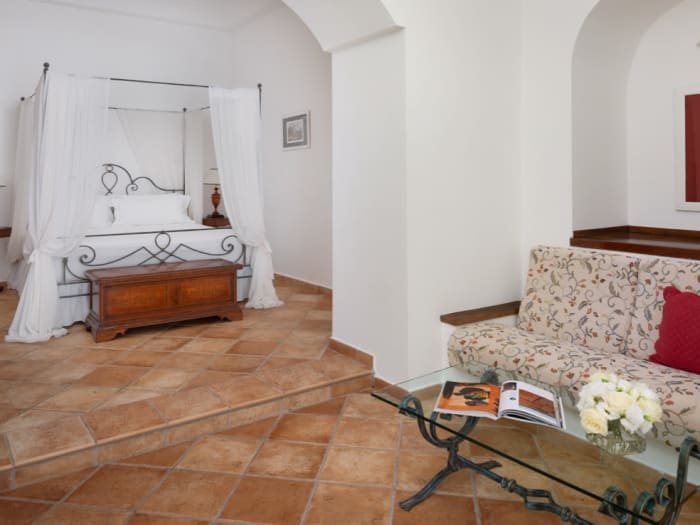
In a hotel of this calibre, the room must extend the spirit of the place. At Caesar Augustus, it embodies the same promise as the communal areas: tranquility, refinement, light, and a privileged relationship with the landscape.
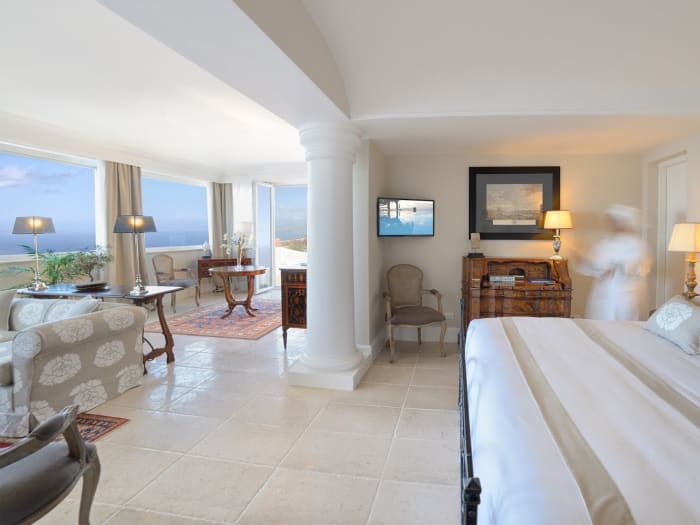
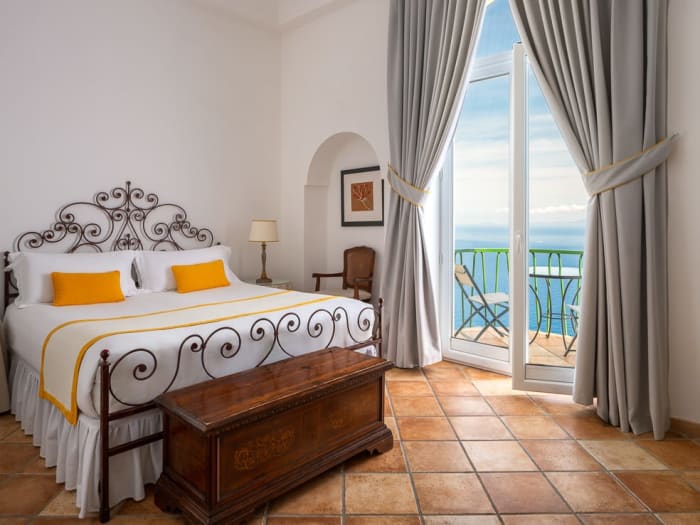
In such a prestigious island setting, the room becomes a private observatory. It serves as both a living space and a place of rest. Guests return here between outings to find freshness, silence, and an expansive horizon.
The decorative style favours an elegance that avoids excess. In Capri, the finest rooms allow light and views to take centre stage, steering clear of ostentatious decor.
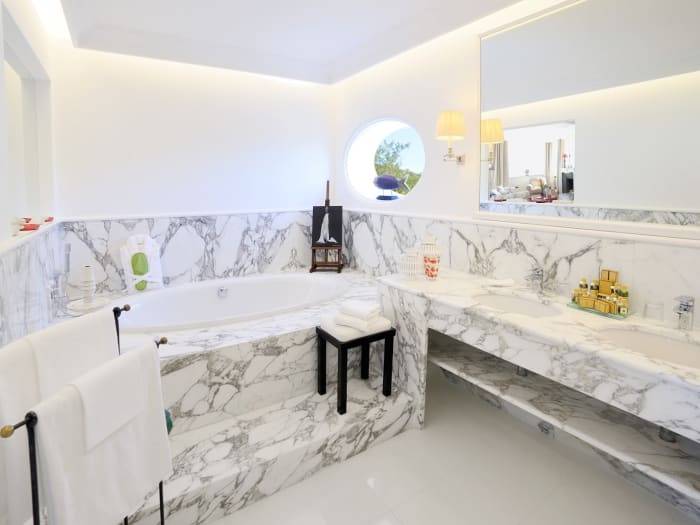
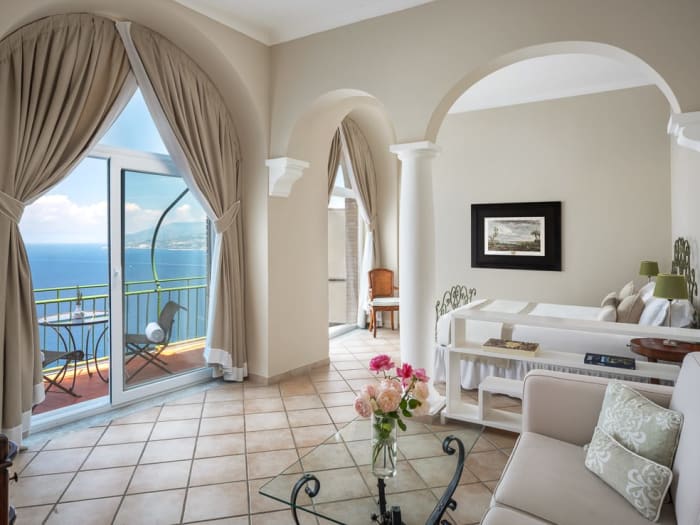
There is a focus on clear volumes, tactile materials, and a soothing colour palette. Generous openings and a genuine sense of breathing space enhance this refined intimacy, evoking areas designed for a leisurely stay.
For couples, the experience takes on a special dimension. Capri invites outdoor living, followed by a return to an interior that can slow the pace. A well-oriented room transforms simple moments into memorable experiences.
Opening the shutters early in the morning. Reading in the afternoon dimness. Preparing for dinner with the sea as a backdrop. Extending the evening in a hushed atmosphere.
In such establishments, comfort is as much about the bedding as it is about the turn-down service. It also encompasses the feeling of being sheltered from the world without being cut off from it.
Daily service contributes to this impression. Housekeeping, evening preparations, and the discreet attention of the staff create an essential continuity. The most convincing luxury is often the quietest.
An immaculate room upon returning from a stroll. Personal belongings respected. A service rhythm that adapts to the guest. In an intimate setting, these details foster trust.
The most sought-after accommodations enhance the dialogue with the outside world. A terrace, balcony, or simple opening to the Mediterranean. In Capri, the view shapes the memory of the stay.
A successful room allows guests to engage with this relationship to the landscape at various times of the day, from the first light to the evening hues.
The rooms and suites at Caesar Augustus thus extend a certain idea of Mediterranean holidaying. They establish a mindset characterised by slowness, contemplation, and attentiveness to the site. For those choosing Capri as their holiday destination, this is a crucial aspect.
Dining
On Capri, gastronomy is never entirely separate from setting. Dining here is shaped by light, air, rhythm, Mediterranean produce and carefully chosen moments. In a hotel such as Caesar Augustus, one expects less a performance than a sense of rightness: cooking that supports the place, respects the season and makes the most of the constant dialogue between indoors and out. Even without precise details about restaurants or chefs, it is fair to say that a Relais & Châteaux address of this kind places dining at the centre of the experience.
The first pleasure is often breakfast. On an island like Capri, breakfast is not merely functional; it opens the day and sets its mood. Taken facing the Mediterranean, it becomes a suspended moment. Fruit, pastries, savoury options, carefully served coffee, fresh juices and simple but well-chosen products all take on another dimension when framed by sea and sky. It is one of the most enduring luxuries of the stay: beginning the day without haste, in a setting that invites contemplation rather than efficiency.
At lunch, the ideal table on Capri knows how to remain light without losing character. One readily imagines a cuisine inspired by Italian and Mediterranean traditions, attentive to the freshness of ingredients and the clarity of flavour. Fish, seasonal vegetables, herbs, citrus, olive oils, pasta and preparations simple in appearance find their fullest expression when served with precision. In a great island hotel, true refinement often lies in not overcomplicating what the product and the setting already elevate.
Dinner belongs to another register. As the light fades and the sea becomes a more abstract presence, dining can take on a more hushed, more ceremonial tone. Service plays an essential role here: being present without intruding, advising without imposing, accompanying the rhythm of the meal. In a house with an intimate atmosphere, the evening dining room or terrace should suit both a private dinner for two and a more contemplative meal, where one lingers as much for the ambience as for the succession of courses.
Beyond the plate, gastronomy forms part of a broader way of living. It connects the traveller to the island through tangible sensations: the taste of ripe fruit, the simplicity of a local recipe, the freshness of lunch after a morning out, the comfort of dinner taken without leaving the panorama. It is also an area in which the concierge can deepen the experience, guiding guests towards Capri tables according to the mood of the day, whether a discreet address, a lunch near the water or a livelier evening setting.
Seen in this light, dining at Caesar Augustus should not be understood as a mere complement to the stay, but as one of its essential languages. It gives daily form to the island’s luxury: eating slowly, in a rare setting, with the sense that landscape, service and cuisine are speaking in the same voice. For many travellers, these are precisely the meals that fix the memory of Capri most vividly.
Wellness & Island Retreat
At the Hotel Caesar Augustus, wellness extends beyond the confines of a spa. It primarily stems from the quality of the environment.
Capri transforms the presence of the landscape into a restorative experience. The sea air, light, contours, and distance from the mainland all contribute to this.
In such a setting, rejuvenation begins before any treatment. It arises from silence, views, and a regained sense of time.
Here, the first act of wellness often involves slowing down. One savours the freshness of the morning. Time is taken for breakfast. A pause is made in the middle of the day.
This alternation between exploration and retreat is significant. A grand hotel in Capri must also allow for recovery between travel moments.
Wellness is facilitated by the spaces available. A well-exposed terrace, a shaded corner, a quiet lounge, a cool room, and discreet service all play a role.
In Mediterranean luxury hospitality, rest is not always spectacular. It often relies on a well-thought-out environment conducive to reading, sleeping, or contemplation.
If the hotel offers treatments, they naturally align with this holiday spirit. Massages after a day of walking, facials before an evening out, moments of recovery.
The sea also plays a central role. Even without swimming, its presence is soothing. The horizon, the variations of the water, and the evening breeze contribute to this sensation.
Caesar Augustus thus provides a setting conducive to re-centering. In Capri, the most precious rest is often that which settles in naturally.
Concierge & Services
In Capri, the quality of services is as important as material comfort. The experience begins even before arrival at the hotel. It encompasses the organisation of the journey, luggage management, boat transfers, and transportation on the island.
A 24-hour concierge and a continuously open reception are genuine assets here. They address the logistics unique to Capri. Timings, connections, and seasonal crowds often require responsive assistance.
Booking a boat transfer in advance encapsulates the usefulness of this support. A good concierge helps streamline the stay, avoiding downtime and making arrival more serene. In summer, this ability to anticipate significantly enhances the experience.
On a daily basis, Caesar Augustus offers daily housekeeping, turn-down service, luggage storage, laundry, wake-up calls, and multilingual staff. Together, these services create a very real comfort.
The turn-down service accompanies the transition from day to evening. Laundry becomes particularly valuable during a summer or extended stay on the island.
The multilingual staff plays a crucial role with an international clientele. Directing guests to a beach at the right time, recommending a walk, organising a reservation, or adapting a service requires precise listening.
Luggage storage and continuous reception provide appreciated flexibility upon arrival and departure. Ferry schedules do not always align with hotel timings. The ability to drop off belongings, enjoy a few more hours on-site, or arrive late remains a discreet comfort.
At Caesar Augustus, these services aim less for impact and more for the fluidity of the stay. In Capri, this approach makes perfect sense.
The Capri way of life
Staying at Caesar Augustus also means adopting, for a few days, a particular way of inhabiting Capri. The island cannot be reduced to its most familiar images. It is made of subtle contrasts: between crowds and retreat, rock and vegetation, the brilliance of full daylight and the softness of evening, departures by sea and walks at altitude. A well-positioned hotel allows those nuances to be read properly, and opens the way to a style of living that is less about seeing everything than about choosing the right rhythm.
Morning is often the finest time to discover Capri. The light is clear, the air still cool, the paths quieter. One sets out early towards a viewpoint, a garden, a lane or a beach, then returns to the hotel before the island becomes busier. That alternation between going out and coming back lies at the heart of the experience. It allows guests to enjoy Capri without being overwhelmed by its density. Caesar Augustus, with its privileged position and serene atmosphere, is particularly well suited to this way of structuring the day.
Afternoon invites another use of time. Depending on the season, one may choose the sea, an excursion, a pause in the shade, a long lunch or simply a few hours of rest. This is where a great hotel reveals its most valuable function: offering a setting in which inactivity becomes a legitimate pleasure. On Capri, knowing how to do nothing is almost an elegant discipline. Watching the light turn across the Mediterranean, listening to the relative quiet of a terrace, reading a few pages before heading out again: such simple gestures often define the stay more accurately than a succession of visits.
In the evening, the island changes register once more. Temperatures fall, silhouettes are redrawn, terraces take on a softer tone. One may choose to go out, dine in town, or remain within the calm of the hotel. That freedom is essential. The true luxury on Capri is not to be everywhere, but to be able to decide, according to one’s mood, between animation and withdrawal. An intimate address such as this provides precisely that flexibility, without ever making the guest feel they are missing something by staying in.
The Caprese way of life also involves a particular relationship with elegance. Here, it is not necessarily ostentatious; it appears in the way one moves, lunches, chooses an hour, or creates pauses. It implies attention to detail, but also a form of lightness. One quickly understands that Capri is best enjoyed when one accepts not to control everything, and allows the weather, the light or the mood of the moment to shape the day. A hotel with good concierge support and fluid service is the ideal companion to that openness.
In that sense, Caesar Augustus is not simply a place to sleep on the island; it is a point of entry into a more accurate way of living it. It allows access to Capri without being absorbed by reputation alone. Here one rediscovers what the great Mediterranean destinations offer at their best when approached well: not a collection of images, but a quality of presence. And it is often that presence, more than any itinerary, that one carries home afterwards.
Book with MyConciergeHotel
Booking Hotel Caesar Augustus through MyConciergeHotel means approaching Capri with method and discernment. On a highly sought-after island destination, the difference between a pleasant stay and a genuinely seamless experience is often decided in advance: choice of dates, understanding the island’s rhythms, anticipating transfers, selecting the most suitable room category, and organising the first hours on site. Editorial and concierge support is especially valuable here, because Capri rewards travellers who prepare their arrival intelligently.
One of the first considerations is the season. Summer draws large numbers of visitors, which affects room availability, crossings, the atmosphere at key sites and the general tempo of the island. Booking early not only improves access to the best options, but also allows travellers to define the experience more precisely: a lively stay at the height of the season, a quieter interlude outside peak periods, a romantic escape of a few nights, or a longer stay in order to enjoy the place at a slower pace. In every case, a clear reading of the calendar significantly improves the quality of the trip.
The second issue is logistics. Reaching Capri often involves a boat transfer, and that stage requires serious coordination, particularly when travelling with luggage or on a tight schedule. The advice to reserve the transfer in advance is not incidental; it directly shapes the serenity of arrival. MyConciergeHotel can help structure that journey so that the transition from mainland to island is not experienced as a constraint, but as the natural prelude to the stay. Such attention to the route is especially important in a hotel chosen for calm and continuity.
Booking through a specialist also makes it easier to define expectations properly. Caesar Augustus is particularly well suited to couples and solo travellers; the question is how to translate that profile into concrete choices. Is the priority the view, intimacy, ease of access to local discoveries, the ideal length of stay, or the possibility of alternating outings with rest? A well-supported booking does not merely confirm a room; it aligns place, timing and use.
MyConciergeHotel also brings editorial value for travellers who want to understand before they book. The aim is not to sell an abstract image of luxury, but to position the hotel within its real context, with its specific strengths: panoramic Mediterranean views, an intimate and refined atmosphere, Relais & Châteaux membership, and practical access to beaches and island sights. That perspective helps guests make a more accurate choice, especially if they are hesitating between different styles of stay on Capri.
Ultimately, booking Caesar Augustus through MyConciergeHotel means choosing an approach that prioritises the coherence of the journey. On an island where every organisational detail can affect overall comfort, that coherence is valuable. It allows guests to arrive under the right conditions, enjoy the property fully from the first hours, and experience Capri not as a destination complicated to orchestrate, but as something self-evident. For a hotel of this level, that is exactly what thoughtful booking should deliver.