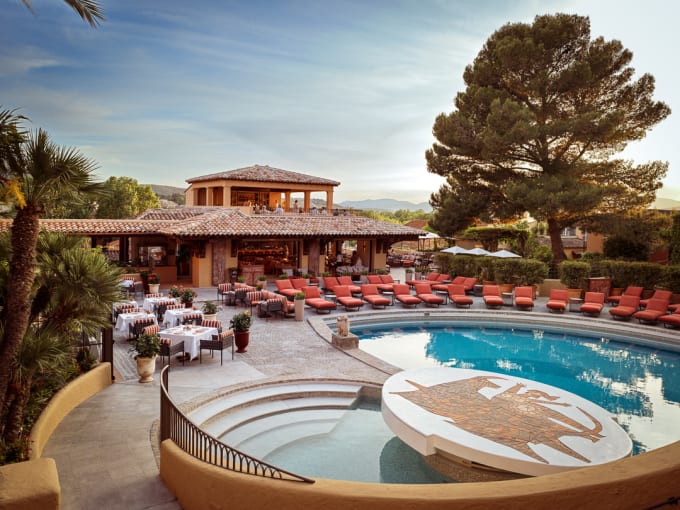
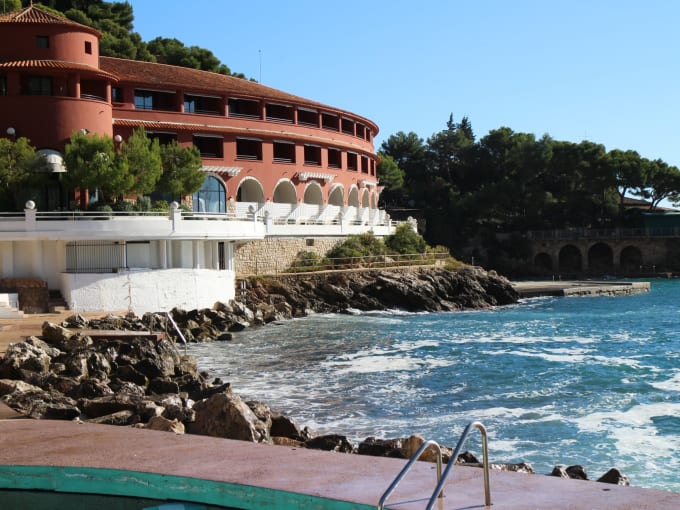
On the Côte d'Azur, a rooftop is not merely an aesthetic feature. It serves as a vantage point for observing the light, the landscape, and the coastal rhythm. From Nice to Èze, Ramatuelle, and Saint-Tropez, this vertical geography transforms the experience. A high terrace offers a different experience depending on its orientation, the urban fabric, or its proximity to the sea. This is precisely what makes this segment so exciting. The azure rooftop is not just a bar with a view; it can take the form of a panoramic restaurant, a solarium, a perched pool, or a top floor designed as an open-air lounge. In a region where exceptional hospitality is abundant, this aerial dimension acts as a style revealer, distinguishing establishments that know how to showcase their surroundings without overwhelming them.
To compile this ranking, we do not rely on marketing promises. We observe concrete, tangible, and comparable elements. First, the reality of the rooftop itself: is it central to the experience, or merely an accessory? Next, we assess the quality of its location. A direct sea view, a panorama over the bay, a vantage point over Nice's rooftops, or a dominant position on the hills all hold different significance. We also consider the coherence between the top floor and the hotel's identity. A palace like Cheval Blanc St-Tropez expresses height differently from Maison Albar - Le Victoria. The same logic applies to Le Negresco, the Palais de la Méditerranée, Hotel La Perouse, or Hôtel Amour Nice. Finally, our advisors take into account the actual usage. A successful rooftop must thrive from morning to night without losing its essence.
The azure panorama reveals a rare diversity. In Nice, multiple interpretations of the rooftop coexist. The Palais de la Méditerranée integrates its silhouette into the Promenade des Anglais, while Maison Albar - Le Victoria offers a more contemporary design. Hotel La Perouse engages more with the site and its topography, whereas Hôtel Amour Nice adopts a more lifestyle tone with a relaxed approach. The Negresco, a city institution, reminds us that a heritage address can also engage with more contemporary usages. Further east, Chateau Eza overlooks the coastline from Èze Village, where height takes on an almost topographical dimension. In Saint-Tropez and Ramatuelle, Airelles Saint-Tropez Château de la Messardière, Château de la Messardière, Hôtel Byblos Saint-Tropez, Cheval Blanc St-Tropez, and La Réserve Ramatuelle - Hôtel, SPA and Villas offer different relationships to the sky. Here, the rooftop often fits within an estate, a terrace, or a belvedere position.
The trends for 2025-2026 confirm a clear evolution. The rooftop is no longer just an aperitif spot; it is becoming a programmatic space designed for various moments of the stay. Hotels are now looking to combine light dining, sunbathing, wellness, and contemplation within a single setting. On the Côte d'Azur, this transformation is particularly evident. International demand remains strong, but travellers are more attentive to the clarity of the experience. They want to know what they are seeking. A panoramic pool serves a different function than a sunset bar. Our advisors also observe a return to a certain visual sobriety. The best rooftops avoid decorative overload, allowing the coast to speak for itself. In this context, addresses like Monte-Carlo Beach, Maison Albar - Le Victoria, or the Palais de la Méditerranée embody this rise in precision.
There is also a very local way of thinking about height on the French Riviera. Luxury does not solely rely on display; it often hinges on the quality of framing. A well-oriented table, a discreet balustrade, a pool open to the horizon, or a rooftop terrace sheltered from the wind can make all the difference. This philosophy aligns with a certain idea of French luxury, prioritising use, measure, and continuity between architecture and landscape. In Saint-Tropez, this might take the form of a terrace that complements the village's rhythm without imitating it. In Nice, the challenge is different, often involving a composition with an urban facade and a highly exposed promenade. In Èze or Ramatuelle, height becomes more contemplative. My advice is simple: in this destination, focus less on altitude alone and more on the quality of the relationship to the site.
This ranking should therefore be read with nuance. We do not seek to designate one rooftop as universally superior to others. Each hotel caters to a specific use, a different pace of stay, and varying expectations. Some travellers will favour a very Riviera atmosphere, close to the Tropezian lifestyle, while others may prefer a more urban address in Nice with direct access to major cultural and seaside attractions. Still others will seek the suspension offered by a perched village like Èze. This is why we value both established signatures and more recent interpretations. A palace, such as Airelles Saint-Tropez Château de la Messardière or La Réserve Ramatuelle - Hôtel, SPA and Villas, does not compete head-on with a boutique hotel that has a more liberated positioning. It is important to note that this ranking prioritises rooftop experiences without reducing the Côte d'Azur to a single model of luxury.
The following section of this ranking delves into the details. You will find ten hotels where the rooftop truly matters in the overall stay experience. View, usage, style, and coherence guide our assessment.