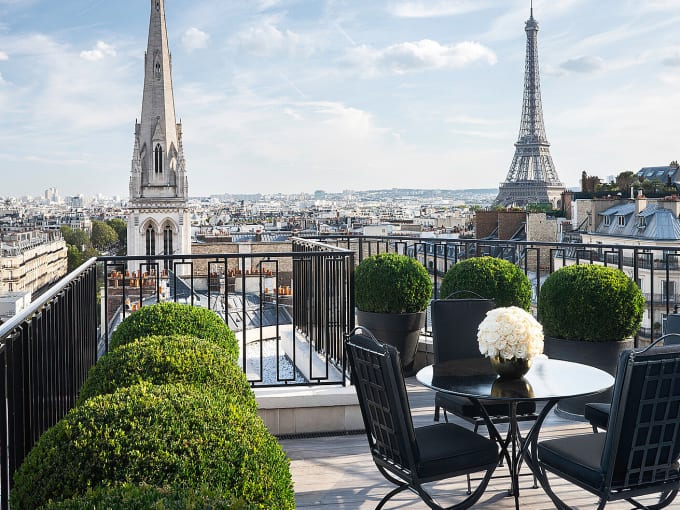
In the 8th arrondissement of Paris, a gastronomic hotel is not merely a place to stay; it becomes a dining destination, a social theatre, and sometimes a destination in its own right. Nestled between Avenue George V, Place de la Concorde, Faubourg Saint-Honoré, and the Champs-Élysées, this district boasts a rare concentration of palaces and prestigious establishments. This geographical context is significant, bringing together an international clientele, historic houses, and hotel brands capable of making lasting investments in gastronomy. For a discerning traveller, the matter extends beyond a single Michelin star; it concerns the overall coherence of the experience. Factors such as breakfast quality, precision of service, wine cellar, meal pacing, acoustic comfort, and the relevance of lounges all come into play. This is precisely where the 8th arrondissement stands out, with hotels like Four Seasons Georges V, Hôtel Le Bristol Paris, Hôtel de Crillon, La Réserve Paris – Hotel and Spa, Plaza Athénée Paris, and Le Royal Monceau Raffles Paris.
To compile an editorial ranking of gastronomic hotels, we do not rely on a single indicator. Our assessment encompasses multiple levels of observation. Firstly, we consider the hotel's status and its ability to maintain an ambitious culinary offering over time. Parisian palaces often possess teams, spaces, and cellars that allow for a genuine depth of proposal. Next, we examine the clarity of the offering. A grand gastronomic hotel must articulate a destination restaurant, a more accessible dining option, a bar, room service, and breakfast. We also take into account the reputation of the establishment, the consistency of service, the elegance of the surroundings, and the relevance of the experience for a stay in Paris. Finally, the observations of our advisors carry significant weight. Some hotels excel for business dinners, while others are better suited for a gourmet weekend, a celebration, or a quintessentially Parisian stay.
The landscape of the 8th is more varied than it may initially appear. At first glance, one thinks of the grand palaces, which indeed structure the scene. Four Seasons Georges V, Hôtel Le Bristol Paris, Hôtel de Crillon, and Plaza Athénée Paris embody this tradition of hotel excellence where the dining experience is integral to the identity of the establishment. However, the neighbourhood is not limited to these institutions. La Réserve Paris – Hotel and Spa offers a more subdued, almost residential approach that appeals to travellers seeking high-level gastronomy in a more discreet setting. Le Royal Monceau Raffles Paris presents a more contemporary interpretation, linked to its artistic and cosmopolitan DNA. Bulgari Hotel Paris brings a more design-oriented and international vision of luxury, with a culinary offering tailored for a mobile clientele accustomed to major capitals. Even establishments like Hôtel de Sers, Prince de Galles, Hôtel Vernet, or Hôtel Marignan Champs-Élysées contribute to this conversation, each with its unique style.
The trends for 2025-2026 confirm several fundamental shifts. The first concerns clarity. Travellers desire strong culinary experiences but without excessive rigidity. The most convincing hotels are those that can offer multiple dining intensities throughout the day. A well-executed breakfast, a fluid lunch, a destination dinner, and then reliable late-night room service. The second trend relates to the venues themselves. Overly demonstrative dining rooms are losing ground to more comfortable, better-lit, and quieter spaces. The third evolution pertains to the clientele itself. They expect gastronomy rooted in Paris but compatible with international rhythms. This favours hotels capable of orchestrating dining as a comprehensive service. In the 8th, this expectation clearly benefits establishments with a genuine culture of hospitality, not just a renowned restaurant.
It is also important to highlight what Parisian hotel gastronomy conveys about French luxury. It relies less on ostentation and more on assembly. A beautiful dining room is not enough; a discreet entrance, seamless service, appropriate table settings, a well-thought-out wine cellar, stable staff, and a kitchen that maintains quality throughout service are essential. In the 8th arrondissement, this philosophy takes various forms. At Le Bristol, it is expressed through the continuity of a great Parisian house. At Le Crillon, it engages with the monumental history of Place de la Concorde. At George V, it is rooted in a highly structured international palace tradition. At La Réserve, it becomes almost domestic in the best sense of the term. My advice is simple: to choose the right gastronomic hotel, consider both the overall atmosphere and the restaurant's reputation.
This ranking should therefore be read methodically. It does not designate an absolute winner, applicable to all travellers and all stays. It ranks different experiences based on their gastronomic coherence, execution level, and relevance in Paris 8. A historic palace may suit certain profiles better, while a more contemporary, discreet, or design-oriented establishment may appeal more to others. Here, we highlight hotels that make dining a cornerstone of the stay, not just an ancillary service. This includes the prestige of the dining experience, but also the quality of breakfast, the flexibility of service, and the overall impression. It is worth noting that a great gastronomic hotel is one where you want to dine, then return for lunch, and then continue the conversation at the bar. It is this continuity that makes the difference.
Now, let us present our Top 6 gastronomic hotels in Paris 8. You will find major palaces and very distinctive signatures here, each deserving its place for specific reasons.