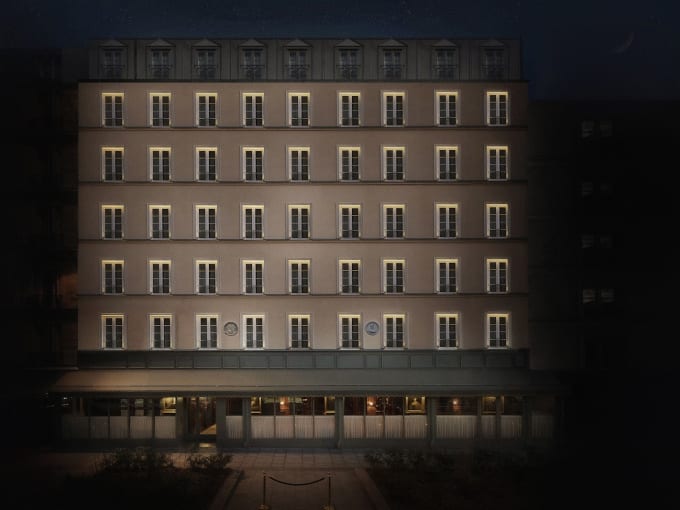
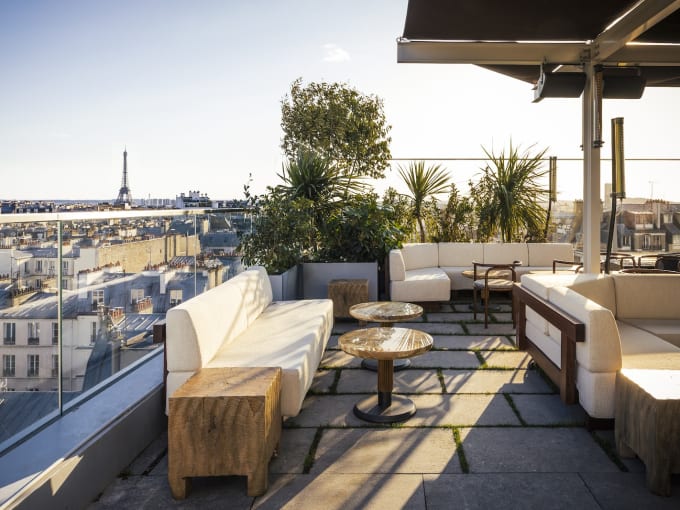
Paris remains a unique laboratory for design hospitality. The city imposes a rare constraint: one must engage with history without freezing the decor. In the capital, hotel design is not merely a visible signature; it encompasses circulation, light, materials, acoustics, and the way one inhabits a room. This is what makes this selection particularly intriguing. Between institutions such as Le Meurice, the Four Seasons Hotel George V, the Hôtel de Crillon, and the Plaza Athénée Paris, and more recent addresses like Brach, Grand Mazarin, and Hôtel Hana, Paris showcases various languages of contemporary luxury. Here, design becomes a tool for experience, structuring the stay as much as it defines an identity. For a discerning traveller, it is often this detail that makes the difference.
At MyConciergeHotel, we do not view design as a mere image effect. Our approach prioritises concrete criteria. First, the coherence between architecture, interior decoration, and the actual use of spaces. Next, a hotel's ability to offer an identifiable vision of Paris. We also observe the quality of materials, the clarity of the layout, the relationship between common areas and rooms, as well as the integration of well-being. A spa, a pool, or a terrace count more when they extend the aesthetic project. Finally, we take into account the hotel's positioning. A Palace does not express design in the same way as a boutique hotel; expectations differ. Our assessment seeks accuracy. It is important to note that a design hotel is not necessarily minimalist; it can be theatrical, heritage-inspired, graphic, or very residential.
The Parisian panorama is particularly broad. Bulgari Hotel Paris embodies a highly controlled interpretation of contemporary luxury. The lines are sharp, and the volumes remain understated, with a strong emphasis on materials. In contrast, Grand Mazarin embraces a more decorative and narrative style. Brach works with a more sensory, almost club-like aesthetic, showcasing a strong personality. Hôtel Molitor Paris - MGallery engages in a different dialogue, with a design identity rooted in modernist heritage and the presence of iconic pools. Park Hyatt Paris-Vendôme, Prince de Galles, and Hotel Balzac Paris occupy yet other territories. One focuses on structured elegance, another on Art Deco heritage, while the third offers a more subdued interpretation of the Parisian address. This ranking thus brings together hotels that do not resemble each other, which is precisely its appeal.
For 2025 and 2026, several trends are confirmed in Paris. The first concerns the return of tactile materials. Deep woods, textured stones, patinated metals, and enveloping fabrics replace overly smooth decor. The second pertains to the room itself, which is becoming a more modular space designed for staying, working, and recuperating. Well-being is no longer isolated in the basement; it permeates the entire project, evident in suites, bathrooms, and lighting. Another evolution is that Parisian design is moving away from gratuitous spectacle, seeking more enduring qualities. Our advisors also observe the rise of a quieter luxury. Decorative gestures remain, but they are grounded in better functionality. Travellers are asking for fewer effects, expecting more coherence, tranquillity, and a genuine sense of place.
This question of place remains central to French luxury. In Paris, a grand hotel is never just a comfortable refuge; it stages a certain idea of the city. This can manifest through a historic façade, a view over rooftops, an address on the right or left bank, or a precise relationship with the neighbourhood. Hôtel de Sers and Hôtel Montalembert evoke this residential, almost private dimension that belongs to the Parisian tradition. Hôtel de Crillon, Le Meurice, and Four Seasons Hotel George V illustrate another path, where heritage dialogues with contemporary interventions and very high international standards. My advice for understanding Parisian design is to look beyond the lobby. The true level of a hotel reveals itself in the transitions, corridors, bathrooms, bedding, and how light accompanies the day.
It is also essential to approach this ranking without a reflex for superlatives. The best design hotel in Paris does not exist in absolute terms. There is a hotel that is just right for a specific type of stay, rhythm, and sensitivity. Some travellers will seek a manifest address, immediately recognisable, while others will prefer a more discreet elegance, almost hidden behind very fluid service. A Palace like Bulgari Hotel Paris does not meet the same expectations as a character hotel like Hôtel Hana. Brach does not play the same tune as Prince de Galles, and that is perfectly fine. Our selection values strong identities without unnecessarily opposing styles. We have chosen hotels capable of offering a complete design experience, encompassing interior architecture, comfort, personality, and the ability to leave a precise memory of Paris.
Now, let’s turn to the Top 8. You will find very different addresses here, all convincing in their interpretation of Parisian design. Some are already references, while others embody a more recent renewal. All deserve careful consideration.