New York remains a laboratory for hotel design. The city evolves rapidly, yet some hotels establish enduring landmarks. Here, design is not merely an added decoration; it orchestrates the arrival, light, silence, flow, and views. This is what differentiates an alluring address from a truly thoughtful hotel. In a dense, vertical, and noisy city, this question becomes central. Travellers often come to work, explore, shop, dine, and traverse multiple neighbourhoods in a single day. They therefore expect more than just a beautiful room; they seek a coherent staging of their stay. This is precisely where New York excels. With its modernist heritage, rehabilitation of buildings, and contemporary signatures, the city offers a rare landscape to observe the evolution of urban luxury.
To compile this ranking, MyConciergeHotel does not rely on mere announcements. We first examine the overall coherence. Design must connect architecture, volumes, materials, furnishings, acoustics, and actual usage. We also consider the address within its context. A design hotel in New York never exists outside its neighbourhood. Its visual language interacts with Midtown, NoMad, the Lower East Side, SoHo, or Columbus Circle. We take into account the consistency of the experience; a spectacular reception is insufficient if the rooms, corridors, or common areas lose their thread. Finally, we prioritise hotels whose identity remains clear over time. It is important to note that a great design hotel does not merely impose an image; it offers a clear way to inhabit the city.
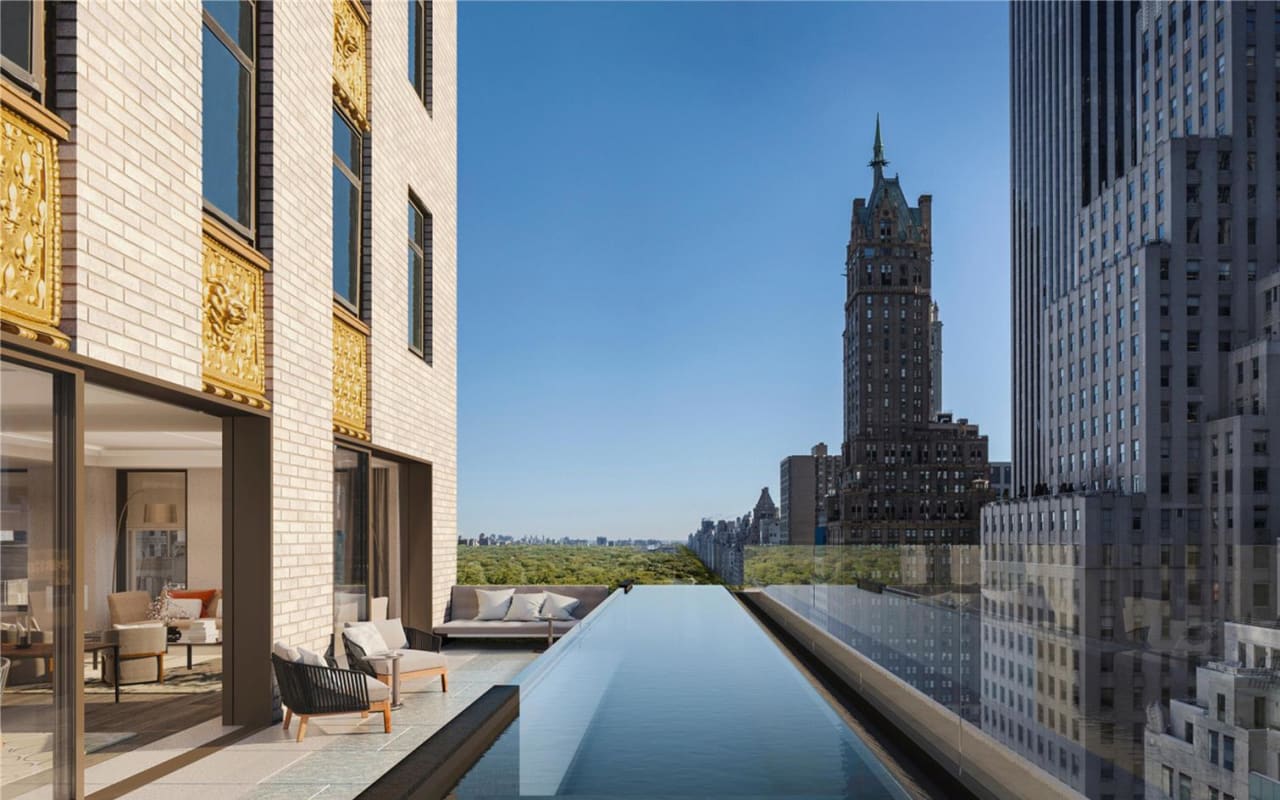
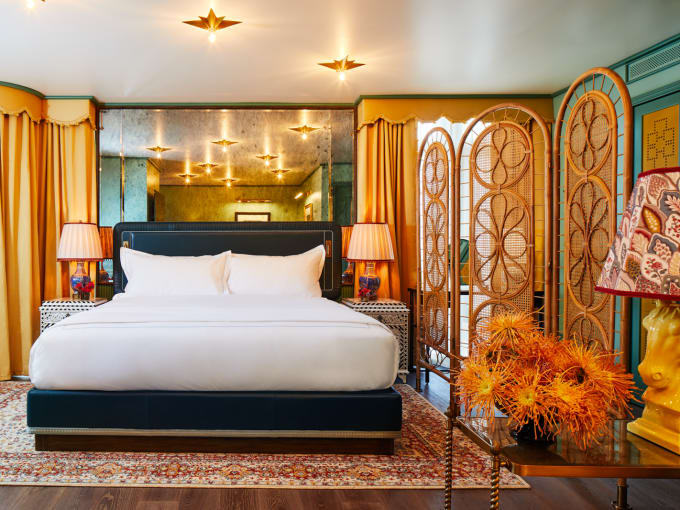
The New York landscape is more varied than it appears. On one hand, very contemporary houses focus on restraint, texture, and light. Aman New York and Park Hyatt New York speak this language with precision. On the other hand, some addresses embrace a more narrative personality. The Fifth Avenue Hotel and Nine Orchard demonstrate that an interior can be expressive without losing its discipline. Between these two poles, New York maintains a tradition of hotels with a strong cultural footprint. Ace Hotel New York has marked a generation with its creative energy. PUBLIC Hotel has championed a more direct vision of urban design. The Bryant Park Hotel, Andaz Fifth Avenue, and The Box House Hotel also illustrate different interpretations of space. This ranking reflects this plurality rather than a single school of thought.
The trends for 2025-2026 confirm an interesting shift. Luxury hotel design is moving away from overly demonstrative gestures. Savvy travellers are demanding quieter, more legible, and better-proportioned spaces. True sophistication is now evident in the quality of transitions. The entrance sets the rhythm for the stay. The lobby is no longer just a social theatre; it becomes a space for breathing. Rooms gain discreet functionality. Natural materials, muted palettes, and precise lighting take precedence over accumulation. Our advisors also observe a return of buildings with memory. Travellers appreciate places that retain a structure, façade, or identifiable urban history. In New York, this trend favours hotels that can unite heritage and contemporary comfort, without pastiche or coldness.
Our perspective is also shaped by a certain idea of French luxury. It prioritises subtlety over emphasis. A successful design hotel does not seek to impress from every angle; it composes a fluid, cultured, and sustainable experience. This approach is particularly beneficial in New York, where the offering can easily blend with spectacle. Good design, to us, knows how to create breathing spaces. It allows the city to enter, but without letting the tumult take over. It respects usage, values materials, and knows how to age gracefully. Mandarin Oriental New York, Four Seasons Hotel New York, and The Carlyle remind us that a strong identity can be conveyed through mastery, proportion, and attention to detail. My advice is to read this ranking as a map of styles, not as a mere decorative hierarchy.
This is why we reject easy superlatives. The best design hotel in New York does not exist in absolute terms; it exists for a specific type of stay, a neighbourhood, a relationship with the city, and an aesthetic sensibility. Some travellers seek a quiet refuge after intense days, while others prefer a more social, visible hotel that is deeply rooted in a local scene. Some favour monumentality, others warmth, and still others radicality. Our role is to systematically organise these differences. We highlight the most convincing addresses in terms of design without devaluing others. An unranked hotel may perfectly suit a specific trip. This is the spirit of the Concierge selection. We seek the right address for the right person, at the right time, in the right city.
In the following Top 8, you will find very different hotels, all relevant for considering New York through the lens of design. Some have become references, while others embody a more recent evolution. All deserve careful consideration.