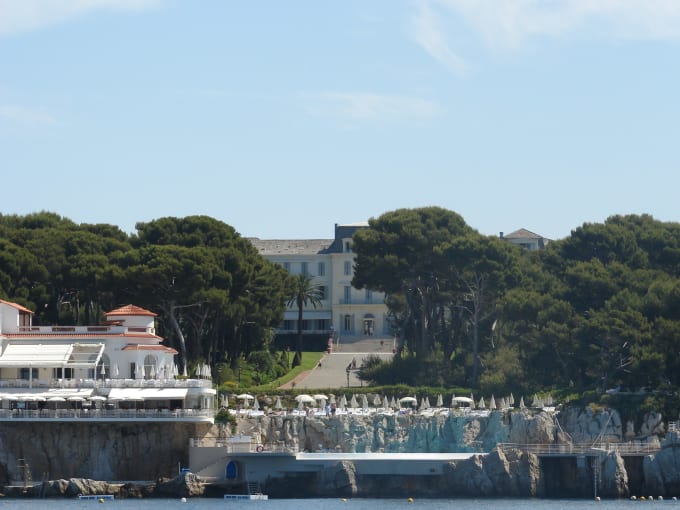
On the Côte d'Azur, a charming hotel is not merely defined by a beautiful terrace overlooking the sea. It first tells a story of how to inhabit the shoreline. Between Nice, Antibes, Cannes, Saint-Jean-Cap-Ferrat, Beaulieu-sur-Mer, Ramatuelle, Saint-Tropez, and Monaco, the hotel heritage creates a rare landscape. Here, one encounters historic palaces, more intimate seaside addresses, and a few institutions whose names evoke a particular era. Hôtel du Cap-Eden-Roc, Grand-Hôtel du Cap-Ferrat, A Four Seasons Hotel, La Réserve de Beaulieu, Hôtel Le Negresco, and Cheval Blanc St-Tropez each express charm in their own unique way. This is precisely what makes the Côte d'Azur so fascinating. Charm here arises from architecture, location, and local memory as much as from the service itself. It is enduring. It can be found in a façade, a garden, a view, or a rhythm.
To establish this ranking, MyConciergeHotel does not seek sensationalism. We prioritise clear and verifiable criteria. First, the heritage anchoring. This can be architectural, historical, scenic, or related to the hotel's place in the collective imagination of the Côte d'Azur. Next, the coherence between the location and the experience offered. A grand promenade hotel in Cannes serves a different purpose than a retreat in the heights of Ramatuelle. We also consider the quality of the location, the uniqueness of the building, the reputation of the establishment, the continuity of service, and the ability to provide an experience that cannot be replicated elsewhere. Official distinctions, such as the Palace designation from Atout France, are important, but they are not sufficient on their own. It is essential to remember that charm is never an isolated decoration. It is a convincing relationship between address, territory, and usage.
The Côte d'Azur panorama presented here showcases an uncommon diversity. In Cannes, Hôtel Martinez, Carlton Cannes, and Hôtel Barrière Le Majestic embody three distinct interpretations of the grand Riviera hotel. In Nice, Hôtel Le Negresco and Hotel La Perouse remind us that charm can be monumental or more understated. In Antibes and Cap d'Antibes, Hôtel du Cap-Eden-Roc and Cap d'Antibes Beach Hotel elegantly contrast the legend of the estate with the immediate proximity of the beach. In Saint-Jean-Cap-Ferrat and Beaulieu-sur-Mer, Grand-Hôtel du Cap-Ferrat, A Four Seasons Hotel, and La Réserve de Beaulieu continue a tradition of refined holidaymaking. Further west, Airelles Saint-Tropez Château de la Messardière, Château de la Messardière, La Réserve Ramatuelle - Hôtel, SPA and Villas, and Cheval Blanc St-Tropez narrate four visions of the Gulf of Saint-Tropez. Lastly, Monaco adds an urban and princely tone with Hôtel Hermitage Monte-Carlo and Hôtel de Paris Monte-Carlo.
For 2025 and 2026, our advisors observe a clear evolution in expectations. Travellers still seek the sea, but not merely the postcard view. They desire a place with cultural density, a true address, and a narrative that extends beyond a weekend. This favours hotels that can embrace their heritage without becoming stagnant. On the Côte d'Azur, this trend benefits establishments that highlight their built heritage, gardens, historical views, and a certain continuity of style. It also favours those that offer space, discretion, and a more sensitive relationship with the landscape. The demand for off-season stays is also increasing. In this more nuanced interpretation of the Riviera, charm is no longer solely dependent on the high season. It is measured by how a hotel performs in April, October, or during a long winter weekend in Nice or Monaco.
It is also important to recall what the Côte d'Azur has contributed to the very idea of French hotel luxury. Here, refinement is not merely ceremonial. It is based on a science of proportions, light, and the flow between interior and exterior. A well-oriented terrace, a lounge that retains its identity, an entrance that preserves the view, a garden that shields from the world, can matter more than a display of prestige. It is in this balance that certain addresses become endearing. Heritage is not solely a matter of age. A hotel can be recent and already have a just relationship with its site. Conversely, a grand historic house only truly captivates if it remains vibrant. My advice for this destination is simple. Always observe the relationship between the hotel and its stretch of coast. This is often where the difference lies between a beautiful address and a memorable one.
This ranking should therefore be read as an editorial selection, not as a universal verdict. An iconic palace does not overshadow a more intimate establishment. A grand name does not negate the relevance of a hotel better suited to a specific stay. Some travellers will seek a legendary institution. Others may prefer a more secluded, contemporary address, or one closer to the sea. We do not rank hotels against one another. We prioritise charming experiences according to a specific theme, in this case, heritage on the Côte d'Azur. This involves making choices. These choices concern the uniqueness of the location, the strength of the setting, the continuity of reputation, and the ability to embody an identifiable part of the Riviera. What our advisors observe is that a successful charming hotel leaves a lasting impression of the right tone. It does not seek to impress at every moment. It establishes an obviousness.
In the following Top 10, you will find very different establishments in terms of scale, history, and atmosphere. All share a strong connection with the Côte d'Azur. It is this connection, more than the influence of fashion, that guides our selection.