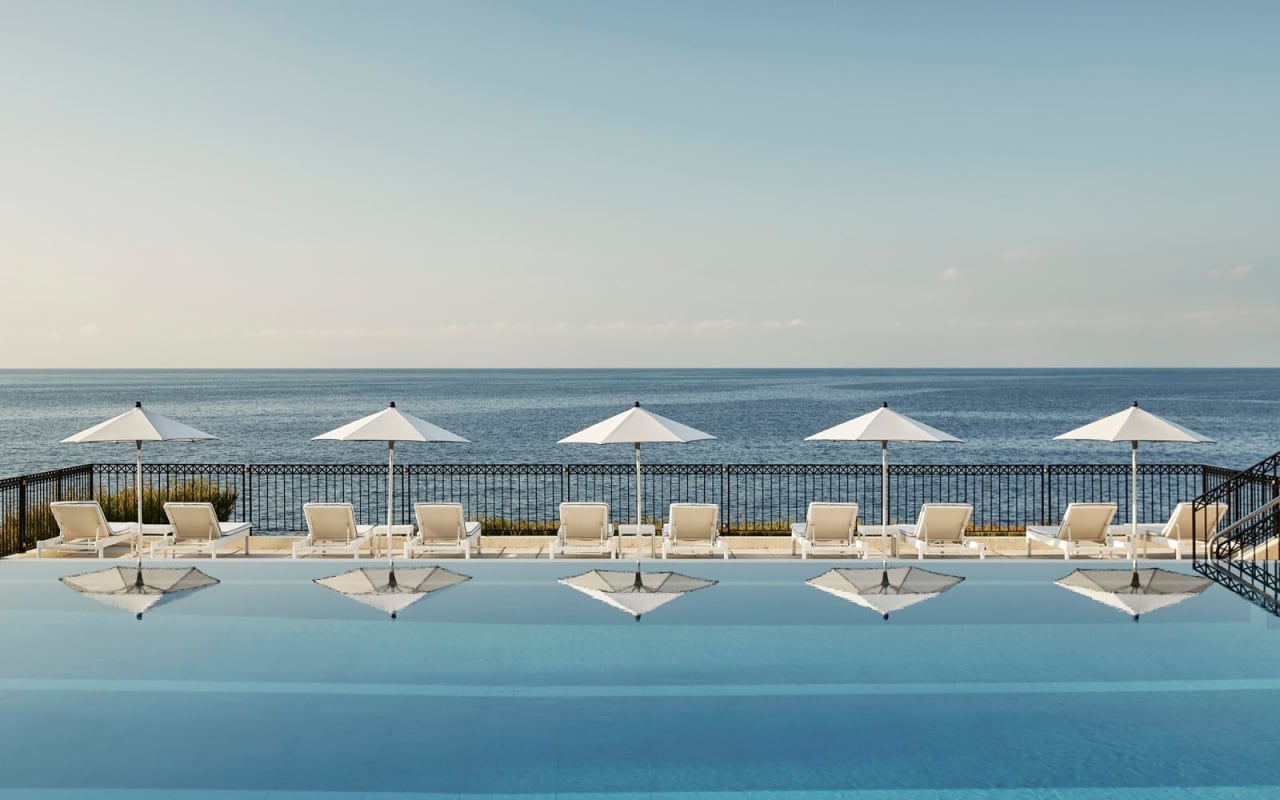
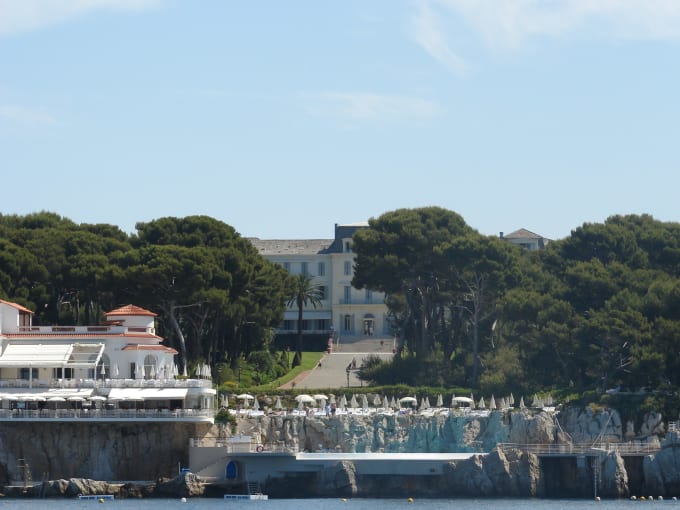
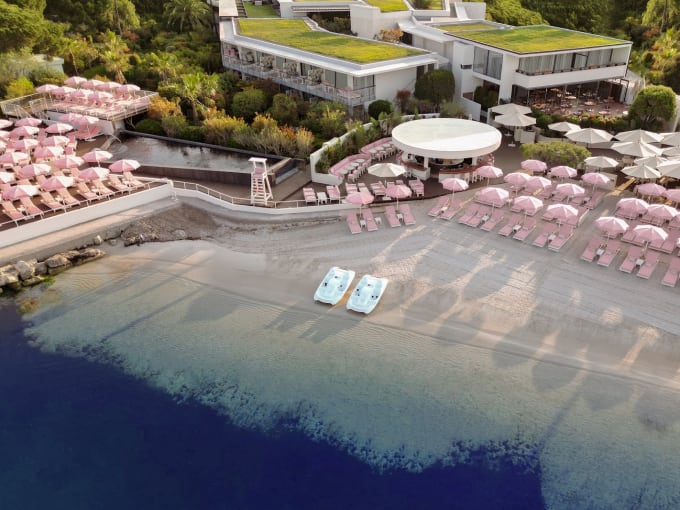
On the French Riviera, a seaside hotel is never just a place to stay. It shapes the relationship with the shore, the light, and the rhythm of the holiday. Between Nice, Cannes, Antibes, and Saint-Jean-Cap-Ferrat, the Mediterranean transforms its character within just a few kilometres. Here, an urban promenade facing the Baie des Anges; there, a more secluded rocky outcrop; further along, a private beach, a jetty, or a terrace suspended above the water. This is precisely what makes this segment so exciting. The azure coastline is not a uniform postcard image; it comprises a collection of very different establishments, from historic palaces to contemporary hotels, each offering a distinct way to experience the shoreline. For our clients, this choice often dictates the entire journey. Views, access to swimming, atmosphere, surroundings, and logistics become decisive criteria.
To establish this ranking, we first adhere to a simple principle. A great seaside hotel must provide a clear, tangible, and lasting relationship with the coastline. Of course, the view matters, but it is not enough. We also consider the actual location, the immediate proximity to the water, access to the beach or rocks, the quality of outdoor spaces, and the coherence between architecture, service, and destination. We take into account objective distinctions when they exist, such as Palace status for certain major establishments. Additionally, we incorporate our on-the-ground observations. What our advisors notice often boils down to the same questions. Does the hotel allow guests to experience the sea from morning until night? Does the setting remain appealing outside of the high season? And most importantly, does the address offer a unique seaside experience rather than just a backdrop?
The azure panorama presented here is broad. It includes renowned institutions such as Grand-Hôtel du Cap-Ferrat, A Four Seasons Hotel, Hôtel du Cap-Eden-Roc, Hôtel Martinez, Carlton Cannes, Hôtel Barrière Le Majestic, and Hôtel Le Negresco. It also features more contemporary or intimate options, such as Cap d’Antibes Beach Hotel, Anantara Plaza Nice, Maison Albar - Le Victoria, Hotel La Perouse, Hôtel Juana, Boscolo Nice Hôtel & Spa, Hôtel Villa Miraé, and Hôtel du Couvent. Not all maintain the same relationship with the sea. Some are literally situated on the shore, while others overlook the bay from an urban position. Still others opt for a more discreet location, just a short distance from the beaches and capes. This diversity enriches the Côte d’Azur. Travellers can seek either the iconography of grand palaces or a calmer, more residential interpretation of the coastline.
For 2025 and 2026, several trends are emerging in this segment. The first concerns the use of outdoor spaces. Guests desire more than just a balcony with a view; they seek livable terraces, well-oriented gardens, jetties, characterful pools, and places where the sea is effortlessly present. The second relates to the tempo of the stay. Long weekends are gaining importance, particularly in spring and the shoulder season. In this context, direct access to the shore or the ability to do everything on foot becomes a significant advantage. We also observe a growing interest in hotels that can blend heritage image with contemporary comfort. Finally, the Côte d’Azur remains a destination for repeat visits. Many travellers return, not always in search of novelty, but rather the right angle, the right neighbourhood, and the address that perfectly aligns with their way of experiencing the sea.
There exists a distinctly French notion of seaside luxury on the Riviera. It does not solely rely on the size of suites or the grandeur of lobbies. It hinges on the staging of light, the quality of a breakfast facing the water, the precision of beach service, the ease of transfers, and how a hotel preserves tranquillity despite seasonal intensity. In Nice, the sea interacts with the city and its heritage. In Cannes, it is part of a tradition of grand promenade hotels. In Cap d’Antibes and Saint-Jean-Cap-Ferrat, it takes on a more residential, sometimes more secluded tone. My advice is simple: on the Côte d’Azur, one should choose a hotel based on its exact relationship with the shore, not just its name. Two prestigious addresses may suit entirely different stays, depending on whether one prioritises the beach, the view, discretion, or liveliness.
This ranking should therefore be viewed as an editorial selection, not as an absolute verdict. A number one does not negate the relevance of number eight. Each ranked hotel caters to a specific use of the sea. Some excel for an iconic first stay on the Riviera, while others are better suited for a quieter interlude, a couple’s getaway, a few summer days with family, or an urban escape with a marine horizon. We deliberately avoid easy superlatives, as they diminish the understanding of the place. What we seek here is accuracy. A great seaside address is not merely one that impresses; it is one that delivers on its promise, from dawn until returning from the beach. It is also worth noting that the season significantly alters perception. The same establishment can reveal different qualities in April, June, or September.
In the following top list, we have favoured hotels where the sea is not a backdrop but an active component of the experience. You will find iconic palaces, beachfront addresses, and a few more discreet establishments, all offering a credible and desirable interpretation of the Côte d’Azur.