Histoire & esprit des lieux
À Snowmass, l’idée du luxe ne se résume ni à l’apparat ni à la démonstration. Elle tient davantage à une manière d’habiter la montagne avec justesse, dans un dialogue constant entre confort contemporain, culture du plein air et rythme des saisons. Le Viceroy Snowmass s’inscrit dans cette lecture très américaine de l’hospitalité alpine : un hôtel de grand standing pensé pour accompagner la vie en altitude, au pied des pistes en hiver, au départ des sentiers dès le retour des beaux jours. Plus qu’un refuge spectaculaire, l’adresse cultive une forme d’évidence. On y vient pour skier sans logistique inutile, pour retrouver un intérieur soigné après une journée dans le froid sec du Colorado, pour profiter d’un service attentif sans rigidité.
L’identité de l’établissement repose sur cette rencontre entre l’énergie de Snowmass et l’esthétique plus urbaine, plus actuelle, propre à l’univers Viceroy. Ici, le vocabulaire alpin traditionnel est relu de manière nette : lignes contemporaines, matériaux chaleureux, espaces conçus pour le mouvement des familles comme pour les séjours à deux. Le résultat n’a rien du chalet pastiche. Il s’agit plutôt d’un hôtel qui assume sa modernité tout en répondant à des besoins très concrets de voyageurs de montagne : circulation fluide, retour de ski confortable, lieux de détente où l’on peut se retrouver sans formalisme.
Snowmass, dans l’orbite d’Aspen, occupe une place singulière dans l’imaginaire des Rocheuses. La destination associe une vraie culture sportive à une offre hôtelière haut de gamme, avec une atmosphère souvent plus décontractée que celle des stations européennes historiques. Le Viceroy Snowmass traduit bien cet équilibre. Il ne cherche pas à imiter les codes d’un palace classique ; il propose une version contemporaine du séjour alpin, où l’on alterne facilement entre performance, repos et vie sociale. Cette souplesse explique aussi son attractivité auprès de profils variés : couples venus chercher quelques jours de neige et de spa, familles organisant une semaine de ski, voyageurs d’affaires profitant d’un cadre plus inspirant pour réunir une équipe.
Ce qui marque, dans l’esprit des lieux, c’est la continuité entre l’extérieur et l’intérieur. Tout rappelle la montagne sans la surjouer. Les volumes, la lumière, la palette de matières et l’attention portée au confort composent un décor pensé pour l’après-effort. Dans une destination où la journée commence tôt et se vit intensément, cette qualité de retour à l’hôtel compte autant que l’emplacement lui-même. Le Viceroy Snowmass s’adresse ainsi à des voyageurs qui attendent d’un 5 étoiles non pas une distance cérémonielle, mais une hospitalité bien réglée, lisible, efficace et chaleureuse.
En cela, l’hôtel reflète aussi l’évolution du luxe alpin contemporain : moins codifié, plus expérientiel, plus attentif à la fluidité du séjour. On y retrouve les attributs essentiels d’une adresse haut de gamme — service continu, conciergerie, entretien quotidien, sens du détail — mais intégrés à un mode de vie de montagne où l’on passe facilement des pistes à un moment de bien-être, d’un déjeuner simple à une soirée plus posée. C’est cette cohérence, plus que tout effet de style, qui donne au Viceroy Snowmass sa personnalité.
L’établissement et son cadre alpin
Le premier atout du Viceroy Snowmass tient à son accès direct aux pistes. Dans une station où chaque minute compte le matin, cette proximité change le rythme du séjour. On sort de l’hôtel pour rejoindre la neige sans transfert. Pour les skieurs réguliers, cela signifie plus de temps sur les pistes. Pour les familles, les départs et les retours sont plus simples.
Snowmass affirme une personnalité propre au sein de l’ensemble Aspen/Snowmass. L’atmosphère y est alpine, mais plus ouverte, avec un lien direct au paysage. L’hiver, la station vit au rythme des remontées, des cours de ski et des terrasses ensoleillées. L’été, les sentiers, les reliefs, l’air sec et la lumière claire changent la tonalité du séjour. Le Viceroy Snowmass profite de cette double saisonnalité. Il constitue une base solide toute l’année pour explorer la montagne.
Dans son architecture comme dans son aménagement, l’établissement privilégie une lecture contemporaine du séjour alpin. Les espaces communs accueillent des usages variés, du retour de ski aux moments plus calmes. L’ambiance reste chaleureuse. Elle repose sur les matières, la lumière et des proportions bien maîtrisées.
L’adresse convient aux séjours en couple comme aux voyages en famille. Cette polyvalence se ressent dans son organisation. Certains voyageurs veulent maximiser leur temps dehors. D’autres recherchent surtout un cocon confortable. D’autres encore intègrent des impératifs professionnels à leur séjour. Le Viceroy Snowmass répond à cette pluralité sans rupture.
L’hôtel garde aussi son intérêt au-delà de la haute saison hivernale. Les activités de montagne toute l’année élargissent la perspective. Randonnée, respiration en altitude, séjours plus lents ou réunions dans un cadre moins convenu : le lieu conserve sa cohérence, ancré dans un paysage et un mode de vie.
Chambres, suites et art du retour
Dans une destination de montagne, la chambre n’est jamais un simple lieu où dormir. Elle devient un espace de transition entre l’intensité du dehors et le besoin de récupération. Au Viceroy Snowmass, cette fonction est centrale. L’hôtel attire des voyageurs sensibles au confort des installations. On revient souvent chargé de vêtements, d’accessoires et d’une fatigue heureuse. Une bonne chambre de montagne doit être lisible, accueillante et bien pensée. Elle doit permettre de se réchauffer, de s’étendre et de préparer la journée suivante sans friction.
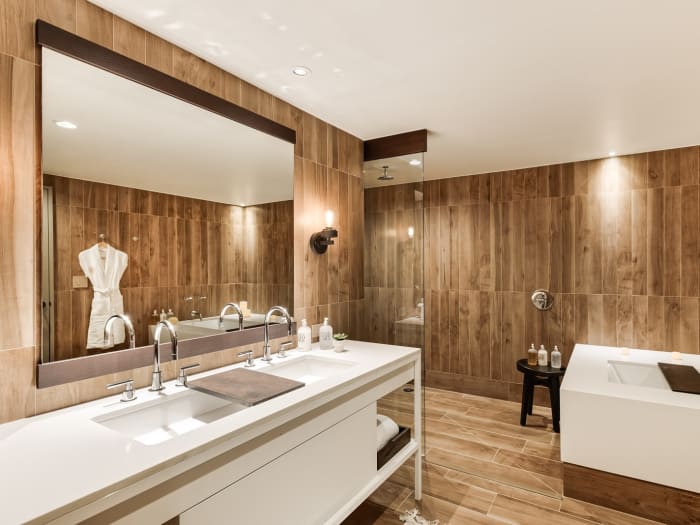
Le design moderne et élégant de l’établissement se prolonge dans les hébergements. Les intérieurs privilégient les lignes nettes, une palette apaisante et des matières chaleureuses. Dans l’univers alpin contemporain, cette retenue laisse la montagne jouer son rôle. Elle donne aussi à la chambre une identité enveloppante. Après plusieurs heures passées dans le froid ou en altitude, ce sentiment de refuge compte beaucoup.
Pour les couples, l’intérêt tient à cette atmosphère feutrée. Elle transforme un séjour sportif en parenthèse plus intime. Une chambre bien conçue à Snowmass n’a pas besoin d’en faire trop. Il suffit d’offrir de l’espace, du calme, une bonne lumière et une literie convaincante. Pour les familles, les attentes diffèrent. Il faut de la souplesse, de la circulation et des solutions pratiques. L’hôtel est adapté aux couples comme aux familles. Son offre d’hébergement répond à ces usages sans sacrifier le standing.
Le service participe pleinement à cette qualité de séjour. L’entretien quotidien, le service de couverture et la présence d’équipes disponibles à toute heure façonnent une expérience fluide. La chambre reste constamment prête à l’usage. Dans un hôtel de montagne, cette continuité est particulièrement appréciable. On retrouve en soirée un espace remis en ordre, propice au repos. C’est l’un des marqueurs les plus concrets d’une hospitalité haut de gamme.
À Snowmass, la lumière, la météo, le relief et l’activité de la station composent un décor vivant. Un hébergement réussi doit ménager un rapport sensible à l’environnement alpin. Cela passe par la clarté du matin, le retour des skieurs et le calme du soir. Le Viceroy Snowmass cherche cet équilibre. Il offre des intérieurs contemporains, confortables et chaleureux, dans le prolongement de l’expérience de la montagne.
En somme, les chambres et suites participent ici d’un art du retour. Elles s’inscrivent dans la continuité d’une journée vécue dehors. C’est ce qui distingue un hébergement élégant d’une vraie adresse de montagne. Elle comprend le corps fatigué, l’esprit encore tourné vers les pistes, et le désir simple d’être bien, immédiatement.
La table, entre énergie et détente
Dans un hôtel de montagne haut de gamme, la restauration remplit plusieurs fonctions à la fois. Elle doit nourrir l’effort, accompagner les retours de piste, offrir des temps de convivialité et ménager des moments plus calmes où l’on reprend simplement possession de sa journée. Même lorsque les détails d’une offre culinaire ne sont pas tous documentés, on peut lire la table du Viceroy Snowmass à travers cette logique d’usage. Dans une adresse ski-in/ski-out, la qualité de l’expérience gastronomique ne se mesure pas seulement à la sophistication d’une carte, mais à la pertinence du rythme qu’elle propose : un début de journée efficace, une pause lisible, une fin d’après-midi réconfortante, un dîner qui sache être à la fois agréable et sans lourdeur inutile.
Le contexte de Snowmass appelle une cuisine capable de s’adapter à des clientèles diverses. Les couples n’attendent pas la même chose qu’une famille revenant des pistes avec des enfants fatigués ; les voyageurs d’affaires n’ont pas toujours le même tempo que les vacanciers venus s’installer plusieurs jours. Un bon hôtel de ce niveau sait répondre à ces attentes en offrant de la souplesse, de la constance et un cadre suffisamment soigné pour que chaque repas s’intègre naturellement au séjour. Dans ce type d’adresse, l’élégance tient souvent moins à la démonstration qu’à la précision : service attentif, atmosphère maîtrisée, confort acoustique, capacité à passer d’un café matinal à un dîner plus posé sans perdre en cohérence.
Le design moderne de l’hôtel joue probablement un rôle important dans cette expérience. À la montagne, les espaces de restauration réussis sont ceux qui évitent deux écueils : la froideur d’un lieu trop conceptuel et la lourdeur d’un décor alpin caricatural. Lorsqu’un établissement trouve le bon équilibre, il crée des lieux où l’on a envie de s’attarder, de se retrouver après le ski, de partager un verre ou un repas sans que cela paraisse forcé. Le Viceroy Snowmass, par son positionnement, semble appartenir à cette catégorie d’hôtels où la table participe d’un art de vivre plus large, fait de confort, de fluidité et d’attention discrète.
Il faut aussi rappeler qu’en montagne, l’appétit suit les saisons. L’hiver appelle des repas plus enveloppants, des boissons chaudes, des pauses qui réparent autant qu’elles réconfortent. L’été, au contraire, on recherche souvent davantage de fraîcheur, de simplicité et de légèreté, surtout après une randonnée ou une journée passée dehors. Une adresse pensée pour les activités de montagne toute l’année doit savoir accompagner cette variation sans perdre son identité. La restauration devient alors un marqueur de la capacité de l’hôtel à vivre pleinement sur douze mois, et non seulement pendant les pics de fréquentation hivernale.
Enfin, la table d’un 5 étoiles comme celui-ci ne se limite pas à ce qui est servi. Elle comprend aussi la manière dont l’hôtel organise les moments de la journée : petit-déjeuner avant les pistes, collation au retour, dîner sans complication logistique, possibilité de s’appuyer sur la conciergerie pour réserver ou orienter ses choix dans la destination. Cette intelligence du séjour compte autant que la cuisine elle-même. Elle permet au voyageur de consacrer son énergie à la montagne, tout en sachant qu’il retrouvera à l’hôtel un cadre fiable, agréable et bien tenu.
Au Viceroy Snowmass, la restauration s’inscrit donc vraisemblablement dans une philosophie de service plus large : faire en sorte que chaque repas soit juste, au bon moment, dans le bon ton. C’est souvent cela, au fond, la vraie sophistication en altitude.
Spa, récupération et bien-être en altitude
Le bien-être prend en montagne une signification particulière. Il ne s’agit pas seulement de se détendre, mais de récupérer après l’effort. Il aide à compenser le froid, l’altitude et l’activité physique. Au Viceroy Snowmass, cette dimension structure le séjour.
Après le ski, le corps réclame chaleur, repos, hydratation et relâchement musculaire. En station, le bien-être ne relève pas du décor. Il participe à l’équilibre du séjour. Il transforme la fatigue sportive en sensation de récupération. Le retour à l’intérieur doit être réparateur. Le Viceroy Snowmass répond à cette attente avec une approche fluide et professionnelle.
L’atmosphère chaleureuse du lieu s’y prête naturellement. En altitude, le bien-être n’exige pas toujours un cérémonial. Il peut être plus simple, plus direct, plus lié au plaisir de se sentir mieux. La journée trouve alors une continuité naturelle, entre grand air, détente, dîner calme et nuit reposante.
Le fait que l’hôtel convienne aux couples comme aux familles éclaire aussi cette dimension. Pour les uns, les espaces de détente prolongent l’intimité du voyage. Pour les autres, ils introduisent des pauses dans des journées souvent denses. Dans les deux cas, chacun peut retrouver son rythme.
L’été, le bien-être change de tonalité sans disparaître. Après la randonnée ou les activités de plein air, on recherche surtout le relâchement musculaire et le recentrage. Le Viceroy Snowmass s’inscrit dans cette logique de continuité, avec une approche adaptée à la vie en altitude.
Ici, les moments de détente participent d’une idée juste du luxe alpin. Prendre soin du corps permet de mieux profiter du paysage, du temps et de la destination. À Snowmass, cette promesse s’accorde naturellement au lieu.
Conciergerie & services, la fluidité avant tout
Ce qui distingue durablement un grand hôtel de montagne n’est pas seulement son emplacement ni son décor, mais sa manière d’absorber la complexité du séjour. À Snowmass, elle est bien réelle : cours de ski, journées en famille, activités, arrivées tardives, départs matinaux, blanchisserie, bagages, changements de météo ou de programme. Le Viceroy Snowmass dispose d’une base de services solide : conciergerie 24h/24, réception 24h/24, entretien quotidien, service de couverture, consigne à bagages, blanchisserie, service de réveil, personnel multilingue. Pris séparément, ces éléments peuvent sembler attendus dans un 5 étoiles. Réunis et bien exécutés, ils transforment pourtant très concrètement l’expérience.
La conciergerie est ici l’un des points névralgiques du séjour. Dans une destination de montagne, un bon concierge anticipe les points de friction. Il aide à structurer les journées, à réserver les activités demandées, et à orienter les voyageurs selon leur niveau, leur rythme ou la composition du groupe. En haute saison, mieux vaut réserver les leçons de ski dès que possible. Le luxe consiste souvent à éviter les pertes de temps et les arbitrages de dernière minute.
La réception ouverte en continu apporte une sécurité de fonctionnement essentielle. Elle rassure les voyageurs arrivant à des horaires décalés ou revenant tard. Cette permanence simplifie le séjour. Elle compte d’autant plus dans une station où les conditions climatiques peuvent modifier les temps de trajet.
L’entretien quotidien et le service de couverture participent aussi à cette fluidité. En montagne, les chambres sont davantage sollicitées qu’en séjour urbain. On y entre et l’on en sort plusieurs fois. On y dépose des couches de vêtements. On y revient parfois brièvement entre deux activités. Retrouver un espace remis en ordre, propre et prêt pour la nuit reste un confort très tangible.
La blanchisserie et la consigne à bagages répondent à des besoins tout aussi concrets. La première est précieuse lors des séjours prolongés, mais aussi face aux imprévus des vacances actives. La seconde facilite les arrivées anticipées, les départs tardifs, ou les dernières heures passées dans la station sans être encombré. Le service de réveil soutient aussi les rythmes précis des hôtes, qu’il s’agisse d’un premier télésiège, d’un rendez-vous professionnel ou d’une excursion organisée.
Enfin, la présence d’un personnel multilingue souligne l’ouverture internationale de la destination. Elle traduit aussi la capacité de l’hôtel à accueillir des clientèles variées avec naturel. Dans un établissement haut de gamme, la qualité du service se mesure aussi à la clarté des échanges, à la discrétion, à la mémoire des préférences et à la capacité d’agir sans surjouer l’attention.
Au Viceroy Snowmass, l’ensemble de ces services compose une promesse de séjour fluide. C’est une qualité moins visible qu’un grand lobby ou qu’une vue spectaculaire, mais souvent plus décisive dans le souvenir final. Quand tout paraît simple, c’est généralement que l’hôtel travaille bien.
L’art de vivre Aspen/Snowmass
Séjourner au Viceroy Snowmass, c’est aussi entrer dans une certaine idée de la montagne nord-américaine, où l’activité physique, le confort haut de gamme et une forme de décontraction élégante coexistent sans contradiction. Aspen/Snowmass ne se réduit pas à un simple domaine skiable ; c’est un territoire de séjour, avec ses habitudes, ses rythmes et sa culture propre. On y vient bien sûr pour la neige, mais aussi pour cette manière très particulière de vivre l’altitude : intensément le jour, plus doucement le soir, sans jamais perdre le lien avec le paysage.
Snowmass offre un rapport direct à la montagne. Le séjour y est souvent structuré par les activités de plein air, qu’il s’agisse du ski en hiver ou de la randonnée lorsque les sentiers reprennent leurs droits. Cette centralité du dehors influence tout : les horaires, l’appétit, la fatigue, la sociabilité, le besoin de récupération. Un hôtel comme le Viceroy Snowmass prend tout son sens dans cet écosystème, parce qu’il permet de vivre cette intensité sans en subir les contraintes. On profite de la destination avec plus de liberté, plus de confort et un meilleur usage du temps.
L’hiver, l’art de vivre local se lit dans les départs matinaux vers les pistes, les pauses au soleil lorsque la météo le permet, les retours progressifs en fin d’après-midi, puis les soirées plus calmes où l’on se retrouve autour d’un repas, d’un verre ou d’un moment de détente. Il y a là une forme de ritualité très agréable, faite de gestes simples mais précis. L’été, le ton change : la montagne devient plus ample, plus silencieuse, et l’on redécouvre la destination à travers la marche, l’observation, l’altitude vécue autrement. Cette dualité saisonnière donne à Aspen/Snowmass une profondeur que les stations purement hivernales n’ont pas toujours.
Ce qui séduit aussi dans cette région, c’est l’équilibre entre sophistication et accessibilité. Le niveau de service peut être élevé, les hôtels très confortables, les attentes importantes, sans que l’ensemble devienne rigide. Le luxe y reste lié à l’usage. On valorise ce qui facilite la vie, ce qui améliore l’expérience, ce qui permet de profiter davantage du lieu. Le Viceroy Snowmass s’inscrit pleinement dans cette culture : une adresse 5 étoiles qui n’impose pas de distance, mais organise les conditions d’un séjour plus harmonieux.
Pour les couples, Aspen/Snowmass offre un cadre propice aux échappées à deux, entre journées actives et soirées plus enveloppantes. Pour les familles, la destination fonctionne particulièrement bien grâce à la diversité des rythmes qu’elle autorise. Pour les voyageurs d’affaires, elle propose un décor moins convenu, capable de transformer une réunion ou un séminaire en expérience plus mémorable. Dans tous les cas, la montagne agit comme un révélateur : elle simplifie les priorités, remet le corps au centre, redonne de la valeur au temps bien employé.
C’est sans doute là que réside l’art de vivre Aspen/Snowmass : dans cette capacité à conjuguer performance et plaisir, effort et récupération, nature et confort. Le Viceroy Snowmass en est une expression convaincante, parce qu’il se place exactement à l’endroit où ces dimensions se rencontrent. On n’y vient pas seulement pour dormir au pied des pistes, mais pour vivre plus justement la montagne, dans ce qu’elle a de stimulant, de réparateur et de durablement désirable.
Réserver via MyConciergeHotel
Réserver le Viceroy Snowmass via MyConciergeHotel, c’est aborder le séjour avec une logique de préparation plutôt que de simple transaction. À Aspen/Snowmass, cette nuance fait une vraie différence.
Un hôtel ski-in/ski-out de ce niveau ne se choisit pas seulement pour une catégorie de chambre ou un tarif. Il se réserve selon le calendrier des vacances, la disponibilité des cours de ski, le profil des voyageurs, la durée du séjour et les activités prévues autour de l’hôtel.
La haute saison hivernale demande une anticipation particulière. Les leçons de ski se réservent idéalement dès que possible. Cette logique vaut aussi pour les éléments qui structurent un séjour en station : horaires, rythme des journées, besoins des enfants, temps de repos, bien-être, arrivées et départs.
Pour un couple, l’enjeu peut être le bon moment de saison, l’équilibre entre ski et détente, ou une chambre adaptée à quelques nuits. Pour une famille, il s’agit souvent d’anticiper davantage : cours, matériel, repas, récupération, flexibilité des journées.
Pour un déplacement professionnel ou un petit événement, l’attention se porte sur la fluidité logistique, la qualité des espaces, l’accès aux services et la capacité de l’hôtel à soutenir un agenda précis.
Le Viceroy Snowmass ne se résume pas à une liste d’équipements. Son intérêt tient à la combinaison de plusieurs facteurs : accès direct aux pistes, cadre alpin, design contemporain, adaptation aux couples comme aux familles, pertinence sur quatre saisons.
Réserver cette adresse revient à préparer une expérience complète : choisir la bonne période, penser les activités prioritaires, sécuriser les réservations sensibles, prévoir les temps de repos et tirer parti des services de l’hôtel dès l’arrivée.
À Snowmass, cette approche est particulièrement précieuse. La montagne récompense les voyageurs bien préparés, par son rythme propre. Dans un hôtel comme le Viceroy Snowmass, c’est souvent la meilleure manière d’assurer un séjour fluide.