Histoire & héritage
Raffles The Palm Dubai s’inscrit dans une double filiation qui éclaire immédiatement son identité. D’un côté, il appartient à une enseigne dont l’imaginaire hôtelier repose sur une certaine idée du grand service, du rituel d’accueil et d’une élégance cosmopolite née dans les grandes capitales et les ports du voyage international. De l’autre, il prend place sur Palm Jumeirah, territoire emblématique du Dubaï contemporain, où l’urbanisme spectaculaire dialogue avec une culture de l’hospitalité très ancrée dans la région. Ce croisement entre tradition d’adresse internationale et décor résolument dubaïote donne à l’établissement une personnalité particulière : il ne cherche pas à reproduire un palais historique européen, ni à se réduire à un simple resort balnéaire, mais à composer une version locale du grand hôtel de villégiature.
À Dubaï, la notion d’héritage se lit rarement dans l’ancienneté des murs. Elle se comprend davantage à travers la manière dont un lieu interprète les codes du luxe, de la réception et du séjour. Ici, l’héritage est celui d’un service pensé comme une présence continue mais discrète, d’espaces conçus pour impressionner sans devenir intimidants, et d’une mise en scène de l’arrivée qui compte autant que le temps passé dans la chambre. Le voyageur retrouve cette grammaire dès les premiers instants : volumes généreux, sens de la perspective, attention portée aux matières, et volonté de créer une parenthèse qui tranche avec le rythme de la ville.
Le cadre de Palm Jumeirah ajoute une dimension presque théâtrale à cette lecture. Cette île artificielle, devenue l’un des symboles les plus reconnaissables de Dubaï, raconte à elle seule l’ambition d’une destination qui s’est construite en quelques décennies comme une scène mondiale du tourisme, des affaires et des séjours hédonistes. Séjourner ici, c’est donc aussi habiter un récit urbain plus vaste : celui d’une ville qui a fait du littoral, de l’architecture et de l’expérience client des marqueurs de son identité internationale.
Dans ce contexte, Raffles The Palm Dubai cultive une forme de classicisme interprété. L’adresse semble privilégier les codes intemporels du grand hôtel — réception attentive, espaces communs propices à la conversation, chambres pensées comme de véritables refuges — plutôt qu’une démonstration purement technologique ou conceptuelle. Cette orientation compte pour les voyageurs qui recherchent à Dubaï autre chose qu’un décor spectaculaire : une sensation de continuité, de confort installé, presque de cérémonial apaisé.
L’héritage de la maison se mesure aussi à sa capacité à accueillir des profils de séjour très différents sans perdre sa cohérence. Couples venus chercher une retraite balnéaire, familles souhaitant conjuguer plage et excursions, visiteurs d’affaires prolongeant un déplacement professionnel par quelques jours de détente : tous trouvent ici une lecture possible du lieu. C’est souvent le signe d’un hôtel bien pensé. Non pas un établissement qui multiplie les promesses, mais une adresse qui sait articuler plusieurs usages autour d’un même langage de service.
En cela, Raffles The Palm Dubai appartient pleinement à l’histoire récente du luxe à Dubaï : celle d’hôtels capables d’offrir une expérience de destination tout en préservant la sensation, plus rare, d’un refuge. Son héritage n’est pas patrimonial au sens classique ; il est hôtelier, culturel et urbain. Il tient dans la manière dont l’adresse fait dialoguer l’esprit d’une grande marque internationale avec l’énergie singulière de Palm Jumeirah et, au-delà, avec l’idée même de Dubaï comme escale de prestige entre mer, architecture et horizons ouverts.
L’établissement
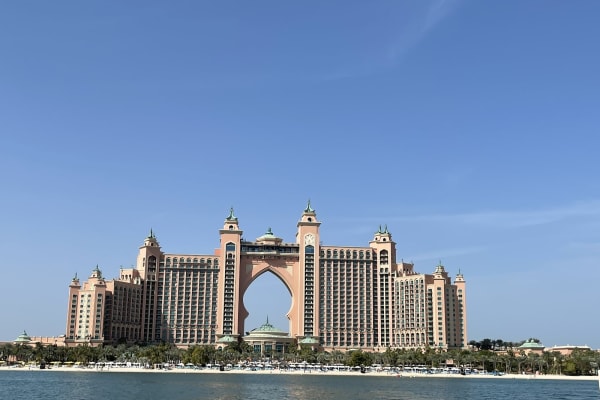
Raffles The Palm Dubai profite d’un emplacement lisible sur la Palm Jumeirah, face à la mer, avec la silhouette de Dubaï en toile de fond.
On y retrouve les avantages d’un resort littoral, sans renoncer à la relation visuelle avec la ville. Les deux registres coexistent.
L’établissement fait le lien entre l’intensité de la métropole et le calme recherché à l’hôtel. Après la ville, le retour sur la Palm change le rythme. Les arrivées sont plus silencieuses, les perspectives plus ouvertes, et la mer joue un vrai contrepoint.
L’architecture et les espaces communs prolongent cette impression. L’ensemble assume des volumes généreux. Les circulations participent à l’expérience. Les salons, zones de passage et espaces d’attente permettent de se retrouver, lire, observer ou prolonger une conversation.
La vue structure aussi le séjour. Selon l’orientation, le regard se porte vers la mer ou vers la skyline de Dubaï. D’un côté, l’horizon marin apporte une respiration. De l’autre, les tours rappellent l’énergie de l’émirat.
La proximité des plages renforce la vocation de villégiature. Quelques heures au bord de l’eau suffisent à changer le rythme du voyage. L’hôtel devient une base souple plutôt qu’un simple point de chute.
L’adresse convient à ceux qui recherchent un luxe lisible, sans agitation permanente. Palm Jumeirah attire une clientèle internationale, mais certaines adresses préservent mieux le calme. Raffles The Palm Dubai en fait partie. On y vient pour la qualité du cadre et pour la manière dont il amortit l’intensité de Dubaï.
Chambres et suites
À Dubaï, la chambre d’hôtel n’est jamais un simple espace de nuit. Elle doit protéger de la chaleur, ménager une vraie intimité, offrir un confort immédiat après les déplacements et, idéalement, prolonger la relation au paysage. Dans cette perspective, les chambres et suites de Raffles The Palm Dubai s’inscrivent dans l’idée d’un refuge complet, pensé pour ralentir le rythme plutôt que pour servir de simple décor. On y attend d’abord une sensation d’installation : celle d’un lieu où l’on peut défaire ses bagages, reprendre ses habitudes et retrouver un certain calme entre deux séquences de voyage.
Le premier luxe, ici, tient probablement à la relation entre espace intérieur et vues extérieures. Sur Palm Jumeirah, la lumière joue un rôle constant, depuis les premières heures du matin jusqu’aux fins de journée plus dorées. Une chambre bien orientée transforme cette lumière en véritable expérience de séjour. Face à la mer, l’atmosphère se fait plus contemplative, presque suspendue. Face à la skyline, le regard retrouve la présence de Dubaï, ses lignes nettes, son énergie et son caractère spectaculaire. Dans les deux cas, la vue n’est pas un simple agrément : elle participe au rythme émotionnel du séjour.
Le confort quotidien repose aussi sur une série de détails de service qui comptent davantage qu’ils n’en ont l’air. Le service de chambre quotidien, le service de couverture, la possibilité de joindre la réception ou la conciergerie à toute heure, la gestion fluide des bagages ou du linge : autant d’éléments qui transforment la chambre en espace réellement habité. Dans un hôtel de ce niveau, on attend moins une accumulation d’effets qu’une continuité de prise en charge. Le voyageur doit pouvoir sortir tôt, rentrer tard, demander une attention particulière ou simplement retrouver sa chambre parfaitement remise en ordre sans avoir à y penser.
Les suites, pour leur part, répondent à une autre logique du séjour. Elles conviennent aux voyageurs qui restent plusieurs nuits, à ceux qui souhaitent recevoir en toute discrétion, ou aux familles qui ont besoin d’une organisation plus souple. Dans une destination comme Dubaï, où les journées peuvent alterner plage, rendez-vous, shopping, visites et dîners, disposer d’un espace plus ample change profondément l’expérience. On ne revient plus seulement dans une chambre ; on retrouve un véritable appartement hôtelier, avec cette sensation de respiration qui permet au séjour de durer sans fatigue.
L’intérêt d’une grande adresse réside aussi dans sa capacité à faire de la chambre un lieu de retrait psychologique. Après l’intensité visuelle de Dubaï, ses infrastructures, ses flux et ses contrastes, beaucoup de voyageurs recherchent un environnement plus feutré. Les chambres et suites doivent alors absorber le bruit du monde, rétablir une échelle plus personnelle et offrir un cadre propice au repos. C’est souvent là que se mesure la qualité réelle d’un hôtel : non pas dans l’effet produit à l’arrivée, mais dans le sentiment éprouvé une fois la porte refermée.
Pour les couples, l’expérience prend la forme d’une retraite élégante, où l’on peut prolonger le matin, faire une pause en milieu de journée ou organiser un dîner en chambre sans que cela paraisse secondaire. Pour les familles, le confort tient à la lisibilité des espaces, à la facilité des services et à la possibilité de composer des journées souples. Pour les voyageurs d’affaires, enfin, la chambre devient un poste d’équilibre entre efficacité et récupération. Dans tous les cas, Raffles The Palm Dubai semble défendre une vision classique mais juste de l’hébergement de luxe : des chambres et suites conçues pour être vécues, pas seulement admirées.
La table
Dans un grand hôtel de villégiature à Dubaï, la restauration joue un rôle plus large que celui d’un simple service annexe. Elle structure les journées, donne un tempo au séjour et permet souvent d’éviter les déplacements inutiles lorsque la chaleur se fait plus forte. À Raffles The Palm Dubai, on peut raisonnablement attendre de la table qu’elle accompagne plusieurs usages du lieu : le petit-déjeuner qui ouvre la journée face à la lumière du Golfe, le déjeuner pris sans formalisme entre deux heures de plage, le tea time ou la pause de l’après-midi dans un salon, puis le dîner qui redonne au séjour sa dimension plus habillée.
Le cadre de Palm Jumeirah favorise naturellement une gastronomie tournée vers le plaisir du temps long. On ne vient pas seulement manger ; on s’installe, on observe la lumière, on prolonge une conversation. Dans les meilleures adresses de ce type, l’expérience culinaire ne repose pas sur l’effet de mode mais sur la justesse de l’instant : une salle où l’on se sent bien à toute heure, un service capable d’adapter son rythme à celui des convives, une carte suffisamment lisible pour convenir aussi bien à une arrivée tardive qu’à un repas plus cérémoniel. Cette souplesse est essentielle dans une destination où les journées ne se ressemblent pas.
Le petit-déjeuner mérite une mention particulière, car il constitue souvent l’un des moments les plus mémorables d’un séjour balnéaire à Dubaï. La douceur relative du matin, la clarté du ciel, la possibilité de commencer la journée sans précipitation : tout concourt à faire de ce repas un véritable rituel. Dans un hôtel de cette catégorie, on attend une offre généreuse mais surtout bien orchestrée, où la variété n’écrase pas la qualité, et où le service sait reconnaître les habitudes qui s’installent au fil des jours. C’est souvent là, dans la répétition tranquille du matin, qu’un hôtel gagne la fidélité de ses hôtes.
Le déjeuner et les collations répondent à une autre logique. Après quelques heures au bord de l’eau ou entre deux sorties, le voyageur recherche davantage la fraîcheur, la simplicité apparente et l’efficacité. Une bonne table de resort sait proposer des repas qui ne pèsent pas sur la journée tout en conservant le niveau d’exécution attendu d’une adresse cinq étoiles. Le soir, en revanche, le registre peut évoluer vers quelque chose de plus posé, plus scénographié, sans nécessairement tomber dans la démonstration. À Dubaï, les dîners d’hôtel réussis sont souvent ceux qui comprennent qu’une clientèle internationale souhaite autant la qualité de l’assiette que le confort de l’atmosphère.
L’intérêt de séjourner dans un établissement comme celui-ci tient aussi à la possibilité de varier les cadres sans quitter l’hôtel. Selon l’humeur, on peut privilégier une table plus animée, un salon plus discret, un service en chambre ou un moment prolongé autour d’un thé, d’un café ou d’un dessert. Cette pluralité compte beaucoup pour les séjours de plusieurs nuits. Elle permet de ne pas répéter la même scène chaque jour et donne à l’hôtel une véritable vie intérieure.
Faute d’éléments précis sur les signatures culinaires, il est plus juste de parler ici d’une promesse de style que d’un inventaire. Cette promesse repose sur trois attentes légitimes : une exécution soignée, un service attentif et une capacité à faire de chaque repas un prolongement naturel du séjour. Dans un lieu qui se présente comme une retraite paisible sur la Palm, la table doit avant tout participer à cette sensation d’aisance. Non pas impressionner à tout prix, mais accompagner, rythmer et enrichir le temps passé sur place.
Spa & bien-être
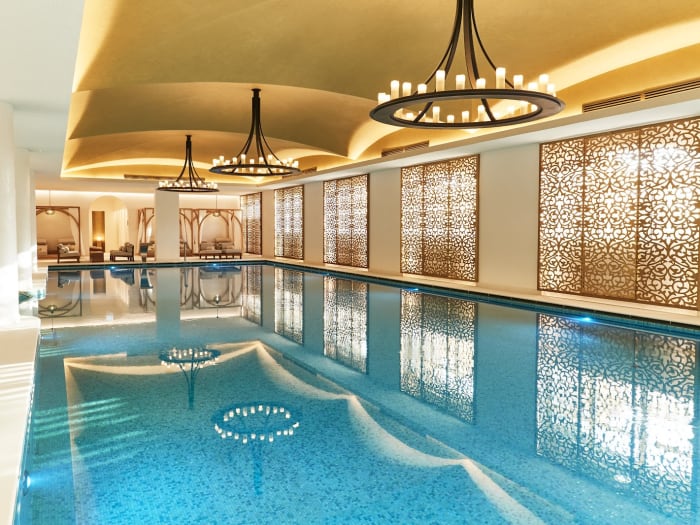
À Dubaï, le bien-être n’est pas un supplément ; c’est une composante essentielle de l’expérience hôtelière. Le climat, l’intensité lumineuse, les déplacements et le contraste entre espaces extérieurs et intérieurs climatisés rendent particulièrement précieuses les parenthèses de récupération. Dans un hôtel situé sur Palm Jumeirah, cette dimension prend encore plus de sens : le séjour oscille naturellement entre activité et relâchement, entre énergie urbaine et besoin de ralentir. Le spa et les espaces de bien-être ont alors pour fonction de traduire physiquement ce passage d’un rythme à l’autre.
Même sans détailler une carte de soins précise, on peut décrire ce que les voyageurs recherchent dans une adresse de ce niveau. D’abord, un environnement capable d’installer le calme avant même le soin lui-même : accueil mesuré, vestiaires confortables, circulation fluide, lumière maîtrisée, silence relatif. Ensuite, une offre suffisamment souple pour répondre à des besoins très différents. Certains viennent pour un massage de récupération après un vol long-courrier, d’autres pour une routine plus complète intégrant soin du visage, temps humide, repos et hydratation. D’autres encore cherchent simplement à s’extraire quelques heures du soleil et de l’agitation. Le bon spa est celui qui sait accueillir ces intentions diverses sans les standardiser.
Le rapport à la mer et à la plage influence aussi la manière dont on pense le bien-être sur la Palm. On alterne volontiers baignade, exposition au soleil, marche en extérieur et retour dans des espaces plus frais. Le corps réclame alors des soins de rééquilibrage : détente musculaire, hydratation, récupération, sommeil. Dans ce contexte, un hôtel comme Raffles The Palm Dubai a intérêt à proposer une expérience de bien-être qui ne soit pas seulement esthétique, mais véritablement régénérante. Le luxe contemporain, surtout dans les destinations de climat chaud, se mesure de plus en plus à cette capacité à faire du repos une expérience active et non un simple vide dans l’agenda.
Le spa peut également jouer un rôle de ponctuation dans le séjour. Pour les couples, il devient souvent un moment à deux, intégré à une journée plus lente ou à une célébration discrète. Pour les voyageurs d’affaires, il sert de sas entre obligations professionnelles et temps personnel. Pour les familles, il offre parfois aux adultes une respiration bienvenue pendant que le reste du programme s’organise autrement. Cette polyvalence est importante, car elle montre qu’un espace bien-être n’est pas réservé à une clientèle unique mais participe à l’équilibre général de l’hôtel.
Au-delà des soins, le bien-être dans un resort de cette catégorie tient aussi à une somme de sensations : la qualité du sommeil, la fraîcheur retrouvée en rentrant de l’extérieur, la possibilité de nager, de marcher, de s’isoler, de lire au calme, de prendre le temps. Tous ces éléments forment une écologie du séjour. Ils expliquent pourquoi certains hôtels laissent une impression durable de récupération réelle, là où d’autres ne proposent qu’un luxe visuel.
Dans le cas de Raffles The Palm Dubai, la promesse la plus crédible est celle d’un bien-être cohérent avec l’ensemble du lieu : paisible, soigné, attentif au confort et à la transition entre ville et mer. Le spa, au sens large, n’y est pas seulement un espace spécialisé. Il prolonge l’idée centrale de l’hôtel : offrir, au sein d’une destination intense, une forme de retrait élégant où le corps retrouve son rythme et où le séjour gagne en profondeur.
Conciergerie & services
Le vrai luxe hôtelier se reconnaît souvent moins à ce qui se voit qu’à ce qui fonctionne sans friction. À ce titre, les services annoncés par Raffles The Palm Dubai dessinent une promesse claire : celle d’un séjour accompagné avec continuité, à toute heure, et sans lourdeur. La présence d’une conciergerie 24h/24 et d’une réception 24h/24 n’a rien d’anecdotique dans une destination comme Dubaï, où les arrivées nocturnes sont fréquentes, où les horaires de vol peuvent être décalés, et où les journées se construisent parfois tardivement selon la météo, les rendez-vous ou les envies du moment. Cette disponibilité permanente permet au voyageur de ne pas adapter son séjour aux contraintes de l’hôtel ; c’est l’hôtel qui s’adapte à son rythme.
La conciergerie joue ici un rôle central. Dans un lieu situé sur Palm Jumeirah, elle ne se limite pas à fournir des renseignements. Elle organise la fluidité du séjour : transferts, réservations, conseils de timing pour éviter les heures les plus chargées, orientation vers les plages ou les quartiers à découvrir, aide logistique pour une sortie en ville ou une journée plus balnéaire. Un bon concierge à Dubaï sait surtout calibrer les attentes. Il comprend qu’un même voyageur peut vouloir, selon les jours, intensifier son programme ou au contraire simplifier au maximum son emploi du temps. Cette intelligence de situation fait toute la différence.
Les services de chambre quotidiens et le service de couverture participent de cette même logique de soin continu. Ils rappellent qu’un grand hôtel n’est pas seulement un lieu où l’on dort, mais un environnement entretenu et ajusté en permanence. Revenir d’une journée chaude et active dans une chambre remise en ordre, retrouver le soir une atmosphère préparée pour la nuit, disposer d’un linge traité avec efficacité grâce à la blanchisserie : ces gestes ont une valeur concrète. Ils réduisent la fatigue invisible du voyage et permettent de consacrer son énergie à l’expérience plutôt qu’à l’organisation.
La consigne à bagages, le service de réveil et la présence d’un personnel multilingue complètent un dispositif particulièrement utile dans une destination internationale. Beaucoup de séjours à Dubaï impliquent des horaires intermédiaires, des départs tardifs, des escales prolongées ou des combinaisons entre loisirs et affaires. Pouvoir laisser ses bagages, organiser un réveil fiable avant un vol matinal ou échanger facilement avec les équipes dans plusieurs langues contribue à cette sensation de maîtrise tranquille que recherchent les voyageurs exigeants.
Ce qui distingue cependant les meilleurs services, ce n’est pas la liste elle-même mais la manière dont elle s’incarne. Un hôtel peut proposer les bons outils sans réussir à créer la bonne relation. Dans une maison de cette catégorie, on attend une présence attentive mais non intrusive, une capacité à anticiper sans surjouer la personnalisation, et un ton juste, ni trop distant ni trop familier. Le service doit donner au client le sentiment d’être reconnu dans ses habitudes, ses contraintes et ses préférences, tout en laissant au séjour sa légèreté.
Pour les couples, cela signifie une organisation discrète des attentions qui comptent. Pour les familles, une logistique simplifiée et rassurante. Pour les voyageurs d’affaires, une exécution fiable qui libère du temps mental. Dans tous les cas, Raffles The Palm Dubai semble défendre une vision classique et solide du service hôtelier : disponibilité, régularité, lisibilité. Dans une ville où tout peut aller très vite, cette qualité de soutien permanent devient l’un des luxes les plus appréciables.
L’art de vivre à Dubaï
Séjourner à Raffles The Palm Dubai, c’est aussi adopter une certaine manière de vivre Dubaï. Non pas celle de la course aux icônes, même si la ville en offre beaucoup, mais celle d’un équilibre entre découverte, confort et respiration. Dubaï fascine souvent par ses contrastes : la mer et le désert, les quartiers d’affaires et les promenades littorales, les centres commerciaux monumentaux et les espaces de villégiature presque suspendus. Depuis Palm Jumeirah, ces contrastes deviennent particulièrement lisibles. L’île agit comme un poste d’observation privilégié, à la fois connecté à la ville et légèrement en retrait d’elle.
L’art de vivre local, pour un visiteur, consiste d’abord à comprendre le rythme climatique. Les matinées ont une qualité propre, plus douce, plus mobile, qui invite aux promenades, aux petits-déjeuners prolongés, aux premiers bains ou à une sortie avant la montée des températures. Le milieu de journée appelle davantage l’intériorité : déjeuner à l’abri, pause en chambre, spa, lecture, temps calme. Puis la fin d’après-midi rouvre la ville. La lumière change, les déplacements redeviennent agréables, et Dubaï révèle alors une part essentielle de son charme contemporain : terrasses, vues, dîners, promenades et séquences nocturnes très maîtrisées. Un hôtel bien situé sur la Palm permet précisément d’épouser ce rythme sans effort.
Il y a aussi, dans l’expérience de Dubaï, une culture de la mise en scène qui ne doit pas être confondue avec l’artifice. La ville soigne les arrivées, les points de vue, les transitions, les usages du soir. Elle a compris que le voyageur contemporain ne cherche pas seulement des lieux, mais des séquences mémorables. Depuis un établissement comme Raffles The Palm Dubai, on peut choisir de participer pleinement à cette dramaturgie urbaine — sorties, shopping, architecture, restaurants, plages — puis de revenir à une ambiance plus posée. Ce va-et-vient fait partie du plaisir du séjour.
Pour les amateurs de mer, Palm Jumeirah offre une lecture balnéaire de Dubaï souvent plus apaisée que celle du centre. Pour les voyageurs curieux d’architecture et d’urbanisme, la vue sur la skyline rappelle constamment la singularité de la ville, construite en quelques décennies comme un manifeste de verticalité et d’infrastructure. Pour les familles, l’art de vivre dubaïote tient à la facilité : déplacements organisés, services nombreux, sentiment de sécurité et capacité à composer des journées très différentes sans quitter un rayon relativement accessible. Pour les couples, il repose davantage sur la possibilité de mêler spectacle et intimité, énergie et retrait.
Dubaï ne se résume pas à ses records ni à ses images les plus diffusées. C’est aussi une ville de confort, de climat, de service et d’usages. On y apprend vite à valoriser les détails pratiques : un transfert bien organisé, une réservation au bon horaire, une pause au frais au bon moment, une table avec vue au coucher du soleil, un retour à l’hôtel sans complication. Ce sont ces détails qui transforment un séjour potentiellement fatigant en expérience fluide.
Dans cette perspective, Raffles The Palm Dubai apparaît comme une bonne porte d’entrée vers un art de vivre dubaïote plus nuancé. L’hôtel n’isole pas de la destination ; il en propose une lecture plus équilibrée. Il permet de profiter de la mer sans renoncer à la ville, d’explorer sans s’épuiser, et de comprendre que le luxe à Dubaï ne réside pas seulement dans l’exceptionnel visible, mais dans la qualité des transitions. Entre deux horizons — la mer et la skyline — se dessine ainsi une manière très contemporaine de voyager : intense, confortable et remarquablement orchestrée.
Réserver via MyConciergeHotel
Réserver Raffles The Palm Dubai via MyConciergeHotel, c’est aborder cette adresse avec méthode. Le séjour se prépare avec précision, selon le lieu, le rythme de Dubaï et la nature du voyage. Sur Palm Jumeirah, les chambres, les orientations et les périodes ne donnent pas la même expérience. L’enjeu n’est pas seulement de confirmer des dates. Il s’agit de choisir la configuration la plus adaptée : escapade à deux, séjour familial, extension balnéaire, parenthèse de repos ou première découverte de Dubaï.
L’intérêt d’une réservation accompagnée apparaît dès la préparation. À Dubaï, la saison influe fortement sur l’usage de l’hôtel. Entre novembre et mars, le climat plus clément favorise les petits-déjeuners en extérieur, les temps de plage plus longs et les sorties. À d’autres périodes, l’organisation des journées devient plus stratégique. Les espaces intérieurs, le spa, les horaires de déplacement et les réservations prennent alors plus d’importance. Anticiper ces différences permet d’ajuster le séjour avec justesse.
MyConciergeHotel apporte aussi une valeur concrète sur la logistique. Prévoir le transfert depuis l’aéroport facilite l’arrivée. À Dubaï, les vols arrivent souvent tard et la fatigue du voyage peut être marquée. Cette attention change beaucoup. L’accompagnement aide aussi à structurer les premiers et derniers jours : arrivée matinale, départ tardif, gestion des bagages, programme léger le jour d’installation ou soirée prévue dès l’arrivée.
Réserver via MyConciergeHotel, c’est aussi bénéficier d’un regard qui dépasse la seule chambre. Le séjour se pense comme un ensemble cohérent : temps de repos, plage, découvertes de la ville, réservations de table, bien-être, besoins liés à la famille ou au travail. Dans un hôtel où le service compte autant, cette préparation permet d’entrer plus vite dans le bon tempo. Le voyageur n’a pas à improviser chaque détail sur place.
Cette approche convient particulièrement à Dubaï. La ville offre énormément. L’une des clés d’un séjour réussi consiste à choisir plutôt qu’à accumuler. Un accompagnement de réservation aide à faire ces choix. Il permet de privilégier le calme de la Palm, tout en gardant des fenêtres de découverte. Il aide aussi à organiser des journées réalistes, à éviter les déplacements inutiles et à réserver les bonnes expériences au bon moment.
Réserver Raffles The Palm Dubai via MyConciergeHotel revient ainsi à prolonger la promesse du lieu : fluidité, attention, confort et sens du détail. Dans une adresse où l’équilibre entre mer, skyline et retrait paisible compte autant, la qualité de la préparation change la manière de vivre le séjour.