L’établissement
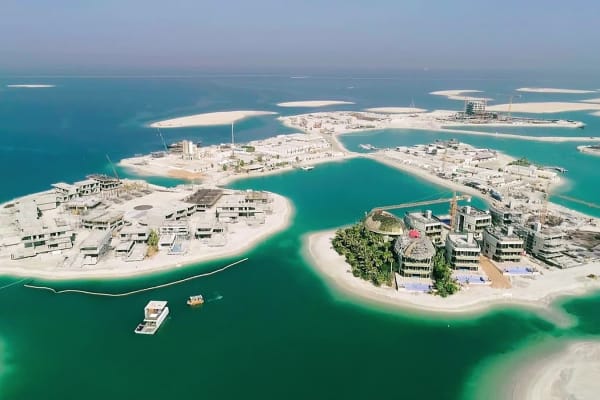
Il y a, à Dubaï, des adresses qui regardent la ville. Et puis il y a celles qui choisissent de s’en éloigner pour mieux en révéler une autre lecture. Installé sur The World Islands, l’Anantara World Islands Dubai Resort appartient à cette seconde catégorie : un refuge balnéaire pensé comme une parenthèse, à distance du rythme urbain, mais sans rompre avec l’énergie singulière de l’émirat. Le simple fait d’y parvenir participe déjà de l’expérience. L’arrivée se fait par la mer, et ce passage vers l’hôtel agit comme une transition sensible entre la ligne d’horizon de Dubaï et un paysage plus silencieux, plus ouvert, où dominent le sable, l’eau et la lumière.
L’adresse cultive une forme de luxe décontracté qui ne cherche pas l’effet démonstratif. Ici, l’élégance passe par l’espace, la respiration des volumes, la présence constante du littoral et une impression de retrait rare dans une destination souvent associée à la verticalité et à la mise en scène. La plage privée, élément central du séjour, donne le ton : on vient autant pour la sensation d’isolement choisi que pour le confort d’un resort cinq étoiles. Le cadre naturel en bord de mer structure l’ensemble de l’expérience, depuis les espaces communs jusqu’aux moments les plus simples de la journée, qu’il s’agisse d’un café face à l’eau, d’une promenade matinale sur le sable ou d’une fin d’après-midi portée par la douceur du vent marin.
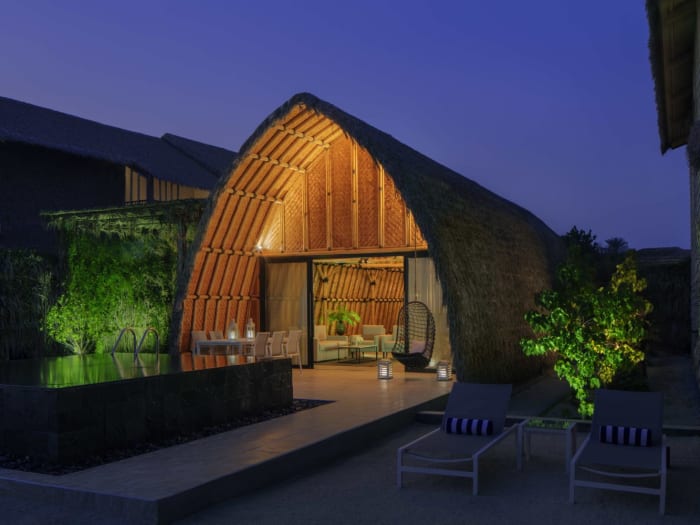
L’architecture et les aménagements privilégient une lecture apaisée du luxe. Les espaces élégants ne cherchent pas à rivaliser avec le spectaculaire extérieur ; ils l’accompagnent. Les matières, les perspectives et l’ouverture sur le paysage composent une atmosphère qui convient aussi bien aux séjours de couple qu’aux retraites familiales ou aux parenthèses plus introspectives. Cette capacité à accueillir des usages différents sans perdre son identité est l’un des atouts de l’établissement. On peut y vivre Dubaï autrement : non comme une succession d’adresses à collectionner, mais comme une destination de villégiature, presque insulaire, où le temps se dilate.
Le resort séduit également par cette tension subtile entre exclusivité et simplicité d’usage. L’accès est réservé, la situation est singulière, mais le séjour demeure fluide grâce à une organisation pensée pour le confort des hôtes. L’impression générale est celle d’un lieu conçu pour ralentir, sans jamais renoncer aux standards d’un grand hôtel contemporain. Dans une ville où l’exception prend souvent la forme de l’excès, cette adresse choisit une autre voie : celle d’un raffinement calme, ancré dans la mer, la lumière et la distance juste.
Une adresse née du paysage
L’intérêt de cette adresse tient moins à une histoire patrimoniale classique qu’à la singularité de son implantation. Sur The World Islands, archipel artificiel devenu l’un des symboles les plus commentés de Dubaï, l’hôtel s’inscrit dans une géographie qui raconte à sa manière l’ambition de l’émirat : créer de nouveaux horizons, déplacer les frontières du possible, transformer la mer en territoire d’hospitalité. Pourtant, une fois sur place, le discours s’efface au profit d’une expérience beaucoup plus sensorielle. Ce qui frappe n’est pas l’idée de prouesse, mais la façon dont le resort compose avec le paysage maritime pour en tirer une atmosphère de retraite.
Cette relation entre projet contemporain et imaginaire insulaire donne à l’établissement une identité particulière. Là où d’autres hôtels de Dubaï revendiquent un ancrage urbain, celui-ci construit son récit autour de l’éloignement. Il ne s’agit pas d’un isolement austère, mais d’une mise à distance choisie, presque cérémonielle, qui redonne de la valeur à l’arrivée, au silence relatif, au rythme des marées et à la présence continue de l’horizon. Dans une région où l’hôtellerie de luxe a souvent dialogué avec le désert, cette adresse choisit la mer comme élément fondateur. Elle en reprend les codes les plus désirables : l’ouverture, la lumière changeante, la sensation de fraîcheur, la promesse d’un temps plus lent.
Le nom Anantara n’est pas anodin dans cette lecture. La marque a construit sa réputation sur des resorts où le voyage s’exprime par le lieu autant que par le service, avec une attention particulière portée aux environnements naturels et à l’idée d’évasion. À Dubaï, cette philosophie trouve ici un terrain cohérent. L’établissement ne cherche pas à reproduire un palais citadin ni à singer une île tropicale lointaine ; il propose une version locale du séjour balnéaire exclusif, façonnée par les conditions propres au Golfe, par la lumière du littoral et par cette proximité paradoxale avec une métropole mondiale que l’on aperçoit sans la subir.
C’est sans doute là que réside sa forme d’héritage la plus intéressante : dans sa capacité à incarner une étape de l’évolution de Dubaï, passée d’une destination de transit et d’affaires à une scène hôtelière capable d’inventer des refuges de destination. Le resort participe de cette maturité nouvelle. Il ne s’adresse pas seulement à ceux qui veulent voir Dubaï, mais à ceux qui souhaitent la vivre autrement, à travers une expérience plus lente, plus maritime, plus contemplative. Son histoire est donc celle d’un lieu contemporain qui trouve sa légitimité non dans l’ancienneté, mais dans la justesse de son rapport au site.
Chambres et suites
Dans un resort de cette nature, la chambre n’est pas un simple point de chute entre deux activités : elle devient une extension du paysage et un espace de retrait à part entière. À l’Anantara World Islands Dubai Resort, tout l’intérêt réside dans cette continuité entre l’intimité du logement et l’environnement marin qui l’entoure. On attend d’une telle adresse des volumes généreux, une circulation fluide, une palette apaisante et une relation constante avec l’extérieur ; c’est précisément cette promesse de respiration qui donne son sens au séjour. Ici, le confort ne se résume pas à l’équipement, mais à la qualité de l’atmosphère.
Les hébergements s’inscrivent dans l’idée générale de luxe décontracté qui définit le resort. L’élégance n’y est pas rigide. Elle passe par des lignes nettes, des matières agréables au regard comme au toucher, et une mise en scène discrète de la lumière naturelle. Dans un contexte insulaire, la perception de l’espace compte autant que sa mesure réelle : la vue, l’ouverture, la possibilité de prolonger la chambre vers une terrasse ou un coin extérieur deviennent des éléments essentiels de l’expérience. Le rapport à la mer, direct ou suggéré, agit comme un fil conducteur. Même lorsque l’on reste à l’intérieur, le séjour conserve quelque chose de balnéaire, de calme et de lumineux.
Pour les couples, ce type d’hébergement répond à une recherche de tranquillité et de rythme choisi. On y retrouve ce que les meilleurs resorts savent offrir : la sensation d’être protégé du monde sans être coupé du paysage. Pour les familles, l’intérêt réside dans la facilité d’usage, la fluidité des services quotidiens et la possibilité de vivre le resort sans tension logistique. Le service de chambre quotidien, le service de couverture et l’attention portée aux détails participent de cette impression de confort continu, presque silencieux, qui distingue les séjours vraiment reposants des simples parenthèses hôtelières.
L’autre qualité de ces chambres et suites tient à leur capacité à accompagner différents moments de la journée. Le matin, elles s’ouvrent sur une lumière franche et une énergie douce ; aux heures chaudes, elles offrent le refuge tempéré que l’on attend d’un grand resort du Golfe ; le soir, elles retrouvent une dimension plus enveloppante, propice au repos après le dîner ou à une nuit prolongée par le bruit discret de la mer. Cette temporalité intérieure est importante : elle transforme l’hébergement en lieu de vie, et non en décor.
Dans une destination où certains hôtels misent sur l’effet spectaculaire, l’approche ici semble plus mesurée. Le raffinement se lit dans la cohérence d’ensemble, dans la façon dont la chambre soutient l’expérience globale du lieu. On n’y cherche pas l’ostentation, mais une forme de justesse : assez de sophistication pour répondre aux attentes d’un cinq étoiles, assez de simplicité pour laisser la mer, le sable et la lumière jouer les premiers rôles.
La table au rythme de la mer
Dans un resort insulaire, la restauration joue un rôle bien plus large que celui d’un simple service hôtelier. Elle structure les journées, crée des rendez-vous, donne une couleur particulière au séjour. À l’Anantara World Islands Dubai Resort, on imagine volontiers la table comme un prolongement naturel du cadre : ouverte sur le littoral, pensée pour accompagner la lumière changeante et attentive à cette idée de détente élégante qui définit l’adresse. Le plaisir de manger y tient autant à l’assiette qu’au contexte — le bruit discret des vagues, l’air marin, la sensation d’être à l’écart sans être loin de tout.
Le petit-déjeuner, dans ce type de lieu, a souvent valeur de rituel fondateur. Il ne s’agit pas seulement de commencer la journée, mais de prendre possession du paysage. Un café face à la mer, des fruits, des préparations chaudes, une table dressée sans précipitation : autant de gestes simples qui prennent ici une densité particulière. À midi, la cuisine se prête naturellement à un registre plus léger, accordé à la plage, à la chaleur et au désir de prolonger les heures dehors. Le soir, en revanche, le resort retrouve une tonalité plus feutrée. La tombée du jour sur l’eau, la lumière plus douce, la distance avec la ville composent un décor qui appelle des dîners plus lents, plus conversationnels, presque suspendus.
Dans un établissement de ce niveau, l’attente porte moins sur l’accumulation de concepts que sur la cohérence de l’offre. Les voyageurs recherchent une cuisine lisible, bien exécutée, capable de satisfaire des envies diverses sans perdre son identité. Dans le contexte de Dubaï, cela peut signifier une ouverture aux influences internationales, mais aussi une attention portée aux produits de la mer, aux cuissons nettes, aux assiettes fraîches et aux saveurs adaptées à un séjour balnéaire. Le luxe, ici, n’est pas nécessairement dans la sophistication extrême ; il réside dans la justesse du service, la qualité de l’environnement et la capacité à faire de chaque repas un moment attendu plutôt qu’une simple commodité.
L’intérêt d’un resort accessible par bateau est aussi de créer une forme d’autonomie gastronomique. Une fois arrivé, on n’a plus vraiment envie de repartir dîner ailleurs. Cela oblige l’hôtel à penser la table comme une destination interne, avec suffisamment de variété et de souplesse pour accompagner plusieurs jours de séjour. Déjeuner informel après la plage, dîner romantique, repas familial, pause fraîcheur dans l’après-midi : chaque séquence doit trouver son ton. Lorsqu’elle est bien menée, cette orchestration contribue puissamment à la réussite du voyage.
À The World Islands, la mer n’est jamais un simple décor ; elle influence l’humeur, le tempo et jusqu’à la manière de se mettre à table. C’est cette relation entre paysage et plaisir de recevoir qui donne à la restauration de l’adresse sa vraie valeur : moins une démonstration qu’un art de vivre littoral, précis, confortable et naturellement tourné vers le temps long.
Conciergerie et services
L’un des enjeux majeurs d’un séjour sur une île privée ou semi-privée tient à la fluidité. Plus le lieu est exclusif, plus l’organisation doit être simple pour le voyageur. À l’Anantara World Islands Dubai Resort, cette évidence prend une importance particulière : l’accès par bateau, la distance volontaire avec le continent et la promesse d’un séjour sans friction supposent une qualité de service irréprochable dans les gestes du quotidien. C’est là que la conciergerie et les services hôteliers prennent tout leur sens. Ils ne sont pas seulement un supplément de confort ; ils sont l’armature invisible qui permet au séjour de rester léger.
La présence d’une conciergerie disponible à toute heure et d’une réception ouverte en continu répond d’abord à cette logique. Dans une destination internationale comme Dubaï, où les horaires d’arrivée et de départ peuvent être décalés, cette permanence rassure et simplifie. Elle permet d’anticiper les transferts, d’accompagner les demandes particulières, de gérer les imprévus avec discrétion. Le luxe contemporain se mesure souvent à cela : non à la multiplication des attentions spectaculaires, mais à la capacité d’un hôtel à rendre les choses faciles avant même qu’elles ne deviennent des contraintes.
Les services quotidiens contribuent également à cette impression de continuité maîtrisée. Le ménage journalier, le service de couverture, la bagagerie, la blanchisserie ou encore le service de réveil dessinent un cadre de séjour où tout semble pris en charge sans jamais devenir intrusif. Cette discrétion est essentielle. Dans un resort tourné vers le repos, l’excellence se lit dans le timing, dans la manière d’intervenir au bon moment, dans la faculté de maintenir l’ordre et le confort d’une chambre pendant que les hôtes profitent de la plage ou d’un déjeuner prolongé.
Le personnel multilingue joue, lui aussi, un rôle décisif. Dubaï accueille une clientèle cosmopolite, habituée à des standards élevés mais aussi à des attentes culturelles variées. La qualité de l’échange, la précision des recommandations, la compréhension immédiate des besoins participent pleinement de l’expérience. Qu’il s’agisse d’organiser une traversée, de personnaliser un moment romantique, de faciliter un séjour en famille ou de répondre à une demande de dernière minute, le service doit conjuguer efficacité et tact.
Dans un lieu comme celui-ci, la conciergerie peut également devenir une passerelle entre retraite insulaire et découverte de Dubaï. Certains voyageurs voudront rester entièrement tournés vers la mer ; d’autres souhaiteront ponctuer leur séjour d’une escapade urbaine, d’une expérience privée ou d’un programme sur mesure. La valeur d’un grand hôtel réside précisément dans cette capacité à ajuster le séjour à la personne, sans imposer un rythme unique.
Au fond, les services de l’Anantara World Islands Dubai Resort prolongent la promesse essentielle du lieu : offrir une parenthèse paisible, élégante et parfaitement tenue. Quand tout fonctionne avec naturel, le voyageur ne remarque presque plus l’organisation. C’est souvent le signe le plus sûr d’une hospitalité aboutie.
L’art de vivre à Dubaï, version insulaire
Séjourner ici, c’est adopter une lecture inhabituelle de Dubaï. L’émirat est souvent raconté à travers ses tours, ses adresses de shopping, ses restaurants de destination et son goût pour l’architecture manifeste. Depuis The World Islands, le regard change. La ville cesse d’être un décor frontal pour devenir une présence lointaine, presque abstraite, qui souligne par contraste la douceur du resort. Cette distance transforme l’expérience de Dubaï en quelque chose de plus nuancé. On ne renonce pas à la modernité de la destination ; on la contemple depuis un lieu qui réhabilite le silence, l’espace et le rapport direct aux éléments.
Cet art de vivre insulaire repose d’abord sur le temps. Les journées ne s’y organisent pas selon un agenda de performances, mais selon une succession de moments simples : rejoindre la plage tôt le matin, s’attarder au petit-déjeuner, alterner baignade et lecture, se retirer dans sa chambre aux heures les plus chaudes, revenir vers la mer en fin d’après-midi. Ce rythme, presque méditerranéen dans son principe, prend à Dubaï une saveur particulière parce qu’il contredit l’image d’urgence ou d’intensité que la ville peut parfois projeter. Il rappelle que le luxe véritable réside souvent dans la possibilité de choisir sa cadence.
Le cadre naturel en bord de mer joue ici un rôle fondamental. Il ne s’agit pas d’une nature spectaculaire au sens romantique du terme, mais d’un paysage d’horizon, de lumière et de texture. Le sable, la mer, le ciel et les variations de couleur au fil du jour composent une esthétique minimaliste qui apaise le regard. Cette sobriété visuelle est précieuse dans un univers de voyage saturé de stimuli. Elle permet de renouer avec des plaisirs élémentaires : marcher pieds nus, sentir l’air salin, regarder la lumière changer sur l’eau, dîner dehors lorsque la température devient plus douce.
Pour les couples, cette version insulaire de Dubaï offre un terrain particulièrement favorable au romantisme sans cliché. L’isolement relatif, l’arrivée par bateau, la plage privée et la sensation d’être ailleurs tout en restant à portée de la ville créent une intimité naturelle. Pour les familles, l’intérêt tient à la sécurité du cadre, à la lisibilité des espaces et à la facilité avec laquelle chacun peut trouver son rythme. Quant aux voyageurs d’affaires en quête de retraite ou de séminaire, ils y découvrent un environnement propice à la concentration, précisément parce qu’il coupe avec les automatismes du quotidien.
Au fond, cet art de vivre ne cherche pas à opposer la mer à la ville, mais à les faire dialoguer. Dubaï apporte l’accessibilité internationale, la qualité des infrastructures et la culture du service ; l’île, elle, offre le recul, la respiration et la sensation de privilège tranquille. Entre les deux naît une forme d’équilibre rare, qui donne à l’adresse sa personnalité la plus juste : celle d’un refuge contemporain où l’on vient moins pour s’extraire du monde que pour retrouver une manière plus calme d’y habiter.
Réserver via MyConciergeHotel
Une adresse comme l’Anantara World Islands Dubai Resort ne se réserve pas tout à fait comme un hôtel urbain classique. Son intérêt tient précisément à ce qui la rend différente : son implantation sur les îles, son accès maritime, son rythme plus exclusif, la nécessité d’anticiper certains détails pour que l’expérience reste parfaitement fluide. Passer par MyConciergeHotel permet d’aborder ce séjour avec une logique de précision plutôt qu’avec une simple transaction. Dans ce type de resort, la qualité du voyage commence bien avant l’arrivée sur place.
Le premier enjeu est l’organisation du transfert. Parce que l’accès peut nécessiter une traversée en bateau, il est essentiel de penser le séjour dans sa totalité : heure d’arrivée à Dubaï, correspondance éventuelle, rythme souhaité à l’arrivée, contraintes familiales ou envies particulières. Une réservation accompagnée permet d’éviter les approximations et de transformer ce passage logistique en véritable entrée en matière. Ce qui pourrait n’être qu’un détail devient alors un moment de bascule vers l’univers du resort, géré avec calme et cohérence.
Réserver avec un accompagnement dédié, c’est aussi mieux calibrer le séjour selon son intention réelle. Tous les voyageurs ne viennent pas chercher la même chose dans cette adresse. Certains privilégient une retraite romantique, d’autres un séjour balnéaire en famille, d’autres encore quelques jours de déconnexion entre deux étapes professionnelles. La bonne durée, le bon rythme, le bon type d’hébergement et la bonne articulation entre temps sur l’île et éventuelles sorties à Dubaï changent profondément la qualité de l’expérience. Le rôle d’une conciergerie de réservation consiste précisément à lire ces nuances.
L’intérêt de MyConciergeHotel réside dans cette approche éditoriale et sur mesure du luxe hôtelier. Il ne s’agit pas seulement de confirmer une chambre, mais d’orienter un choix, d’identifier les points d’attention utiles et de valoriser ce qui fera la différence une fois sur place. Pour une adresse insulaire, cela peut signifier recommander la meilleure période de séjour, rappeler l’importance d’anticiper les transferts, suggérer un programme plus contemplatif que chargé, ou encore aider à penser les temps forts du voyage : dîner en bord de mer, moment privé sur la plage, organisation d’un séjour à deux ou d’une parenthèse familiale sereine.
Cette manière de réserver convient particulièrement aux hôtels qui reposent sur une promesse d’atmosphère. Car ce que l’on vient chercher ici n’est pas seulement une catégorie de chambre ou une liste d’équipements. C’est une sensation : celle d’un Dubaï plus calme, plus maritime, plus rare. Pour y accéder pleinement, il faut que chaque détail soit juste, depuis l’arrivée jusqu’au départ.
Choisir MyConciergeHotel pour cette réservation, c’est donc privilégier une lecture experte du séjour, attentive au lieu, à son fonctionnement et à la manière dont il peut correspondre à un désir de voyage précis. Dans un resort où la simplicité apparente repose sur une organisation bien pensée, cette médiation fait toute la différence.