Histoire & héritage
Dans une ville qui change vite, l’Anantara Siam Bangkok Hotel cultive une forme de permanence rare. Son identité repose sur une idée simple mais exigeante : offrir, au cœur de la capitale thaïlandaise, une adresse urbaine capable d’exprimer à la fois l’énergie de Bangkok et une certaine continuité avec l’esthétique classique de l’hospitalité thaïlandaise. Ici, le luxe ne se résume pas à l’ostentation ni à l’effet de nouveauté. Il s’inscrit davantage dans une manière d’accueillir, dans le soin porté aux détails, dans l’équilibre entre architecture intérieure, service et rythme du séjour.
L’hôtel appartient à l’univers Anantara, marque connue pour son approche du voyage ancrée dans le lieu, attentive aux cultures locales et à l’expérience vécue plutôt qu’à la seule démonstration de prestige. À Bangkok, cette philosophie prend une forme particulièrement lisible. L’établissement assume un langage décoratif inspiré de la culture thaïlandaise, avec des références visibles dans les matières, les motifs, la palette de couleurs et l’atmosphère générale des espaces communs. On y retrouve cette volonté de traduire un imaginaire thaï sans folklore appuyé : boiseries, touches artisanales, compositions florales, lignes élégantes et sens de la mise en scène propre aux grands hôtels d’Asie.
Ce qui distingue surtout l’Anantara Siam dans le paysage hôtelier de Bangkok, c’est sa capacité à préserver une sensation de calme et de chaleur dans un environnement métropolitain dense. Beaucoup d’adresses de la ville misent sur la verticalité spectaculaire ou sur un minimalisme très contemporain. Ici, l’expérience semble davantage pensée comme une respiration. Les circulations, les salons, les espaces de réception et les lieux de détente composent un ensemble cohérent, où l’on perçoit une tradition de l’hôtellerie internationale installée de longue date dans la capitale.
Cette notion d’héritage ne renvoie pas seulement à un style. Elle se lit aussi dans la relation au service. L’attention personnalisée, mentionnée parmi les points forts de l’hôtel, appartient à une culture de l’accueil dans laquelle le personnel ne se contente pas d’exécuter une prestation : il accompagne le séjour, anticipe les besoins, facilite les déplacements, aide à lire la ville. Pour un voyageur découvrant Bangkok comme pour un habitué des grands hôtels asiatiques, cette qualité de présence change profondément l’expérience.
L’Anantara Siam s’adresse ainsi à plusieurs types de voyageurs sans perdre sa cohérence. Les couples y trouvent une adresse élégante, propice à un séjour urbain raffiné. Les voyageurs d’affaires apprécient sa centralité et sa fluidité opérationnelle. Les familles, enfin, bénéficient d’un cadre suffisamment apaisé pour faire de Bangkok une destination moins intimidante. Cette polyvalence, lorsqu’elle est bien maîtrisée, est souvent le signe d’un hôtel mature.
Plutôt qu’un simple point de chute dans la ville, l’établissement se présente donc comme une adresse de référence pour qui recherche une certaine idée de Bangkok : une capitale intense, raffinée, contrastée, mais toujours accueillante lorsqu’elle est abordée depuis un lieu qui en comprend les codes. C’est dans cette alliance entre ancrage local, élégance intemporelle et sens du service que se construit l’héritage de l’Anantara Siam Bangkok Hotel.
L’établissement
Séjourner à l’Anantara Siam Bangkok Hotel, c’est choisir un point d’ancrage central dans une métropole vaste, animée et parfois déroutante. L’hôtel se trouve au cœur de Bangkok, à proximité des sites emblématiques de la ville. Cette situation structure le séjour. Elle permet d’alterner rendez-vous, visites, shopping, découvertes culturelles et retours au calme, sans passer ses journées en trajets.
Bangkok est une ville de contrastes, faite de grands axes, de quartiers d’affaires, de centres commerciaux, de sanctuaires, de marchés et de ruelles plus secrètes. Dans ce contexte, un hôtel central joue un rôle d’interface. L’Anantara Siam permet de vivre la ville sans la subir. On peut partir tôt, revenir en milieu d’après-midi pour une pause, puis repartir dîner ou explorer un autre quartier en soirée. Cette souplesse compte dans une capitale où la chaleur, l’humidité et la circulation influencent le rythme des journées.
L’établissement offre un contrepoint à l’intensité urbaine. Son ambiance chaleureuse se traduit par la lumière, les volumes, les fleurs, les matières et les transitions entre intérieur et extérieur. L’Anantara Siam s’inscrit dans cette tradition d’adresses qui créent une bulle sans se couper de la ville.
Le design inspiré de la culture thaïlandaise renforce cette impression. Il donne du relief au séjour et rappelle au voyageur qu’il est à Bangkok. Les éléments décoratifs, les textures, les tonalités et l’atmosphère générale participent à une lecture plus sensible du lieu.
Cette centralité convient à des profils de voyageurs très différents. Pour un séjour de loisirs, elle facilite l’accès aux principaux points d’intérêt. Pour un voyage d’affaires, elle apporte efficacité et lisibilité. Pour un premier séjour à Bangkok, elle rassure. Pour un habitué, elle offre une grande liberté d’improvisation.
L’Anantara Siam propose ainsi une certaine manière d’habiter Bangkok. Celle d’un grand hôtel urbain qui assume son rôle de refuge, de salon, de point de rendez-vous et de porte d’entrée vers la ville. Entre l’effervescence extérieure et le calme des espaces intérieurs, le séjour prend un rythme plus maîtrisé.
Chambres et suites
Dans un grand hôtel urbain, la chambre n’est jamais un simple espace fonctionnel. À Bangkok, elle devient un lieu de retrait essentiel. On y retrouve de la fraîcheur, un silence relatif et une sensation d’ordre après l’intensité de la ville.
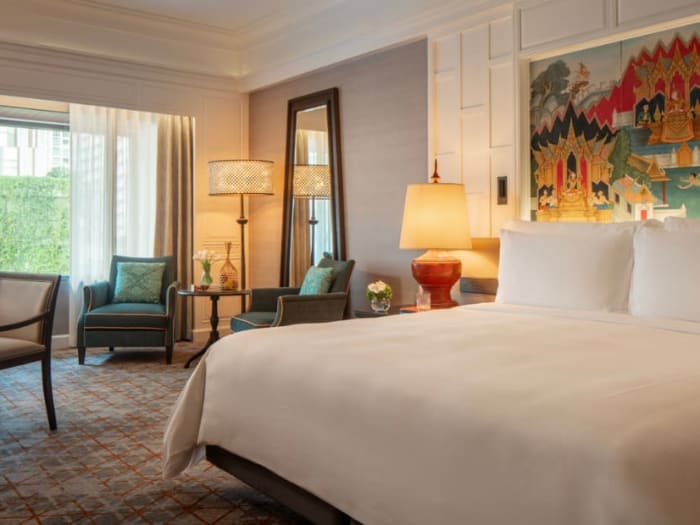
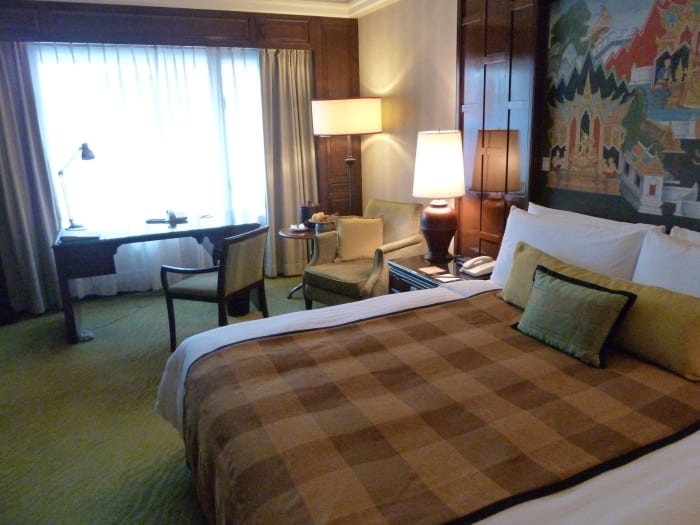
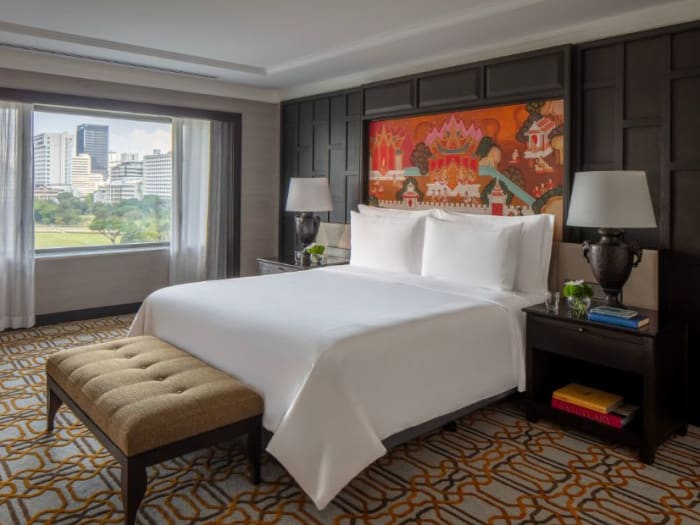
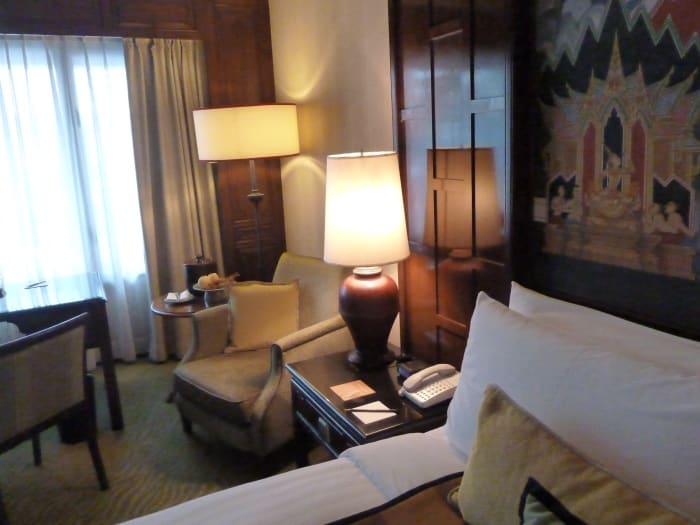
À l’Anantara Siam Bangkok Hotel, cette dimension paraît centrale. Le positionnement de l’établissement, son atmosphère chaleureuse et son design inspiré de la culture thaïlandaise suggèrent des chambres et suites dans le prolongement de cette identité. Elles s’inscrivent dans une ligne élégante, confortable et cohérente avec les espaces communs.
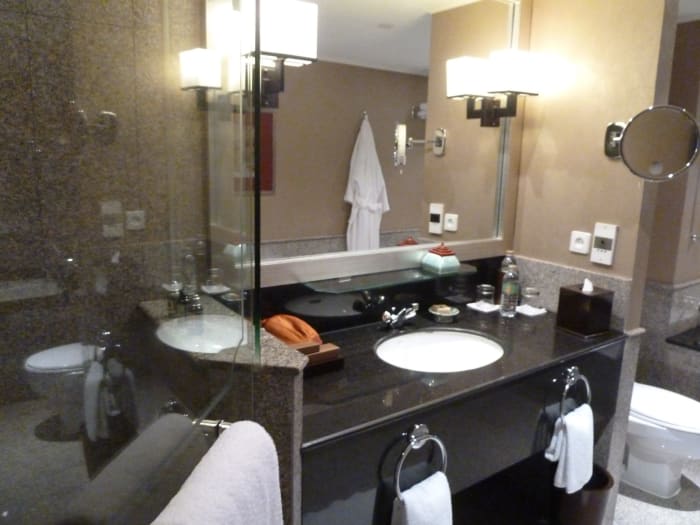
Dans une adresse de ce niveau, la qualité du repos reste essentielle. À Bangkok, le luxe commence souvent par là. Une literie soignée, une lumière bien maîtrisée, des volumes équilibrés et une salle de bains pensée comme un sas entre la ville et soi.
Même lors d’un voyage d’affaires, cette qualité de récupération compte. Pour un long week-end, elle aide à garder un rythme soutenu. Pour un séjour plus long, elle installe une forme de confort durable.
Le style des hébergements joue aussi un rôle important. Dans une adresse inspirée par la Thaïlande, on attend une présence mesurée de motifs, de bois, de textiles et de détails décoratifs. L’ensemble doit donner de la personnalité sans alourdir l’espace.
Le meilleur design hôtelier thaï dose l’ornement avec justesse. Assez pour inscrire la chambre dans un imaginaire local. Jamais au point de compromettre la sérénité visuelle. Cette retenue participe à une impression de raffinement durable.
Les suites répondent généralement à des usages variés. Certaines conviennent aux séjours romantiques, avec plus d’espace et davantage d’intimité. D’autres séduisent les voyageurs d’affaires, grâce à un salon ou à une zone adaptée au travail. Pour les familles, l’intérêt tient souvent à une organisation plus fluide.
L’expérience en chambre dépend aussi de la qualité du service. L’hôtel propose un service de chambre quotidien ainsi qu’un service de couverture. Une chambre bien entretenue, remise en ordre avec discrétion et préparée pour la nuit, renforce l’impression d’un séjour accompagné.
Enfin, les chambres et suites de l’Anantara Siam prennent tout leur sens dans le contexte de Bangkok. Elles ne sont pas seulement des lieux où l’on dort. Elles deviennent le cadre d’un séjour urbain plus maîtrisé. On y commence la journée, on y revient pour reprendre son souffle, on s’y prépare pour un dîner ou un rendez-vous. Dans une ville aussi dense, cette fonction de refuge compte presque autant que l’emplacement.
La table
À Bangkok, la gastronomie fait partie intégrante du voyage. La ville est l’une des grandes capitales culinaires d’Asie, capable de faire coexister cuisine de rue, tables contemporaines, traditions régionales thaïlandaises, influences chinoises, japonaises, indiennes ou européennes, et une culture du repas qui s’étend du petit-déjeuner très tôt le matin aux dîners tardifs. Dans ce contexte, la proposition culinaire d’un hôtel 5 étoiles ne peut être anecdotique. Elle doit offrir à la fois un niveau d’exécution irréprochable, une vraie commodité pour le voyageur et une identité suffisamment claire pour ne pas se réduire à une simple restauration d’appoint.
Même sans détailler ici chaque adresse de l’établissement, on peut lire l’Anantara Siam Bangkok Hotel comme une maison où la table participe pleinement de l’expérience. Son positionnement, son raffinement classique et son ancrage dans la culture locale invitent à imaginer une offre pensée pour accompagner les différents temps du séjour : petit-déjeuner structurant avant une journée en ville, déjeuner plus léger entre deux rendez-vous, pause dans un cadre élégant, dîner permettant de rester sur place sans renoncer à une atmosphère soignée.
Le petit-déjeuner, dans un hôtel de cette catégorie, joue un rôle particulier. À Bangkok, où les journées commencent souvent tôt pour éviter les heures les plus chaudes ou profiter d’un programme dense, il doit être à la fois généreux, efficace et agréable. Le service, la fraîcheur des produits, l’équilibre entre options internationales et références locales, la qualité du café, des fruits, des préparations chaudes ou des viennoiseries comptent autant que le décor. Un grand hôtel se reconnaît souvent à sa capacité à faire de ce moment quotidien un rituel fluide plutôt qu’une simple formalité.
Le reste de la journée appelle d’autres usages. Certains voyageurs souhaitent découvrir la scène culinaire de Bangkok à l’extérieur et utiliser l’hôtel comme point de départ ou de retour. D’autres, après une journée dense, préfèrent dîner sur place. Dans les deux cas, la qualité de la restauration interne demeure essentielle. Elle permet soit de commencer et conclure la journée dans de bonnes conditions, soit d’offrir une alternative crédible aux sorties. Dans une adresse à l’ambiance chaleureuse, la table doit prolonger ce sentiment de confort et d’attention.
Le design inspiré de la culture thaïlandaise ajoute une dimension importante à l’expérience culinaire. Manger dans un lieu qui possède une vraie cohérence esthétique change la perception du repas. La lumière, les matières, le dressage, la relation entre salle et service contribuent à créer un cadre. Dans les meilleurs hôtels asiatiques, la gastronomie n’est pas isolée du reste ; elle s’inscrit dans une mise en scène globale de l’hospitalité.
Enfin, la table d’un hôtel comme l’Anantara Siam remplit aussi une fonction très concrète : simplifier la vie du voyageur sans appauvrir le séjour. Un dîner élégant après un vol long-courrier, un déjeuner discret entre deux réunions, une collation avant de repartir explorer la ville, un moment de calme autour d’un thé ou d’un verre en fin de journée : autant de séquences qui donnent de la texture au voyage. À Bangkok, où l’offre extérieure est immense, un hôtel ne doit pas rivaliser par excès. Il doit offrir justesse, constance et sens du moment. C’est souvent ce que les voyageurs retiennent le plus durablement.
Spa & bien-être
Dans une ville aussi intense que Bangkok, le bien-être n’est pas un supplément décoratif. C’est une composante essentielle du séjour. Entre le climat tropical, le décalage horaire et le rythme de la capitale, le corps réclame des moments de récupération. À l’Anantara Siam Bangkok Hotel, cette dimension s’inscrit naturellement dans l’expérience de l’établissement. L’adresse est centrale, raffinée, et pensée pour ménager une vraie parenthèse.
Le bien-être, dans un hôtel de ce niveau, ne se limite pas à une carte de soins. Il commence par une atmosphère. L’ambiance chaleureuse suggère un cadre où l’on peut ralentir et retrouver un autre tempo. Dans les grandes adresses asiatiques, cette sensation tient à des éléments concrets. La qualité de l’accueil, le calme des espaces, la lumière, les matières et le rythme des interactions y contribuent. Un spa réussi prolonge simplement l’hospitalité.
Bangkok entretient une relation profonde avec les traditions du soin et du massage. Un hôtel comme l’Anantara Siam s’inscrit dans cet héritage du bien-être thaï. Il est reconnu pour son sens de la gestuelle, de la pression, de l’étirement et de la relaxation. Pour le voyageur, cela permet de rééquilibrer le séjour. Relâcher les tensions après un vol long-courrier, récupérer après une journée de marche, ou s’accorder un moment de calme.
Le bien-être urbain répond aussi à des usages différents. Les couples y trouvent un temps à partager. Les voyageurs d’affaires y restaurent leur énergie entre deux obligations. Les familles apprécient la possibilité, pour les adultes, de s’offrir un moment de pause dans un cadre confortable. Dans tous les cas, la valeur d’un espace bien-être tient à sa capacité à redonner de la qualité au temps.
Au-delà des soins, la remise en forme englobe souvent d’autres dimensions. Maintien d’une routine, attention au sommeil, hydratation, respiration, retour au calme après la stimulation urbaine. L’Anantara Siam, par son niveau de service et son positionnement, vise cette forme d’équilibre. En ville, le luxe contemporain consiste aussi à aider le voyageur à rester bien.
C’est l’un des atouts les plus précieux d’une adresse comme celle-ci. Bangkok peut être exaltante, mais elle peut aussi fatiguer rapidement. Revenir dans un hôtel qui offre une vraie possibilité de récupération transforme la perception de la destination. Le séjour devient plus fluide, plus durable, plus agréable. Le bien-être n’est plus une activité parmi d’autres. Il devient la condition discrète de toutes les autres.
Conciergerie & services
Le vrai niveau d’un grand hôtel urbain se mesure souvent à la qualité de ses services. À Bangkok, cette réalité est particulièrement sensible.
La ville est vaste, dense et mobile. Circulation, temps de trajet et organisation des journées exigent une logistique précise. Dans ce contexte, un service bien pensé devient un véritable outil de fluidité.
À l’Anantara Siam Bangkok Hotel, la conciergerie 24h/24 et la réception ouverte en continu forment un socle essentiel. Pour une clientèle internationale, cette disponibilité simplifie les arrivées tardives, les départs matinaux et les changements de programme.
Le service personnalisé joue ici un rôle central. Il peut concerner l’organisation des déplacements, les réservations, les recommandations de dernière minute ou la gestion de besoins spécifiques. Bien exécuté, il crée une continuité naturelle entre l’hôtel et la ville.
Les prestations plus discrètes comptent tout autant. Service de chambre quotidien, couverture, consigne à bagages, blanchisserie et réveil composent une trame efficace. Leur précision allège le séjour et limite les frictions.
La présence d’un personnel multilingue renforce encore cette fluidité. Elle facilite les échanges, clarifie les demandes et permet d’ajuster un programme sans ambiguïté.
Enfin, la qualité d’un grand service se mesure à sa capacité d’adaptation. Couple, famille, voyageur d’affaires ou visiteur en transit n’attendent pas la même chose. L’Anantara Siam Bangkok Hotel accompagne cette diversité avec souplesse.
L’art de vivre à Bangkok
Bangkok ne se laisse pas résumer facilement. La ville est à la fois monumentale et intime, spirituelle et commerciale, frénétique et contemplative. Elle peut se révéler par ses grands sites, ses quartiers modernes, ses marchés, ses temples, ses centres commerciaux, ses tables, ses jardins cachés, ses canaux, ses rooftops ou simplement par l’observation de la vie quotidienne. Séjourner à l’Anantara Siam Bangkok Hotel permet précisément d’aborder cette pluralité avec méthode et confort. Grâce à sa position centrale et à son atmosphère apaisante, l’hôtel offre un cadre idéal pour découvrir la capitale sans s’y perdre.
Pour un premier séjour, l’enjeu consiste souvent à trouver le bon rythme. Bangkok récompense les voyageurs qui alternent intensité et pauses. On part tôt pour profiter d’une lumière plus douce et d’une ville encore relativement calme ; on réserve les heures les plus chaudes à un déjeuner, à une visite intérieure ou à un retour à l’hôtel ; on ressort en fin d’après-midi lorsque la ville change de visage. Depuis une adresse bien située, cette chorégraphie devient beaucoup plus simple. L’hôtel agit comme un pivot entre exploration et récupération.
L’art de vivre bangkokien tient aussi à la diversité des expériences possibles au cours d’une même journée. On peut commencer par un site culturel ou un sanctuaire, poursuivre par une séquence plus contemporaine dans un quartier commerçant, s’accorder une pause gourmande, puis terminer par un dîner ou une promenade dans une autre ambiance. Cette capacité à faire coexister les registres constitue l’un des grands charmes de la ville. Encore faut-il avoir un point de retour stable, élégant et accueillant. L’Anantara Siam remplit précisément cette fonction.
La saison évoquée dans la description courte, entre novembre et février, correspond à une période souvent jugée plus agréable pour découvrir Bangkok. La chaleur y est généralement plus supportable, ce qui favorise les déplacements à pied et les journées plus longues à l’extérieur. Mais quelle que soit la période, la clé reste l’organisation du temps. Un hôtel doté d’un service attentif et d’une bonne connaissance de la ville aide à ajuster les programmes, à éviter certaines contraintes et à privilégier les expériences les plus adaptées au moment du séjour.
Bangkok se vit également par ses détails : un accueil souriant, une composition florale, un thé pris au calme, le contraste entre une avenue animée et un intérieur silencieux, la sensation de passer d’un monde à l’autre en quelques minutes. Les grands hôtels thaïlandais savent souvent capter cette dimension sensorielle. Ils ne se contentent pas d’héberger ; ils traduisent une certaine manière de vivre la ville. À l’Anantara Siam, le design inspiré de la culture thaïlandaise et l’ambiance chaleureuse participent de cette lecture plus nuancée de Bangkok.
Au fond, l’art de vivre dans la capitale thaïlandaise ne consiste pas à tout voir, mais à bien composer son séjour. Choisir les bons moments, accepter les contrastes, ménager des respirations, alterner découvertes et confort. Un hôtel comme l’Anantara Siam rend cette composition plus naturelle. Il permet de goûter Bangkok dans ce qu’elle a de plus séduisant : son énergie, sa richesse culturelle, son sens de l’accueil et sa capacité à offrir, au milieu du mouvement, de véritables instants de grâce urbaine.
Réserver via MyConciergeHotel
Réserver l’Anantara Siam Bangkok Hotel via MyConciergeHotel, c’est choisir une adresse en accord avec son séjour. À Bangkok, le quartier compte autant que les dates.
Un hôtel central, élégant, à l’atmosphère chaleureuse et au service personnalisé, répond à des attentes précises. Fluidité, confort et accès simple à la ville.
L’Anantara Siam se distingue par son emplacement au cœur de Bangkok, sa proximité avec les sites emblématiques, son design inspiré de la culture thaïlandaise et son sens de l’accueil.
Pour le voyageur, il ne s’agit pas seulement de réserver une chambre. Il s’agit de choisir une manière de vivre la destination.
Tous les séjours à Bangkok ne se ressemblent pas. Un couple, un voyageur d’affaires, une famille ou un habitué de l’Asie du Sud-Est n’attendent pas la même chose.
L’intérêt d’un accompagnement tient à cette lecture du besoin. Rythme du séjour, importance de la localisation, niveau de service attendu, transfert à prévoir.
Cette anticipation est particulièrement utile à Bangkok. Après un vol long-courrier, rejoindre une adresse bien identifiée change l’arrivée.
Réception 24h/24, conciergerie disponible et équipe habituée à une clientèle internationale apportent une vraie continuité.
L’objectif n’est pas seulement d’obtenir une chambre. Il est de choisir une adresse adaptée à une intention de séjour.
Dans le cas de l’Anantara Siam Bangkok Hotel, cela revient à choisir un grand hôtel urbain, central et inspiré par la culture thaïlandaise.